A História
Bio
"Hi. My name is Wellington and I'm a passion for general history. Here, I publish articles on different periods and themes in history, from prehistory to the present day.
Stories (165)
Filter by community
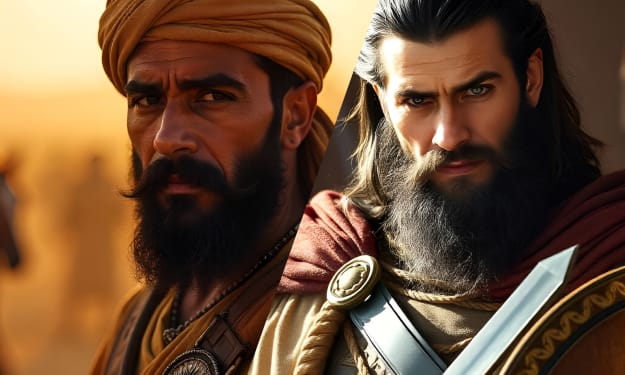
The Fall of the Visigothic Kingdom in the Iberian Peninsula
The Visigothic Kingdom, which reigned as a formidable power over the Iberian Peninsula for almost three hundred years, experienced a sudden and dramatic decline in the early 8th century. The dissolution of this kingdom represented a crucial turning point in European history, paving the way for the Islamic expansion into Europe and initiating a lengthy and intricate narrative for the Iberian Peninsula, ultimately leading to the Reconquista many centuries later. This article explores the circumstances that contributed to the downfall of the Visigothic Kingdom, the significant figures involved, and the enduring impact of this historical event.
By A Históriaabout a year ago in History
The Legend of Boitatá
Brazilian folklore encompasses a wealth of captivating narratives, featuring mythical beings and extraordinary occurrences that embody the nation’s vibrant cultural diversity. Among these stories, the legend of the Boitatá emerges as particularly enigmatic and compelling. Referred to as a serpent of fire, the Boitatá is thought to protect forests, rivers, and the environment from danger. This article will delve into the origins of this fiery entity, its symbolic meaning, and the cultural importance it represents in Brazil.
By A Históriaabout a year ago in History
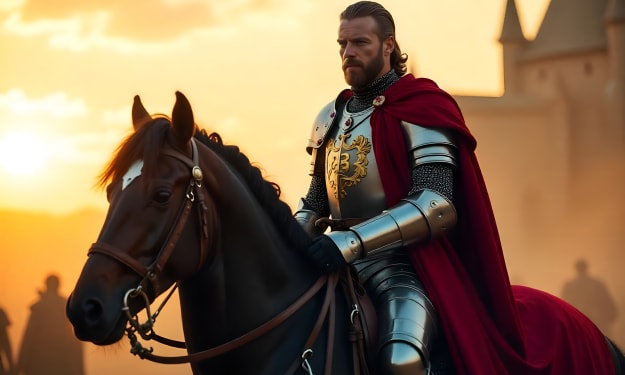
The Rise of Richard the Lionheart
If you've ever watched a movie, read a book, or played a game depicting medieval England, chances are you’ve encountered Richard the Lionheart. Crowned King of England on September 3, 1189, Richard I remains one of the most celebrated monarchs in English history. Though modern scholars have questioned some aspects of his legacy, his name still echoes in legends, stories, and films, cementing his status as a timeless figure in folklore and pop culture. Richard I, known as Richard Cœur de Lion (or Richard the Lionheart), was born on September 8, 1157, likely in a royal palace in Oxford. He was the third son of King Henry II of England and Eleanor of Aquitaine, a powerful and influential political figure of her time. Richard’s mother played a crucial role in his life, as she did in European politics, wielding immense influence due to her vast inheritance and her position as the former queen of France and the queen of England. Richard was one of five children, and he became his mother’s favorite, a preference that would shape his upbringing and career.
By A Históriaabout a year ago in History
Exploring the Resilient World of the Inuit
In one of the most inhospitable regions on Earth, where the night can last for months and survival is a daily challenge, a people have managed to thrive for millennia: the Inuit. Their story is one of remarkable resilience, ingenuity, and adaptation to a hostile environment that most would consider uninhabitable. Join us on a journey through the fascinating history and culture of the Inuit, uncovering their ancestral secrets and learning how they continue to prosper in one of the planet's most extreme environments.
By A Históriaabout a year ago in History
The Pinnacle of Modern Civilization and the Foundations of Western Thought
Modern civilization is often seen as the apex of human achievement, where mankind has reached unprecedented levels of technological and scientific capability. Innovations that would have been considered witchcraft by our ancestors are now a reality, such as artificial intelligence, space travel, and advanced medical treatments. Along with these physical tools, our logical and pragmatic reasoning has also been systematically refined, allowing for a structured understanding of the world around us. One of the greatest contributors to this advancement has been philosophy, particularly Western philosophy.
By A Históriaabout a year ago in History
The Legacy of Ancient Thebes
Ancient Thebes, one of the most influential city-states in Greek history, stands as a symbol of military power, cultural richness, and mythological significance. Located in Boeotia, in central Greece, Thebes thrived due to its strategic position between Mount Cithaeron and Mount Parnassus, allowing it to emerge as a political and military force that challenged Sparta and other Greek city-states. Its legacy, however, extends beyond its military might, with Thebes being home to renowned figures such as the poet Pindar and the philosopher Plutarch.
By A Históriaabout a year ago in History
The Rise and Fall of the Khmer Empire
Deep within the dense jungles of Southeast Asia, ancient stone towers rise like colossal sentinels, bearing witness to the rise and fall of kingdoms, the passage of armies, and the lives of countless people. These jungles, rich in mystery, have long concealed the secrets of one of the most powerful empires in history—the Khmer Empire. Today, we delve into the captivating tale of how this empire emerged, its divine kings ruled, and the profound legacy it left behind. The jungles may whisper the past, but through these ruins, we hear the echoes of a forgotten world. The Khmer people, an ancient Austro-Asiatic ethnic group, trace their origins to Southeast Asia, with roots stretching back over 4,000 years. Scholars suggest that they migrated from southern China or northeastern India, bringing with them the practice of agriculture—especially rice cultivation—and some of the earliest use of bronze. These early Khmers also developed their own script, which became the foundation for the alphabets used in Thailand and Laos today. Their migration southward may have been driven by invaders from the north, forcing them to traverse rivers and valleys until they settled in the lands now known as Cambodia, southern Vietnam, and Laos.
By A Históriaabout a year ago in History
The Myth of the Amazons
Throughout history, ancient mythologies often attributed natural phenomena like lightning, volcanoes, and rivers to divine origins. Many legends revolved around powerful characters, some of divine descent, who interacted with both gods and humans. In Greek mythology, which holds a special place in cultural history, one of the most fascinating legends is that of the Amazons, a tribe of fierce warrior women. Renowned for their mastery of horseback riding, archery, and bravery in battle, the Amazons have sparked the imagination for centuries. But were these legendary women real? What do historical records say about them? In mythology, the Amazons were said to be the daughters of Ares, the god of war. They formed an all-female society where men were welcome solely for reproduction purposes. These warrior women lived on the fringes of what the Greeks considered the "civilized" world, often depicted as residing in distant regions near the southern shores of the Black Sea. According to the playwright Aeschylus (c. 525-456 BCE), the Amazons once lived in Scythia, near the Meotis Lake, now known as the Sea of Azov, before moving to the city-state of Themiscyra by the Thermodon River. Interestingly, the Thermodon is a real river in northern Turkey, now called the Terme River.
By A Históriaabout a year ago in History
The Tale of the Mischievous Badger
Many years ago, a peaceful elderly couple decided to leave behind the chaos of city life and settle in the quiet, remote mountains, far from any other civilization. They longed for a life of tranquility, where they could tend to their farm and enjoy the beauty of nature. For a while, their life was peaceful, and their rice and vegetable fields flourished. But their serenity was shattered by an unexpected and persistent visitor: a mischievous badger.
By A Históriaabout a year ago in History
The Legacy of Mary Shelley
Mary Shelley, born Mary Wollstonecraft Godwin on August 30, 1797, in London, is best remembered for her groundbreaking novel Frankenstein; or, The Modern Prometheus. This 19th-century British writer led a life marked by tragedy, intellectual restlessness, and a prolific creative mind. Though she is celebrated primarily for Frankenstein, Shelley’s legacy extends far beyond her most famous work, encompassing a diverse literary career that has cemented her place as one of the most influential figures in English literature. Mary Shelley was born into an intellectually vibrant household. Her mother, Mary Wollstonecraft, was a prominent philosopher and advocate for women's rights, while her father, William Godwin, was a political philosopher and writer. Sadly, her mother died of complications shortly after Mary’s birth, leaving her to be raised by her father, who nurtured her with a rich education in literature and philosophy. This intellectual environment helped foster Mary’s early passion for writing.
By A Históriaabout a year ago in History
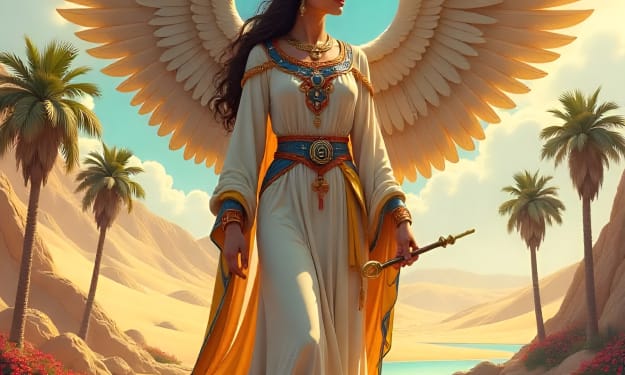
Maat
Maat, one of the most captivating figures in Egyptian mythology, transcends the mere role of a deity. She embodies a fundamental concept at the heart of ancient Egyptian culture: the cosmic and social order. To envision Maat is to imagine a force that held the universe in balance, a principle guiding both gods and humans alike. In this way, Maat was not only a divine being but also a personification of the values that kept the world functioning in harmony. Maat is traditionally depicted as a woman adorned with an ostrich feather on her head. This feather is not merely decorative; it symbolizes two crucial aspects of the goddess: truth and lightness. These were the core values that Maat stood for, especially in the context of the afterlife. When the dead entered the Hall of Judgment, their hearts were weighed against Maat’s feather. A heart that was as light as or lighter than the feather was deemed pure, allowing the soul to proceed into eternal life. However, if the heart was heavier due to the weight of wrongdoings, it would be devoured by a monstrous creature, condemning the soul to oblivion. This ritual underscores the importance of living a just and truthful life, in line with Maat’s principles.
By A Históriaabout a year ago in History
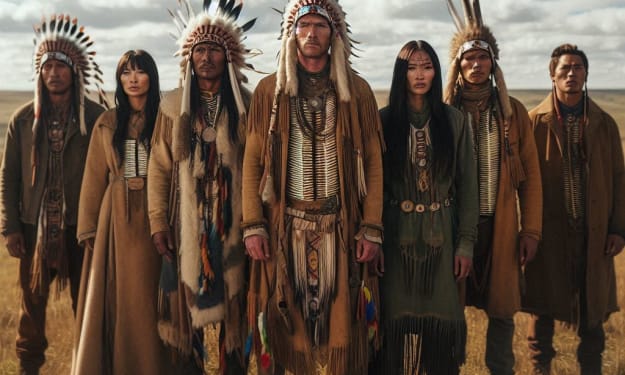
The Sioux
We are shaped by the experiences of those who preceded us. Our ancestors endured, labored, faced challenges, and encountered both deep joy and sorrow. Their moments of insight and creativity have left us a valuable legacy. Reflecting on the history of North America reveals the remarkable and diverse cultures that have thrived on this continent for thousands of years. Among these extraordinary societies are the Sioux, a Native American nation that has historically coexisted with nature. In this article, we will delve into the history, culture, and enduring legacy of the Sioux people, one of the most prominent indigenous civilizations in North America. The Sioux are a Native American nation whose ancestral lands span the modern-day states of Colorado, North and South Dakota, Wyoming, Montana, and Nebraska. Their story began approximately 13,000 years ago, during the tail end of the last Ice Age, when much of North America was still covered in vast sheets of ice. These early ancestors migrated from Asia across the Bering Land Bridge, known as Beringia, and eventually settled in the northern regions of what is now the United States.
By A Históriaabout a year ago in History