
The Fall of the Visigothic Kingdom in the Iberian Peninsula
A Turning Point in European History

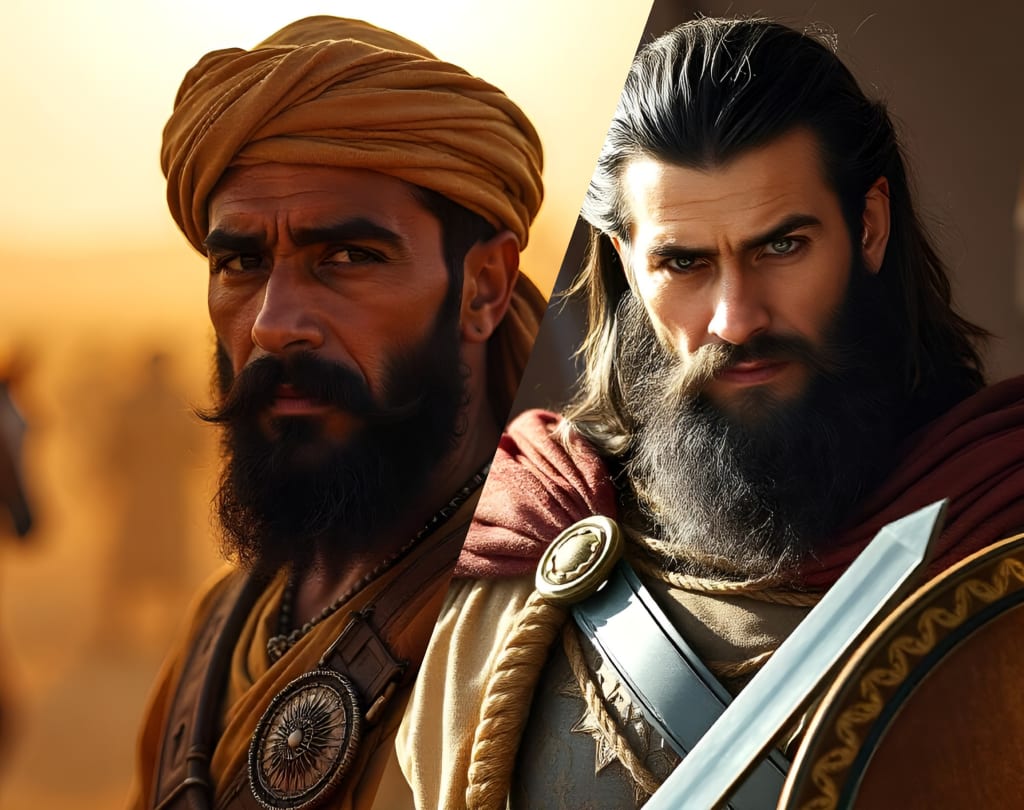
The Visigothic Kingdom, which reigned as a formidable power over the Iberian Peninsula for almost three hundred years, experienced a sudden and dramatic decline in the early 8th century. The dissolution of this kingdom represented a crucial turning point in European history, paving the way for the Islamic expansion into Europe and initiating a lengthy and intricate narrative for the Iberian Peninsula, ultimately leading to the Reconquista many centuries later. This article explores the circumstances that contributed to the downfall of the Visigothic Kingdom, the significant figures involved, and the enduring impact of this historical event.
After the fall of the Western Roman Empire in 476 AD, the Visigoths, a Germanic tribe originally from the Balkans, took control of large parts of the Iberian Peninsula and southern Gaul. By the early 6th century, they had established their capital in Toledo and formed a kingdom that covered most of what is now modern-day Spain and Portugal.
Under King Leovigild (r. 568-586) and later his son Reccared I (r. 586-601), the Visigothic Kingdom strengthened its position by consolidating political power and converting from Arian Christianity to Catholicism, aligning themselves with the majority of the Iberian population. Despite their initial strength, however, internal divisions and external threats would ultimately weaken the kingdom.
One of the key factors that contributed to the fall of the Visigothic Kingdom was internal political instability. The Visigoths lacked a formal system of succession, which often led to disputes, civil wars, and assassinations whenever a king died. After the death of King Witiza in 710, a fierce struggle for the throne ensued between his sons and a noble named Roderic (also spelled Rodrigo). Roderic ultimately seized the throne, but his rule was contested, and the kingdom remained divided, with local leaders refusing to accept his authority. This political fragmentation left the kingdom vulnerable to external invasion.
In 711, a new and formidable force arrived on the Iberian Peninsula: the Muslim armies from North Africa. The Umayyad Caliphate, which had recently expanded its influence across North Africa, saw an opportunity to push into Europe. The invasion was led by the Berber general Tariq ibn Ziyad, who crossed the Strait of Gibraltar with a relatively small force of about 7,000 troops.
The decisive confrontation between the Visigoths and the Muslim invaders occurred at the Battle of Guadalete in the summer of 711. According to historical accounts, Roderic's forces were significantly larger than Tariq's, but the Visigoths were deeply divided, and many nobles withheld their support from Roderic. The battle ended in a crushing defeat for the Visigoths, and Roderic himself is believed to have been killed during the fighting. The defeat at Guadalete effectively marked the end of centralized Visigothic resistance.
In the wake of their victory at Guadalete, the Muslim forces encountered little organized resistance as they advanced further into the Iberian Peninsula. By 714, the majority of the peninsula had fallen under Muslim control, with the cities of Toledo, Córdoba, and Seville quickly submitting to the invaders. While some Visigothic nobles and bishops attempted to organize resistance in the north, the Muslim conquest was swift and decisive.
The fall of the Visigothic Kingdom was not just the result of military defeat but also of the deep internal divisions that had plagued the kingdom for years. Many local rulers and nobles, dissatisfied with the central authority of Toledo, either submitted to Muslim rule or simply chose not to fight. Additionally, the Muslim invaders, though small in number, were able to capitalize on the weakened state of the kingdom and win over parts of the local population, especially those who saw the new rulers as a preferable alternative to the constant political infighting.
The collapse of the Visigothic Kingdom and the subsequent establishment of the Umayyad Caliphate’s control over the Iberian Peninsula had profound consequences for European history. It marked the beginning of nearly 800 years of Muslim presence in Spain, leading to a rich and unique cultural, scientific, and architectural legacy that would shape the region for centuries. The coexistence and interaction of Christian, Muslim, and Jewish communities in al-Andalus created a unique environment of intellectual exchange, known as the "Golden Age" of Muslim Spain.
The fall of the Visigothic Kingdom also set the stage for the Reconquista, the centuries-long process by which Christian kingdoms in northern Spain slowly reclaimed territory from Muslim rulers. This process would not be completed until 1492 with the fall of Granada, the last Muslim stronghold in Spain.
About the Creator
A História
"Hi. My name is Wellington and I'm a passion for general history. Here, I publish articles on different periods and themes in history, from prehistory to the present day.
Keep reading
More stories from A História and writers in History and other communities.
The Legend of Boitatá
Brazilian folklore encompasses a wealth of captivating narratives, featuring mythical beings and extraordinary occurrences that embody the nation’s vibrant cultural diversity. Among these stories, the legend of the Boitatá emerges as particularly enigmatic and compelling. Referred to as a serpent of fire, the Boitatá is thought to protect forests, rivers, and the environment from danger. This article will delve into the origins of this fiery entity, its symbolic meaning, and the cultural importance it represents in Brazil.
By A Históriaabout a year ago in History
The Mughal Princess Who Changed the Image of the Imperial Harem
When people imagine royal harems in medieval empires, they often picture places of luxury, secrecy, and endless indulgence. The Mughal Empire is no exception. For centuries, the Mughal harem has been portrayed as a secluded world of wealth and pleasure where royal women lived hidden lives behind palace walls. However, one remarkable woman challenged this narrow view: Gulbadan Begum, a Mughal princess whose life and writings revealed a very different reality.
By Irshad Abbasi 4 days ago in History
The Solitude of The Chupacabra
Many say that the Chupacabra is a rather recent and modern tale, a mangy coyote or rabied dog. Some point out that it’s just twisted evolution. But very few know the true backstory of the shapeshifter that led to the bloodsucking legend. And perhaps once you will come to know and understand more, you might “forget” a few cattle out to wander.
By Oneg In The Arctic3 days ago in Fiction


Comments
There are no comments for this story
Be the first to respond and start the conversation.