
The Legacy of Ancient Thebes
A Greek Powerhouse of War, Culture, and Myth

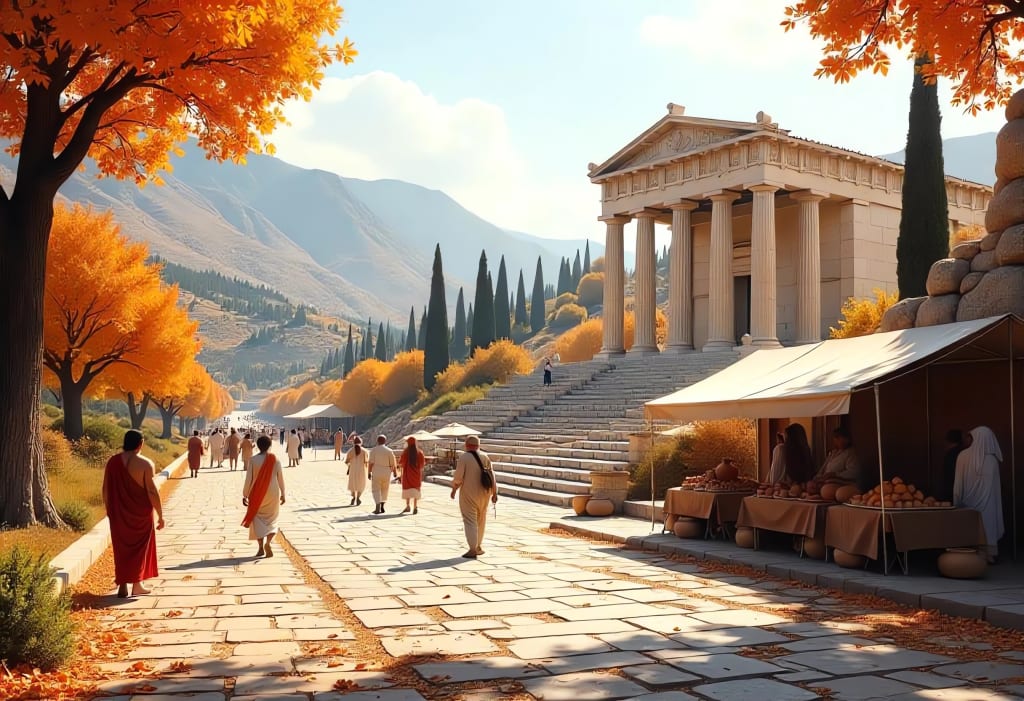
Ancient Thebes, one of the most influential city-states in Greek history, stands as a symbol of military power, cultural richness, and mythological significance. Located in Boeotia, in central Greece, Thebes thrived due to its strategic position between Mount Cithaeron and Mount Parnassus, allowing it to emerge as a political and military force that challenged Sparta and other Greek city-states. Its legacy, however, extends beyond its military might, with Thebes being home to renowned figures such as the poet Pindar and the philosopher Plutarch.
The origins of Thebes trace back to prehistoric times, with archaeological evidence suggesting that the area was inhabited since the Neolithic period. By the Mycenaean era (1600-1100 BCE), Thebes had already established itself as a prosperous city. It gained further prominence in ancient Greek literature, including in Homer's Iliad, where it is described as a key player in the Trojan War alongside Mycenae.
Mythology played a crucial role in shaping the identity of Thebes. The city is deeply intertwined with epic tales, such as the story of Oedipus, whose tragic fate was a central theme in Greek culture. These myths not only influenced Greek literature but also left a lasting imprint on the cultural identity of Thebes.
During the Classical period, Thebes rose to become a formidable rival to other prominent city-states like Athens and Sparta. The zenith of Theban power came in the 4th century BCE, under the leadership of military geniuses Epaminondas and Pelopidas. Their innovative strategies, particularly the creation of the famed "Theban phalanx," revolutionized warfare in Greece and led to decisive victories. The Battle of Leuctra in 371 BCE is a prime example of Theban military prowess, where Thebes decisively defeated Sparta, breaking its hegemony over Greece and establishing Thebes as a dominant force.
The citizens of Thebes, like those of other Greek city-states, practiced direct democracy, though political rights were restricted to free-born male citizens. At various points, however, the city experimented with alternative forms of governance, reflecting the dynamic and often tumultuous political landscape of ancient Greece.
Thebes was not only a military powerhouse but also a vibrant cultural center. The city gave birth to one of Greece’s greatest lyrical poets, Pindar, whose odes celebrated athletic victories and were revered throughout the Greek world. In addition to literature, Thebes was associated with prominent philosophers like Plutarch, who became a prolific writer and biographer, contributing significantly to Greek intellectual thought.
Education was highly valued in Thebes, where young noblemen were trained in literature, philosophy, music, and gymnastics. The city became known for its academies and educators, playing a pivotal role in shaping the intellectual elite of ancient Greece.
Religion was central to Theban life, with the city worshiping deities like Dionysus, the god of wine and fertility, and Apollo, the god of music and prophecy. Thebes was particularly famous for its cult of Dionysus, which included elaborate festivals and rituals that celebrated the deity's powers.
Economically, Thebes benefited from its fertile land in Boeotia. The region was rich in agricultural resources, producing cereals, wine, olive oil, and various fruits and vegetables. These products were traded locally and exported to other regions, making Thebes an important economic hub despite its lack of a major port.
The city also had a thriving artisanal industry, with local craftsmen producing ceramics, textiles, metal goods, and luxury items that were highly sought after both locally and in other Greek city-states. Thebes' proximity to the Gulf of Corinth allowed it to participate in maritime trade, and its economy was largely based on a system of bartering goods and services. However, silver coins like the drachma were used in more complex international transactions.
The history of Thebes is marked by its involvement in major conflicts, such as the Peloponnesian War (431-404 BCE), where it initially allied with Athens against Sparta. After Athens' defeat, however, Thebes entered into direct conflict with Sparta, leading to the aforementioned Battle of Leuctra. The city's military campaigns, led by Epaminondas, expanded Theban influence across central Greece and the Peloponnese, further solidifying its reputation as a military power.
Thebes also played a significant role in the Sacred War (356-346 BCE), part of a coalition fighting against Phocis for control of the sacred lands of Delphi. During this period, Thebes was deeply involved in the power struggles of the Greek city-states, forging alliances and engaging in battles that would shape the course of Greek history.
Despite its military and political successes, Thebes began to decline due to internal strife and external pressures. The city was affected by power struggles between aristocratic families, economic instability, and natural disasters such as earthquakes. The rise of Macedonian power under Philip II and his son Alexander the Great further diminished Theban influence. In 335 BCE, after a failed rebellion against Alexander, Thebes was destroyed, signaling the end of its dominance.
Although Thebes was eventually rebuilt, it never regained its former glory. Following the Roman conquest of Greece in 146 BCE, Thebes became part of the Roman province of Achaea, and later the Byzantine Empire. While its political and military importance faded, Thebes remained a center of cultural and religious life, transitioning into the Christian era with the construction of churches and Christian monuments.
The legacy of Thebes is profound. From its military innovations under Epaminondas to its contributions to literature and philosophy through figures like Pindar and Plutarch, Thebes left an indelible mark on Greek history. Its myths, such as the tragic tale of Oedipus, continue to resonate in modern culture, reflecting the city's deep connection to Greek identity.
About the Creator
A História
"Hi. My name is Wellington and I'm a passion for general history. Here, I publish articles on different periods and themes in history, from prehistory to the present day.
Keep reading
More stories from A História and writers in History and other communities.
The Rise and Fall of the Khmer Empire
Deep within the dense jungles of Southeast Asia, ancient stone towers rise like colossal sentinels, bearing witness to the rise and fall of kingdoms, the passage of armies, and the lives of countless people. These jungles, rich in mystery, have long concealed the secrets of one of the most powerful empires in history—the Khmer Empire. Today, we delve into the captivating tale of how this empire emerged, its divine kings ruled, and the profound legacy it left behind. The jungles may whisper the past, but through these ruins, we hear the echoes of a forgotten world. The Khmer people, an ancient Austro-Asiatic ethnic group, trace their origins to Southeast Asia, with roots stretching back over 4,000 years. Scholars suggest that they migrated from southern China or northeastern India, bringing with them the practice of agriculture—especially rice cultivation—and some of the earliest use of bronze. These early Khmers also developed their own script, which became the foundation for the alphabets used in Thailand and Laos today. Their migration southward may have been driven by invaders from the north, forcing them to traverse rivers and valleys until they settled in the lands now known as Cambodia, southern Vietnam, and Laos.
By A Históriaabout a year ago in History




Comments
There are no comments for this story
Be the first to respond and start the conversation.