
The Rise of Richard the Lionheart
A Hero of Folklore and Pop Culture

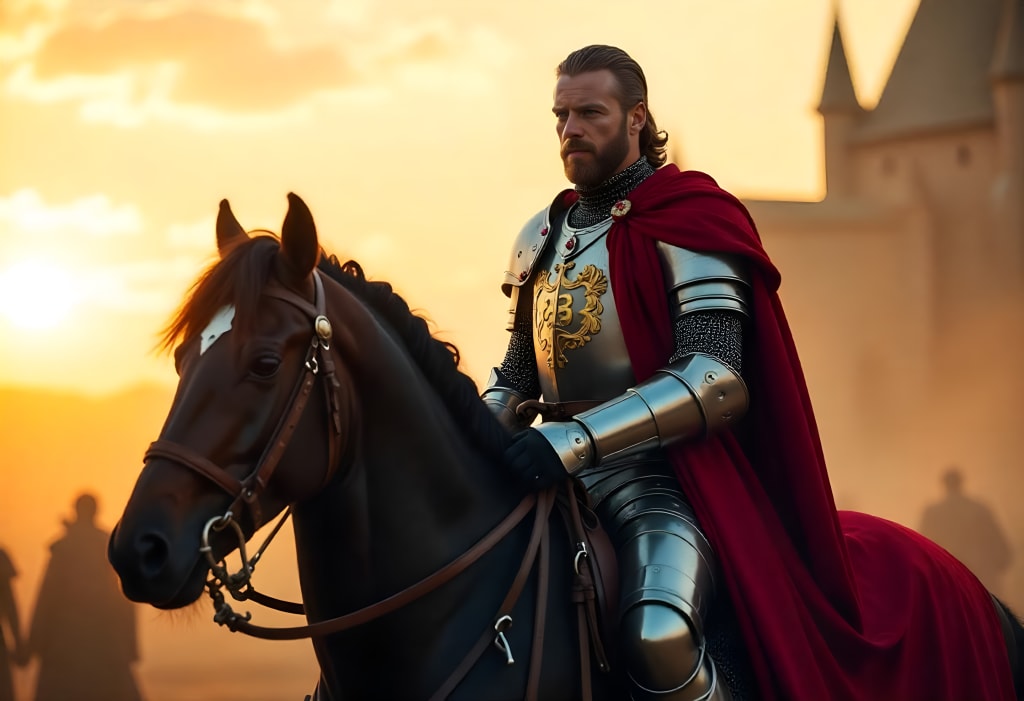
If you've ever watched a movie, read a book, or played a game depicting medieval England, chances are you’ve encountered Richard the Lionheart. Crowned King of England on September 3, 1189, Richard I remains one of the most celebrated monarchs in English history. Though modern scholars have questioned some aspects of his legacy, his name still echoes in legends, stories, and films, cementing his status as a timeless figure in folklore and pop culture. Richard I, known as Richard Cœur de Lion (or Richard the Lionheart), was born on September 8, 1157, likely in a royal palace in Oxford. He was the third son of King Henry II of England and Eleanor of Aquitaine, a powerful and influential political figure of her time. Richard’s mother played a crucial role in his life, as she did in European politics, wielding immense influence due to her vast inheritance and her position as the former queen of France and the queen of England. Richard was one of five children, and he became his mother’s favorite, a preference that would shape his upbringing and career.
Richard spent his early years in England, but he grew up primarily in France. In fact, he spoke little to no English, preferring the languages of French and Occitan, the latter a dialect from southern France. This reflects the intricate web of allegiances, landholdings, and familial ties that defined the English monarchy during the Middle Ages. At this time, the English king ruled over vast territories in France, and the distinction between the English and French nobilities was often blurred due to complex marriage alliances and shared heritage.
Richard’s father, Henry II, belonged to the Plantagenet dynasty, which was established after a turbulent period known as "The Anarchy." This civil war was triggered by a dispute over succession, after the death of Henry I (Henry II’s grandfather), and the struggle involved numerous French and English nobles, creating a chaotic patchwork of loyalties. It’s often said that the political landscape of Richard’s time makes the intrigue of Game of Thrones seem like child’s play by comparison.
In 1172, Richard was officially named Duke of Aquitaine, an enormous and wealthy region in southern France, which he ruled alongside his mother. At just 14 years old, Richard had already been thrust into the cutthroat world of medieval power politics, a world in which he would earn his legendary nickname—Cœur de Lion—for his bravery and skill in battle.
Physically, Richard was described as tall, handsome, and strong, with reddish-blond hair, traits that added to his heroic image. However, while admired for his courage, Richard was also known for his violent temper and material greed. His personal relationships were often fraught with tension, particularly with his father and brothers. The Plantagenet family was infamous for their internal power struggles. In fact, Richard, along with his brothers, rebelled against their father, Henry II, in 1173, seeking more autonomy, land, and power. Though the rebellion ultimately failed, it further strained the family dynamic, with Richard pledging allegiance to the French king and later resuming his fight against his father.
Richard’s ambitions paid off after his father’s death in 1189, when he became King of England. His reign lasted less than a decade, but it was marked by his involvement in the Third Crusade. Richard's decision to join the Crusade was spurred by the fall of Jerusalem to the Muslim leader Saladin. Fearing that his absence from Europe could give his rivals an opportunity to plot against him, Richard set off for the Holy Land, forming a temporary alliance with King Philip II of France.
The Crusades further cemented Richard’s place in history and legend. His leadership in battle and his famous rivalry with Saladin became the stuff of medieval folklore. Despite the short length of his reign, Richard's influence persisted long after his death. His exploits have been woven into countless tales, most famously the Robin Hood stories, where he is depicted as the good king returning from the Crusades to reclaim England from the villainous Prince John.
Though Richard the Lionheart's image has been romanticized over centuries, it's important to recognize the complexities of his character. He was not only a heroic figure but also a man who fought fiercely for his own ambitions, often at the expense of others. Whether through historical analysis or modern depictions, Richard’s life offers a fascinating look into the volatile world of medieval politics and warfare, where kings and queens were as much warriors as they were rulers.
To this day, Richard remains an enduring symbol of bravery, chivalry, and leadership in Western culture, immortalized through films, literature, and games. His legacy is a testament to the power of myth and storytelling in shaping our understanding of the past.
About the Creator
A História
"Hi. My name is Wellington and I'm a passion for general history. Here, I publish articles on different periods and themes in history, from prehistory to the present day.
Keep reading
More stories from A História and writers in History and other communities.
Exploring the Resilient World of the Inuit
In one of the most inhospitable regions on Earth, where the night can last for months and survival is a daily challenge, a people have managed to thrive for millennia: the Inuit. Their story is one of remarkable resilience, ingenuity, and adaptation to a hostile environment that most would consider uninhabitable. Join us on a journey through the fascinating history and culture of the Inuit, uncovering their ancestral secrets and learning how they continue to prosper in one of the planet's most extreme environments.
By A Históriaabout a year ago in History



Comments (1)
Interesting article and thanks for sharing. Richard was certainly more French than he was English, viewing his French lands as home, and his English kingdom as a source of rental income to fund his international ambitions. History seems to have forgotten that it was the Norman French (Richard was also a Duke of Normandy) who invaded England, not the other around. I often see the statue of a mounted and heroic King Richard that is outside Parliament in London. As is the statue of Oliver Cromwell. Two very different battle lords. Thanks again for sharing.