
Exploring the Resilient World of the Inuit
Masters of Survival in the Arctic

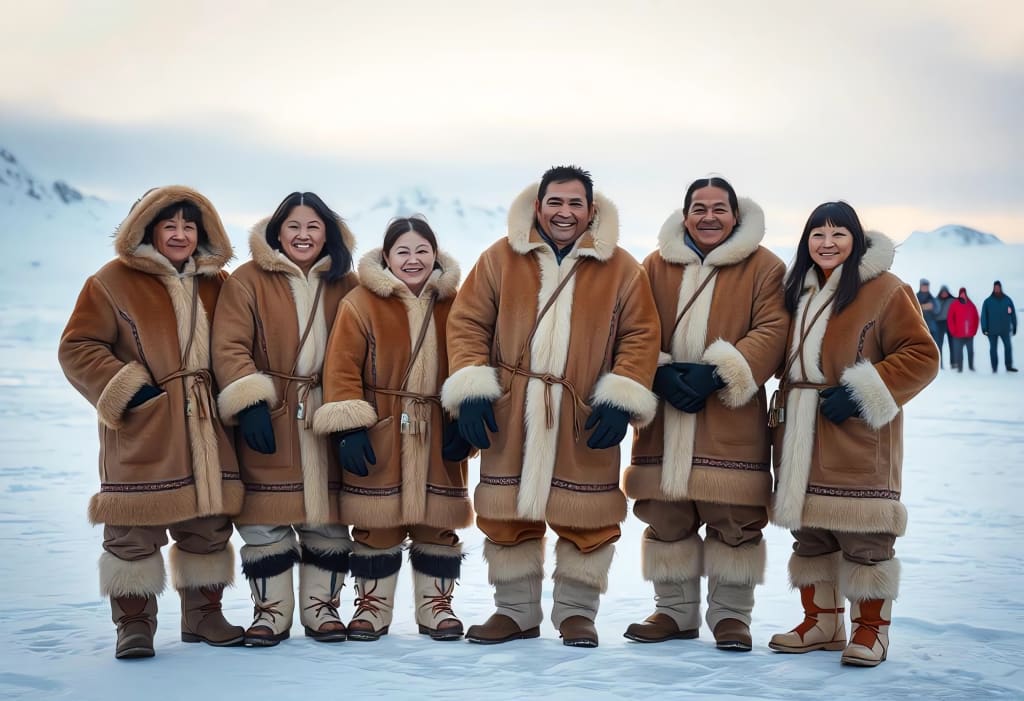
In one of the most inhospitable regions on Earth, where the night can last for months and survival is a daily challenge, a people have managed to thrive for millennia: the Inuit. Their story is one of remarkable resilience, ingenuity, and adaptation to a hostile environment that most would consider uninhabitable. Join us on a journey through the fascinating history and culture of the Inuit, uncovering their ancestral secrets and learning how they continue to prosper in one of the planet's most extreme environments.
Before we dive into the rich history of the Inuit, if you enjoy content like this, please support the channel by liking the video and subscribing. Your support allows me to continue bringing you more content like this!
Human settlement in the North American Arctic, which includes present-day northern Alaska, Canada, and Greenland, dates back over 6,000 years. Archaeological evidence reveals a complex history, including distinct cultural groups such as the Pre-Dorset and Saqqaq peoples, known as Paleo-Eskimos. While the genetic relationship between these Paleo-Eskimos and Native American populations remains uncertain, DNA analysis of modern and ancient Inuit populations suggests that their origins lie in Siberia.
The ancestors of the Inuit, known as the Thule people, migrated from the Bering Strait region around 1000 CE. They rapidly spread across the Arctic coast of North America, displacing the Dorset culture, which had dominated the region for centuries. By 1300 CE, the Thule had established dominance across the Arctic, marking the beginning of the culture we now recognize as the Inuit.
Genetic studies published in Science in 2014 showed that the Thule people were genetically distinct from the Dorset, supporting the theory that they migrated from Siberia. Following their prey—bowhead whales, which were essential for food and materials—the Thule expanded eastward during a warmer climatic period, known as the Medieval Warm Period. This movement brought them into contact with new resources and allowed them to develop advanced hunting techniques and tools.
The Thule culture thrived by mastering their environment with ingenuity. They used large harpoons with whale bone tips for hunting and relied on sled dogs for transportation across ice and snow. They also developed the iconic igloo, a temporary shelter made from blocks of compacted snow, which provided crucial warmth and protection during the harsh Arctic winters. The igloo, alongside summer tents made from animal skins, became an important aspect of Inuit life.
However, the onset of the Little Ice Age around 1350 CE forced the Thule people to adapt once again. As the climate grew colder, whale hunting became more difficult in northern regions, pushing them further south. This led to the emergence of the Inuit culture as we know it today, blending with other indigenous groups and adapting to a new way of life. By the 16th century, the Inuit had developed the societal and cultural traits that define them to this day.
The term "Inuit" means "the people" in their language, Inuktitut, which is spoken primarily in northern Canada. This collective identity is shared by indigenous communities across Canada, Greenland, and Alaska. However, they have different dialects, including Inupiaq in Alaska and Kalaallisut in Greenland. Each dialect reflects the cultural diversity within the broader Inuit community.
The term “Eskimo,” which was introduced by Europeans in the 16th century, is now considered offensive and outdated. While historically used to describe these northern peoples, the Inuit prefer their own name, which more accurately reflects their heritage and identity.
Inuit culture is deeply rooted in animism, the belief that all living things and natural elements possess a spirit, known as "Inua." Respecting these spirits is crucial for maintaining balance in their environment. The Inuit believe that the mesmerizing Northern Lights, or auroras, represent spirits playing a celestial game, often using a walrus skull as a ball.
Shamans, called Angakkuit, play an essential role in Inuit spiritual life, acting as healers and mediators with the spirit world. They perform rituals to bless hunts, seeking favor from deities like Sedna, the mother of the sea creatures, and Aningaat, the Moon God. These beliefs influence every aspect of Inuit life, from hunting to important life transitions such as birth, puberty, and death.
Inuit society is organized around the nuclear family, where community members work together to survive in the Arctic’s extreme conditions. Their semi-nomadic lifestyle was traditionally driven by the availability of resources, with families moving between seasonal hunting grounds. The igloo, an architectural marvel, symbolizes their adaptability and skill in using the environment to their advantage.
The first recorded contact between the Inuit and Europeans occurred in 986 CE when Norse explorers arrived in Greenland. The Inuit likely interacted with the Norse settlers, though the latter eventually abandoned their Greenland settlements during the Little Ice Age. European contact with the Inuit resumed in the 16th century, as whalers and explorers arrived in the Arctic.
Initial interactions were often based on trade, with the Inuit acquiring tools and materials from Europeans, which they ingeniously adapted for their own needs. However, the arrival of Europeans also brought challenges, including the introduction of diseases to which the Inuit had no immunity, leading to a sharp population decline.
Despite these challenges, the Inuit have maintained their cultural identity and adapted to modern life. In 1999, the creation of the autonomous territory of Nunavut in Canada marked a significant victory for Inuit political rights and self-governance. Greenland has also gained autonomy from Denmark, further empowering the Inuit to manage their own affairs.
Today, the Inuit population is estimated at around 180,000 people, spread across Canada, Alaska, and Greenland. Their culture continues to thrive, with traditional practices such as hunting, fishing, and craftsmanship coexisting alongside modern technologies. The Inuit's respect for nature and their ability to adapt to changing environments remain central to their way of life.
The resilience of the Inuit is a testament to their strength and ingenuity. For thousands of years, they have survived and flourished in one of the most extreme environments on Earth. Their deep connection to the land and its resources offers valuable lessons on living in harmony with nature.
About the Creator
A História
"Hi. My name is Wellington and I'm a passion for general history. Here, I publish articles on different periods and themes in history, from prehistory to the present day.
Keep reading
More stories from A História and writers in History and other communities.
The Pinnacle of Modern Civilization and the Foundations of Western Thought
Modern civilization is often seen as the apex of human achievement, where mankind has reached unprecedented levels of technological and scientific capability. Innovations that would have been considered witchcraft by our ancestors are now a reality, such as artificial intelligence, space travel, and advanced medical treatments. Along with these physical tools, our logical and pragmatic reasoning has also been systematically refined, allowing for a structured understanding of the world around us. One of the greatest contributors to this advancement has been philosophy, particularly Western philosophy.
By A Históriaabout a year ago in History




Comments
There are no comments for this story
Be the first to respond and start the conversation.