A História
Bio
"Hi. My name is Wellington and I'm a passion for general history. Here, I publish articles on different periods and themes in history, from prehistory to the present day.
Stories (165)
Filter by community
Echoes of a Broken Lyre
In the expansive and colorful landscape of 19th-century Brazilian literature, few voices echo with the same haunting beauty and emotional depth as that of Luís Nicolau Fagundes Varela. A poet of contrasts—both mystical and melancholic, patriotic and reflective—Varela's short yet brilliant career represented a pivotal moment in Brazil’s Romantic movement. Frequently eclipsed by his contemporaries such as Castro Alves and Álvares de Azevedo, Varela remains a profoundly human figure, whose poetry was influenced as much by personal sorrow as by the idealistic zeal of his era.
By A História9 months ago in History
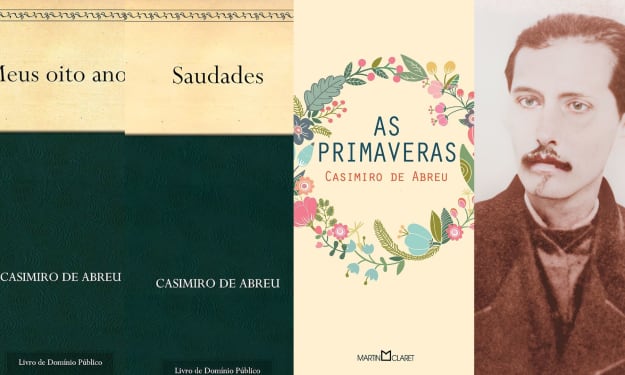
Casimiro de Abreu
Casimiro José Marques de Abreu (1839–1860) was a brilliant yet tragically brief figure in Brazilian literature. A poet of deep sensitivity, he emerged as one of the most iconic voices of Brazil’s Ultra-Romantic movement, leaving a legacy of melancholic beauty despite his premature death at the age of 21. His poetry, marked by nostalgia, youthful yearning, and an almost childlike innocence, continues to resonate with readers, especially through his renowned work As Primaveras (1859) and the timeless poem Meus Oito Anos ("My Eight Years").
By A História9 months ago in History
Álvares de Azevedo
In the history of Brazilian literature, few individuals shine as brightly—and as briefly—as Manuel Antônio Álvares de Azevedo (1831–1852). A prodigy of the Ultra-Romantic movement, Azevedo’s existence was a fleeting comet of poetic brilliance, characterized by melancholy, morbidity, and a fixation on love and death. His works, released posthumously, became cult classics, shaping the influence of generations of Gothic and Romantic authors. This article delves into his tumultuous life, his literary impact, and the tragic fate that secured his status as Brazil’s equivalent to Lord Byron.
By A História9 months ago in History
Antônio Gonçalves Teixeira e Sousa
Antônio Gonçalves Teixeira e Sousa (1812–1861) is often regarded as one of Brazil’s most underrated yet essential literary figures. Born into a life of poverty in Cabo Frio, Rio de Janeiro, to a Portuguese father and an Afro-Brazilian mother, his existence was characterized by struggle, resilience, and a steadfast commitment to literature. Although financial difficulties compelled him to take up carpentry before he could fully engage in writing, Teixeira e Sousa became a significant voice in Brazil’s Romantic movement. His most notable work, O Filho do Pescador (1843), is considered the first Romantic novel in Brazilian literature—a landmark achievement that, despite his current lack of recognition, secures his position in the annals of literary history.
By A História10 months ago in History
Araújo Porto-Alegre
Manuel de Araújo Porto-Alegre stands out as a remarkable figure in Brazilian cultural history. Born in 1806 in Rio Pardo, located in the southern province of Rio Grande do Sul, Porto-Alegre was truly a visionary. As a painter, poet, playwright, architect, critic, diplomat, and professor, his impact was felt across various fields, securing his essential role in shaping Brazil's cultural identity in the 19th century.
By A História10 months ago in History
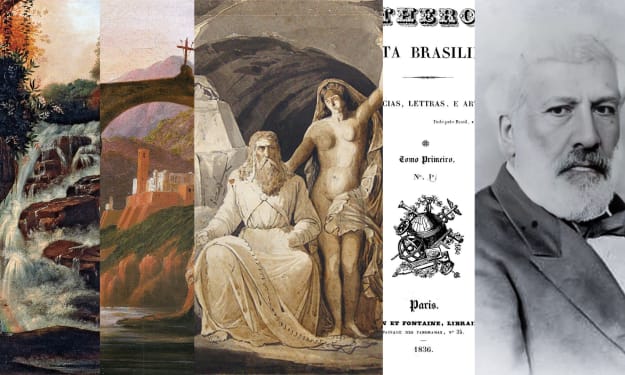
Gonçalves de Magalhães
In the rich landscape of Brazilian literature, few figures stand out as prominently for their innovative contributions as Gonçalves de Magalhães. Recognized as the father of Brazilian Romanticism, Magalhães’s life and oeuvre represent a crucial shift in Brazil's cultural and literary landscape. His impact extended beyond literature to encompass philosophy, politics, and science, establishing him as one of the most multifaceted intellectuals of 19th-century Brazil. His journey was one of discovery — traversing not just geographical boundaries, but also exploring diverse ideas, literary forms, and the essence of national identity.
By A História10 months ago in History
Echoes of a Homeland
Antônio Gonçalves Dias, a prominent literary figure in Brazil, significantly influenced the country's cultural and poetic landscape. As a trailblazer of Brazilian Romanticism, he is celebrated for his evocative nationalistic themes, his deep connection to the indigenous spirit, and his skillful integration of European poetic structures with Brazilian narratives. Although his life was cut short, his artistic legacy and patriotic fervor were profound. This narrative recounts the life of Gonçalves Dias—the poet who captured the essence of saudade, the forest, and the spirit of Brazil. Born on August 10, 1823, in Caxias, Maranhão, he was the offspring of a Portuguese merchant and a mixed-race Brazilian mother. This diverse background significantly shaped his identity and influenced his literary work, especially in his compassionate depictions of indigenous communities and his strong sense of belonging to Brazil. Despite the societal biases of his era, Dias received a robust education and later relocated to Portugal to pursue a law degree at the University of Coimbra in 1840.
By A História10 months ago in History
The Forgotten Shepherd
Among the initial leaders of the Christian Church, few individuals exhibit the same quiet dignity and spiritual authority as Pope Clement I, also referred to as Clement of Rome. Esteemed as the third successor of Saint Peter and one of the Apostolic Fathers, Clement's life and contributions were crucial in defining the identity and unity of the early Church. While the specifics of his biography are scarce and frequently shrouded in legend, his works—particularly his letter to the Corinthians—serve as a significant testament to early Christian theology, pastoral care, and church governance.
By A História10 months ago in History
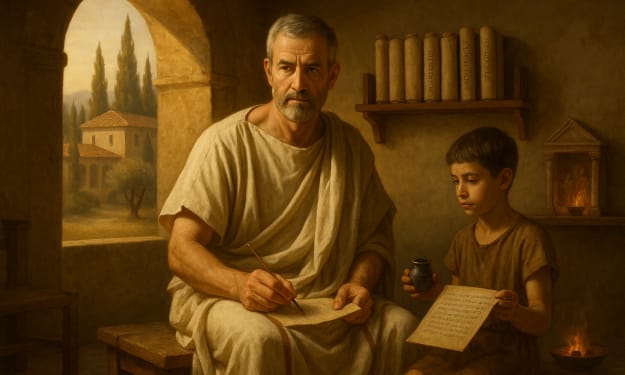
Cato the Elde
Marcus Porcius Cato, often referred to as Cato the Elder or Cato the Censor, was a significant figure in the Roman Republic, embodying the values, conflicts, and changes of an emerging Rome. Born in 234 BCE in Tusculum, a small town located southeast of Rome, Cato hailed from a humble plebeian background. However, through his military skill, political resolve, and strong adherence to traditional Roman values, he established himself among the prominent figures in Roman history. His literary works and public endeavors offer essential perspectives on the early identity and principles of the Roman Republic.
By A História10 months ago in History
Quintus Fabius Pictor
In the rich narrative of Roman history, where prominent generals, emperors, and senators frequently take center stage, the more subdued contributions of early historians can often be overlooked. However, among these intellectual trailblazers, Quintus Fabius Pictor emerges as a crucial figure. As the first historian of Rome, he established the groundwork for Latin historiography, significantly shaping the Roman perception of their history and influencing the style and format of historical writing for future generations. Although much of his work exists only in fragments and citations, his impact is profoundly ingrained in the fabric of Roman cultural heritage.
By A História10 months ago in History
Cratippus of Athens
Within the intricate landscape of ancient Greek philosophy, prominent figures such as Plato, Aristotle, and Socrates often take center stage. Yet, numerous lesser-known philosophers have made substantial contributions to the evolution of Western thought. One notable individual is Cratippus of Athens, a Peripatetic philosopher from the 4th century BCE. Although his writings have not survived, remnants of his thoughts and accounts from subsequent scholars indicate a philosopher deeply involved in metaphysics, ethics, and natural philosophy. This essay delves into Cratippus' life, his philosophical impact, and his significance for later thinkers. By analyzing ancient texts, we can reconstruct the legacy of a philosopher who connected the ideas of Aristotle with those of subsequent Hellenistic philosophy.
By A História10 months ago in History
Cleitarchus
The narrative of Alexander the Great has been recounted for centuries, yet few of his historians are as contentious and fascinating as Cleitarchus. Although his original writings have been lost to history, his impact endures through the works of later historians who drew upon his vivid, albeit occasionally embellished, accounts. Cleitarchus’ depiction of Alexander’s victories contributed to the legendary image of the Macedonian ruler, merging reality with dramatic expression. This essay examines Cleitarchus’ life, his role in shaping Alexander’s historiography, and the ongoing discussion regarding his credibility as a historical source.
By A História10 months ago in History