A História
Bio
"Hi. My name is Wellington and I'm a passion for general history. Here, I publish articles on different periods and themes in history, from prehistory to the present day.
Stories (165)
Filter by community
The Grootslang
African folklore offers a wealth of enchanting narratives, brimming with mythical beings and supernatural entities. One such figure is the Grootslang, a fearsome and enigmatic creature believed to inhabit the caves and rivers of South Africa. The legend of this monster has fascinated explorers, historians, and mythology aficionados for generations.
By A Históriaabout a year ago in Horror
The Story of the "Velho do Saco":
Brazilian folklore presents a rich array of myths, legends, and characters that have been transmitted through the ages. One particularly intriguing figure is the Velho do Saco, or "The Old Man with the Bag." This enigmatic and occasionally intimidating character features prominently in cautionary tales aimed at children throughout Brazil. The Velho do Saco is commonly depicted as an old man wandering the streets with a sizable sack. Legend has it that he seizes unruly or disobedient children and places them inside his bag. Depending on the version of the tale, these children may be taken to an undisclosed location, sold, or even consumed.
By A Históriaabout a year ago in Horror
The Enduring Influence of Socrates
The representations of Socrates by Plato, Xenophon, and Aristophanes reveal varied interpretations of his character. Plato, the most renowned disciple of Socrates, offered a profoundly respectful and philosophical view, which has greatly enriched our comprehension of his mentor's concepts. In contrast, Xenophon, who also held Socrates in high regard, portrayed him as a figure of practicality and moral integrity in his narratives. Conversely, Aristophanes, the playwright, presented a more critical image in his comedic work, The Clouds, where Socrates is ridiculed as a "false sage," charged with the corruption of youth and irreverence towards the gods, and is even compared to a sophist—a label that Socrates himself rejected.
By A Históriaabout a year ago in History
Ningyo
In the intricate landscape of Japanese folklore, the Ningyo emerges as one of the most intriguing and enigmatic beings. Frequently compared to mermaids in Western legends, Ningyo embody a distinctive combination of allure, mystery, and an ethereal quality that symbolizes Japan's profound relationship with the ocean and the natural world. However, the Ningyo transcends the role of a mere mythical aquatic entity; it encompasses rich cultural meanings, moral teachings, and even elements of the supernatural.
By A Históriaabout a year ago in History
The Enigmatic Legend of El Dorado
The quest for El Dorado is regarded as one of the most intriguing legends associated with European exploration in the Americas. Translated as "The Golden One" in Spanish, El Dorado initially referred to a ceremonial figure within South American mythology rather than a specific city. As time progressed, this concept transformed into the legendary tale of a city or kingdom purportedly overflowing with gold, captivating the imaginations of explorers and adventurers for centuries.
By A Históriaabout a year ago in History
Investigating the origins of civilization
Situated in the rich valley between the Tigris and Euphrates rivers, in present-day Iraq, Mesopotamia is recognized as one of the most important historical regions in human history. Commonly known as the "Cradle of Civilization," this area was inhabited by various groups who vigorously competed for its valuable resources and its strategic location linking Asia, Africa, and Europe. Among the ancient cultures that flourished in this region, the Sumerians are particularly notable for their groundbreaking contributions to state formation, cultural advancement, and technological progress. The designation "Sumerian" comes from the Akkadian term Shummer, which probably points to their geographical roots. In contrast, the Sumerians identified themselves as Hugozagh, meaning the "Black-Headed People." Their history traces back to prehistoric societies, including the Ubaid culture, which flourished near the Persian Gulf from the Neolithic era until the early Uruk period, approximately 4000 BCE. Although the exact origins of the Sumerians are still a topic of discussion, historians suggest they might have emerged from Central Asian populations or local Mesopotamian groups. The Sumerian civilization began to thrive around 4500 BCE and continued until approximately 1900 BCE. This era is typically categorized into six significant phases: the Ubaid Period, Uruk Period, Early Dynastic Period, Akkadian Empire, Gutian Interregnum, and the Third Dynasty of Ur. These phases were characterized by the emergence of city-states such as Uruk, Eridu, and Lagash, which became hubs of political authority, trade, and religious activities.
By A Históriaabout a year ago in History
Unraveling the Secrets of Ancient Egypt
Welcome to the intriguing realm of Ancient Egypt, renowned as one of history's most iconic and thoroughly studied civilizations. Even with extensive research and numerous archaeological findings, Egypt remains a source of fascination for historians and enthusiasts. In this article, we will delve into the origins, societal structure, religious beliefs, and lasting legacy of this extraordinary civilization, examining the pivotal phases that contributed to its enduring impact on the world. The origins of Ancient Egypt can be traced back to approximately 5,500 BCE during the Predynastic Period. During this era, Northeast Africa was characterized by a verdant savanna, where various tribes thrived by taking advantage of the region's rich resources. As the climate shifted towards aridity, these groups began to migrate to the fertile Nile Valley, setting the stage for one of the most sophisticated agricultural societies of the ancient world.
By A Históriaabout a year ago in History
The Mysterious and Advanced Indus Valley Civilization
The Indus Valley Civilization, often referred to as the Harappan Civilization, stands as one of the most captivating and contentious societies of the Bronze Age. Flourishing in what is now Pakistan approximately 5,000 years ago, this enigmatic culture has bequeathed a wealth of mysteries for contemporary archaeologists to explore. In this article, we shall embark on a journey through the latest findings that illuminate the splendor of this extraordinary civilization.
By A Históriaabout a year ago in History
The Capelobo
Brazilian folklore is abundant with intriguing creatures and tales that reflect a blend of indigenous, African, and European heritage. One such mythical entity is the Capelobo, a lesser-known yet equally enthralling figure. Frequently eclipsed by more renowned characters such as the Saci or Curupira, the Capelobo embodies an aura of mystery, fear, and fascination. Let us explore the legend of this enigmatic creature and its importance within Brazilian folklore.
By A Históriaabout a year ago in History
Unveiling Qatar
Qatar has recently emerged as a focal point of global interest, having hosted the illustrious 2022 FIFA World Cup. Despite its modest size, this Gulf nation is steeped in a profound history, marked by swift economic advancement and a vibrant cultural legacy. What insights do you possess about Qatar, a land that harmoniously blends the ancient with the contemporary? Join us as we traverse the annals of Qatar’s past and witness its extraordinary transformation into one of the wealthiest nations on the planet.
By A Históriaabout a year ago in FYI
The Remarkable Legacy of the Phoenicians
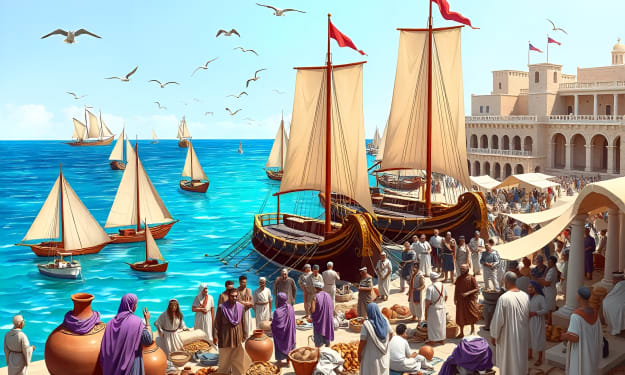
The Phoenicians are frequently hailed as one of the most accomplished maritime civilizations of antiquity. Renowned for their exceptional seafaring abilities, they not only excelled in navigation but also pioneered the principles of international commerce, founding colonies throughout the Mediterranean. This vast web of trade routes and settlements empowered the Phoenicians to exert influence over far-flung territories, creating a legacy that resonates to this day. In this article, we shall delve into the origins, culture, and notable contributions of this extraordinary civilization.
By A Históriaabout a year ago in History
Haiti’s Revolutionary History
The Haitian Revolution is considered a pivotal moment in history, yet it often lacks the acknowledgment it merits. Haiti was the second country in the Americas to gain independence, after the United States in 1776. Furthermore, it became the first Black republic globally and stands as the sole example of a successful uprising by enslaved people that led to the establishment of an independent nation.
By A Históriaabout a year ago in History