


We are shaped by the experiences of those who preceded us. Our ancestors endured, labored, faced challenges, and encountered both deep joy and sorrow. Their moments of insight and creativity have left us a valuable legacy. Reflecting on the history of North America reveals the remarkable and diverse cultures that have thrived on this continent for thousands of years. Among these extraordinary societies are the Sioux, a Native American nation that has historically coexisted with nature. In this article, we will delve into the history, culture, and enduring legacy of the Sioux people, one of the most prominent indigenous civilizations in North America. The Sioux are a Native American nation whose ancestral lands span the modern-day states of Colorado, North and South Dakota, Wyoming, Montana, and Nebraska. Their story began approximately 13,000 years ago, during the tail end of the last Ice Age, when much of North America was still covered in vast sheets of ice. These early ancestors migrated from Asia across the Bering Land Bridge, known as Beringia, and eventually settled in the northern regions of what is now the United States.
The Sioux originally inhabited the Great Lakes and the Mississippi River Valley. However, due to ongoing conflicts with the Iroquois and Ojibwe nations, they were forced to migrate westward. The name "Sioux" is derived from a French interpretation of an Ojibwe term, though the people themselves identify as the Oceti Sakowin, meaning "People of the Seven Council Fires." This name reflects the confederation of seven main Sioux tribes—Mdewakanton, Sisseton, Teton, Wahpekute, Wahpeton, Yankton, and Yanktonai—that came together in unity.
Over time, the Sioux became divided into two main linguistic and cultural groups: the Dakota, who lived in the eastern part of their territory, and the Lakota, who inhabited the western regions. Though they adopted agriculture around 700–900 CE, cultivating maize from Mesoamerica, the Sioux continued their semi-nomadic lifestyle, hunting bison across the Great Plains. Their way of life underwent a significant transformation with the arrival of European firearms and horses, particularly in the 17th and 18th centuries, making them one of the foremost tribes of the "Horse Culture" of North America.
Spirituality is central to the Sioux way of life. The Sioux believe in Wakan Tanka, the Great Spirit, who created all things and maintains the unity of the universe. A key symbol in their spiritual practices is the chanunpa, a sacred ceremonial pipe given to them by White Buffalo Woman, a supernatural figure. White Buffalo Woman not only brought the sacred pipe but also taught the Sioux seven important rites to maintain their connection with the Great Spirit.
One of the most significant ceremonies is the Sun Dance, a communal ritual of renewal that honors the sun and the earth. Traditionally performed in early summer, the Sun Dance involves constructing a temporary lodge with a central pole that symbolizes the connection between the earth and the sky. Participants fast, pray, and dance for days, sometimes enduring physical trials to seek visions for the good of the community. This dance reflects the Sioux belief in the interconnectedness of life and the importance of community over the individual.
Daily life for the Sioux revolved around a shared responsibility for the well-being of the community. Men were hunters, warriors, and protectors, while women made clothes, raised children, and maintained the tipis, which were considered their property. Children were raised with an understanding of their roles within the community, helping with chores from a young age.
The Sioux social structure was egalitarian, with leadership based on merit. Leaders were chosen based on their virtues—loyalty, wisdom, courage—and were expected to act in the community’s best interest. Decisions were made collectively, and there was no monarchical hierarchy as seen in European societies. Instead, each village and tribe would come together annually to discuss and resolve issues in a democratic manner.
By the 18th century, the Sioux had become one of the most formidable Native American nations, thanks to their mastery of horseback riding and the use of firearms. Horses revolutionized their way of life, making travel, hunting, and warfare more efficient. War parties were often organized to defend hunting grounds or avenge insults, and warriors earned prestige through their skill in battle.
As European settlers moved westward in the 19th century, the Sioux fiercely resisted the invasion of their lands. The Sioux Wars, which began in 1854 and ended with the tragic Wounded Knee Massacre in 1890, were a series of conflicts that pitted the Sioux against the United States government. Despite many treaties promising peace and land security, the Sioux were forcibly removed to reservations after Wounded Knee, which marked a devastating turning point in their history.
Today, the Sioux live on reservations that cover a fraction of their original homeland, spanning parts of Minnesota, Montana, Nebraska, and the Dakotas, as well as Canada. Although they face modern challenges, such as environmental threats posed by pipeline projects, the Sioux continue to uphold their traditions and fight for their rights.
Their resilience throughout history—from mastering the horse to resisting displacement by European settlers—shows their unyielding determination to preserve their culture and way of life. The Sioux remain a vital part of North America's cultural diversity, their heritage living on through their descendants. The story of the Sioux is a powerful reminder of the strength of indigenous cultures and the importance of respect and justice for all peoples. Their legacy continues to inspire, and their presence among us today is a testament to their enduring resilience.
About the Creator
A História
"Hi. My name is Wellington and I'm a passion for general history. Here, I publish articles on different periods and themes in history, from prehistory to the present day.
Keep reading
More stories from A História and writers in History and other communities.
The Mokoi
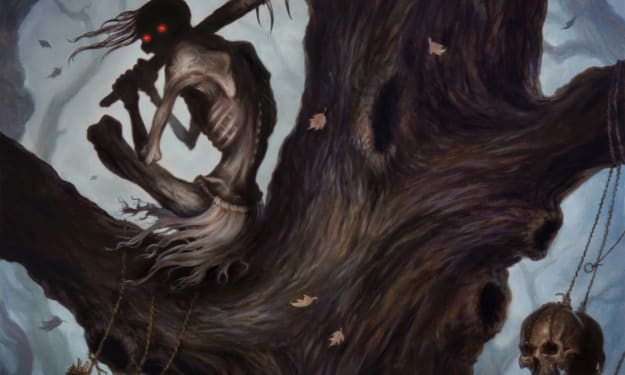
In the rich tapestry of Aboriginal Australian mythology, the Mokoi is a figure of fear and mystery. A malevolent spirit associated with death, disease, and witchcraft, its name literally means "evil spirit." This dark entity is described as a tall, thin, and shadowy figure, with glowing eyes and skeletal limbs. Its haunting presence lurks in remote, dark areas of the bushland, where it waits to strike. The Mokoi is not bound by the limits of the physical world, capable of swift movement through the air, making it nearly impossible for its victims to escape. The origins of the Mokoi trace back to a tale of dark magic. According to Aboriginal legend, a powerful sorcerer, in his quest for eternal life, struck a sinister deal with a malevolent spirit. The spirit promised to grant the sorcerer his wish, but the price was steep: the sorcerer had to serve the spirit for eternity. Desperate for immortality, the sorcerer agreed, and as a result, he was transformed into the Mokoi—a creature of darkness, forever tasked with carrying out the wicked deeds of the spirit.
By A Históriaabout a year ago in History
The V-Shaped Torture Device: A Dark Reminder from Europe’s Brutal Past
History is often remembered through stories of great empires, heroic leaders, and remarkable achievements. Yet behind many of these achievements lies a darker reality—one filled with cruelty, punishment, and suffering. Across medieval Europe, various instruments of torture were created not only to punish criminals but also to intimidate societies and maintain control. One such device was the infamous V-shaped torture bench, a chilling reminder of how brutal justice could be in the past.
By Irshad Abbasi about 15 hours ago in History


Comments
There are no comments for this story
Be the first to respond and start the conversation.