Deji Akomolafe
Bio
Stories (512)
Filter by community
The Roar That Defined an Era: The Story Behind MGM's Iconic Lion
From the golden age of Hollywood to the digital blockbusters of today, the majestic roar of the MGM lion has become one of the most recognizable symbols in cinema history. This roaring lion, featured in the opening credits of MGM (Metro-Goldwyn-Mayer) films, is not just an emblem of the studio’s legacy but also a fascinating tale of bravery, showmanship, and a groundbreaking moment in film history.
By Deji Akomolafeabout a year ago in History
Anne Boleyn and the Mystery of the Lumley Portrait
Anne Boleyn, one of the most enigmatic figures in English history, continues to fascinate historians and enthusiasts alike. As the second wife of King Henry VIII and the mother of Elizabeth I, her story is marked by ambition, passion, and tragedy. Yet, while her life has been the subject of extensive study, the visual representation of Anne has long been shrouded in mystery.
By Deji Akomolafeabout a year ago in Art
Devizes Castle: A Historic Gem with Royal Ties
Perched on a hill overlooking the charming market town of Devizes in Wiltshire, Devizes Castle is a magnificent structure steeped in history, intrigue, and royal connections. From its medieval origins as a strategic fortification to its later use as a royal residence and even a prison, the castle has played a pivotal role in England’s history. Recently listed for sale at £3.25 million, this Grade I listed building offers a rare glimpse into centuries of architectural evolution and historical significance.
By Deji Akomolafeabout a year ago in History
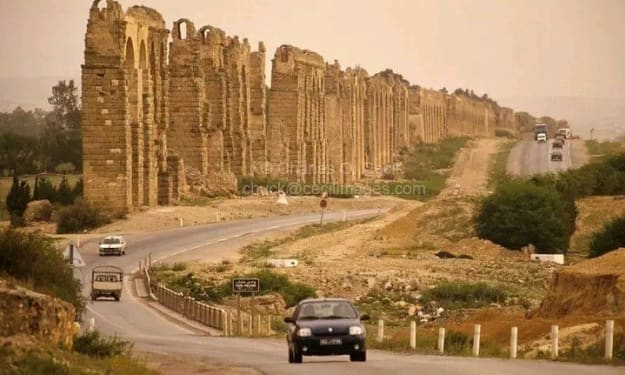
The Zaghouan Aqueduct: A Marvel of Roman Engineering in Tunisia
The Roman Empire, known for its architectural brilliance and infrastructure, left an indelible mark on the regions it controlled. Among its many achievements, the construction of aqueducts stands out as a testament to the ingenuity and engineering prowess of Roman civilization. One of the most remarkable examples is the Zaghouan Aqueduct, a 2nd-century marvel that supplied water to the city of Carthage, located in modern-day Tunisia. Stretching an impressive 132 kilometers, it is one of the longest aqueducts of the Roman Empire and a symbol of the empire's ability to overcome geographical challenges to ensure the prosperity of its cities.
By Deji Akomolafeabout a year ago in History
The Coronation of Henry VII and the Creation of Westminster Abbey’s Lady Chapel
The year was 1485, a time of turbulence and bloodshed in England, as the Wars of the Roses, a series of civil wars between the houses of Lancaster and York, reached its dramatic conclusion. On August 22, 1485, Henry Tudor defeated King Richard III at the Battle of Bosworth Field, emerging as the last man standing in a decades-long struggle for the English throne. Soon after, Henry was crowned King Henry VII in Westminster Abbey, marking the beginning of the Tudor dynasty and a new chapter in England's history. To cement his legitimacy as king, Henry undertook several projects, one of the most notable being the commissioning of the magnificent Lady Chapel at Westminster Abbey.
By Deji Akomolafeabout a year ago in History
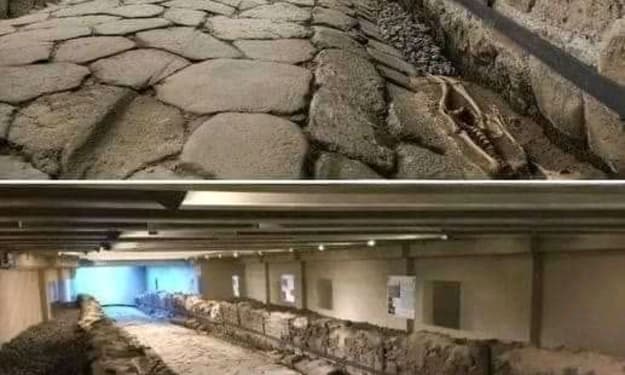
Unearthing History Beneath a McDonald’s: A 2,000-Year-Old Roman Road and Skeletons in Rome
Rome, a city where history and modern life intertwine, is no stranger to archaeological discoveries. Yet, the unexpected uncovering of a 2,000-year-old Roman road with three skeletons beneath a McDonald’s restaurant in the Roman suburb of Frattocchie has captivated historians, archaeologists, and the public alike. This remarkable find is not just a testament to Rome’s layered history but also a fascinating glimpse into how the ancient and contemporary coexist in this eternal city.
By Deji Akomolafeabout a year ago in History
The Amethyst Legacy: The Exquisite Head of Queen Arsinoe II
Among the treasures of the ancient world, few artifacts encapsulate the splendor and sophistication of their era like the Head of Queen Arsinoe II. This exquisite amethyst carving, created during the 3rd century BCE in the Ptolemaic-Hellenistic period, represents not only a remarkable artistic achievement but also the legacy of a queen who played a pivotal role in Egypt’s history. Mounted in a modern gold setting, the piece—measuring a modest 2.2 × 1.5 × 1.4 cm—combines delicate craftsmanship with timeless beauty.
By Deji Akomolafeabout a year ago in History
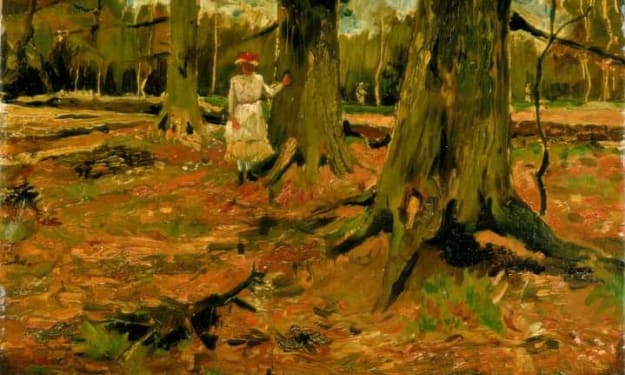
Van Gogh’s Forest Floor: A Masterpiece Born from the Earth
Vincent van Gogh, one of history's most celebrated artists, often found inspiration in nature, translating its raw beauty into vibrant works of art. Among his many masterpieces, one painting stands out for its unique perspective and connection to the earth itself. Believed to have been created while Van Gogh was kneeling, this painting captures the forest floor in stunning detail, offering a glimpse into his creative process and intimate relationship with nature.
By Deji Akomolafeabout a year ago in Art
The 500-Year-Old Marriage Bed of Henry VII and Elizabeth of York: A Regal Rediscovery
In the annals of British history, few artifacts capture the imagination like the recently rediscovered marriage bed of Henry VII and Elizabeth of York. Believed to be the only surviving medieval royal state bed in England, this extraordinary relic embodies the union that founded the Tudor dynasty. Its story, however, is as fascinating as its origins: found abandoned in a Chester car park, the bed’s journey from royal treasure to modern-day marvel is a tale of mystery, intrigue, and historical significance.
By Deji Akomolafeabout a year ago in History
The Great Hall of Baddesley Clinton: A Journey Through Time
Nestled in the picturesque Warwickshire countryside, Baddesley Clinton is a historic gem, steeped in centuries of stories and secrets. Among its many treasures, the Great Hall stands out as a testament to the Tudor era, constructed in the 1570s and preserved with care by the National Trust. Dominated by a magnificent stone chimneypiece, this room captures the essence of a bygone age while continuing to evolve through the years.
By Deji Akomolafeabout a year ago in Art
Exploring The Census at Bethlehem: A Bruegel Masterpiece
Among the rich tapestry of Renaissance art, The Census at Bethlehem by Pieter Brueghel the Younger stands out as a work of remarkable depth and storytelling. Created between 1579 and 1638, this painting is one of several versions attributed to Brueghel and his workshop. It is modeled on an earlier work by his father, Pieter Bruegel the Elder, a luminary of Netherlandish art. The painting in question, housed in the Palais des Beaux-Arts de Lille, is a striking oil on canvas that measures 111.5 cm by 164 cm. Versions of this masterpiece are also found in Brussels, Caen, and Maastricht, each offering subtle variations.
By Deji Akomolafeabout a year ago in Art
Kingsgate: A 14th-Century Portal to Winchester’s Past
In the heart of the historic city of Winchester stands Kingsgate, a remarkable relic of medieval England. Constructed in the 14th century, it is one of only two surviving medieval gates in the city, a testament to Winchester’s rich and storied past. While much of the surrounding landscape has changed—most notably, the removal of nearby original buildings in the 1930s—Kingsgate remains steadfast, bridging centuries of history.
By Deji Akomolafeabout a year ago in History