
Van Gogh’s Forest Floor: A Masterpiece Born from the Earth
Paint Masterpiece

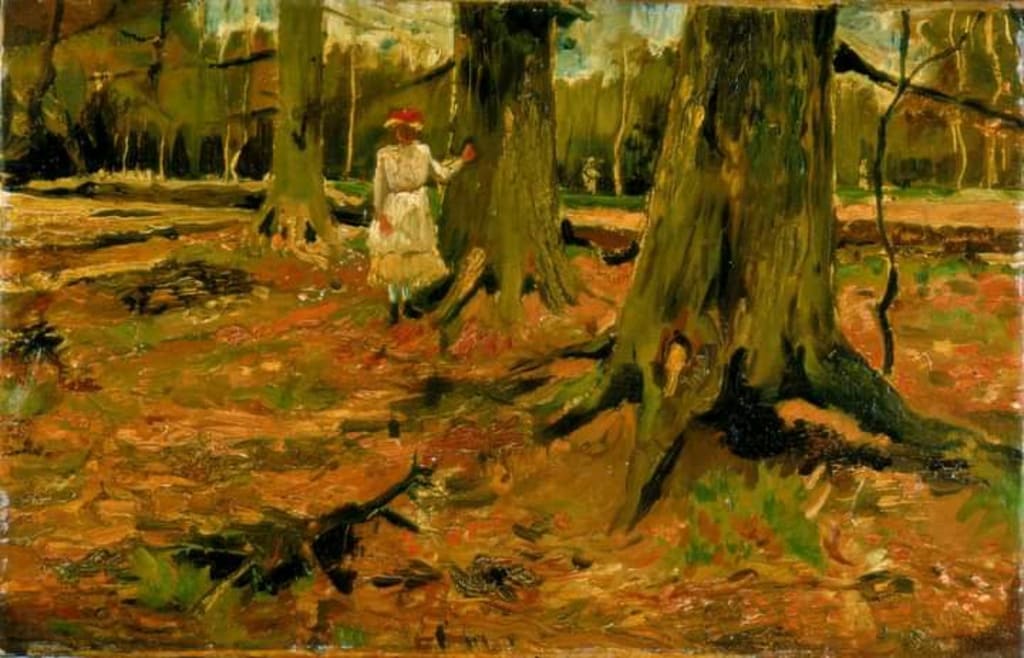
Vincent van Gogh, one of history's most celebrated artists, often found inspiration in nature, translating its raw beauty into vibrant works of art. Among his many masterpieces, one painting stands out for its unique perspective and connection to the earth itself. Believed to have been created while Van Gogh was kneeling, this painting captures the forest floor in stunning detail, offering a glimpse into his creative process and intimate relationship with nature.
Research has revealed that Van Gogh’s low perspective and the physical traces of the forest embedded in the paint—tiny oak leaves from the ground—provide clues about how this masterpiece came to life. This connection between the painting and the natural world not only enhances its mystique but also deepens our understanding of Van Gogh as an artist.
A Unique Perspective
One of the most striking aspects of this painting is its perspective. Unlike traditional landscapes that focus on sweeping views of forests or skies, Van Gogh directs our attention downward, immersing us in the intricate details of the forest floor. Leaves, twigs, and soil dominate the composition, inviting viewers to explore a world often overlooked.
This low perspective is believed to be the result of Van Gogh kneeling while painting. By positioning himself close to the ground, he was able to capture the textures, colors, and patterns of the forest floor with remarkable accuracy. The viewer feels as though they are kneeling alongside the artist, experiencing the forest from his unique vantage point.
The Evidence in the Paint
Scientific analysis has provided compelling evidence to support the idea that Van Gogh was kneeling when he created this work. Microscopic fragments of oak leaves were found embedded in the paint, suggesting that the artist worked directly on the forest floor. These tiny bits of nature became a permanent part of the painting, blurring the line between the artwork and its subject.
Van Gogh was known for his immersive approach to painting, often working en plein air to capture the essence of his surroundings. The presence of organic material in this painting speaks to his dedication to authenticity and his willingness to embrace the imperfections and unpredictability of nature.
Nature as Inspiration
For Van Gogh, nature was more than just a subject; it was a source of solace and inspiration. During his time in the countryside, he frequently painted fields, gardens, and woodlands, using bold colors and dynamic brushstrokes to convey the vitality of the natural world.
This painting of the forest floor exemplifies his ability to find beauty in the ordinary. By focusing on the ground beneath his feet, Van Gogh reminds us that even the most overlooked aspects of nature can be worthy of attention and admiration. His vibrant palette transforms the earthy tones of the forest into a celebration of life and color.
The Emotional Connection
Van Gogh’s work often reflects his emotional state, and this painting is no exception. The forest floor, with its layers of leaves and soil, can be seen as a metaphor for the cycles of life and renewal. The fallen leaves, decaying yet nourishing the earth, mirror the artist’s own struggles and his enduring hope for growth and transformation.
Kneeling to create this work may also suggest a sense of humility and reverence for nature. Van Gogh’s deep connection to his surroundings is palpable in every brushstroke, as he captures not just the physical details of the forest but its essence and spirit.
The Legacy of Van Gogh’s Perspective
This painting of the forest floor is a testament to Van Gogh’s innovative approach to art. By shifting the viewer’s perspective and focusing on an unconventional subject, he challenges us to see the world differently. His ability to find beauty in the mundane and his commitment to authenticity continue to inspire artists and art lovers alike.
The physical traces of the forest embedded in the painting serve as a reminder of the artist’s presence and his creative process. They connect us to a moment in time when Van Gogh knelt on the forest floor, fully immersed in his work, and remind us of the enduring power of art to capture and preserve the essence of the natural world.
Conclusion
Van Gogh’s forest floor painting is more than just an artwork; it is a window into the artist’s mind and his relationship with nature. The low perspective, the embedded oak leaves, and the vibrant depiction of the forest all speak to his unique vision and his ability to transform ordinary scenes into extraordinary works of art.
This masterpiece invites us to kneel alongside Van Gogh, to see the world from his perspective, and to appreciate the beauty and complexity of the world beneath our feet. It is a celebration of nature, a reflection of the artist’s soul, and a timeless reminder of the interconnectedness of life and art.
About the Creator
Keep reading
More stories from Deji Akomolafe and writers in Art and other communities.
The Great Hall of Baddesley Clinton: A Journey Through Time
Nestled in the picturesque Warwickshire countryside, Baddesley Clinton is a historic gem, steeped in centuries of stories and secrets. Among its many treasures, the Great Hall stands out as a testament to the Tudor era, constructed in the 1570s and preserved with care by the National Trust. Dominated by a magnificent stone chimneypiece, this room captures the essence of a bygone age while continuing to evolve through the years.
By Deji Akomolafeabout a year ago in Art
'Till Death We Do Art
There would be nothing divine in this world without art. Nature may surpass the divine to all intents and purposes, but like everything it absorbs and is absorbed by, it remains here, stuck on the surface of this world, ever-present, physically bound to the universe.
By Avocado Nunzella BSc (Psych) -- M.A.P 20 days ago in Art
Heavenly Harmonies and Heavy Criticisms: The Complex Rise of Bethel Music
Heavenly Harmonies and Heavy Criticisms: The Complex Rise of Bethel Music Walk into almost any contemporary Christian church on a Sunday morning—whether in London, Lagos, or Los Angeles—and you are almost guaranteed to hear their music.
By Nivard Anna17 minutes ago in Art
The BAFTA Awards
By now, in a stunning departure from recent years, most of the world is aware of what happened at the BAFTA film awards. Social Media Headlines will tell you the bare bones: that John Davidson, a Tourette's Syndrome advocate, shouted a racial slur at two Actors of Colour, Michael B Jordan and Delroy Lindo.
By Natasja Rose5 days ago in Psyche



Comments
There are no comments for this story
Be the first to respond and start the conversation.