
The Zaghouan Aqueduct: A Marvel of Roman Engineering in Tunisia
Roman History

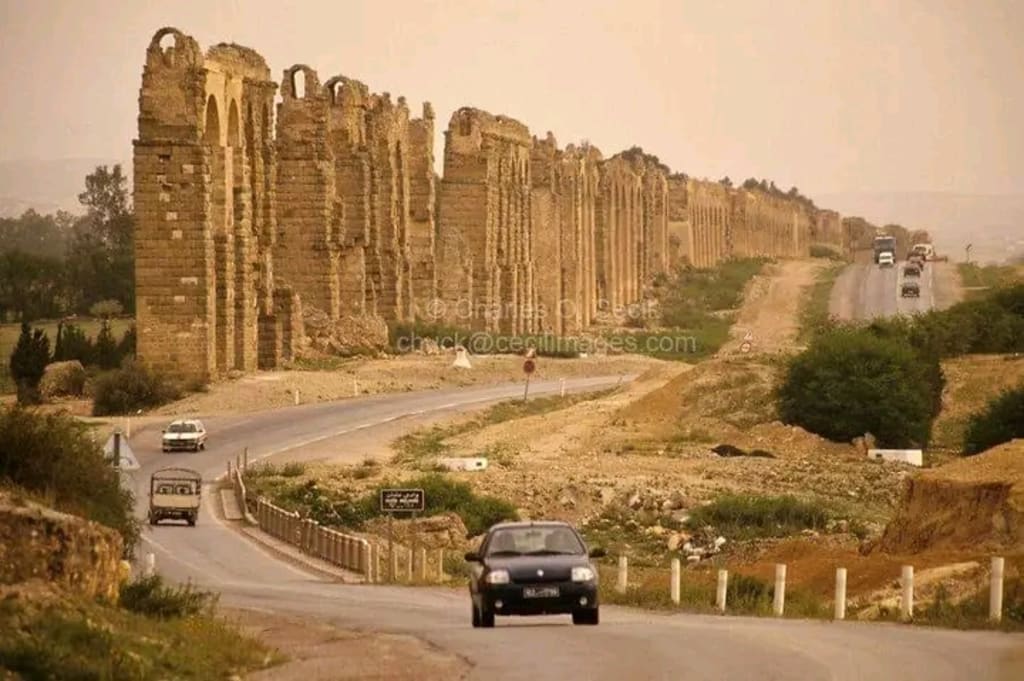
The Roman Empire, known for its architectural brilliance and infrastructure, left an indelible mark on the regions it controlled. Among its many achievements, the construction of aqueducts stands out as a testament to the ingenuity and engineering prowess of Roman civilization. One of the most remarkable examples is the Zaghouan Aqueduct, a 2nd-century marvel that supplied water to the city of Carthage, located in modern-day Tunisia. Stretching an impressive 132 kilometers, it is one of the longest aqueducts of the Roman Empire and a symbol of the empire's ability to overcome geographical challenges to ensure the prosperity of its cities.
Historical Context: The Need for Water in Carthage
By the 2nd century AD, Carthage was a thriving Roman colony, having been rebuilt after its destruction during the Punic Wars. As the city grew in size and importance, its population and industries demanded a reliable supply of fresh water. The local water sources, including wells and cisterns, were no longer sufficient to meet the city's needs.
During the reign of Emperor Hadrian (117–138 AD), a solution was conceived: a grand aqueduct to transport water from the natural springs of Zaghouan, located to the south of Carthage. The decision to construct this aqueduct was not merely practical but also symbolic, reflecting Rome's commitment to providing for its provinces and showcasing its engineering capabilities.
Design and Construction of the Zaghouan Aqueduct
The Zaghouan Aqueduct was designed to channel water from the springs in the town of Zaghouan to Carthage, a distance of 132 kilometers. This incredible feat of engineering required careful planning, as the aqueduct had to traverse varied terrains, including mountains, valleys, and plains.
The Source at Zaghouan
The aqueduct began at the Temple of Water, a Roman structure built at the source of the springs in Zaghouan. This temple, dedicated to the water deities, served both a functional and ceremonial purpose, emphasizing the Romans' reverence for natural resources. The spring was captured using a stone structure that filtered and directed the water into the aqueduct.
The Aqueduct Structure
The aqueduct consisted of a combination of underground channels, arcades, and bridges, depending on the terrain. In flatter areas, underground channels protected the water from contamination and evaporation. In hilly or uneven landscapes, the aqueduct was elevated on arches, allowing the water to maintain a gentle slope essential for its flow.
One of the most striking features of the Zaghouan Aqueduct is the Oudhna Bridge, a multi-tiered structure designed to carry the aqueduct over a deep valley. This bridge demonstrates the Romans' mastery of masonry and their ability to construct stable, durable structures even in challenging conditions.
The Gradient
Maintaining a consistent gradient over 132 kilometers was a significant challenge. The engineers had to ensure the slope was steep enough for water to flow but not so steep as to cause turbulence or damage the channel. This meticulous attention to detail underscores the sophistication of Roman engineering.
Water Distribution in Carthage
Once the water reached Carthage, it was stored in large cisterns known as the Malga Cisterns. These reservoirs, located near the city, could hold vast quantities of water, ensuring a steady supply even during periods of high demand or maintenance.
The water was then distributed throughout the city via a network of smaller aqueducts and pipes. Public fountains, baths, and private households all benefitted from the aqueduct, transforming Carthage into a city of comfort and luxury. The presence of a reliable water supply also boosted agriculture and supported local industries, further enhancing the city's prosperity.
Significance of the Zaghouan Aqueduct
The Zaghouan Aqueduct is a remarkable example of Roman innovation and adaptability. Its construction highlights several key aspects of Roman civilization:
1. Engineering Excellence: The aqueduct's design and execution demonstrate the advanced technical knowledge of Roman engineers. Their ability to construct such a vast and complex system without modern tools is awe-inspiring.
2. Urban Development: The aqueduct underscores the importance of water in sustaining and enhancing urban life. By providing Carthage with a reliable water supply, the Romans ensured the city's growth and significance as a provincial capital.
3. Integration of Nature and Culture: The Temple of Water at Zaghouan reflects the Romans' ability to integrate practical infrastructure with cultural and religious practices, creating structures that were both functional and symbolic.
Legacy and Modern Importance
Much of the Zaghouan Aqueduct still stands today, a testament to its durability and the quality of its construction. While no longer operational, its ruins offer valuable insights into Roman engineering and provide a tangible link to Tunisia's ancient past.
The aqueduct is also a popular tourist attraction, drawing visitors from around the world to marvel at its scale and craftsmanship. Efforts to preserve and study the aqueduct continue, ensuring that future generations can appreciate this incredible feat of engineering.
Conclusion
The Zaghouan Aqueduct is more than just an ancient Roman structure; it is a symbol of human ingenuity and the ability to overcome challenges in the pursuit of progress. Built during the reign of Emperor Hadrian, it exemplifies the Roman Empire's dedication to infrastructure and its impact on the lives of its citizens.
As one of the longest aqueducts in the Roman Empire, the Zaghouan Aqueduct is a reminder of the empire's grandeur and its enduring legacy. Whether admired for its engineering brilliance or its historical significance, this aqueduct remains a source of inspiration and a shining example of the ingenuity of the ancient world.
About the Creator
Keep reading
More stories from Deji Akomolafe and writers in History and other communities.
The Coronation of Henry VII and the Creation of Westminster Abbey’s Lady Chapel
The year was 1485, a time of turbulence and bloodshed in England, as the Wars of the Roses, a series of civil wars between the houses of Lancaster and York, reached its dramatic conclusion. On August 22, 1485, Henry Tudor defeated King Richard III at the Battle of Bosworth Field, emerging as the last man standing in a decades-long struggle for the English throne. Soon after, Henry was crowned King Henry VII in Westminster Abbey, marking the beginning of the Tudor dynasty and a new chapter in England's history. To cement his legitimacy as king, Henry undertook several projects, one of the most notable being the commissioning of the magnificent Lady Chapel at Westminster Abbey.
By Deji Akomolafeabout a year ago in History
World War I
The morning fog lay thick over the trenches of northern France, clinging to the earth as if it too feared what was about to happen. Private Thomas Hale pulled his coat tighter around himself, though it did little to stop the cold from seeping into his bones. He had been in the trenches for six months, yet the damp smell of mud, smoke, and fear still felt unfamiliar, like a nightmare he could not wake from.
By Maavia tahir5 days ago in History
Chicago Hospital Held Newborn Baby for 8 Months Over an Unpaid Medical Bill
Debts were handled much differently in the 19th and early 20th century. Back then, people who accrued debt had more to fear than letters and calls from collection agencies the same way we do today, especially if they owed a hospital or doctor money.
By Criminal Matters6 days ago in History
How to Succeed at the Benson Directory®
Congratulations and welcome to the Benson Directory® employee #22391! As our newest call handler, you will have the privilege of speaking with dozens of unique and interesting people on a daily basis as well as the opportunity to earn bonuses for high performance. Contained within this handbook you will find a set of ease to follow instructions designed to help you settle in to your new role and begin paving the way to success.
By S. A. Crawforda day ago in Fiction



Comments
There are no comments for this story
Be the first to respond and start the conversation.