
The Great Hall of Baddesley Clinton: A Journey Through Time
Painting History

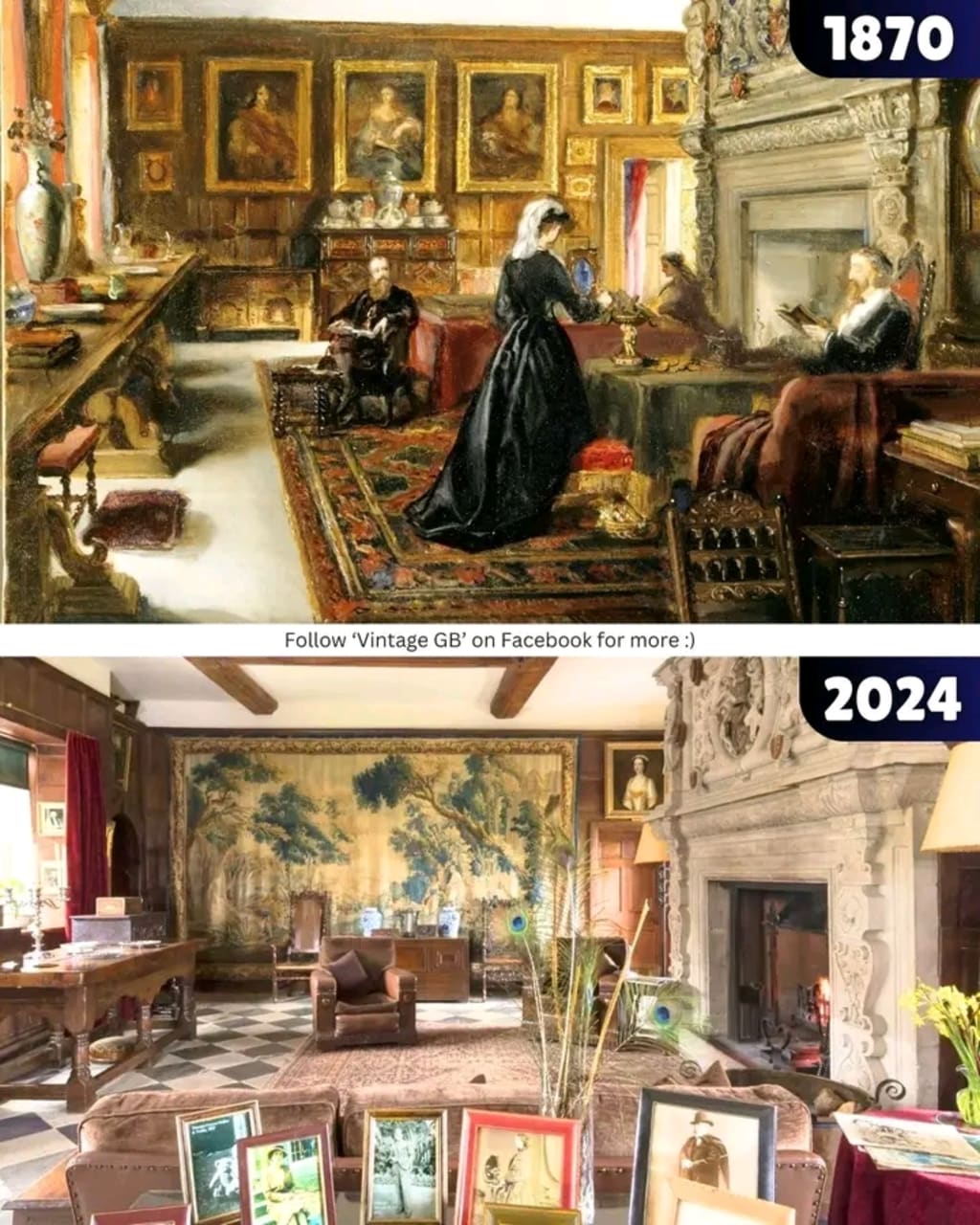
Nestled in the picturesque Warwickshire countryside, Baddesley Clinton is a historic gem, steeped in centuries of stories and secrets. Among its many treasures, the Great Hall stands out as a testament to the Tudor era, constructed in the 1570s and preserved with care by the National Trust. Dominated by a magnificent stone chimneypiece, this room captures the essence of a bygone age while continuing to evolve through the years.
In comparing an old painting of the Great Hall from 1870 to its present-day appearance, we uncover a fascinating narrative of continuity and change, highlighting both the artistry of the past and the dedication to preserving history.
The Great Hall: A Tudor Masterpiece
Constructed in the 1570s by Henry Ferrers, Baddesley Clinton is a moated manor house that exemplifies Tudor architecture and design. The Great Hall, located at the heart of the house, served as a space for dining, entertainment, and gatherings—a hub of activity in the life of the Ferrers family and their guests.
The hall’s most striking feature is the stone chimneypiece, an imposing structure carved with intricate details. Positioned prominently on the right-hand side of the room, it not only provided warmth but also served as a symbol of the family’s status and taste.
The room’s high timber ceiling, leaded windows, and wooden paneling further enhance its Tudor character, creating an atmosphere of grandeur and intimacy.
The 1870 Painting: A Glimpse into the Past
An old painting of the Great Hall from 1870 offers a unique window into its appearance during the 19th century. Created at a time when Baddesley Clinton was inhabited by the eccentric Ferrers and their Catholic associates, the painting captures the hall in a period of romanticized antiquity.
The chimneypiece remains a focal point, its elaborate carvings clearly depicted. The furniture, including long wooden tables and chairs, reflects the Victorian fascination with medieval revivalism. Tapestries and decorative objects adorn the walls, adding layers of texture and color to the scene.
This image conveys the hall as a lived-in space, blending Tudor authenticity with 19th-century tastes. It hints at the enduring charm of the room, cherished by generations who sought to preserve its historic essence while making it their own.
The Great Hall Today
Fast forward to today, and the Great Hall continues to exude its timeless appeal, carefully maintained by the National Trust. While the room retains many of its original features, subtle differences reflect the passage of time and the evolution of conservation practices.
The stone chimneypiece remains the centerpiece, its intricate carvings as striking as ever. Modern lighting now illuminates its details, allowing visitors to appreciate the craftsmanship more clearly. The timber ceiling, still in excellent condition, tells a story of longevity and skilled construction.
Furnishings in the hall today are curated to reflect its Tudor origins. Simple wooden tables and benches evoke the room’s historical purpose, while decorative elements, such as textiles and portraits, enhance the atmosphere without overwhelming the space. Unlike in the 1870 painting, the Victorian embellishments have been pared back, aligning with the National Trust’s commitment to historical accuracy.
Continuity and Change
The comparison between the 1870 painting and the modern-day Great Hall reveals a delicate balance between continuity and change. While the core features of the room remain intact, subtle shifts in decoration and presentation highlight the evolving approach to heritage preservation.
1. Fidelity to History
The removal of some Victorian elements reflects a broader trend in conservation to prioritize historical authenticity. By focusing on the room’s Tudor origins, the National Trust ensures that visitors can experience the space as it might have appeared in the 16th century.
2. Modern Enhancements
Advances in lighting and climate control have allowed for better preservation of the room’s features. These modern interventions are discreet yet vital, protecting the hall’s woodwork, stonework, and furnishings for future generations.
3. Visitor Experience
Today’s Great Hall is designed to be both educational and immersive. Interpretation panels and guided tours provide historical context, enriching the experience for visitors who step into this remarkable space.
The Legacy of the Great Hall
The Great Hall of Baddesley Clinton is more than just a room; it is a living testament to the people who built, inhabited, and preserved it over the centuries. From its Tudor origins under Henry Ferrers to its 19th-century revival under the eccentric Ferrers family, the hall has been a constant presence, adapting to the changing needs and tastes of its occupants.
Its survival is a credit to the dedication of the National Trust, which has worked tirelessly to maintain the house and its treasures. Through careful conservation and thoughtful curation, the Great Hall continues to inspire and educate, offering a tangible connection to England’s past.
Conclusion
The Great Hall at Baddesley Clinton is a space where history comes alive. The old painting from 1870, with its Victorian charm, captures a moment in the room’s long story, while its present-day appearance reflects a commitment to authenticity and preservation.
For visitors to Baddesley Clinton, the Great Hall offers an opportunity to step back in time, marvel at Tudor craftsmanship, and imagine the lives of those who walked its floors centuries ago. Whether viewed through the lens of art or experienced firsthand, the hall remains a masterpiece of heritage, bridging the past and the present with grace and elegance.
About the Creator
Keep reading
More stories from Deji Akomolafe and writers in Art and other communities.
Exploring The Census at Bethlehem: A Bruegel Masterpiece
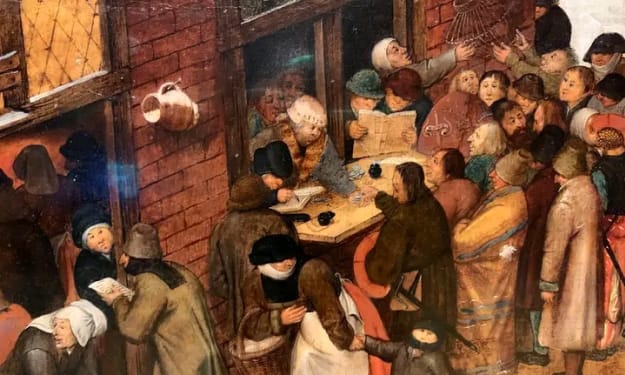
Among the rich tapestry of Renaissance art, The Census at Bethlehem by Pieter Brueghel the Younger stands out as a work of remarkable depth and storytelling. Created between 1579 and 1638, this painting is one of several versions attributed to Brueghel and his workshop. It is modeled on an earlier work by his father, Pieter Bruegel the Elder, a luminary of Netherlandish art. The painting in question, housed in the Palais des Beaux-Arts de Lille, is a striking oil on canvas that measures 111.5 cm by 164 cm. Versions of this masterpiece are also found in Brussels, Caen, and Maastricht, each offering subtle variations.
By Deji Akomolafeabout a year ago in Art
'Till Death We Do Art
There would be nothing divine in this world without art. Nature may surpass the divine to all intents and purposes, but like everything it absorbs and is absorbed by, it remains here, stuck on the surface of this world, ever-present, physically bound to the universe.
By Avocado Nunzella BSc (Psych) -- M.A.P 26 days ago in Art
Where Courage Meets the Sunrise
In a small village called Alara, nestled between rolling hills and vast fields, the sun rose each day bringing light to the world. But today was different. Today was the day of the Great Awakening, when the villagers learned of new depths of courage within themselves.
By Hamad Afridi 2 days ago in Art



Comments
There are no comments for this story
Be the first to respond and start the conversation.