
Unearthing History Beneath a McDonald’s: A 2,000-Year-Old Roman Road and Skeletons in Rome
Roman History

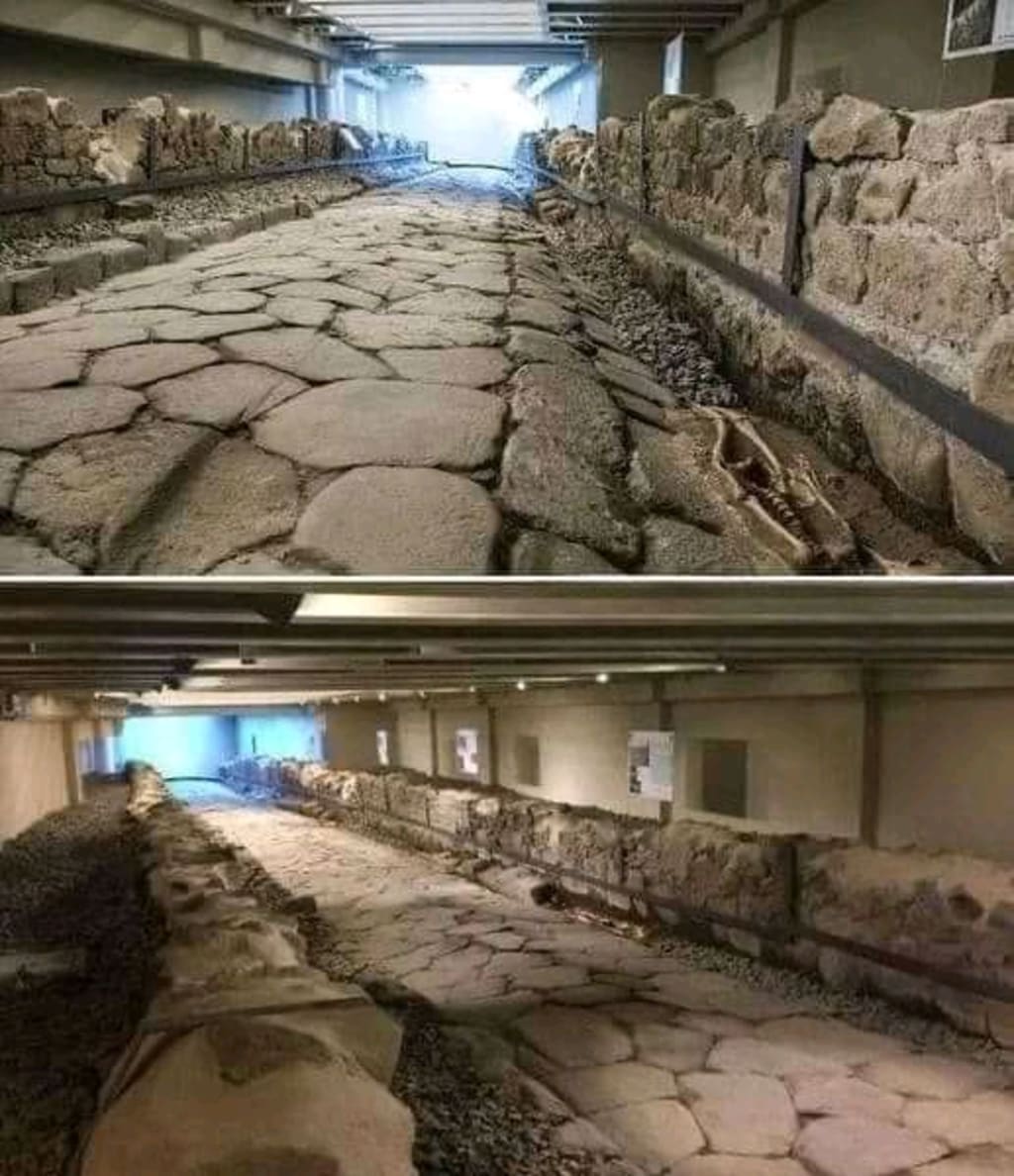
Rome, a city where history and modern life intertwine, is no stranger to archaeological discoveries. Yet, the unexpected uncovering of a 2,000-year-old Roman road with three skeletons beneath a McDonald’s restaurant in the Roman suburb of Frattocchie has captivated historians, archaeologists, and the public alike. This remarkable find is not just a testament to Rome’s layered history but also a fascinating glimpse into how the ancient and contemporary coexist in this eternal city.
The Discovery: Ancient Rome Beneath Modern Floors
The discovery was made in 2014 during construction for a new McDonald’s in Frattocchie, located along the Via Appia, one of the most iconic Roman roads. Beneath layers of soil, construction workers stumbled upon a 45-meter (148-foot) section of a Roman road, its basalt stones still intact, complete with visible wheel ruts left by ancient carts.
Dating back to the 2nd century BCE, this road was part of Rome’s legendary infrastructure that connected the capital to its vast empire. The road, with curbstones and drainage systems, speaks to the engineering brilliance of the Romans, whose infrastructure set standards that are still admired today.
Alongside the road, three skeletons were unearthed, adding an enigmatic layer to the site. These remains, believed to belong to individuals from the same era, offer a glimpse into the lives—and deaths—of those who walked these roads thousands of years ago.
Who Were the Skeletons?
The three skeletons found near the road have sparked curiosity and speculation. In ancient Rome, it was common for burials to take place along roadsides outside the city limits, complying with Roman laws that prohibited burials within urban areas. Tombs and graves along roads served as markers, ensuring that the dead would not be forgotten by travelers.
While the identities of these individuals remain unknown, their placement suggests they may have been ordinary Romans—travelers, workers, or perhaps residents of a nearby settlement. Future analysis of their bones and burial context may provide insights into their lives, such as their diet, health, and cause of death.
Roman Roads: Engineering Marvels
The road itself is a shining example of Roman engineering. Roads like this one were the lifeblood of the Roman Empire, enabling trade, military movement, and communication across vast distances. Constructed with layers of sand, gravel, and tightly fitted basalt stones, Roman roads were built to last.
The preservation of this road beneath modern Rome is a testament to the durability of Roman engineering. The visible wheel ruts indicate heavy use, painting a vivid picture of carts and wagons transporting goods, soldiers, and travelers through the bustling Roman countryside.
McDonald’s and Archaeology: A Unique Collaboration
Rather than halting the project, McDonald’s took an unprecedented step in preserving and showcasing this ancient site. Partnering with archaeologists and heritage organizations, the fast-food giant incorporated the archaeological find into its restaurant.
Today, visitors to the McDonald’s in Frattocchie can view the Roman road through a glass floor installed in the restaurant. Informational panels and lighting enhance the experience, turning the restaurant into an unexpected museum of sorts. This innovative approach demonstrates how businesses and archaeologists can collaborate to preserve history while integrating it into modern life.
The Layers of Rome
Rome’s history is famously layered, with ancient ruins often lying just beneath the surface of its modern streets and buildings. The discovery of the Roman road and skeletons beneath a McDonald’s highlights this unique characteristic of the city.
From the Colosseum to hidden underground catacombs, Rome is a city that lives and breathes its history. Even in the suburbs, where modern developments are more common, the past continues to reveal itself in surprising ways.
Bridging the Past and Present
The incorporation of the Roman road into the McDonald’s restaurant creates an accessible link between the past and present. Visitors who might not ordinarily visit a museum or archaeological site can now experience a slice of ancient Rome while dining. This blending of history and modernity makes the site both educational and approachable.
Such efforts also reflect the importance of preserving cultural heritage, even in unexpected places. By protecting and showcasing this road, the McDonald’s site serves as a reminder of the rich history that underpins the modern world.
Conclusion
The 2,000-year-old Roman road and skeletons discovered beneath a McDonald’s in Rome are more than just an archaeological curiosity. They represent the enduring legacy of the Roman Empire, the ingenuity of its infrastructure, and the stories of the people who lived and died in its shadow.
This discovery reminds us of the layers of history beneath our feet, waiting to be uncovered. It also demonstrates how modern spaces can embrace and celebrate the past, ensuring that ancient stories continue to inspire and educate future generations.
Whether you’re a history enthusiast or a casual visitor, this McDonald’s in Frattocchie offers a unique opportunity to experience a tangible connection to ancient Rome—proving that even in the most unexpected places, the echoes of history are never far away.
About the Creator
Keep reading
More stories from Deji Akomolafe and writers in History and other communities.
The Amethyst Legacy: The Exquisite Head of Queen Arsinoe II
Among the treasures of the ancient world, few artifacts encapsulate the splendor and sophistication of their era like the Head of Queen Arsinoe II. This exquisite amethyst carving, created during the 3rd century BCE in the Ptolemaic-Hellenistic period, represents not only a remarkable artistic achievement but also the legacy of a queen who played a pivotal role in Egypt’s history. Mounted in a modern gold setting, the piece—measuring a modest 2.2 × 1.5 × 1.4 cm—combines delicate craftsmanship with timeless beauty.
By Deji Akomolafeabout a year ago in History
Where the Pulse Ends
© 2026 Sai Marie Johnson The humidity in the city didn’t just hang; it leaned. It was a thick, stagnant soup of diesel exhaust, ozone, and the metallic tang of blood that drifted from the "Compliance Zones." Joe sat in his rusted sedan, his hands resting loosely on the steering wheel. He wasn't gripping it. He wasn't angry. Anger was a chemical spike, a biological inefficiency. Joe was simply... focused.
By Sai Marie Johnson3 days ago in History
Ludacris and Nelly draw backlash over bookings at MAGA-coded music festival
Ludacris and Nelly headlining a mostly right-wing event is good for them. It’s also great for the genre of hip hop. The two rap veterans have showcased their talents on other stages. Why can’t they perform for mostly MAGA folks and grab that bag?
By Skyler Saunders5 days ago in Beat


Comments
There are no comments for this story
Be the first to respond and start the conversation.