
Exploring The Census at Bethlehem: A Bruegel Masterpiece
Paint History

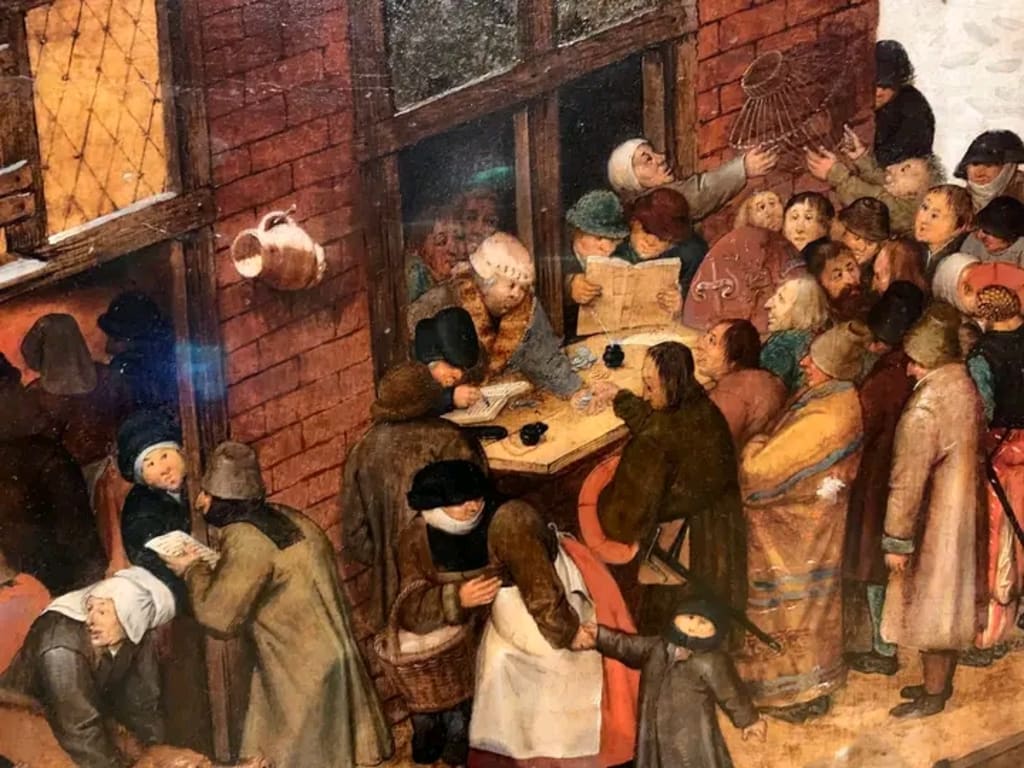
Among the rich tapestry of Renaissance art, The Census at Bethlehem by Pieter Brueghel the Younger stands out as a work of remarkable depth and storytelling. Created between 1579 and 1638, this painting is one of several versions attributed to Brueghel and his workshop. It is modeled on an earlier work by his father, Pieter Bruegel the Elder, a luminary of Netherlandish art. The painting in question, housed in the Palais des Beaux-Arts de Lille, is a striking oil on canvas that measures 111.5 cm by 164 cm. Versions of this masterpiece are also found in Brussels, Caen, and Maastricht, each offering subtle variations.
The Census at Bethlehem captures the timeless biblical story of Mary and Joseph traveling to Bethlehem for a census decreed by Caesar Augustus, but it does so in a uniquely Bruegelian manner. Set against the backdrop of a 16th-century Flemish village, the painting blends sacred history with contemporary life, providing a window into both the artist’s era and his genius.
The Artistic Legacy of Pieter Bruegel the Elder
To fully appreciate The Census at Bethlehem, one must understand its origins. Pieter Bruegel the Elder, often called "Peasant Bruegel," was renowned for his detailed, vibrant depictions of everyday life. He had a rare ability to weave moral and religious narratives into scenes of ordinary people, making profound statements through seemingly mundane activities.
This painting’s original composition belongs to Bruegel the Elder, whose works frequently critiqued the social and political realities of his time. His son, Pieter Brueghel the Younger, became an accomplished painter in his own right, often reproducing and adapting his father’s compositions. Through these reinterpretations, Brueghel the Younger preserved and extended his father’s legacy, ensuring that masterpieces like The Census at Bethlehem continued to resonate with audiences.
A Biblical Scene in a Flemish Setting
At first glance, The Census at Bethlehem appears to depict a bustling winter day in a Flemish village. Children play on the ice, peasants trudge through snow-laden streets, and traders gather in the town square. Yet, nestled within this everyday scene is the poignant story of Mary and Joseph.
In the foreground, Joseph leads a donkey carrying the heavily pregnant Mary, who is wrapped in a blue cloak. The couple’s humble appearance contrasts sharply with the lively crowd around them, symbolizing their isolation and the modesty of their divine mission. They are shown arriving to register for the census, a pivotal moment in the biblical narrative leading to the birth of Christ.
By situating the Holy Family in a contemporary Flemish village, Brueghel bridges the sacred and the secular. This technique makes the biblical story relatable to his audience, allowing them to see themselves in the characters and setting.
Themes and Symbolism
The Census at Bethlehem is rich in symbolism, reflecting both the spiritual and social concerns of its time.
1. The Census and Taxation
The central act of the census—a requirement of imperial governance—can be interpreted as a commentary on the bureaucratic burdens faced by ordinary people. In Brueghel’s time, the Netherlands was under Spanish rule, and heavy taxation was a source of widespread resentment. The painting subtly critiques these economic pressures by highlighting the hardships of the villagers.
2. Community and Division
The painting juxtaposes scenes of community, such as children skating and villagers gathered at the inn, with the isolation of Mary and Joseph. This contrast underscores the challenges faced by the Holy Family and invites viewers to reflect on themes of inclusion and exclusion in their own lives.
3. Winter Landscape as a Metaphor
The cold, snow-covered landscape symbolizes both the harshness of life and the spiritual warmth offered by faith. The frozen river and barren trees evoke a sense of desolation, but the presence of Mary and Joseph hints at hope and renewal.
The Composition
The painting’s composition is meticulously crafted to draw the viewer’s eye across the scene. Brueghel employs a diagonal perspective, leading from the crowded village in the background to the Holy Family in the foreground. This technique creates a sense of depth and movement, immersing viewers in the bustling activity of the village.
The use of color further enhances the painting’s narrative. While the palette is dominated by muted winter tones, Brueghel uses touches of red and blue to draw attention to key figures and details. For example, Mary’s blue cloak subtly distinguishes her from the crowd, emphasizing her importance without disrupting the overall harmony of the scene.
The Variations and Reproductions
As with many of Pieter Brueghel the Younger’s works, multiple versions of The Census at Bethlehem exist. Each reflects the collaborative nature of Brueghel’s workshop and the high demand for his paintings among collectors. While the version in the Palais des Beaux-Arts de Lille is considered a standout example, those in Brussels, Caen, and Maastricht offer their own nuances, showcasing slight differences in color, detail, and execution.
These variations highlight the adaptability of Brueghel’s compositions. By tailoring his works to different patrons and settings, Brueghel ensured their enduring appeal across Europe.
Legacy and Impact
The Census at Bethlehem endures as a masterpiece of storytelling and artistic skill. Its ability to blend biblical narrative with the realities of 16th-century life makes it both timeless and deeply rooted in its historical context.
For contemporary viewers, the painting offers a glimpse into the world of Renaissance Flanders, where art served as both a reflection of daily life and a vehicle for spiritual contemplation. It reminds us of the power of art to connect the sacred and the secular, the past and the present.
As one of Pieter Brueghel the Younger’s finest works, The Census at Bethlehem stands as a tribute to the enduring legacy of the Bruegel family—a legacy of artistry, innovation, and profound humanity.
About the Creator
Keep reading
More stories from Deji Akomolafe and writers in Art and other communities.
Titian’s Ecce Homo: A Renaissance Treasure in Romania
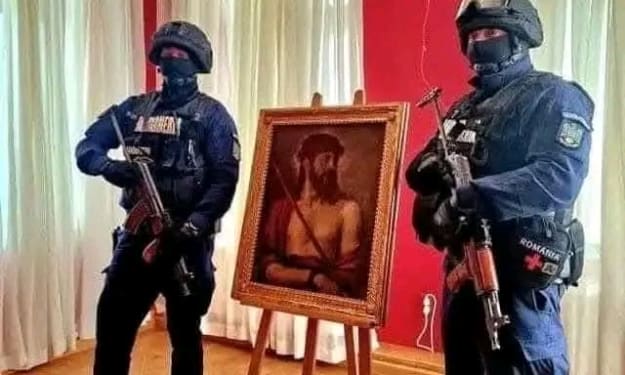
Hidden within the Municipal Museum in Romania lies a masterpiece of immense artistic and historical value—Titian’s Ecce Homo, created in 1543. This remarkable painting, the only known work of the Venetian master in Romania and Eastern Europe, is a cultural treasure that transcends its artistic merits. A beacon of the Italian Renaissance, it enriches local heritage and draws the attention of art lovers and experts from around the globe.
By Deji Akomolafeabout a year ago in Art
'Till Death We Do Art
There would be nothing divine in this world without art. Nature may surpass the divine to all intents and purposes, but like everything it absorbs and is absorbed by, it remains here, stuck on the surface of this world, ever-present, physically bound to the universe.
By Avocado Nunzella BSc (Psych) -- M.A.P 15 days ago in Art
Things to do in Casablanca:
Casablanca is one of lovely destinations around Morocco. Casablanca is considered the largest city in Morocco. It's famously known for its historic attractions, cultural sites and natural landscapes. Additionally, the city is well- known for its clean beaches offering visitors a lifetime experience. This blog cover the top things to do in Casablanca:
By Othmane Anaamabout 16 hours ago in Art
A Knight of the Seven Kingdoms Series Review (Season 1)
As one of the biggest properties in fantasy, A Song of Ice and Fire remains immensely popular with audiences. After reaching far into the past with House of the Dragon, a second spin-off was on the cards. A Knight of the Seven Kingdoms serves up a bite-sized slice of action and drama, but it still claims a spot among the best small-screen titles.
By Robert Cain4 days ago in Geeks



Comments
There are no comments for this story
Be the first to respond and start the conversation.