
Kingsgate: A 14th-Century Portal to Winchester’s Past
Ancient History

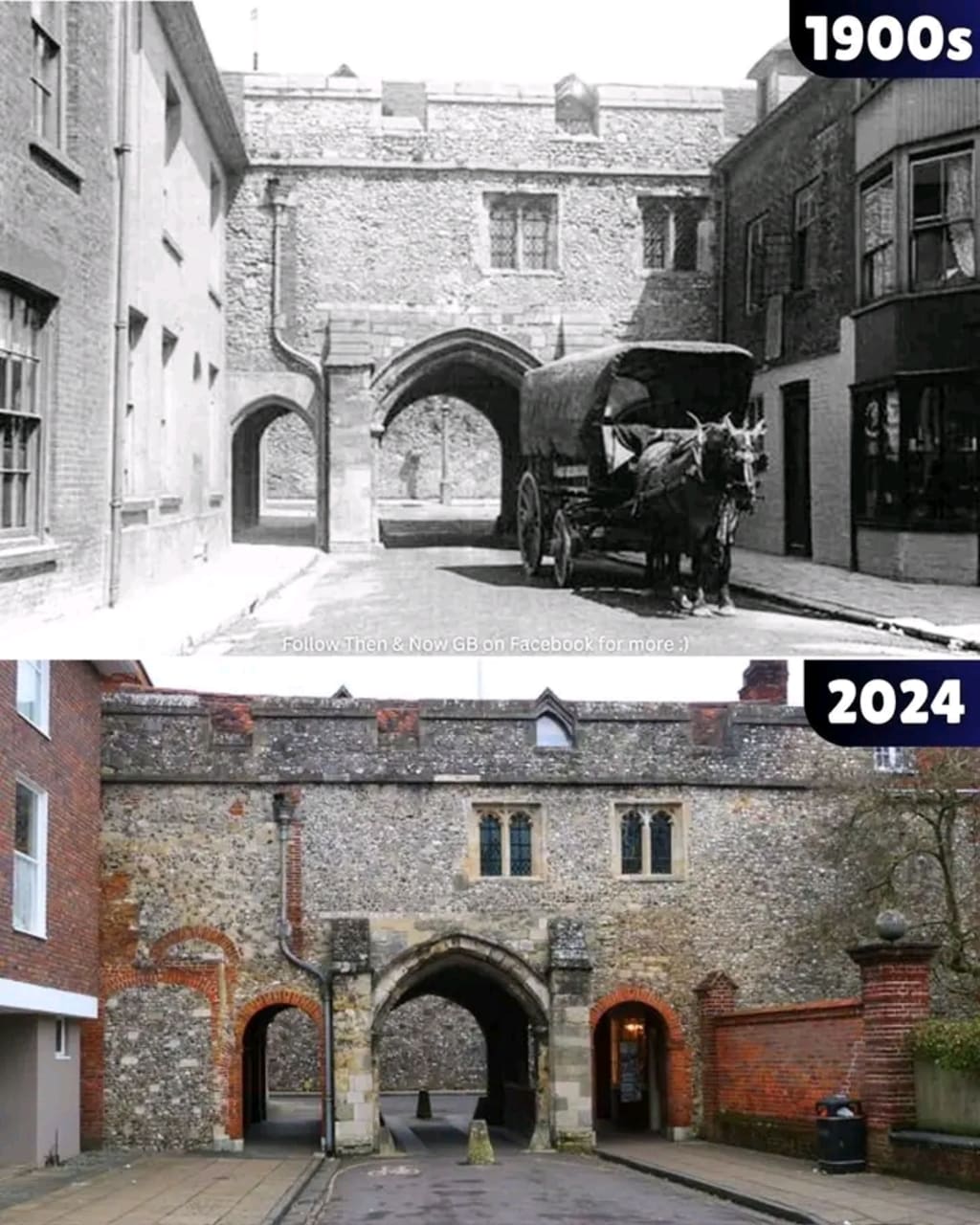
In the heart of the historic city of Winchester stands Kingsgate, a remarkable relic of medieval England. Constructed in the 14th century, it is one of only two surviving medieval gates in the city, a testament to Winchester’s rich and storied past. While much of the surrounding landscape has changed—most notably, the removal of nearby original buildings in the 1930s—Kingsgate remains steadfast, bridging centuries of history.
This architectural gem invites us to explore not only its own enduring story but also the broader tale of a city that was once the ancient capital of England.
The Role of Gates in Medieval Winchester
In medieval times, gates like Kingsgate served both practical and symbolic purposes. They were integral to the defensive walls that encircled the city, controlling access and offering protection from potential invaders. Yet, gates were also ceremonial structures, marking the threshold between the bustling urban life within the walls and the wider countryside beyond.
Kingsgate likely played a vital role in Winchester’s daily life, overseeing travelers and traders who came to the city. As one of the principal gateways, it would have witnessed the comings and goings of pilgrims heading to the magnificent Winchester Cathedral, as well as merchants attending the city’s famous fairs.
The History and Architecture of Kingsgate
Kingsgate, whose name means “King’s Gate,” was part of the medieval fortifications that defended Winchester. Built in the 14th century, the gate showcases the solid, functional architecture of the period, designed to withstand sieges and attacks. Its robust stone construction, rounded arch, and narrow passageway reflect the priorities of medieval defense.
However, Kingsgate is not solely a military structure; it also has a uniquely spiritual dimension. Above the gate lies the small, charming Church of St. Swithun-upon-Kingsgate, which has stood there since at least the 13th century, predating the current gate structure. Dedicated to St. Swithun, the patron saint of Winchester, this tiny church was originally built to serve residents living within the city walls.
The combination of a gate and a church is unusual but not unheard of in medieval England. It reflects the close relationship between faith and daily life during this period, where even defensive structures could house spaces for worship.
The Changes of the 20th Century
Like many historical landmarks, Kingsgate has experienced significant changes over time. The most dramatic alteration came in the 1930s when the original buildings near the arch were removed. These structures, which had likely developed organically around the gate over centuries, were cleared to improve traffic flow and preserve the gate as a standalone monument.
While this removal altered the historic setting of Kingsgate, it also allowed the gate itself to take center stage. Today, its medieval architecture can be appreciated more fully, unencumbered by the additions of later centuries.
A Living Landmark
Kingsgate remains a vital part of Winchester’s identity, blending the past with the present. Its narrow passage continues to accommodate pedestrians and limited traffic, allowing modern visitors to experience the city as medieval travelers might have done.
The Church of St. Swithun-upon-Kingsgate still functions as a place of worship, maintaining an atmosphere of quiet reflection. The church’s modest size and simplicity contrast with the grandeur of nearby Winchester Cathedral, offering a more intimate connection to the spiritual heritage of the city.
Exploring Kingsgate Today
For visitors to Winchester, Kingsgate offers a unique opportunity to step back in time. Walking through the gate’s archway, one can imagine the vibrant medieval city it once guarded. The gate provides access to College Street, a charming area known for its historic buildings and literary connections—most notably, Jane Austen’s final home, where she spent her last days in 1817.
A visit to the Church of St. Swithun-upon-Kingsgate is also highly recommended. The church’s interior is simple yet evocative, with wooden beams, plain plaster walls, and a sense of timeless tranquility. From its small windows, visitors can glimpse views of the gate below, offering a unique perspective on the interplay between architecture and history.
Kingsgate in Context
Kingsgate is one of two surviving medieval gates in Winchester, the other being Westgate. Together, these gates provide a tangible connection to the city’s medieval past, reminding us of Winchester’s importance as a political, religious, and cultural hub.
Winchester’s prominence peaked during the Anglo-Saxon and early medieval periods when it served as the capital of Wessex and later of England under King Alfred the Great. By the 14th century, when Kingsgate was constructed, the city was still a vital center of trade and pilgrimage, though its political influence had begun to wane.
Preservation and Legacy
The survival of Kingsgate is a testament to the value of preserving historical landmarks. While many medieval gates in England have been lost to war, urban expansion, or neglect, Kingsgate has endured, thanks to the efforts of conservationists and the appreciation of the local community.
Today, it stands not only as a reminder of medieval Winchester but also as an emblem of the city’s resilience and adaptability. It connects us to a world that, while vastly different from our own, continues to influence the character and culture of modern Winchester.
Conclusion
Kingsgate is more than just an architectural feature; it is a portal to Winchester’s past, a symbol of the city’s medieval heritage, and a living link between centuries. From its construction in the 14th century to its role in contemporary Winchester, it tells a story of defense, devotion, and adaptation.
As visitors pass through its archway, they are not merely crossing a threshold—they are stepping into history. Kingsgate invites us to pause, reflect, and appreciate the layers of time that have shaped this extraordinary city.
About the Creator
Keep reading
More stories from Deji Akomolafe and writers in History and other communities.
Haddon Hall’s Long Gallery: A Timeless Treasure in Watercolour and Reality
Haddon Hall, a breathtakingly preserved medieval manor house in Derbyshire, holds countless treasures within its ancient walls, but none are as enchanting as its Long Gallery. Constructed in 1580 during the Elizabethan era, this architectural masterpiece is celebrated as one of the finest surviving examples of a long gallery in England. Its enduring beauty has inspired generations, captured not only in art but also in its continued existence today. A comparison of an old watercolour painting of the Long Gallery from 1839 with its present-day appearance reveals a story of preservation, heritage, and the timeless appeal of Elizabethan design.
By Deji Akomolafeabout a year ago in History
Charlie Chaplin — The Tramp Who Conquered the World
Charlie Chaplin was not born into comfort or certainty. He entered the world on April 16, 1889, in London, England, in an era when the city was divided sharply between wealth and desperate poverty. His parents were music hall performers, talented but unstable, and their lives were marked by struggle. Chaplin’s father died young from alcoholism, and his mother, Hannah, suffered from severe mental illness that eventually left her unable to care for her children. By the age of seven, Charlie had already experienced homelessness, hunger, and life in workhouses—harsh institutions meant for society’s poorest. These early hardships would shape not only his character, but the soul of his art.
By The best writer about 9 hours ago in History




Comments
There are no comments for this story
Be the first to respond and start the conversation.