
The Coronation of Henry VII and the Creation of Westminster Abbey’s Lady Chapel
Ancient England

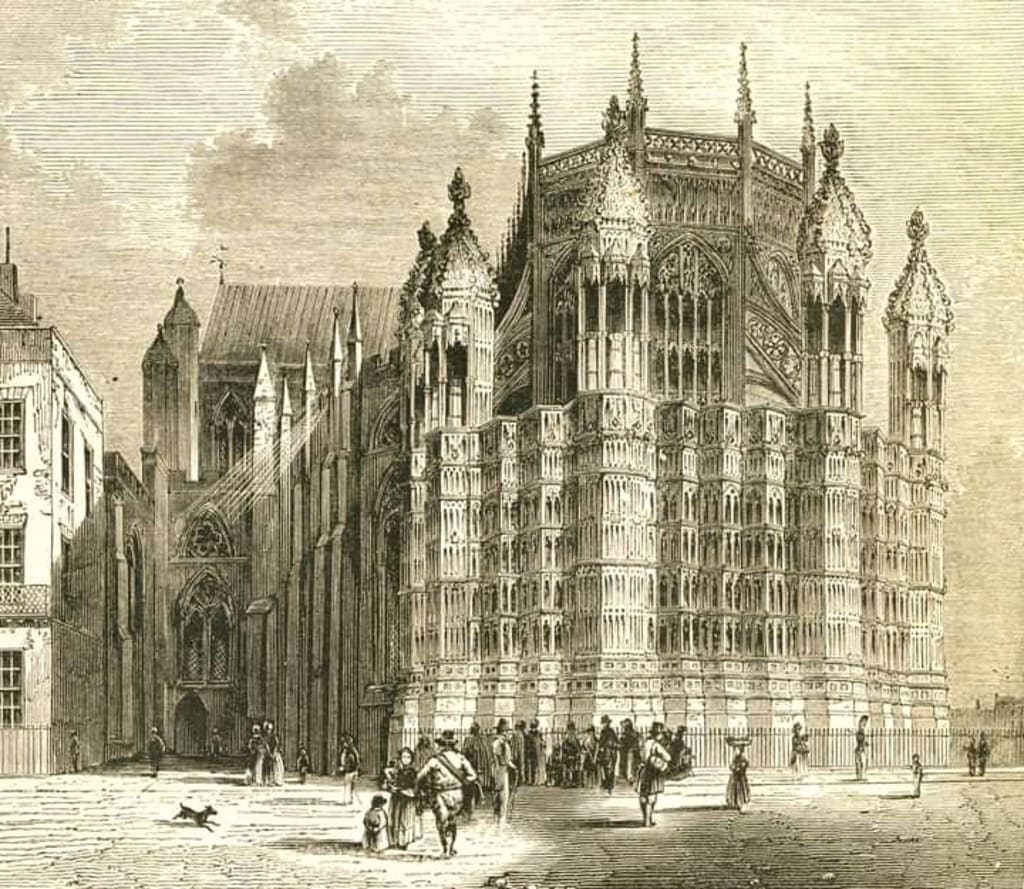
The year was 1485, a time of turbulence and bloodshed in England, as the Wars of the Roses, a series of civil wars between the houses of Lancaster and York, reached its dramatic conclusion. On August 22, 1485, Henry Tudor defeated King Richard III at the Battle of Bosworth Field, emerging as the last man standing in a decades-long struggle for the English throne. Soon after, Henry was crowned King Henry VII in Westminster Abbey, marking the beginning of the Tudor dynasty and a new chapter in England's history. To cement his legitimacy as king, Henry undertook several projects, one of the most notable being the commissioning of the magnificent Lady Chapel at Westminster Abbey.
Henry VII’s Coronation: A Symbolic Beginning
Henry VII was crowned at Westminster Abbey on October 30, 1485, only two months after his decisive victory at Bosworth Field. His coronation was laden with symbolism, a deliberate effort to portray himself as the divinely chosen ruler of England. This was vital, as his claim to the throne was tenuous at best. Henry was a distant relative of the Lancastrian line, descended through his mother, Margaret Beaufort, from John of Gaunt, a son of Edward III. However, his lineage was tainted by questions of illegitimacy, and his rise to power relied heavily on his victory in battle rather than a direct hereditary claim.
By holding his coronation before marrying Elizabeth of York, the daughter of Edward IV, Henry emphasized that his right to the throne came from divine will and his own merit, not through his future wife’s stronger Yorkist claim. Nevertheless, their union would later symbolize the reconciliation of the warring factions and the unification of England under the Tudor rose—a fusion of the red rose of Lancaster and the white rose of York.
The Lady Chapel: A Monument to Legitimacy and Devotion
One of Henry VII’s most enduring contributions to England’s architectural and cultural heritage was his commissioning of the Lady Chapel at Westminster Abbey. Officially known as the Henry VII Chapel, it stands as a testament to his desire to solidify his legacy, demonstrate his piety, and legitimize his rule.
The Lady Chapel, begun in 1503 and completed in 1519, is one of the finest examples of late medieval architecture in England. It replaced an earlier chapel dedicated to the Virgin Mary, and its construction showcased the lavishness and sophistication associated with the Tudor monarchy.
Design and Architectural Significance
Designed in the Perpendicular Gothic style, the Lady Chapel is a marvel of craftsmanship and ingenuity. Its fan-vaulted ceiling is particularly striking, a masterpiece of delicate stonework that seems to defy gravity. The intricate detail of the vaulting, with its lace-like patterns and hanging pendants, captures the eye and reflects the skill of the masons who brought Henry’s vision to life.
The chapel is filled with heraldic imagery, reinforcing the legitimacy of the Tudor dynasty. The Tudor rose features prominently, appearing in the stone carvings, stained glass windows, and decorative motifs throughout the chapel. Alongside it are other symbols of power and stability, such as the Beaufort portcullis, the fleur-de-lis, and the crowned lion. These elements served as constant reminders of Henry's authority and the divine favor he claimed to possess.
A Center for Devotion
Dedicated to the Virgin Mary, the chapel was intended as a place of worship and a spiritual refuge. Henry’s devotion to the Virgin was well known, and he sought her intercession to safeguard his reign and dynasty. The chapel housed a shrine to the Virgin, which attracted pilgrims and reinforced the association between Henry’s rule and divine will.
In addition to its religious significance, the Lady Chapel served as a burial place for Henry and his descendants. Henry VII and his wife, Elizabeth of York, lie in a magnificent tomb crafted by the Italian sculptor Pietro Torrigiano. Their gilded effigies, surrounded by ornate bronze screens, rest in eternal peace beneath the chapel’s soaring vaults. This tomb not only honored the king and queen but also symbolized the unification of the warring houses and the stability brought about by the Tudor dynasty.
Legacy of the Lady Chapel
The Lady Chapel remains a jewel of Westminster Abbey and a lasting symbol of Henry VII’s reign. It reflects his astute understanding of the importance of symbolism and his determination to secure his dynasty’s place in history. By commissioning the chapel, Henry aligned himself with the divine, reinforced his authority, and left a legacy that endures to this day.
In its stunning architecture, the Lady Chapel encapsulates the ideals of the Tudor period: a blend of piety, power, and artistic achievement. It stands as a reminder of the transformative impact of Henry VII’s rule, which brought an end to the Wars of the Roses and laid the foundation for one of England’s most celebrated dynasties.
Today, visitors to Westminster Abbey can marvel at the beauty and craftsmanship of the Lady Chapel, a fitting tribute to a king who rose from unlikely beginnings to change the course of English history. As one gazes up at its soaring ceiling or walks among its intricately carved stalls, it is impossible not to feel the weight of its history—a history shaped by the ambitions and vision of Henry VII.
Through the Lady Chapel, Henry VII’s legacy is etched not only into the stone of Westminster Abbey but also into the very fabric of England’s identity. His reign marked the end of medieval England and the beginning of a new era, one defined by the unity and grandeur he so fervently sought to achieve.
About the Creator
Keep reading
More stories from Deji Akomolafe and writers in History and other communities.
Unearthing History Beneath a McDonald’s: A 2,000-Year-Old Roman Road and Skeletons in Rome
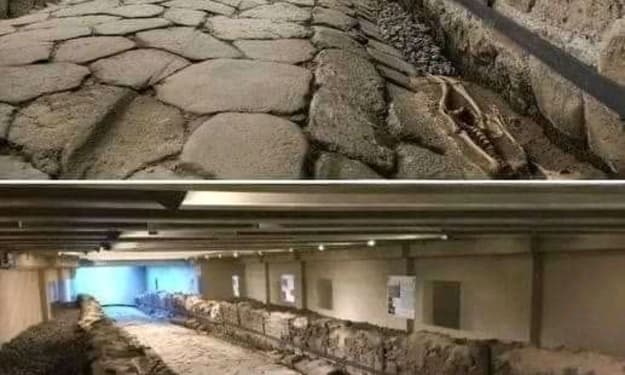
Rome, a city where history and modern life intertwine, is no stranger to archaeological discoveries. Yet, the unexpected uncovering of a 2,000-year-old Roman road with three skeletons beneath a McDonald’s restaurant in the Roman suburb of Frattocchie has captivated historians, archaeologists, and the public alike. This remarkable find is not just a testament to Rome’s layered history but also a fascinating glimpse into how the ancient and contemporary coexist in this eternal city.
By Deji Akomolafeabout a year ago in History
Stanislav Kondrashov Oligarch Series: The Roots of Oligarchy in the Mediterranean
When people hear the word “oligarchy,” they often think of modern contexts. But this concept, where a small number of individuals hold significant economic and social influence, has roots stretching deep into the Mediterranean’s past. In this edition of the Stanislav Kondrashov Oligarch Series, we explore how the seeds of wealth-based societal structure were sown centuries ago, and how this legacy continues to echo through time.
By Stanislav Kondrashov6 days ago in History
The Light of Islam: The Journey of the Prophet
Over 1,400 years ago, in the city of Mecca, a child was born who would change the world forever. His name was Muhammad ﷺ, and he belonged to the noble tribe of Quraysh. From the beginning, his life was marked by trials and simplicity. Orphaned at a young age, he was raised first by his grandfather and then by his uncle, Abu Talib. Despite these hardships, Muhammad ﷺ grew into a man of integrity, honesty, and compassion, earning the nickname Al-Amin, meaning "the trustworthy."
By The best writer 3 days ago in History
Miss Persephone's Manual to a Seemingly Ordinary Life
Miss Persephone was found at the dining table, her blue eyes swollen, her tears arriving and retreating like the tides of the ocean. Earlier that day, her family had visited her in the retirement home where she had lived for eight years. It was her eightieth birthday.
By Imola Tóth4 days ago in Fiction



Comments
There are no comments for this story
Be the first to respond and start the conversation.