Deji Akomolafe
Bio
Stories (512)
Filter by community
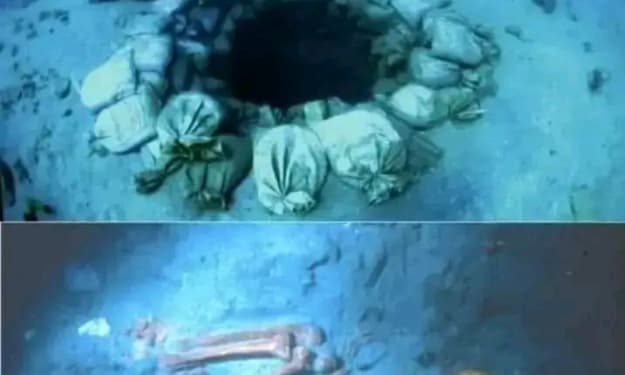
Atlit Yam: A 9,000-Year-Old Window into the Neolithic Past
Submerged beneath the waters off the coast of Atlit, Israel, lies one of the most remarkable archaeological discoveries of our time: Atlit Yam, a 9,000-year-old Neolithic village. This ancient settlement, now resting 8 to 12 meters underwater, provides a detailed glimpse into the lives of people during the final Pre-Pottery Neolithic period, which dates back to between 6900 and 6300 BC. Atlit Yam, which spans around 10 acres, is not only an impressive testament to human ingenuity and survival but also a treasure trove of information about early agriculture, freshwater management, and social structures.
By Deji Akomolafeabout a year ago in History
The Ancient Origins of Impalement: The Assyrians and the Birth of a Brutal Punishment
When one hears the word “impalement,” many might immediately think of Vlad the Impaler, the 15th-century ruler of Wallachia who used this brutal technique to terrorize his enemies and defend his kingdom against the Ottoman Empire. However, the history of impalement stretches back much further, far beyond Vlad Dracula’s reign or the Ottomans. In fact, the Assyrians, one of the most powerful and advanced civilizations of the ancient Near East, were the first to use impalement as a method of punishment and psychological warfare on a large scale. This gruesome practice, employed from around the 9th to the 7th centuries BCE, became one of the defining features of Assyrian rule, and its legacy would echo throughout history.
By Deji Akomolafeabout a year ago in History
The Remarkable Escape of Henry “Box” Brown: A Journey to Freedom
In the annals of American history, there are few stories of escape as daring and ingenious as that of Henry "Box" Brown. Born into the brutal system of slavery in Richmond, Virginia, in 1815, Henry Brown would go on to devise one of the most extraordinary methods of achieving freedom. In 1849, after enduring 33 years of enslavement, Brown famously shipped himself in a wooden box from Richmond to Philadelphia, traveling over 350 miles to secure his liberty. His story is not only one of personal courage but also of the relentless pursuit of freedom in the face of unspeakable adversity.
By Deji Akomolafeabout a year ago in History
From Fertilizer to Delicacy: The Surprising History of Lobster in America
In today’s culinary world, lobster is often synonymous with luxury—a decadent treat reserved for special occasions or fine dining experiences. However, the journey of the lobster in American history is far more humble and intriguing than its current status suggests. Once abundant to the point of washing ashore in piles on Massachusetts beaches during the 1700s, lobsters were not always revered as a delicacy. In fact, they were once considered the "poor man’s chicken," a lowly crustacean primarily used for fertilizer or as food for prisoners and slaves.
By Deji Akomolafeabout a year ago in History
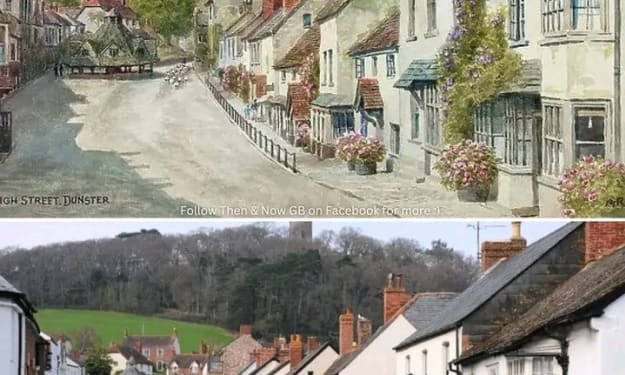
Dunster: A Journey Through Time in Somerset's Medieval Village
Nestled in the heart of Somerset, England, lies the quaint and remarkably well-preserved medieval village of Dunster. Known for its rich history, picturesque setting, and enchanting charm, Dunster offers visitors a rare opportunity to step back in time and experience life in a village that has remained largely unchanged for centuries. Boasting over 200 listed buildings, Dunster is not only an architectural treasure trove but also a living monument to England’s medieval past.
By Deji Akomolafeabout a year ago in History
Europe’s Oldest Road: A Minoan Engineering Marvel on the Island of Crete
Nestled on the picturesque island of Crete, amidst the ancient ruins of palaces and temples, lies a truly remarkable piece of history: Europe's oldest known road. Over 3,500 years old, this Minoan road stands as a testament to the engineering prowess of the Minoan civilization, one of the most advanced and influential cultures of the Bronze Age. Spanning approximately 50 kilometers, the road connected the great palace of Knossos—the political and ceremonial center of Minoan Crete—with the ancient cities of Gortyn and Lebena.
By Deji Akomolafeabout a year ago in History
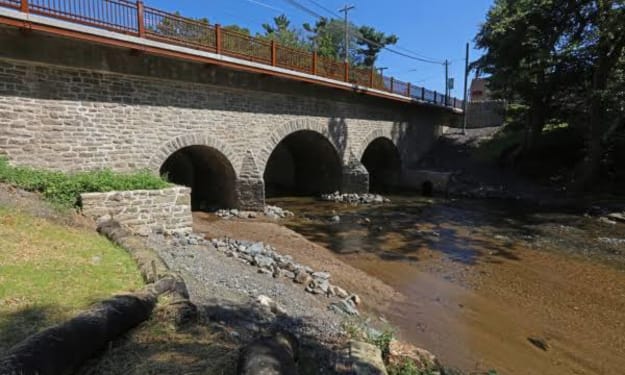
The Frankford Avenue Bridge: America’s Oldest Bridge Still in Use
Tucked away in the bustling city of Philadelphia is a relic from a time long before the United States existed as a nation—the Frankford Avenue Bridge, also known as the King’s Highway Bridge. This unassuming stone structure, built in 1697, holds the distinction of being the oldest bridge in the United States still in use, predating the country itself by nearly 80 years. The bridge was erected to provide a crucial crossing over Pennypack Creek and remains an enduring symbol of American colonial engineering, quietly serving both local and modern traffic for more than three centuries.
By Deji Akomolafeabout a year ago in History
The Terracotta Army: A Monumental Legacy of China’s First Emperor
In 1974, in the city of Xi'an, China, a simple farming task led to one of the greatest archaeological discoveries of the 20th century. As a farmer worked the dry earth of his field, he unearthed fragments of clay that would later reveal themselves to be part of a massive underground army—a stunning collection of more than 8,000 life-sized terracotta soldiers, crafted over 2,200 years ago to accompany and protect China’s first emperor, Qin Shi Huang, in the afterlife.
By Deji Akomolafeabout a year ago in History
The Rippled Wonder: Unearthing One of the Largest Roman Mosaic Floors in Antakya, Turkey. AI-Generated.
During the construction of a luxury hotel in Antakya, Turkey, an unexpected treasure was unearthed that left archaeologists, historians, and art enthusiasts in awe. Beneath the modern soil lay one of the largest Roman mosaic floors ever discovered—a beautifully intricate masterpiece that offers a rare window into the lives and artistic achievements of ancient Roman civilization. What makes this discovery even more extraordinary is not just its size and intricacy but the unusual rippled effect that has transformed its surface, a testament to the geological forces that have shaped the region for centuries.
By Deji Akomolafeabout a year ago in History
The Human Statue of Liberty: A 1918 Patriotic Tribute Formed by 18,000 Soldiers
In 1918, a powerful and unusual tribute to American ideals was made—not in stone or metal, but in human form. At Camp Dodge in Des Moines, Iowa, an astonishing scene unfolded: 18,000 soldiers stood in formation to create a living, breathing replica of the Statue of Liberty. This remarkable human sculpture, captured in a famous photograph, symbolized not just the nation’s enduring values of freedom and democracy, but also the collective strength and unity of the United States during one of the most challenging times in its history: World War I.
By Deji Akomolafeabout a year ago in History
Oldest Fingerprint: A 2,400-Year-Old Bog Body and a Glimpse into Iron Age Rituals
In 1950, deep within a peat bog in Bjældskovdal, Denmark, a discovery was made that would fascinate archaeologists and historians for decades to come. The nearly perfectly preserved body of a man, later named the “Tollund Man,” was unearthed by two farmers cutting peat. What made this find extraordinary was the fact that the man’s features were so intact that he appeared to have only recently died. This remarkable preservation, caused by the unique conditions of the peat bog, revealed a man who lived during the Iron Age, some 2,400 years ago. His story, a mixture of ritual, sacrifice, and daily life in ancient Scandinavia, has captivated researchers ever since.
By Deji Akomolafeabout a year ago in History
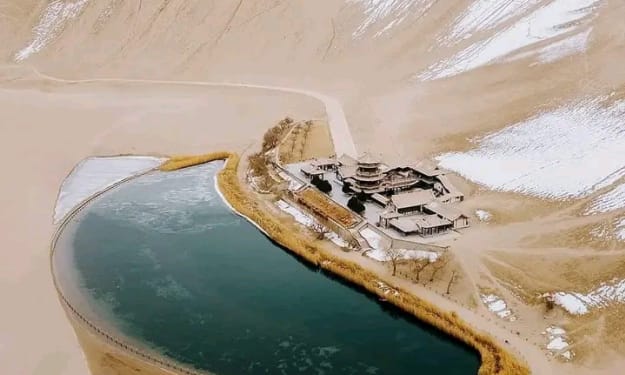
Crescent Moon Lake: A Timeless Oasis in the Sands of the Gobi Desert
Crescent Moon Lake: A Timeless Oasis in the Sands of the Gobi Desert Nestled at the foot of the towering Mingsha Mountains in China’s Gobi Desert lies a breathtaking natural wonder that has captured the imagination of travelers for centuries—Crescent Moon Lake (月牙泉). This serene, crescent-shaped oasis, known for its crystal-clear waters and its contrasting backdrop of golden sand dunes, has served as a lifeline for Silk Road travelers and remains a symbol of nature’s resilience in the face of the harsh desert environment.
By Deji Akomolafeabout a year ago in Earth