
The Remarkable Escape of Henry “Box” Brown: A Journey to Freedom
Smart escape

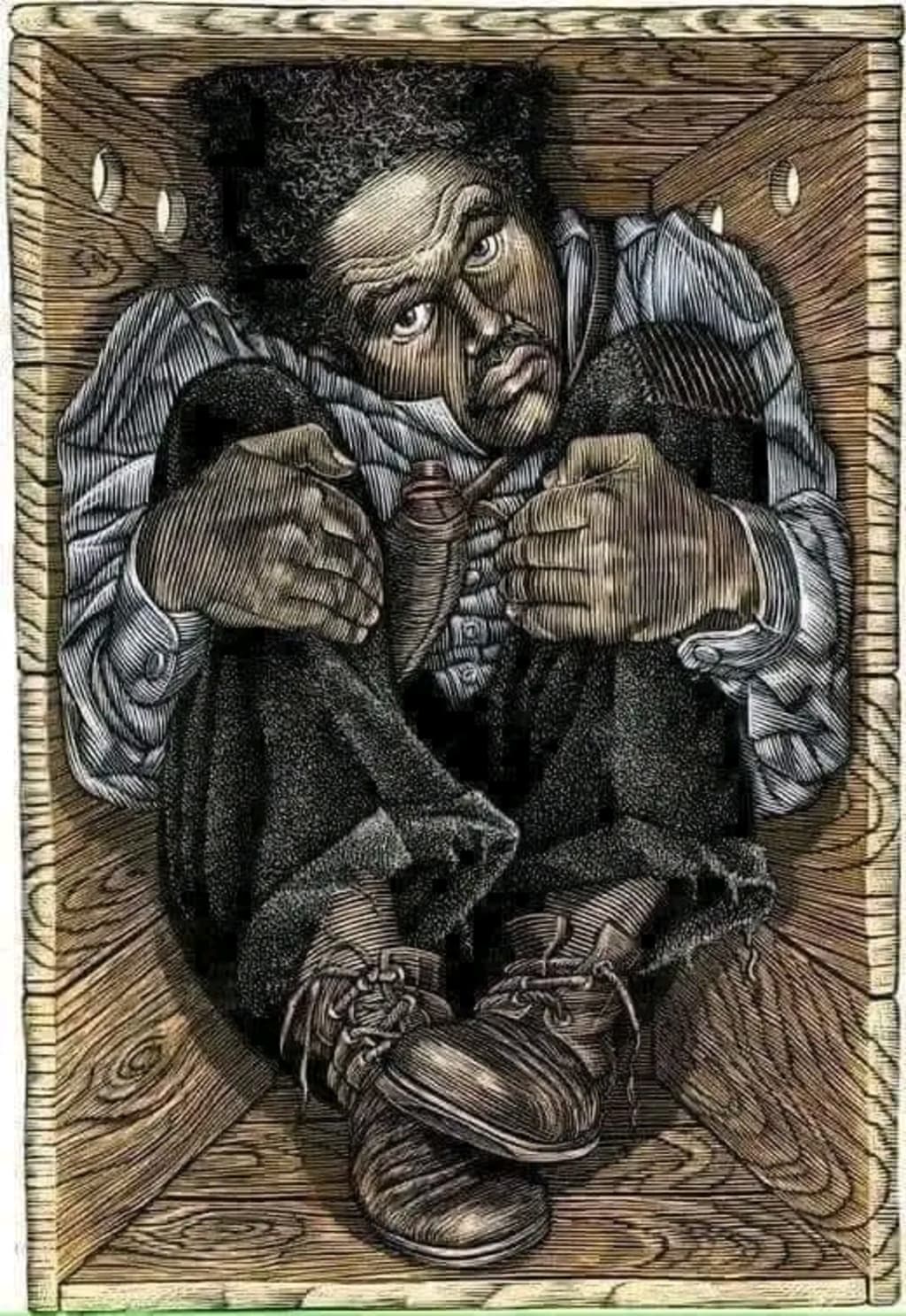
In the annals of American history, there are few stories of escape as daring and ingenious as that of Henry "Box" Brown. Born into the brutal system of slavery in Richmond, Virginia, in 1815, Henry Brown would go on to devise one of the most extraordinary methods of achieving freedom. In 1849, after enduring 33 years of enslavement, Brown famously shipped himself in a wooden box from Richmond to Philadelphia, traveling over 350 miles to secure his liberty. His story is not only one of personal courage but also of the relentless pursuit of freedom in the face of unspeakable adversity.
Life in Bondage
Henry Brown spent much of his early life enslaved on a Virginia plantation, enduring the physical and psychological hardships that came with his condition. Like millions of other enslaved African Americans, he had no control over his own life. His days were spent working tirelessly, and he had little hope for a future beyond the constant cruelty of bondage.
Brown’s personal life was also marred by the cruelty of slavery. He had a wife and children, but the institution of slavery tore them apart. His family was sold to a different owner and sent away, a heart-wrenching reality for many enslaved families. The separation was a turning point for Brown; it was then that he resolved to escape and reclaim control over his life.
A Plan Takes Shape
By the mid-19th century, abolitionist movements in the Northern states were gaining momentum. Philadelphia, in particular, was a hub for abolitionists, and it became a safe haven for those seeking to escape the horrors of slavery in the South. It was to Philadelphia that Henry Brown sought freedom, but the question was how to get there.
Brown began to hatch an idea so bold and dangerous that it seemed impossible: he would ship himself in a cargo box to Philadelphia. The concept was simple, but the execution required careful planning and the help of trusted allies. Brown reached out to a free black man, James C. A. Smith, and an abolitionist shoemaker, Samuel Alexander Smith (no relation), both of whom supported his plan and agreed to help him.
The box that would carry Brown to freedom was constructed from wood and measured just 3 feet long, 2 feet wide, and 2.5 feet deep (about 60 centimeters wide). It was small, barely large enough for him to sit inside. To ensure his survival during the journey, small air holes were drilled into the box, and Brown equipped himself with a single bladder of water and a few biscuits to sustain him.
On March 23, 1849, Brown climbed into the box, which was nailed shut and labeled as “dry goods”. The box was shipped by Adams Express, a popular shipping company of the time, and the destination was the office of an abolitionist in Philadelphia. Thus, Brown’s perilous journey to freedom began.
The Journey to Freedom
The journey from Richmond to Philadelphia was 350 miles and would take 27 hours. Brown was transported via wagon, steamboat, and railroad, enduring a harrowing trip filled with danger and discomfort. The cramped conditions of the box made it difficult for him to breathe, and at several points, he was placed upside down, causing immense physical pain.
Despite these challenges, Brown remained resolute. He knew that if he was discovered, the consequences would be dire. Slaves attempting to escape were often subjected to brutal punishments, including torture or death, and those aiding in their escape faced harsh penalties. But Brown was willing to risk everything for the chance to be free.
Arrival in Philadelphia
After a grueling day of travel, Brown’s box finally arrived in Philadelphia at the office of the Pennsylvania Anti-Slavery Society. When the box was opened by abolitionists, including James Miller McKim, Brown emerged, weak but alive. His first words upon emerging from the box were, “How do you do, gentlemen?” This simple greeting marked the end of his life in bondage and the beginning of his new life as a free man.
Brown’s escape was celebrated by the abolitionist community, and he quickly became a symbol of resilience and ingenuity. His story spread across the North, inspiring others to seek freedom and highlighting the brutal realities of slavery. Brown began to share his story publicly, becoming a speaker and performer in the abolitionist movement.
A Life of Freedom
Henry “Box” Brown spent the remaining 50 years of his life as a free man. After his daring escape, he became a public speaker, sharing his story at abolitionist meetings and events across the country. He published a memoir titled “Narrative of the Life of Henry Box Brown”, which recounted his journey from enslavement to freedom. His story captivated audiences and helped to further the cause of abolition.
In addition to his speaking engagements, Brown also became a magician and performer, incorporating elements of his escape into his act. His performances, which often involved re-enacting his dramatic journey in a box, were a unique way of keeping his story alive and engaging audiences with the plight of enslaved people.
Brown eventually moved to England, where he continued his abolitionist work and performed for many years. He lived out the rest of his life in relative obscurity but remained a powerful symbol of the lengths to which people would go to secure their freedom.
Legacy of Henry "Box" Brown
Henry “Box” Brown’s story is a testament to the strength of the human spirit and the unyielding desire for freedom. His escape in a wooden box remains one of the most remarkable tales of ingenuity and courage in American history. Brown’s journey serves as a reminder of the brutal realities of slavery and the incredible resilience of those who fought to escape its grasp.
Today, Brown’s legacy lives on as a symbol of the abolitionist movement and the broader struggle for civil rights and human dignity. His extraordinary story continues to inspire and resonate with those who fight for freedom and justice around the world.
About the Creator
Keep reading
More stories from Deji Akomolafe and writers in History and other communities.
From Fertilizer to Delicacy: The Surprising History of Lobster in America
In today’s culinary world, lobster is often synonymous with luxury—a decadent treat reserved for special occasions or fine dining experiences. However, the journey of the lobster in American history is far more humble and intriguing than its current status suggests. Once abundant to the point of washing ashore in piles on Massachusetts beaches during the 1700s, lobsters were not always revered as a delicacy. In fact, they were once considered the "poor man’s chicken," a lowly crustacean primarily used for fertilizer or as food for prisoners and slaves.
By Deji Akomolafeabout a year ago in History
Sometimes It's Like That and That'sThe Way It Is
It was the late 1960s, and ten-year-old Gloria Coleman was standing with her grandmother on the side of the highway waiting for the bus. As the Greyhound pulled up, it seemed monstrous and intimidating. Grandma Elizabeth grabbed Gloria's hand, holding it tightly as they boarded.
By Cheryl E Preston3 days ago in Fiction




Comments
There are no comments for this story
Be the first to respond and start the conversation.