
Dunster: A Journey Through Time in Somerset's Medieval Village
Preserved Village

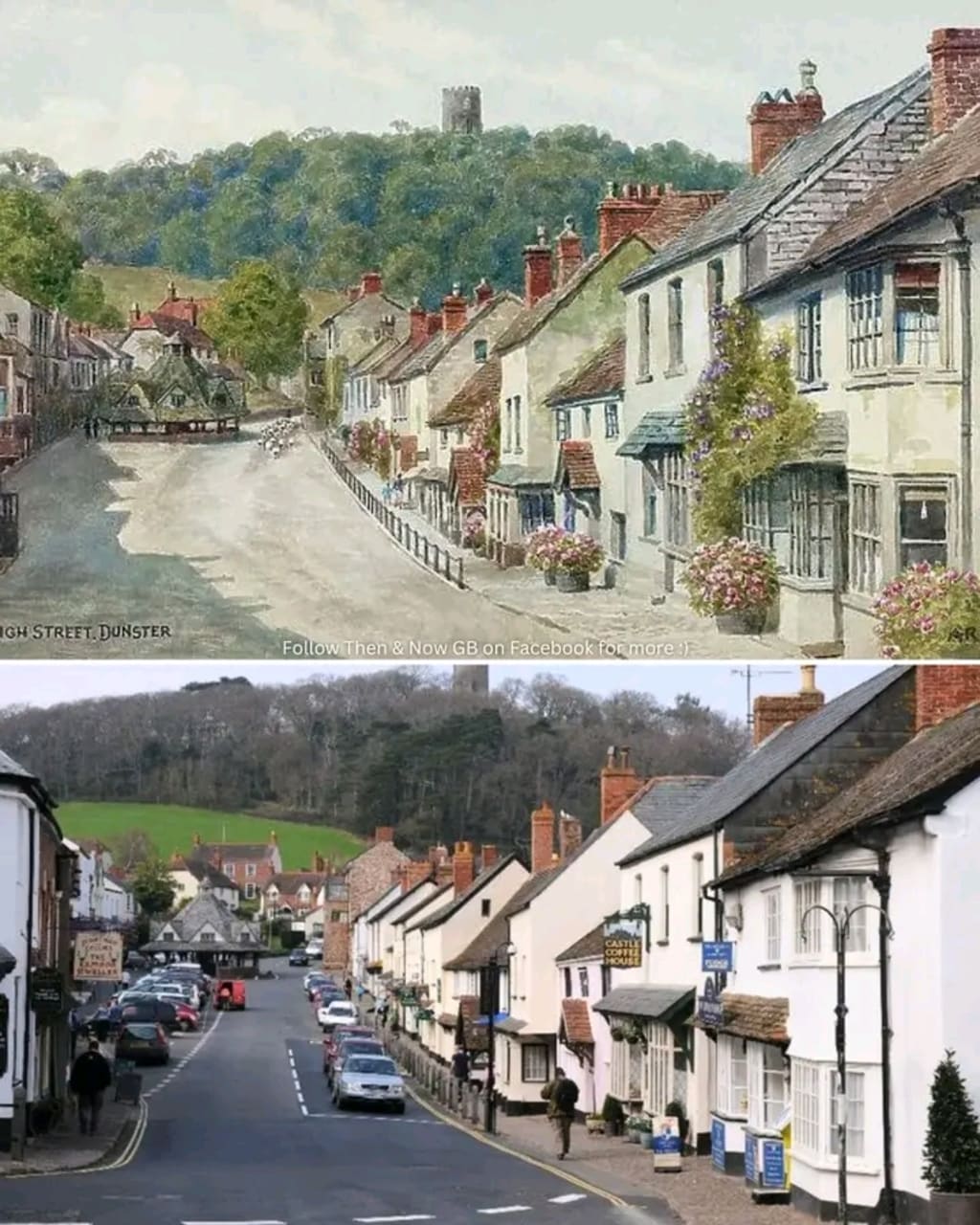
Nestled in the heart of Somerset, England, lies the quaint and remarkably well-preserved medieval village of Dunster. Known for its rich history, picturesque setting, and enchanting charm, Dunster offers visitors a rare opportunity to step back in time and experience life in a village that has remained largely unchanged for centuries. Boasting over 200 listed buildings, Dunster is not only an architectural treasure trove but also a living monument to England’s medieval past.
At the center of the village stands the High Street, the bustling main road that has been the lifeblood of Dunster for centuries. Painted in 1900 by local artists, the High Street of that time looks almost identical to what visitors can see today, a testament to the village’s dedication to preserving its heritage. Walking down the cobbled street, flanked by historic stone buildings, feels like traversing the pages of a history book, with every step revealing a new layer of Dunster’s storied past.
A Village Frozen in Time
Dunster's medieval heritage is immediately apparent from the moment you enter the village. The buildings, many of which date back to the 15th and 16th centuries, are stunning examples of medieval and early-modern architecture. From half-timbered houses to stone cottages, Dunster’s streets are lined with a variety of historical structures that have been lovingly maintained over the years.
At the heart of the village stands the imposing Dunster Castle, which has dominated the landscape since Norman times. Originally built as a motte-and-bailey fortress after the Norman Conquest, Dunster Castle has undergone several transformations over the centuries, evolving from a military stronghold into a lavish country home. Today, it is a popular tourist attraction, offering panoramic views of the surrounding countryside, as well as a glimpse into the lives of the aristocracy that once called the castle home.
Just below the castle, on the edge of the High Street, lies the Yarn Market, a charming octagonal building that dates back to the late 16th century. Built by the Luttrell family, who owned Dunster Castle, the Yarn Market was originally used for trading wool and other goods, reflecting Dunster’s importance as a hub of the medieval wool trade. The building, with its distinctive timber-framed roof, is a rare and well-preserved example of a market hall from the period, and it remains one of Dunster’s most iconic landmarks.
High Street: Then and Now
While much of Dunster has changed over the centuries, its High Street has remained remarkably consistent in its appearance. A painting of the High Street from 1900 captures a snapshot of the village that is strikingly similar to what you would find today. The same stone buildings, with their sloping roofs and wooden window frames, still line the street, and the sense of history and continuity is palpable.
Walking down the High Street, visitors can see a mixture of historic homes, shops, and inns, many of which have been converted for modern use while retaining their original charm. The Dunster Steep, the main thoroughfare leading into the village, is lined with Victorian-style street lamps and lush greenery, adding to the timeless feel of the village. With the Yarn Market at one end of the street and the majestic St. George’s Church at the other, the High Street serves as the heart of the community, just as it has for hundreds of years.
One of the most notable features of the High Street is the Luttrell Arms Hotel, a historic inn that dates back to the 15th century. Once a medieval house, it was converted into a coaching inn and has since welcomed countless travelers over the centuries. The inn’s grand, stone façade and oak-beamed interior offer a glimpse into the luxurious accommodations once enjoyed by merchants and nobility. Today, the Luttrell Arms remains a popular destination for visitors looking to immerse themselves in Dunster’s rich history while enjoying modern comforts.
Preserving Dunster’s Heritage
The preservation of Dunster’s historic buildings is no accident. Over the years, there has been a concerted effort to protect the village’s unique character and heritage. Many of Dunster’s 200 listed buildings have been carefully restored, ensuring that the village retains its medieval charm while accommodating modern needs. These preservation efforts have helped Dunster become a popular destination for tourists, history enthusiasts, and artists alike.
The village has also benefited from its location within Exmoor National Park, which has helped to shield it from overdevelopment and maintain its rural atmosphere. Surrounded by rolling hills and ancient woodlands, Dunster’s setting is as picturesque as the village itself. The proximity to natural beauty only enhances the appeal of the village, making it an ideal spot for walkers, cyclists, and those seeking a peaceful retreat.
A Living History
Dunster’s historical significance extends beyond its architecture. The village is a living history museum, with its traditions and customs carried forward by the local community. Throughout the year, the village hosts a number of events that celebrate its medieval roots, including the Dunster by Candlelight festival, where the village is illuminated by candles and lanterns, creating an enchanting atmosphere that transports visitors back to a time before electricity.
Another event that draws visitors to Dunster is the Medieval Fair, where the village comes alive with costumed performers, traditional crafts, and medieval music. These events not only celebrate the village’s rich history but also help to keep it alive for future generations, ensuring that Dunster’s story continues to be told.
Conclusion: A Timeless Treasure
With its medieval architecture, well-preserved buildings, and rich cultural heritage, Dunster is a timeless treasure that offers a window into England’s past. The village’s High Street, much as it appeared in 1900, serves as the heart of this historical gem, a place where history is not just preserved but lived.
Whether you’re exploring the ancient Dunster Castle, admiring the historic Yarn Market, or simply strolling along the cobbled streets, Dunster offers an unforgettable journey through time. In a world that is constantly changing, this medieval village stands as a reminder of the enduring beauty of history and the importance of preserving our cultural heritage for future generations.
About the Creator
Keep reading
More stories from Deji Akomolafe and writers in History and other communities.
Europe’s Oldest Road: A Minoan Engineering Marvel on the Island of Crete
Nestled on the picturesque island of Crete, amidst the ancient ruins of palaces and temples, lies a truly remarkable piece of history: Europe's oldest known road. Over 3,500 years old, this Minoan road stands as a testament to the engineering prowess of the Minoan civilization, one of the most advanced and influential cultures of the Bronze Age. Spanning approximately 50 kilometers, the road connected the great palace of Knossos—the political and ceremonial center of Minoan Crete—with the ancient cities of Gortyn and Lebena.
By Deji Akomolafeabout a year ago in History
Ancient Egyptian Tomb Unearthed: 3,000-Year-Old Remains of Four Children Discovered
In a remarkable archaeological discovery in Egypt, researchers have uncovered the mummified remains of four children dating back nearly 3,000 years. The find, located in the southern region of Luxor, offers a rare glimpse into the lives, deaths, and funerary customs of young Egyptians during the New Kingdom period.
By Irshad Abbasi 5 days ago in History



Comments
There are no comments for this story
Be the first to respond and start the conversation.