
Oldest Fingerprint: A 2,400-Year-Old Bog Body and a Glimpse into Iron Age Rituals
Oldest fingerprint

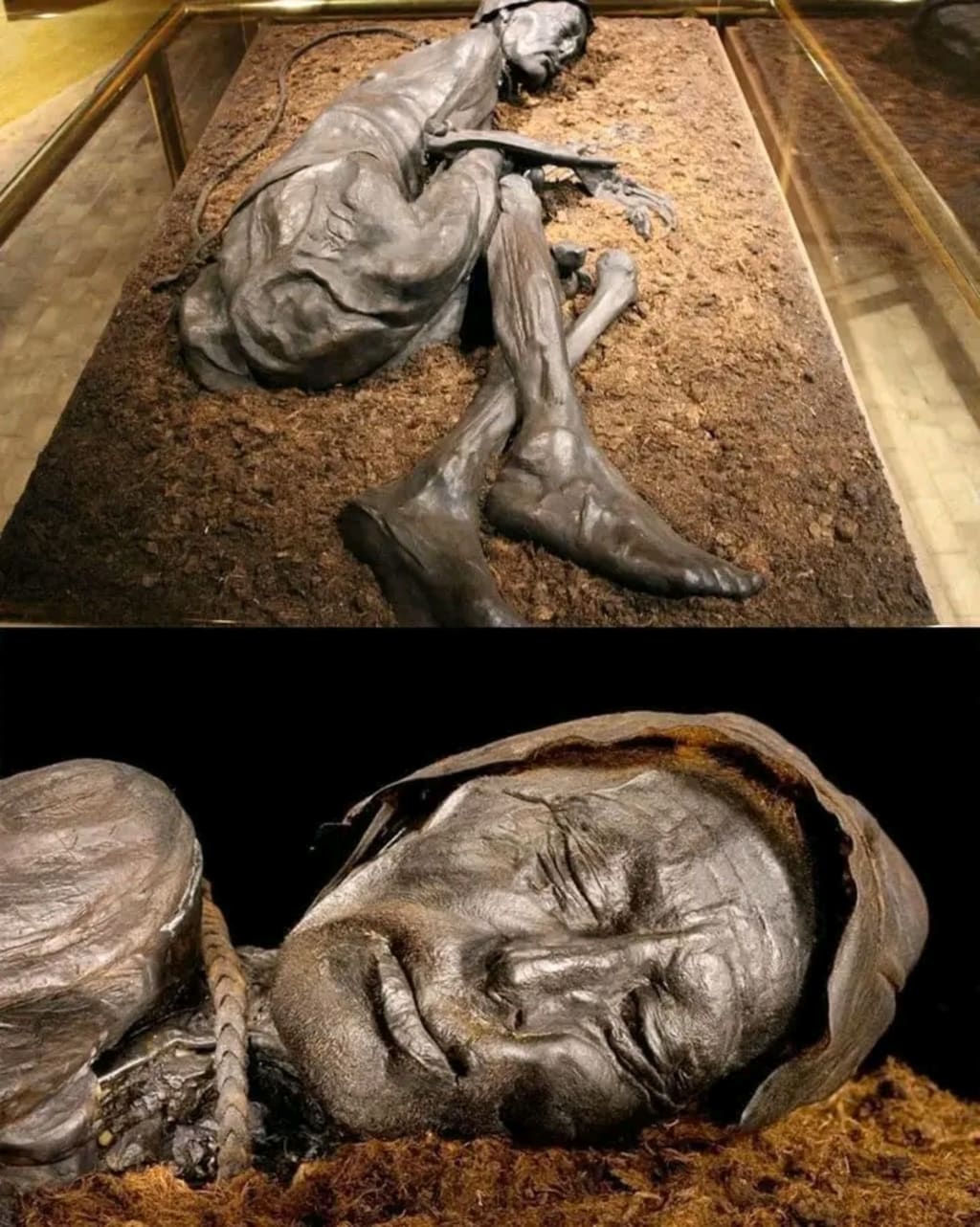
In 1950, deep within a peat bog in Bjældskovdal, Denmark, a discovery was made that would fascinate archaeologists and historians for decades to come. The nearly perfectly preserved body of a man, later named the “Tollund Man,” was unearthed by two farmers cutting peat. What made this find extraordinary was the fact that the man’s features were so intact that he appeared to have only recently died. This remarkable preservation, caused by the unique conditions of the peat bog, revealed a man who lived during the Iron Age, some 2,400 years ago. His story, a mixture of ritual, sacrifice, and daily life in ancient Scandinavia, has captivated researchers ever since.
Discovery of the Tollund Man
On May 8, 1950, Viggo and Emil Højgaard were working in a peat bog near Bjældskovdal when they came across what they initially thought was the victim of a recent murder. The body they found was so well-preserved that it looked like someone who had died only days or weeks earlier. The man was wearing a leather cap and a noose was tightly wrapped around his neck, suggesting foul play. Shocked by their find, the farmers alerted the local authorities, and soon after, archaeologists arrived to examine the body.
When experts began studying the remains, they quickly realized that the Tollund Man was not a recent victim, but rather a relic from the distant past. Radiocarbon dating of his remains confirmed that he had lived during the Iron Age, around 375-210 BC. This meant that the Tollund Man had lain undisturbed in the bog for more than two millennia, his body miraculously preserved by the acidic, oxygen-deprived environment of the peat, which slowed decomposition.
An Iron Age Life Revealed
The Tollund Man provides a rare and invaluable glimpse into the life of Iron Age people in northern Europe. His body is one of several “bog bodies” found across the peatlands of northern Europe, preserved in a similar way. The unique environment of the bogs—cold, wet, and low in oxygen—slowed the bacterial activity that normally breaks down organic material, allowing the Tollund Man’s skin, hair, and even internal organs to remain in an astonishing state of preservation.
One of the most remarkable aspects of the Tollund Man is the detail preserved in his face. His serene expression, closed eyes, and slightly parted lips give him an almost lifelike appearance. Even the stubble on his chin is still visible, a testament to the incredible conditions in which he was buried. His hair, cropped short and covered by a pointed leather cap, adds to the vividness of the image of this man from 2,400 years ago.
The Tollund Man was found lying in a fetal position, with a leather belt around his waist and a noose made of braided animal hide around his neck. The noose, along with the fact that his body was placed in the bog rather than cremated (a common Iron Age burial practice), suggests that he was the victim of a ritual sacrifice. Many researchers believe that the Tollund Man was offered to the gods in a religious ceremony, possibly to ensure a good harvest or to appease the gods during a time of crisis.
A Ritual Sacrifice?
The theory that the Tollund Man was a victim of human sacrifice is supported by the noose around his neck, which indicates he was hanged. Hanging was one of the known methods of sacrifice in Iron Age Europe, and the careful placement of his body in the bog suggests a ritualistic element. Unlike typical burials of the time, which often involved cremation or burial mounds, bog bodies like the Tollund Man were submerged in waterlogged peatlands, which may have been seen as sacred places connected to the gods or the afterlife.
The Tollund Man’s calm, peaceful expression has led some researchers to speculate that he may have been willing to participate in the ritual, or that he was drugged or otherwise prepared for his death. Other bog bodies have been found with signs of violence—stab wounds, blunt force trauma, or strangulation—indicating that Iron Age people may have practiced different forms of ritual killing depending on the situation.
Insights into Iron Age Diet and Health
One of the most fascinating aspects of the Tollund Man’s discovery is the amount of information scientists were able to gather about his diet and health. Thanks to the preservation of his internal organs, researchers were able to analyze the contents of his stomach and determine his final meal. It was a simple porridge made from barley, flax, and seeds from wild plants. This humble meal suggests that the Tollund Man came from a farming community where grains and wild plants were staple foods.
Beyond his diet, other studies have shown that the Tollund Man was around 40 years old when he died, stood about 5 feet 3 inches tall, and was in relatively good health for his time. His teeth, though worn from the rough Iron Age diet, were free of cavities, and there were no signs of long-term illness or malnutrition. In addition, forensic examination revealed that his fingerprints were still intact, an astonishing detail considering his age. This level of preservation allowed researchers to study a man who lived over two millennia ago as if he were a modern subject.
The Legacy of the Tollund Man
The Tollund Man continues to be one of the most famous and well-preserved examples of a bog body, providing a unique window into the past. His remarkably lifelike appearance, combined with the wealth of information gleaned from his remains, has made him an invaluable resource for understanding Iron Age culture, religion, and daily life. While much about his life and death remains a mystery, the Tollund Man serves as a poignant reminder of the complex belief systems and rituals of ancient peoples.
Today, the Tollund Man is housed at the Silkeborg Museum in Denmark, where visitors can marvel at the well-preserved features of a man who lived 2,400 years ago. His story, frozen in time by the bog’s conditions, continues to captivate scientists and the public alike, offering a glimpse into the ancient world and the enigmatic practices of the Iron Age.
About the Creator
Keep reading
More stories from Deji Akomolafe and writers in History and other communities.
New York Federal Reserve’s Gold Depository in 1959
In the heart of Manhattan, 80 feet below the bustling streets, lies one of the most heavily fortified and secretive locations in the world: the gold depository of the New York Federal Reserve. Operational since 1924, this hidden vault has housed some of the world’s largest gold reserves, offering a secure storage space for foreign governments, central banks, and international organizations. By 1959, during the height of the Cold War, the depository held an astounding 12,000 tons of gold, making it one of the most significant collections of precious metal ever amassed.
By Deji Akomolafeabout a year ago in History
3 Times Ordinary Objects Did Something Deeply Unsettling
Objects surround us every day. They make life easier, more comfortable, or more entertaining. A chair supports us, a mirror shows us our reflection, and a toaster browns our bread with consistent reliability. Most of the time, they behave exactly as expected.
By Enoch Sagini5 days ago in History
When Allies Disagree: How Global Partnerships Are Being Redefined
When Allies Disagree: How Global Partnerships Are Being Redefined For much of the modern era, global alliances appeared firm and predictable. Powerful countries formed blocs, promised mutual support, and stood together during times of war and crisis. But in today’s world, those alliances are changing. Recent disagreements between long-standing partners show that global cooperation is no longer based on automatic loyalty—it is increasingly shaped by national interests, public opinion, and long-term stability.
By Wings of Time 3 days ago in History




Comments
There are no comments for this story
Be the first to respond and start the conversation.