Deji Akomolafe
Bio
Stories (512)
Filter by community
4,000-Year-Old Chinese Ceramic Water Pipes: A Glimpse into Neolithic Engineering at Pingliangtai
In the annals of human history, few discoveries are as remarkable as those that reveal the engineering prowess of ancient civilizations. Recent archaeological findings from the Pingliangtai site, located in the Central Plains of China, have uncovered a stunning piece of Neolithic ingenuity: 4,000-year-old ceramic water pipes. This discovery sheds light on the advanced water management systems used by early Chinese settlers and provides a glimpse into how these ancient people harnessed the environment to sustain and protect their communities.
By Deji Akomolafeabout a year ago in History
The Lloyds Bank Coprolite: The Largest Preserved Viking Poop Ever Found
In the world of archaeology, discoveries often come in unexpected shapes and sizes. One such unique find is the Lloyds Bank Coprolite, a preserved Viking poop that has earned its place in the annals of history as the largest human coprolite ever discovered. This 8-inch-long and 2-inch-wide relic, dating back to the 9th century AD, offers a surprising glimpse into the life and health of a Viking over 1,200 years ago. Although its value may seem odd to some, this "precious" poop is now worth an estimated $39,000 and is a prized piece of history.
By Deji Akomolafeabout a year ago in History
The Mysterious Underground City of Derinkuyu: A Hidden Marvel of Ancient Engineering
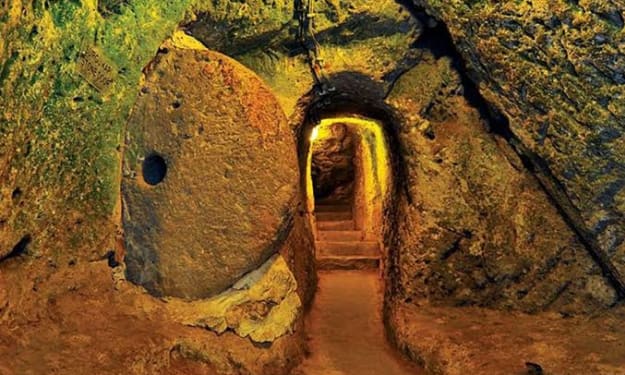
Imagine knocking down a wall in your basement and discovering a passage that leads to an ancient, sprawling underground city. This remarkable scenario became reality for a Turkish man in 1963 when he unwittingly revealed the entrance to Derinkuyu, one of the largest and most elaborate subterranean cities ever found. Located in the Cappadocia region of central Turkey, Derinkuyu is a true marvel of ancient engineering, with its labyrinthine corridors, living quarters, and amenities capable of sustaining an underground community of up to 20,000 people.
By Deji Akomolafeabout a year ago in History
Roman Horse Armor from Dura-Europos: A Glimpse into the Ancient Battlefield
In the rich tapestry of Roman military history, artifacts often tell the most vivid stories. Among these, one of the most remarkable is the discovery of a 3rd-century CE Roman horse armor made of bronze scales, found at Dura-Europos, Syria. This extraordinary find not only sheds light on Roman cavalry tactics but also offers a glimpse into the technological advancements and craftsmanship of the Roman Empire during its later years. Now housed at the National Museum of Damascus, the armor continues to captivate historians, archaeologists, and military enthusiasts alike.
By Deji Akomolafeabout a year ago in History
King Ramses III: Between Horus and Seth – An Egyptian Masterpiece
Nestled within the prestigious halls of the Cairo Museum is one of the most remarkable sculptures from ancient Egypt – a triad statue that represents King Ramses III flanked by two of Egypt’s most significant deities: Horus, the god of kingship and the sky, and Seth, the god of chaos and the desert. This statue, carved from a rare grizzled granite stone, is more than just a piece of art. It is a magnificent testament to the skill of ancient Egyptian artisans, their deep religious beliefs, and their reverence for the divine kingship embodied in their rulers.
By Deji Akomolafeabout a year ago in History
The Legacy of Tupac Amaru: From Incan Resistance to Modern Symbolism
The name “Tupac Amaru” echoes through history as a powerful symbol of resistance, courage, and sacrifice. It originates with the last indigenous Inca leader to challenge the Spanish colonizers, Tupac Amaru I, whose execution marked the end of the Inca resistance in South America. His legacy, however, did not end with his death. Centuries later, Tupac Amaru II emerged as another champion of indigenous rights, leading a massive rebellion against the Spanish rule in the region now known as Peru. Both men, killed and martyred for their efforts, left an indelible mark on history, shaping the identity of the Andean people and becoming enduring symbols of defiance against oppression.
By Deji Akomolafeabout a year ago in History
Ephesus: Echoes of Ancient Grandeur in Modern-Day Turkey
Nestled in the heart of modern-day Turkey, Ephesus stands as a testament to the enduring legacy of classical antiquity. Once a bustling metropolis of the ancient Greek and Roman world, Ephesus flourished as a center of culture, commerce, and spirituality. Today, its well-preserved ruins attract visitors from around the globe, offering a captivating glimpse into the rich history and architectural marvels of one of the ancient world's greatest cities.
By Deji Akomolafeabout a year ago in History
Baiae: The Sunken City of Roman Splendor
Off the western coast of Italy, beneath the azure waters of the Tyrrhenian Sea, lies a submerged treasure—a testament to the lavish lifestyle and opulence of ancient Rome. Baiae, once a playground for Roman elites including Julius Caesar, Nero, and Hadrian, was renowned for its luxurious villas, thermal baths, and temples. This sunken city, hidden for over 1,700 years following the eruption of Mount Vesuvius in 79 AD, offers a captivating glimpse into the grandeur and indulgence of Roman society.
By Deji Akomolafeabout a year ago in History
The Arch of Titus: A Monument of Triumph and Legacy in Ancient Rome
In the heart of ancient Rome, near the towering Colosseum, stands an enduring symbol of Roman power and architectural brilliance: the Arch of Titus. Constructed in 81 AD after the death of Emperor Titus, this monument commemorates one of Rome's most significant military victories—the conquest of Jerusalem in 70 AD. Built by the Roman Senate and Emperor Domitian, Titus' younger brother, the arch celebrates the achievements of the late emperor and immortalizes his legacy within the history of the Roman Empire.
By Deji Akomolafeabout a year ago in History
The Roman Lighthouse of Dover: A Beacon of History
Nestled on the southeastern coast of England, the Roman Lighthouse of Dover, also known as the Pharos of Dover, stands as a testament to the ingenuity and architectural prowess of the Romans. Dating back to 46–50 AD, during the reign of Emperor Claudius, this ancient structure is not only the oldest surviving lighthouse in England but also one of the oldest in the world. Despite the passage of nearly two millennia, the lighthouse remains a significant landmark, illuminating the maritime history of England and the Roman Empire.
By Deji Akomolafeabout a year ago in History
Sutton Hoo: The Enigmatic Anglo-Saxon Burial Ground
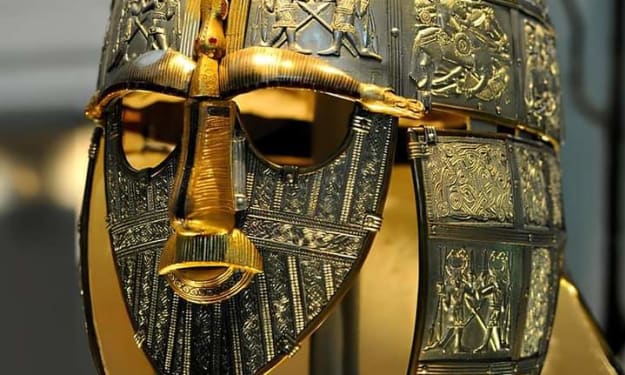
In the summer of 1939, as the shadow of war loomed over Europe, a discovery was made in the quiet Suffolk countryside that would forever alter our understanding of England’s early medieval past. The Sutton Hoo burial site, located near Woodbridge, Suffolk, revealed a treasure trove of Anglo-Saxon artifacts that astounded archaeologists and historians alike. This 7th-century ship burial was not only a testament to the craftsmanship and wealth of the time but also an intriguing mystery, with the absence of human remains leaving scholars to speculate on the identity of the individual buried there.
By Deji Akomolafeabout a year ago in History
Raahe Wanha Herra: The Old Gentleman of Raahe – The World's Oldest Surviving Diving Suit
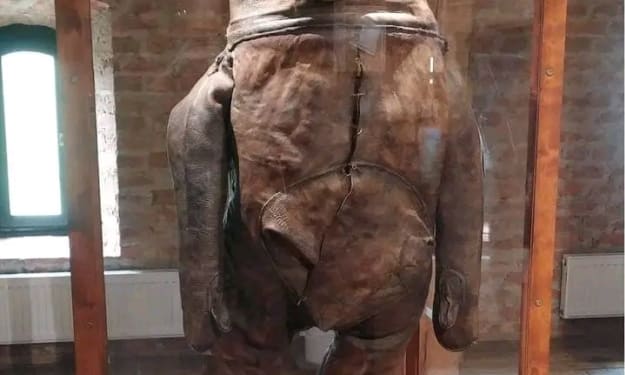
In the small town of Raahe, Finland, an extraordinary relic from the 18th century is carefully preserved in the Raahe Museum—a relic that holds the distinction of being the world’s oldest surviving diving suit. Known affectionately as the “Raahe Wanha Herra” or “The Old Gentleman of Raahe,” this unique piece of maritime history offers a fascinating glimpse into the early innovations of deep-sea exploration. Constructed from calfskin and waterproofed with a mixture of pork fat, tar, and pitch, the suit is a testament to the ingenuity of its time, when venturing beneath the waves was both dangerous and mysterious.
By Deji Akomolafeabout a year ago in History