
The Mysterious Underground City of Derinkuyu: A Hidden Marvel of Ancient Engineering
Ancient City

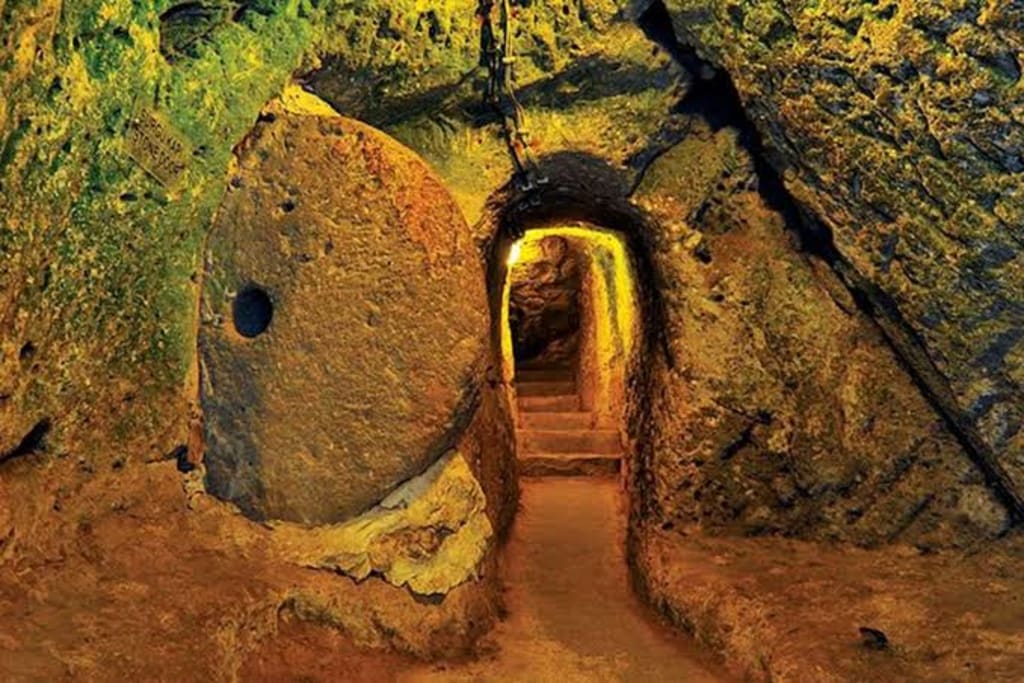
Imagine knocking down a wall in your basement and discovering a passage that leads to an ancient, sprawling underground city. This remarkable scenario became reality for a Turkish man in 1963 when he unwittingly revealed the entrance to Derinkuyu, one of the largest and most elaborate subterranean cities ever found. Located in the Cappadocia region of central Turkey, Derinkuyu is a true marvel of ancient engineering, with its labyrinthine corridors, living quarters, and amenities capable of sustaining an underground community of up to 20,000 people.
Derinkuyu was not just a temporary shelter or hideout; it was a fully functional city with everything its inhabitants needed to survive underground. With 18 stories reaching deep into the earth, this subterranean wonder remains a testament to the ingenuity of its builders and offers a fascinating glimpse into a world designed to protect its people from external threats.
Discovery of Derinkuyu: A Window to the Past
The accidental discovery of Derinkuyu has become the stuff of legend. The homeowner who stumbled upon the city had no idea that the wall he knocked down would lead to a massive underground complex stretching deep beneath the earth. After archaeologists were called in to investigate, they uncovered a multi-level city that had remained hidden for centuries. Each level of the city revealed new wonders: living quarters, communal spaces, storage rooms, and areas for food production, such as wine and oil presses.
While Derinkuyu is just one of many underground cities in the Cappadocia region, it stands out for its sheer size and complexity. Spread across 18 levels, the city had schools, chapels, stables, and refectories. The city could be sealed from the inside with large rolling stone doors, each floor capable of being closed off separately, providing security from invaders or unwanted visitors. This design allowed the residents to remain hidden for long periods of time, making Derinkuyu a highly effective refuge.
A City Designed for Life Underground
Derinkuyu was more than just a temporary shelter; it was designed for long-term living. The city’s inhabitants could remain underground for extended periods, completely cut off from the world above. They had access to essential amenities, including kitchens, wine and oil presses, and storage rooms for food and water. Stables were also built to house animals, demonstrating that livestock played an important role in sustaining the underground community.
One of the most remarkable features of Derinkuyu is its ventilation system. A massive 55-meter (180-foot) deep ventilation shaft provided fresh air throughout the city. This shaft also doubled as a well, providing water to both the underground city and the village above. In times of danger, when access to the outside world was not possible, the well ensured that the city’s inhabitants could survive in isolation.
Unique to Derinkuyu is a spacious room with a barrel-vaulted ceiling located on the second floor, believed to have served as a religious school. The rooms adjacent to this space are thought to have been used as study areas. Religion played a central role in the lives of the city’s inhabitants, and this school highlights the importance of educating future generations even in the midst of living underground.
Starting between the third and fourth levels of the city, a series of vertical staircases lead to a cruciform church located on the lowest level. This sacred space, situated at the heart of the underground city, would have been used for religious services and ceremonies, reflecting the spiritual life of the community.
The Origins of Derinkuyu
The origins of Derinkuyu are shrouded in mystery, but it is believed that the first underground caves in the region were carved out by the Phrygians in the 8th and 7th centuries BCE. The soft volcanic rock of Cappadocia made it relatively easy to carve out living spaces, and the region is known for its many underground dwellings and cities. However, it was not until the Roman period, when Christianity began to spread, that Derinkuyu was expanded into the vast, multi-level complex we see today.
As the Phrygian language faded and was replaced by Greek during Roman times, the Christian inhabitants of the region continued to expand the city. They added chapels, religious schools, and Greek inscriptions, transforming the underground city into a center of Christian worship and learning. Derinkuyu likely served as a refuge for early Christians, who faced persecution during the early centuries of the Roman Empire.
A Hidden Refuge from Invasion
Throughout its history, Derinkuyu was used as a refuge from various invaders and external threats. Cappadocia, located at the crossroads of civilizations, was often subject to invasions by foreign armies. The underground cities provided a safe haven where inhabitants could hide for months at a time, protected by the city’s impenetrable design and its self-sufficient infrastructure.
The rolling stone doors that sealed each level of Derinkuyu were a brilliant security feature. These doors, often weighing several tons, could only be opened from the inside, making it nearly impossible for invaders to breach the city. The complex layout, with its maze-like corridors and hidden entrances, further added to the city’s defensibility.
Legacy of Derinkuyu: A Testament to Ancient Ingenuity
Today, Derinkuyu remains a remarkable example of ancient engineering and human ingenuity. The city offers a glimpse into a world where entire communities lived beneath the earth, relying on their skills and resourcefulness to survive. The fact that such a massive and intricate city could be built using the tools and technologies available in ancient times is a testament to the creativity and determination of its inhabitants.
The underground city of Derinkuyu, now open to the public, continues to fascinate visitors from around the world. As archaeologists continue to explore its many levels and hidden chambers, new discoveries are constantly being made, adding to the mystery and wonder of this ancient subterranean marvel. It serves as a powerful reminder that beneath our feet, history lies waiting to be uncovered, sometimes in the most unexpected ways.
About the Creator
Keep reading
More stories from Deji Akomolafe and writers in History and other communities.
Roman Horse Armor from Dura-Europos: A Glimpse into the Ancient Battlefield
In the rich tapestry of Roman military history, artifacts often tell the most vivid stories. Among these, one of the most remarkable is the discovery of a 3rd-century CE Roman horse armor made of bronze scales, found at Dura-Europos, Syria. This extraordinary find not only sheds light on Roman cavalry tactics but also offers a glimpse into the technological advancements and craftsmanship of the Roman Empire during its later years. Now housed at the National Museum of Damascus, the armor continues to captivate historians, archaeologists, and military enthusiasts alike.
By Deji Akomolafeabout a year ago in History
A 4,400-Year-Old Priestess Tomb Discovered in Egypt
Archaeologists in Egypt have uncovered the remarkable tomb of a priestess that dates back approximately 4,400 years, offering new insight into religion, culture, and daily life during the height of the ancient Egyptian civilization. The discovery was made near the famous pyramids on the Giza Plateau, one of the most important archaeological areas in the world. Experts believe the tomb belonged to a high-ranking priestess named Hetpet, who lived during Egypt’s Fifth Dynasty, around 2400 BC. 
By Irshad Abbasi 7 days ago in History


Comments
There are no comments for this story
Be the first to respond and start the conversation.