
The Legacy of Tupac Amaru: From Incan Resistance to Modern Symbolism
Tupac History


The name “Tupac Amaru” echoes through history as a powerful symbol of resistance, courage, and sacrifice. It originates with the last indigenous Inca leader to challenge the Spanish colonizers, Tupac Amaru I, whose execution marked the end of the Inca resistance in South America. His legacy, however, did not end with his death. Centuries later, Tupac Amaru II emerged as another champion of indigenous rights, leading a massive rebellion against the Spanish rule in the region now known as Peru. Both men, killed and martyred for their efforts, left an indelible mark on history, shaping the identity of the Andean people and becoming enduring symbols of defiance against oppression.
This legacy took on new meaning in the 20th century, when Afeni Shakur, a member of the Black Panther Party and the mother of one of hip-hop's greatest icons, Tupac Shakur, chose to name her son after the legendary Incan leaders. Afeni’s choice was a conscious effort to connect her son’s struggle and identity to a broader history of resistance, reminding him and the world that the fight against oppression spans time, cultures, and continents.
Tupac Amaru I: The Last Inca Leader
The story of Tupac Amaru I begins in the 16th century, during the Spanish conquest of the Inca Empire. After the defeat of the Inca Emperor Atahualpa and the fall of the capital, Cusco, to Spanish forces, the once-powerful empire was reduced to a fraction of its former glory. The remaining Inca nobles retreated to Vilcabamba, a remote region in the Andes, where they maintained a form of resistance for several decades.
Tupac Amaru I, the last Sapa Inca (sovereign leader), took up the mantle of leadership in Vilcabamba. He attempted to preserve the last vestiges of Inca independence, but the Spanish were relentless in their pursuit of complete domination. In 1572, after a long standoff, the Spanish captured Tupac Amaru, and he was publicly executed in Cusco. His death symbolized the end of the Inca resistance, but his martyrdom ignited a fire in the hearts of the indigenous people, a fire that would burn for centuries.
Tupac Amaru I’s legacy lived on not only as a symbol of resistance to colonization but also as a beacon of hope and resilience for the indigenous people of South America. His name would resurface nearly two centuries later, when a descendant took on his mantle in a new fight for justice.
Tupac Amaru II: Rebellion and Martyrdom
José Gabriel Condorcanqui, better known as Tupac Amaru II, was born in 1738 and claimed to be a direct descendant of the original Tupac Amaru. Living under the harsh colonial regime of the Spanish in Peru, Tupac Amaru II witnessed firsthand the exploitation and oppression of indigenous people. The Spanish imposed crushing taxes, forced labor, and a rigid caste system that left indigenous communities impoverished and disenfranchised.
In 1780, inspired by his ancestor and motivated by the desire for justice, Tupac Amaru II launched a rebellion against the Spanish colonial government. His revolt began with the capture and execution of a corrupt Spanish official, marking the start of a widespread uprising that drew in thousands of indigenous people, mestizos, and other oppressed groups. His vision was not just one of revenge but one of creating a new, just society in which indigenous people could reclaim their dignity and freedom.
Despite initial successes, the rebellion was brutally suppressed by the Spanish, who captured Tupac Amaru II in 1781. His execution was as cruel as it was symbolic—he was dismembered in front of his followers, with his body parts sent to different regions as a warning. Yet, like Tupac Amaru I, his martyrdom only strengthened his legacy. His fight for indigenous rights and autonomy continued to inspire movements for independence and justice in Latin America.
Afeni Shakur and the Modern Tupac
In 1971, amidst her own struggle for justice as a member of the Black Panther Party, Afeni Shakur gave birth to a son. She named him Tupac Amaru Shakur, linking his identity to the legacy of the two great Incan leaders. In an interview, Afeni explained the significance behind her choice: “Tupac was conceived during the worst part of my life, and I chose his name because I wanted my son to understand that we aren’t the only people that this has happened to.”
For Afeni, the name Tupac Amaru was a way of connecting the African American struggle for civil rights with the broader history of resistance against colonization and oppression. She wanted her son to carry with him the knowledge that the fight for freedom is a universal one, shared by people across time and space. Tupac Shakur, who would go on to become one of the most influential voices in hip-hop, embodied this spirit of resistance in his music, often addressing themes of social justice, inequality, and the legacy of systemic oppression.
Tupac Shakur’s lyrics were filled with the pain and hope of marginalized communities, much like the Incan leaders whose name he bore. His life, like theirs, was marked by a fierce desire to challenge the status quo and uplift those who had been silenced. His tragic death in 1996 only cemented his status as a martyr in the eyes of his followers, continuing the legacy of Tupac Amaru I and II.
Conclusion: A Legacy of Resistance
The name Tupac Amaru has transcended its Incan origins to become a symbol of resistance, not only in South America but across the world. From the fight against Spanish colonization to the modern struggle for racial justice, the legacy of Tupac Amaru lives on. Through the stories of Tupac Amaru I, Tupac Amaru II, and Tupac Shakur, we are reminded that the fight for justice and freedom is ongoing, and that the spirit of resistance can never be fully extinguished. It passes from one generation to the next, carrying with it the hope that one day, true justice will be realized.Start writing...
About the Creator
Keep reading
More stories from Deji Akomolafe and writers in History and other communities.
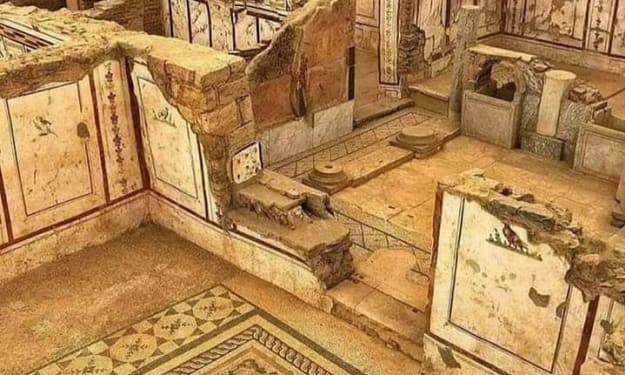
Ephesus: Echoes of Ancient Grandeur in Modern-Day Turkey
Nestled in the heart of modern-day Turkey, Ephesus stands as a testament to the enduring legacy of classical antiquity. Once a bustling metropolis of the ancient Greek and Roman world, Ephesus flourished as a center of culture, commerce, and spirituality. Today, its well-preserved ruins attract visitors from around the globe, offering a captivating glimpse into the rich history and architectural marvels of one of the ancient world's greatest cities.
By Deji Akomolafeabout a year ago in History
Military Strength of Alexander the Great and the Chola Empire: A Historical Comparison
Though separated by more than a thousand years and operating in vastly different geographical and cultural contexts, both forces achieved extraordinary success through discipline, innovation, and strategic brilliance. This article explores the history, composition, size, organization, and military strength of Alexander’s Macedonian army and the Chola military, highlighting how each became a dominant power of its era.
By Say the truth 5 days ago in History


Comments
There are no comments for this story
Be the first to respond and start the conversation.