Deji Akomolafe
Bio
Stories (512)
Filter by community
A Forgotten Era: The Early Days of Electric Vehicles
When people think of electric vehicles (EVs), they often envision them as a modern innovation—a product of the 21st century, driven by the need to combat climate change and reduce dependency on fossil fuels. However, few realize that electric vehicles have a history stretching back more than a century. In fact, electric cars were some of the first automobiles on the road, and by the early 1900s, they were a common sight. At their peak, nearly a third of all cars on the road were powered by electricity. But what happened to these early EVs, and why did they disappear for nearly a century? The answer lies in a fascinating tale of technological advancement, market forces, and the eventual dominance of internal combustion engines.
By Deji Akomolafeabout a year ago in History
Bradford-on-Avon Tithe Barn: A Medieval Masterpiece
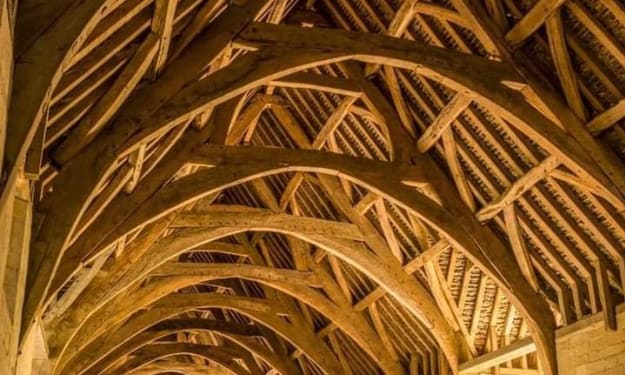
Nestled in the picturesque Wiltshire countryside, the Bradford-on-Avon Tithe Barn stands as one of the most impressive examples of medieval architecture in England. Built in the mid-14th century, this remarkable structure is not only one of the largest medieval barns in the country but also one of the finest in terms of its design and craftsmanship. Serving as a reminder of the agricultural and ecclesiastical history of the region, the Tithe Barn was originally constructed to support Barton Grange, a manor farm that belonged to the powerful Shaftesbury Abbey in Dorset.
By Deji Akomolafeabout a year ago in History
The Sweet Track: A 5,830-Year-Old Window into Neolithic Ingenuity
Tucked away in the marshy Somerset Levels of southwest England lies one of the most remarkable archaeological discoveries of the 20th century: the Sweet Track. This ancient Neolithic timber walkway, unearthed in 1970, is not only a marvel of prehistoric engineering but also one of the oldest known wooden trackways in the world. Dating back an astonishing 5,830 years, the Sweet Track offers a glimpse into a time when humans were transitioning from nomadic lifestyles to more settled agricultural communities. It stands as a testament to the ingenuity and resourcefulness of our distant ancestors.
By Deji Akomolafeabout a year ago in History
The Ingenious "Snake Bridge" of the Macclesfield Canal: A Testament to 19th-Century Engineering
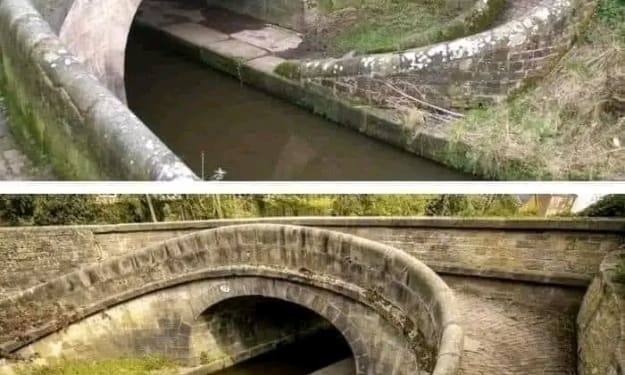
The Macclesfield Canal, which opened in 1831, played a crucial role in British industry during the 19th century, facilitating the transportation of goods and resources across northern England. A distinctive and innovative feature of this canal system is the "snake bridge," a clever engineering solution designed to allow horses to continue towing barges without the need to unhitch or interrupt their journey. These bridges are not only functional marvels of their time but also represent the ingenuity and adaptability of British canal engineering.
By Deji Akomolafeabout a year ago in History
The Pantheon: Rome’s Ancient Marvel and the World’s Greatest Concrete Flex
If there’s one building that can boast over 1,900 years of architectural dominance, it’s the Pantheon in Rome. Not only is this awe-inspiring structure a breathtaking piece of ancient history, but it also holds the remarkable title of having the World’s Largest Unreinforced Concrete Dome—a record it’s been flaunting for nearly two millennia. That’s right, for almost 2,000 years, architects have been trying to top what the Pantheon accomplished in the 2nd century, and let’s just say, it’s a pretty tough act to follow. The Pantheon’s dome is like the ultimate architectural mic drop, challenging modern builders with a silent, "Top that, future people!"
By Deji Akomolafeabout a year ago in History
The Fosse Way and the A303: Unearthing England’s Ancient Roman Road
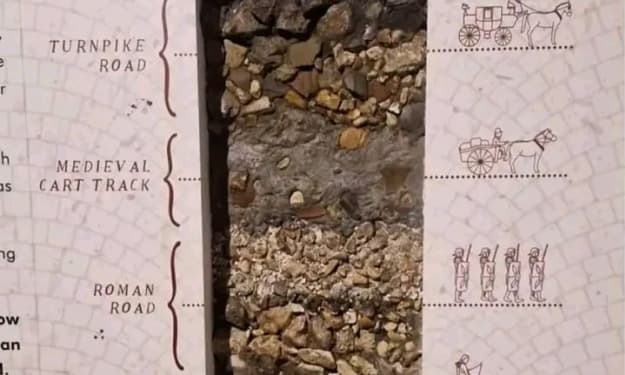
In the English countryside, beneath the busy modern lanes of the A303 highway, lies a hidden historical treasure—an ancient Roman road known as the Fosse Way. This road, which has existed for nearly two millennia, traces a route that once connected the southwest of England to the heart of Roman Britain. Though buried beneath layers of modern infrastructure, cross-sections of the ground beneath the A303 reveal the path of this remarkable Roman road, providing a glimpse into a world that existed thousands of years ago.
By Deji Akomolafeabout a year ago in History
The White Horse of Uffington: A 3,000-Year-Old Enigma
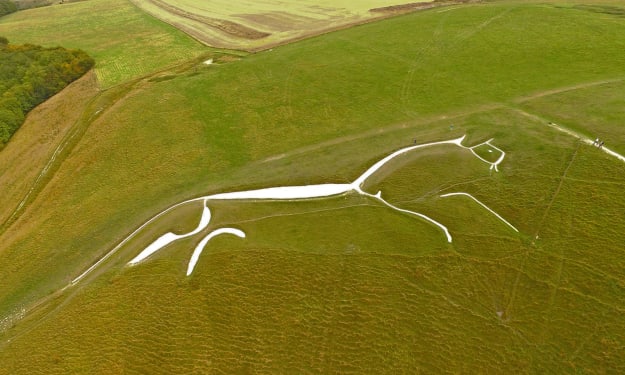
Perched on the rolling chalk hills of Oxfordshire, England, the White Horse of Uffington has captured the imagination of locals and historians alike for over 3,000 years. This iconic hill figure, carved into the earth, stands as a remarkable testament to the creativity and ingenuity of prehistoric peoples. Yet, for all its grandeur and historical significance, much about the White Horse remains shrouded in mystery. Who created it? Why was it made? And what does it truly represent?
By Deji Akomolafeabout a year ago in History
Roman Swords Found in Near-Perfect Condition in Israel: A Window into the Past
In an extraordinary archaeological discovery, four Roman swords in near-perfect condition have been uncovered in a remote cliffside crevice near the Dead Sea in Israel. Hidden for nearly 1,900 years, the swords, along with their scabbards, were likely stashed by Jewish rebels during one of the Jewish revolts against Roman rule. The swords, remarkably preserved in the arid conditions of the desert, offer a rare glimpse into a turbulent period of ancient history. To discover even a single Roman sword in such a state is a rare event, but finding four together is an exceptional and momentous find.
By Deji Akomolafeabout a year ago in History
The 13th-Century Toilet at St Andrews Castle: A Glimpse Into Medieval Sanitation
St Andrews Castle in Scotland, perched dramatically on a cliff overlooking the North Sea, holds centuries of history within its weathered stone walls. While it is well known as the residence of bishops, a fortress, and a site of political intrigue, one of its more unusual features is its medieval toilet system—what’s often referred to as a “garderobe.” This 13th-century toilet at St Andrews Castle was ingeniously constructed to empty directly down the cliff and into the sea, serving as a unique solution to the waste disposal challenges of medieval times.
By Deji Akomolafeabout a year ago in History
Mozart’s Kitchen at No. 9 Getreidegasse: A Glimpse Into the Daily Life of a Musical Prodigy
In the heart of Salzburg, Austria, tucked away in the narrow and picturesque Getreidegasse, stands a house that has become a symbol of one of the greatest musical geniuses the world has ever known. No. 9 Getreidegasse is not just any house—it is the birthplace of Wolfgang Amadeus Mozart. Born on January 27, 1756, in this very building, Mozart spent the early years of his life within these walls, and it is here that the foundation of his extraordinary musical career was laid.
By Deji Akomolafeabout a year ago in History
The Roman Cisternone: A Testament to the Ingenuity of Ancient Roman Engineering
Nestled beneath the streets of Albano Laziale, a town near Rome, lies one of the most extraordinary yet lesser-known marvels of Roman engineering: the Cisternone Romano, or Roman Cistern. This massive underground water reservoir, built almost 1,800 years ago, stands as a silent witness to the ingenuity, craftsmanship, and architectural prowess of ancient Roman builders. Constructed between the 2nd and 3rd centuries AD under the direction of Emperor Septimius Severus, the Roman Cisternone was designed to supply water to the camp of the Second Parthian Legion. However, its significance transcends its functional origins, becoming an enduring monument to the might and sophistication of the Roman Empire.
By Deji Akomolafeabout a year ago in History
The Karakoram Highway: The Eighth Wonder of the World
The Karakoram Highway, often referred to as the "Eighth Wonder of the World," is a marvel of modern engineering and a breathtaking journey through the rugged landscapes of the Karakoram mountain range. Connecting Pakistan and China, this 800-mile highway, which traverses the Khunjerab Pass at an elevation of 15,397 feet, is one of the highest paved roads in the world. Built under extremely challenging conditions, the Karakoram Highway (KKH) stands as a testament to human perseverance, determination, and ingenuity.
By Deji Akomolafeabout a year ago in Wander