Alex Smith
Bio
Stories (18)
Filter by community
Cults of Gods: Dionysus, God of Peoples
Among the Olympian gods, Dionysus occupies a unique and often misunderstood position. He was not merely the god of wine or ecstatic madness, but a deity whose worship belonged to crowds rather than kings, festivals rather than palaces, and shared frenzy rather than private prayer. Dionysus was a god experienced collectively—through procession, theater, initiation, and ritual excess—and for this reason he may best be understood as the god of peoples. His cult reveals how ancient Greek society made room for disorder, emotional release, and sacred transgression within an otherwise highly ordered world.
By Alex Smith27 days ago in History
Cults of Gods: Hephaestus, "Lame" God?
Often portrayed in myth as an outcast, Hephaestus occupied a far more stable and respected position in ancient Greek religious practice. Though depicted as physically imperfect, he was nonetheless firmly established among the Olympian gods and widely revered for his indispensable role in both divine and human craftsmanship.
By Alex Smith28 days ago in History
Cults of Gods: Is Aphrodite older than the Olympians?
The goddess who sided with the Trojans during the Trojan War, restrained the bloodthirsty Ares, and inspired rivalry with the mortal Psyche was also one of the most influential cultic deities of the Hellenic world. Aphrodite was not merely a poetic symbol of love and beauty; she was a widely worshipped divine power whose sanctuaries, festivals, and epithets reveal a far more complex religious role.
By Alex Smithabout a month ago in History
Cults of Gods: Ares, Cultless God?
Ares is described as bloodthirsty, cruel and outright dangerous. Hated by own father Zeus, by mortals and gods, it would be expected that such a deity doesn't have a cult or any trace of veneration. But it is not correct. Even if shown as cruel in myths, reality is far more sophisticated, and even horrible god like Ares had his own place in pantheon.
By Alex Smith2 months ago in History
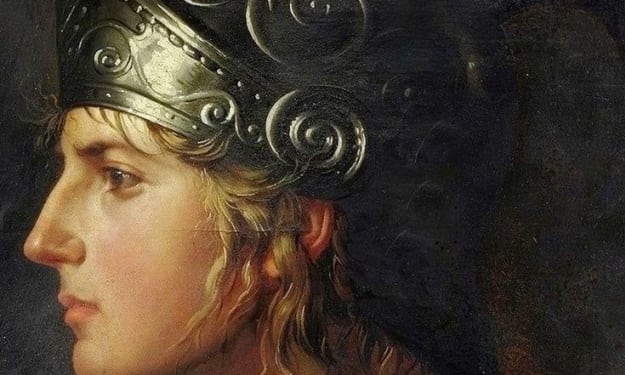
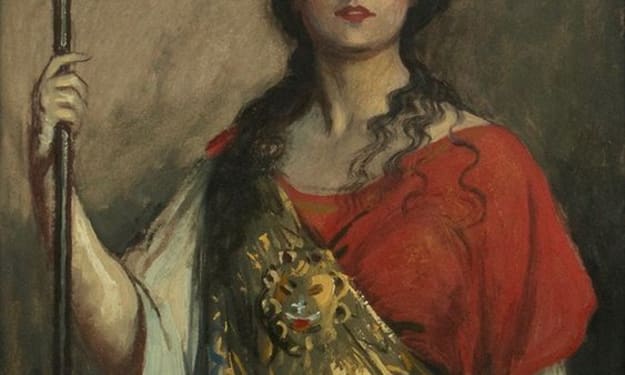
Cults of Gods: Athena, Wisdom or War? Both.
When thinking about Athene, most people remember myths of her springing fully armed from Zeus’ head or her contest with Poseidon for the patronage of Athens. Many neopagan or mythology blogs describe her simply as “the goddess of wisdom.” But Athene’s influence goes far beyond this title. Wisdom is only an umbrella term for the many aspects of life she governs.
By Alex Smith2 months ago in History
Cults of Gods: Hermes, Ouranic or Kthonic?
Among all the Olympians, no god moves as swiftly or slips as easily between worlds as Hermes. Trickster, messenger, guide of souls, protector of travelers and thieves alike—Hermes was the tireless workaholic of Olympus. Yet behind his playful cleverness lies one of the oldest and most important divine functions in Greek religion: the guardianship of boundaries and the mastery of transition. In this article, we will explore who Hermes truly was, beyond the winged sandals and the familiar image of Zeus’ messenger.
By Alex Smith2 months ago in History
Cults of Gods: Hestia, A Mythless Goddess?
The goddess who appears in almost no myths yet holds one of the most important roles in Greek religion—Hestia is a quiet, still presence while the other gods roam the world. But who was she, and why does she seem almost invisible in myth despite her immense religious significance?
By Alex Smith2 months ago in History
Cults of Gods: How Demeter is connected to afterlife?
When most people think of Demeter, their minds immediately go to the myth of Persephone’s abduction by Hades and the grief that followed. Does this mean Demeter’s role was limited to that of a mother? Far from it. In this article, we will explore who Demeter truly was and why the Ancient Greeks worshipped her—not only as the mother of Persephone, but as a central figure in Greek religious life.
By Alex Smith2 months ago in History
Cults of Gods: Is Hades Really Nice?
In modern days, with rise of various thoughts in philosophy, people who learn and Hellenic Polytheists started to repaint the image of the God of the Dead, Hades. They call him nice and good because by myths, he's mostly appropriate in relation to his divine family, and he's always faithful to his wife, Persephone. But how Ancient Greeks really saw him? Who he is? What he is? Let's find out.
By Alex Smith3 months ago in History
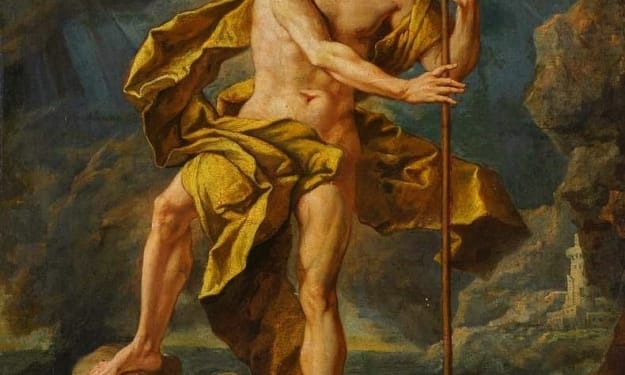
Cults of Gods: Poseidon, God of the Sea and...Horses?
Modern sources often present Poseidon as a one-sided god of the sea. But that is only part of his vast domain. Beyond the waves, Poseidon ruled forces that had little to do with water such as earthquakes and horses. This makes him one of the most complex figures of the Greek pantheon.
By Alex Smith3 months ago in History