
Cults of Gods: Is Aphrodite older than the Olympians?
What were Aphrodite's cult and religious functions?

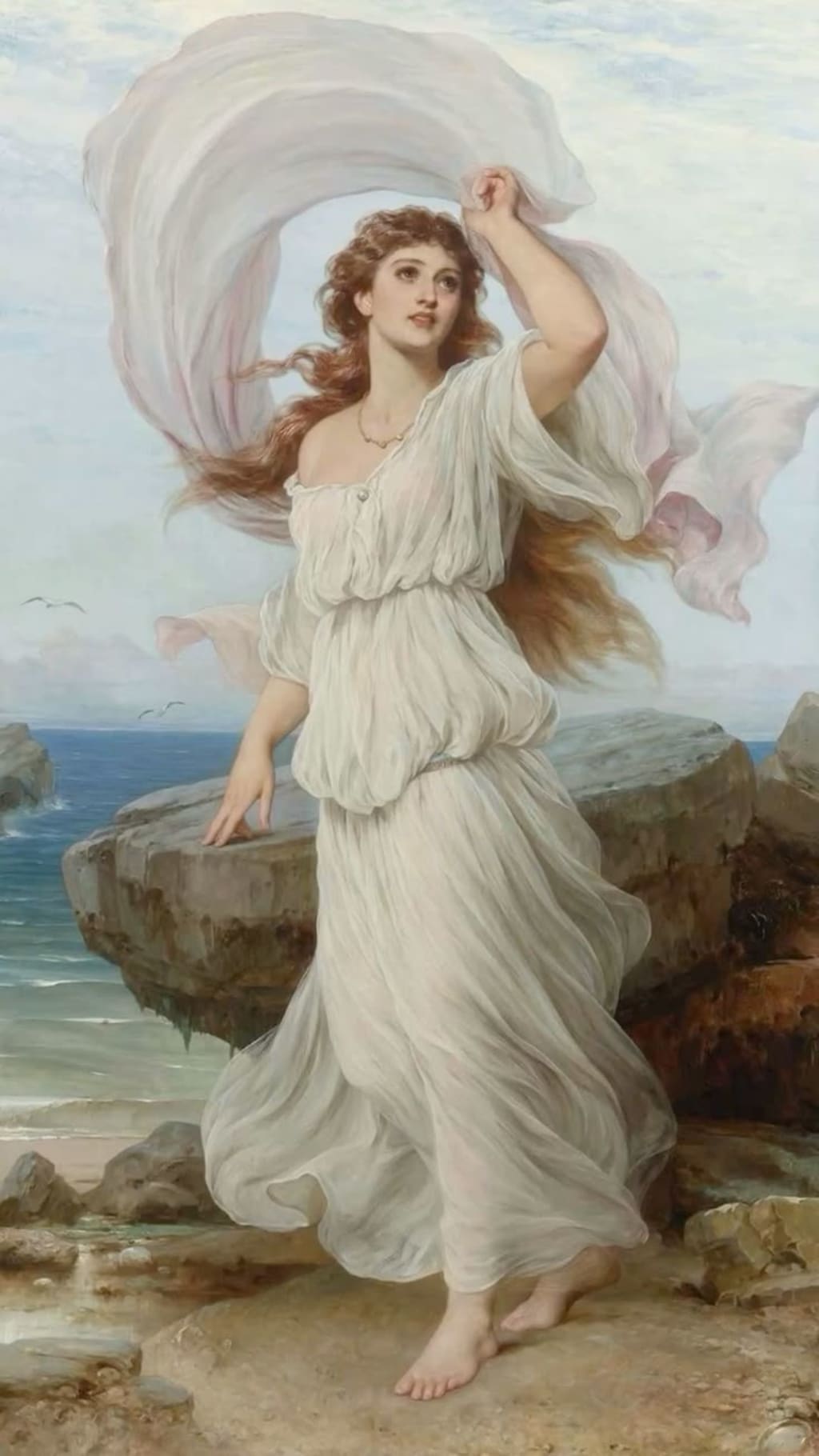
The goddess who sided with the Trojans during the Trojan War, restrained the bloodthirsty Ares, and inspired rivalry with the mortal Psyche was also one of the most influential cultic deities of the Hellenic world. Aphrodite was not merely a poetic symbol of love and beauty; she was a widely worshipped divine power whose sanctuaries, festivals, and epithets reveal a far more complex religious role.
Aphrodite was revered as the Olympian goddess of love, beauty, pleasure, and procreation, most often depicted as a youthful and radiant woman. In cult and art alike, she was frequently accompanied by her son Eros, the personification of desire and attraction.
Ancient poets such as Hesiod derived Aphrodite’s name from aphrós (ἀφρός), “sea-foam,” linking her birth to the moment when Kronos cast the severed genitals of Ouranos into the sea. This myth, preserved in the Theogony, poetically suggests that beauty and generative power can arise even from cosmic violence and chaos.
Modern scholarship, however, largely regards this explanation as a folk etymology. Aphrodite’s cult shows strong signs of Near Eastern influence, and her name is now widely considered to be of Semitic origin, though its precise derivation remains uncertain. Some scholars have proposed connections with Astarte, while others—such as Martin West—suggest a Cypriot-Canaanite form (Aprodît or Aproḏît), possibly meaning “She of the Villages” or “the Sublime One.” These theories underline Aphrodite’s deep ties to Cyprus and the eastern Mediterranean, where her worship likely took shape before spreading to mainland Greece.
Greek tradition preserved two genealogies for Aphrodite. In addition to the Hesiodic sea-birth, she was also said to be the daughter of Zeus and Dione, an oracle goddess associated with Dodona in northwestern Greece. The coexistence of these traditions reflects not confusion, but the absorption of multiple local cults into a unified Olympian framework.
Cultic Aphrodite extended far beyond erotic love. While she was deeply associated with female sexuality, marriage, and fertility, she also presided over childbirth, vegetation, and agricultural abundance. Epithets such as Dôritis (“Bountiful”) emphasized her role in the fertility of the land itself.
She was further revered as the protector of sailors, especially in coastal sanctuaries, under titles like Pontia (“of the Sea”). In a striking contrast to later romanticized portrayals, Aphrodite could also appear as a martial deity. In several cities—most notably Sparta and Corinth—she was worshipped as Aphrodite Areia (“Warlike Aphrodite”), reflecting her close association with Ares and the belief that desire and conflict were intertwined cosmic forces.
Aphrodite also served as the patron goddess of prostitutes, particularly in major urban centers, underscoring her governance over all socially recognized forms of sexuality.
Public festivals dedicated to the goddess were commonly known as Aphrodisia. Large-scale celebrations were held in Cyprus—especially at Paphos and Amathus—as well as in major Greek cities such as Athens and Corinth. Some of these festivals appear to have included symposia accompanied by courtesans, reinforcing the goddess’s association with pleasure and sociability.
Private devotion was equally important. In many Greek communities, young women offered sacrifices to Aphrodite on the eve of their wedding, seeking divine favor for their first sexual union and for future fertility.
Aphrodite’s most prestigious temples were located on Cyprus, especially at Paphos and Amathus. The sanctuary at Amathus was even said to house the legendary Necklace of Harmonia, an object promising eternal youth while carrying a destructive curse—an emblem of Aphrodite’s dual nature.
Her worship extended throughout Greece, with major temples in Sparta and Cythera, and spread across the wider Mediterranean to Italy, Sicily, and Asia Minor.
In some northern Greek cities, such as Cassope and Metropolis, Aphrodite was honored primarily as a protector of the polis, demonstrating her political and civic importance beyond matters of love.
During the Hellenistic period (323–31 BCE), Aphrodite was increasingly identified with Egyptian goddesses such as Hathor and Isis, and her cult flourished throughout Egypt.
The Romans adopted Aphrodite as Venus. According to Livy, this identification was formally established in the late third century BCE with the introduction of the cult of Venus Erycina. As Rome increasingly claimed descent from Aeneas, Venus gained political significance as Venus Genetrix, the divine mother of the Roman people. One of her most important temples was built by Julius Caesar in 44 BCE.
Earlier scholarship often assumed that Aphrodite’s temples practiced sacred prostitution, drawing parallels with Near Eastern cults of Ishtar or Astarte. Today, however, most scholars agree that there is no reliable evidence that such practices formed part of Aphrodite’s Greek cult. While sexuality was central to her worship, it does not appear to have taken the institutionalized form once imagined.
Thank you for reading my article! Like and send it to your friends.
About the Creator
Keep reading
More stories from Alex Smith and writers in History and other communities.
Cults of Gods: Ares, Cultless God?
Ares is described as bloodthirsty, cruel and outright dangerous. Hated by own father Zeus, by mortals and gods, it would be expected that such a deity doesn't have a cult or any trace of veneration. But it is not correct. Even if shown as cruel in myths, reality is far more sophisticated, and even horrible god like Ares had his own place in pantheon.
By Alex Smith2 months ago in History
Rajendra Chola I and the Conquest of the Ganga: A Monumental Feat in Indian History
Known as the “Gangaikonda Chola” (the Chola who conquered the Ganga), Rajendra transformed a South Indian maritime empire into a pan-Indian power whose influence stretched from the Indian Ocean to the heart of the subcontinent. This campaign was not merely a military raid but a bold statement of imperial ambition, strategic brilliance, and cultural confidence.
By Say the truth 4 days ago in History
The Quiet Name on Maple Street
Kim Jong-un was born into a world unlike almost any other—a world sealed by borders, ideology, and secrecy. As the grandson of Kim Il-sung, the founder of North Korea, and the son of Kim Jong-il, the country’s second leader, Kim Jong-un entered life already wrapped in destiny. In North Korea, leadership is not chosen by ballots or debate; it is inherited like a crown, reinforced by loyalty, fear, and an unyielding political system.
By The best writer a day ago in History


Comments
There are no comments for this story
Be the first to respond and start the conversation.