
Cults of Gods: Hestia, A Mythless Goddess?
What were Hestia's Cult and Religious Functions?

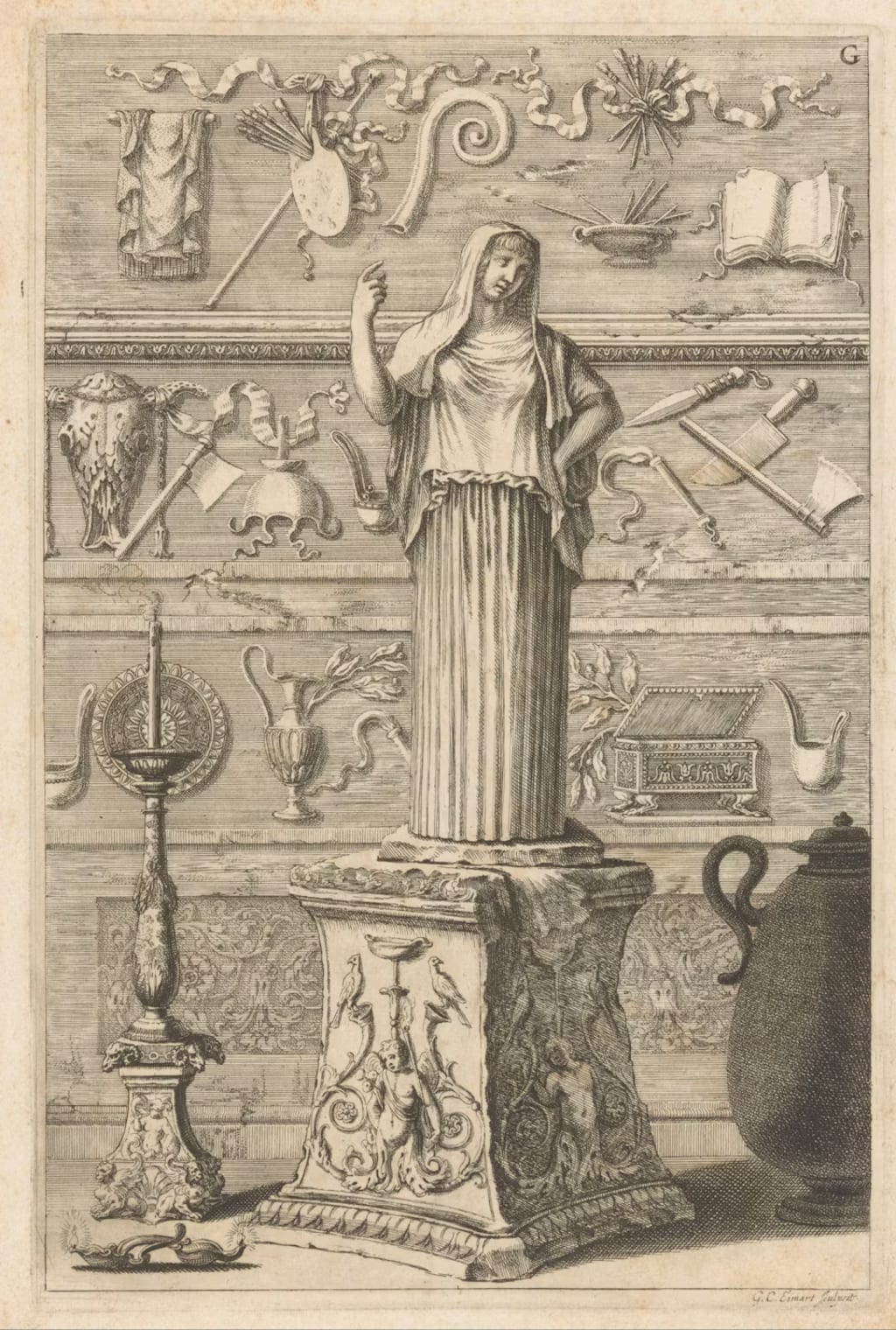
The goddess who appears in almost no myths yet holds one of the most important roles in Greek religion—Hestia is a quiet, still presence while the other gods roam the world. But who was she, and why does she seem almost invisible in myth despite her immense religious significance?
Hestia (Roman Vesta) is the Olympian goddess of the hearth—both private and civic—and of the home. She was, according to some traditions, the eldest child of Kronos and Rhea. As the deity of the hearth’s fire, she presided over the baking of bread, preparation of meals, the warmth of the household, and the stability of the family. In household religion, she received the first and last portion of every offering.
The etymology of her name is uncertain. Some scholars connect Hestia to Proto-Indo-European roots such as wes- (“burn”) or h₂wes- (“dwell, stay the night”). Others have linked her name to words for “hearth,” such as Greek eschara or Slavic jestěja, though these are no longer widely accepted. Robert S. P. Beekes, a leading authority on Greek linguistics, argued that Hestia’s name is most likely pre-Greek, belonging to the linguistic substrate of the Aegean.
Notably, the Roman name Vesta comes from the same ancient root.
Hestia in Myth: A Presence Without Stories
Because references to Hestia are few, it is difficult to reconstruct her personality or attributes from myth alone. The Homeric Hymns, composed between the seventh and sixth centuries BCE, offer only brief glimpses.
In the 24th Hymn, she is addressed as the goddess who tends Apollon’s sacred house at Delphi, her hair dripping with fragrant oil.
The 29th Hymn states that she dwells “in the high houses of all,” among both gods and mortals—a reminder of her universal presence.
A more detailed contrast appears in the Homeric Hymn to Aphrodite, in which Hestia embodies chastity and stability in opposition to Aphrodite’s erotic power. Here, Hestia becomes almost an anti-Aphrodite: a guardian of home, order, and purity.
Her most famous myth concerns her vow of eternal virginity. Both Poseidon and Apollon sought her as a bride, but she rejected them. On Olympus, she placed her hand on Zeus' head and swore an oath to never marry. Zeus honored her vow, granting her the privilege of receiving the first offering at every sacrifice.
Her Worship in Household and City
Though often forgotten today, Hestia’s cult was essential in Greek daily life. In every household, the domestic hearth was her shrine, she was invoked at the start of every prayer and received the first share of every sacrifice. Her presence symbolized stability, purity, and the sacredness of home life.
In the civic sphere, Hestia’s worship centered on the prytaneum, the public building that housed the city’s communal hearth. Every Greek city had a prytaneum containing a sacred fire dedicated to Hestia. These buildings also served official functions—hosting ambassadors, honored guests, and important meetings. A hearth of Hestia was likewise present in the Boule, the city council building.
The hearth, whether private or public, was considered a sanctuary, and supplicants could claim protection at Hestia’s fire.
Because every hearth was sacred to her, independent temples to Hestia were rare. A notable exception was the temple in Hermione, remarkable for containing no cult statue. This contrasts with her Roman counterpart Vesta, who possessed a major temple in central Rome and the famous Vestal Virgins who tended her eternal flame.
The Eternal Flame and Founding of Colonies
Hestia was closely associated with the eternal flame, a fire that was never allowed to go out. When a Greek city founded a colony, settlers carried fire from their mother city’s prytaneum to ignite the hearth of the new settlement—symbolically transporting Hestia’s presence to the new land.
The Romans inherited and expanded this tradition through the cult of Vesta.
Hestia was sometimes also celebrated and invoked with sacrifices of various foods and animals, such as young cows.
Thank you for reading my article! Share your thoughts in the comments and spread this article.
About the Creator
Keep reading
More stories from Alex Smith and writers in History and other communities.
Cults of Gods: How Demeter is connected to afterlife?
When most people think of Demeter, their minds immediately go to the myth of Persephone’s abduction by Hades and the grief that followed. Does this mean Demeter’s role was limited to that of a mother? Far from it. In this article, we will explore who Demeter truly was and why the Ancient Greeks worshipped her—not only as the mother of Persephone, but as a central figure in Greek religious life.
By Alex Smith2 months ago in History
Firoun: The Tyrant Who Defied God
Firoun, known to history as Pharaoh, was not just a king—he was a symbol of absolute power. He ruled over ancient Egypt at a time when the Nile flowed generously, the granaries were full, and massive stone monuments rose toward the sky. To his people, Firoun appeared invincible. To himself, he was more than human.
By The best writer a day ago in History


Comments
There are no comments for this story
Be the first to respond and start the conversation.