politics
Politics does not dictate our collective cultural mindset as much as it simply reflects it; We've got to look in the mirror sometimes, and we've got one.
Executions in Saudi Arabia Hit Highest Number on Record. AI-Generated.
Saudi Arabia has once again drawn intense global attention after reports confirmed that executions in the kingdom have reached the highest number ever recorded in a single year. The sharp rise has sparked renewed debate over capital punishment, legal transparency, and the broader direction of justice reforms promised under the country’s ambitious modernization agenda.
By Aarif Lashari28 days ago in The Swamp
Donald Trump and Volodymyr Zelenskyy Talks Fail to Deliver Breakthrough on Ukraine Peace Deal. AI-Generated.
The much-anticipated talks between former U.S. President Donald Trump and Ukrainian President Volodymyr Zelenskyy have ended without the long-awaited breakthrough many hoped would move the Russia-Ukraine war closer to resolution. Despite optimistic statements from both sides, the discussions revealed deep and persistent divisions over key issues such as territorial integrity, security guarantees, and the future political landscape of Eastern Europe. While the meeting signaled continued diplomatic engagement, it also highlighted just how complex and fragile the road to peace remains. A Meeting Watched by the World The Trump–Zelenskyy meeting attracted global attention, as many believed it could mark a turning point in efforts to end the ongoing conflict that has reshaped Europe’s security order. Both leaders described the discussions as “constructive” and “productive,” fueling speculation that a peace framework might be within reach. However, as details emerged, it became clear that progress was limited. While dialogue was open and frank, no concrete agreement was reached, and several core disagreements remain unresolved. Territory: The Central Roadblock At the heart of the stalled negotiations lies the issue of territorial sovereignty. Ukraine continues to reject any settlement that would formalize Russian control over occupied regions, including parts of eastern Ukraine and strategically vital territories seized during the conflict. President Zelenskyy has repeatedly emphasized that Ukraine’s land is non-negotiable and that any territorial compromise would require public approval through a national referendum. For Ukrainians, the issue is not just political—it is deeply tied to national identity, sacrifice, and sovereignty. On the other hand, proposals reportedly discussed during the talks included potential territorial concessions as part of a broader peace framework, an idea that remains unacceptable to Kyiv at this stage. Security Guarantees Remain a Sticking Point Another major obstacle is the question of long-term security guarantees. Ukraine has consistently demanded binding, long-term assurances to prevent future aggression. While proposals have included limited security commitments from Western partners, Ukrainian officials argue that anything short of long-term, enforceable protection would leave the country vulnerable again. The gap between short-term assurances and Ukraine’s demand for decades-long guarantees remains wide. Without a clear and credible security framework, Kyiv is reluctant to sign onto any peace arrangement. Diplomatic Optimism vs. Political Reality Despite these challenges, both Trump and Zelenskyy sought to project optimism. Trump suggested that a broader peace plan was taking shape and hinted that further negotiations — possibly involving Russia directly — could follow. Zelenskyy echoed cautious optimism but made clear that Ukraine would not accept peace at the cost of sovereignty or national security. Behind closed doors, however, analysts note that the political realities facing both leaders limit flexibility. Trump faces domestic political pressure to end foreign conflicts swiftly, while Zelenskyy must answer to a nation that has endured years of war and sacrifice. Europe’s Role in the Negotiations European leaders continue to play a critical supporting role in the peace process. Several European governments have urged caution, emphasizing that any agreement must align with international law and respect Ukraine’s territorial integrity. European involvement also reflects concern that rushed negotiations could set dangerous precedents for future conflicts. As a result, many European leaders have encouraged continued diplomacy while resisting pressure for quick compromises. What Happens Next? While the talks did not yield a breakthrough, they did keep diplomatic channels open — an important development in itself. Further discussions between the United States, Ukraine, European allies, and potentially Russia are expected in the coming months. For now, the war continues, and so does the difficult search for peace. The failure to reach an agreement underscores how complex and deeply rooted the conflict has become. Any future settlement will require not only political compromise but also trust, security assurances, and international cooperation on an unprecedented scale. Conclusion The Trump–Zelenskyy talks offered hope but ultimately underscored the challenges of ending one of the most consequential conflicts of the modern era. While dialogue continues, peace remains elusive, constrained by unresolved territorial disputes, security concerns, and geopolitical rivalries. As the world watches, the path forward will demand patience, diplomacy, and a willingness from all sides to confront hard truths in pursuit of lasting peace.Start writing...
By Muhammad Hassan28 days ago in The Swamp
Four Decades in the European Union: Spain and Portugal’s Journey Since 1986. AI-Generated.
In 1986, Spain and Portugal took a decisive step that would redefine their futures: they joined the European Economic Community, the predecessor of today’s European Union. For both nations, accession was more than a diplomatic milestone—it symbolized a return to Europe after decades of political isolation under authoritarian rule. Nearly forty years later, their journey within the European Union offers a compelling story of transformation, resilience, and ongoing challenges.
By Aarif Lashari28 days ago in The Swamp
Europe Has ‘Lost the Internet,’ Warns Belgium’s Cybersecurity Chief: A Wake-Up Call for the Digital Age. AI-Generated.
Europe’s digital backbone is under strain, and the warning could not be starker. Belgium’s cybersecurity chief has cautioned that Europe has, in effect, “lost the internet”—a provocative phrase that captures a deeper reality: the continent no longer controls critical parts of the digital infrastructure it relies on daily. From cloud services and social platforms to undersea cables and data centers, Europe’s dependence on foreign technology has grown so pervasive that its digital sovereignty is increasingly fragile.
By Fiaz Ahmed Brohi28 days ago in The Swamp
Several Killed as Iran Protests Over Rising Cost of Living Spread. AI-Generated.
Iran has once again been shaken by widespread protests as anger over the rising cost of living spills onto the streets, leaving several people dead and many more injured or detained. The demonstrations, which began in response to economic hardship, have rapidly spread across multiple cities, highlighting deep frustration among ordinary Iranians struggling to cope with inflation, unemployment, and declining living standards.
By Fiaz Ahmed Brohi28 days ago in The Swamp
US Says Chinese Military Drills Around Taiwan Cause Unnecessary Tensions. AI-Generated.
In the latest escalation of military tensions in the Asia-Pacific region, the United States has condemned China’s recent military drills near Taiwan, calling them provocative and unnecessarily escalating regional tensions. The drills, which involve live-fire exercises and simulated strikes against Taiwan, have raised alarms not only within Taiwan itself but also across the global community, particularly in Washington. Context Behind the Drills The Chinese military drills were initiated as a response to Taiwan’s increased engagement with the United States and other international allies. Beijing views Taiwan as a breakaway province and has long expressed its intent to reunite Taiwan with mainland China, by force if necessary. The island, however, operates as a de facto independent nation with its own government and economy, a status that China strongly opposes. Taiwan's growing international relations, particularly with the US, have led to heightened concerns in Beijing. The recent drills are seen as part of a broader strategy to intimidate Taiwan and to showcase China’s military capabilities. They come at a time when the US has continued to bolster its defense commitment to Taiwan, including arms sales and diplomatic support. US Reaction: A Call for Stability The US government has consistently expressed its commitment to supporting Taiwan's sovereignty and security. The US is bound by the Taiwan Relations Act, which obligates it to assist Taiwan in maintaining its defense capabilities, although it does not formally recognize Taiwan as a separate nation. The US State Department condemned China’s military maneuvers, describing them as an "unnecessary escalation" that undermines peace and stability in the region. A senior US official pointed out that such military exercises are designed to increase fear and anxiety among the Taiwanese population, sending a clear message of military coercion. The Pentagon issued a statement stating, “China’s actions near Taiwan only exacerbate the tensions and instability in the region. These provocations are counterproductive and only strengthen Taiwan's resolve to preserve its democracy and independence.” A Response to Increased US-Taiwan Relations Beijing has long viewed Taiwan as part of its sovereign territory, and the growing military relationship between the US and Taiwan has become one of the most contentious issues in the Taiwan Strait. Over the last few years, Taiwan’s strategic importance has only grown in the eyes of the US, especially in the context of rising Chinese influence in the Indo-Pacific region. The military drills can be seen as a direct response to the increased US involvement in Taiwan's security. In the past year alone, Taiwan has secured advanced weaponry from the US, including missiles, fighter jets, and radar systems. Furthermore, senior US politicians and military officials have made frequent visits to Taipei, signaling robust diplomatic and military support. In response, China has ramped up its military presence around Taiwan, conducting several rounds of live-fire drills and air incursions. These actions, according to the US, are meant to provoke instability and intimidate Taiwan into submission. The US has emphasized the importance of dialogue and peaceful resolution to avoid further conflict. Taiwan’s Position: Sovereignty and Security Taiwan has been a consistent and vocal advocate for its sovereignty and independence, stressing that its people should have the right to determine their own future. Taiwanese officials have reiterated that they seek peace and stability in the region but will not yield to external pressures or military intimidation. Taiwan's President Tsai Ing-wen has called on China to “cease military threats and focus on dialogue.” At the same time, she affirmed that Taiwan would strengthen its military capabilities to defend itself in the face of rising threats. Taiwan’s Ministry of Defense issued a statement confirming that it is closely monitoring China’s military activities and maintaining a high level of readiness. “We will continue to safeguard Taiwan’s sovereignty and territorial integrity while avoiding unnecessary provocations,” the Ministry said. International Reactions: A Broader Concern The increasing military presence in the Taiwan Strait has triggered concerns beyond the US and Taiwan. Countries in the Indo-Pacific region, including Japan, South Korea, and Australia, have expressed growing concerns over the stability of the Taiwan Strait and the potential for conflict in the area. These nations are increasingly wary of China’s growing military assertiveness and the potential ramifications of a conflict over Taiwan. Furthermore, the European Union (EU) has also voiced its concerns about the rising tensions. In a recent statement, EU officials called for calm and urged China to avoid military escalation. They emphasized the importance of diplomatic dialogue and respect for international law. The Bigger Picture: US-China Rivalry The ongoing military standoff in the Taiwan Strait is part of a larger geopolitical competition between the US and China, which is intensifying as both nations vie for dominance in the Indo-Pacific region. The US has long maintained that it has a strategic interest in the region and that Taiwan’s security is integral to regional stability. The situation reflects the broader US-China rivalry, with Taiwan being a focal point in this strategic competition. While both countries have at times engaged in diplomatic dialogue, their differing positions on Taiwan continue to pose a significant risk to regional security. The Path Forward As tensions continue to mount, experts agree that the risk of miscalculation is high. Military exercises, such as China’s recent drills around Taiwan, can inadvertently lead to conflict, especially in an area as sensitive as the Taiwan Strait. The US and its allies will likely continue to bolster their military presence in the region, while China will likely press forward with its efforts to assert control over Taiwan. For now, the focus remains on reducing tensions and ensuring that diplomacy and dialogue remain at the forefront of efforts to resolve the situation. However, with both sides entrenched in their positions, finding a path to lasting peace remains a significant challenge.
By Fiaz Ahmed Brohi28 days ago in The Swamp
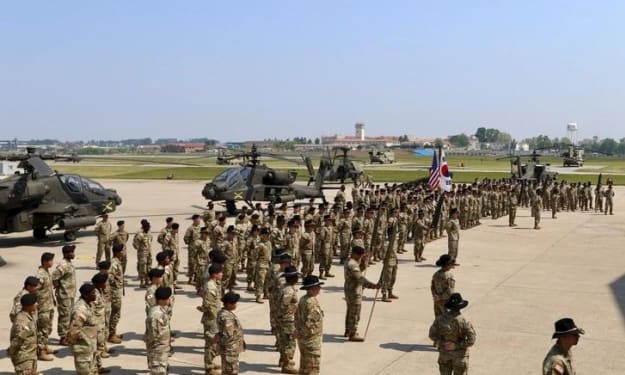
U.S. Army Squadron in Korea Deactivated Amid Concerns About Potential Troop Cuts. AI-Generated.
The recent deactivation of a U.S. Army squadron stationed in South Korea has sparked concerns about the future of U.S. military presence in the region, as well as the strategic implications of such a move. While the U.S. government has presented this action as part of routine military restructuring, many experts and analysts are interpreting it as an indication of potential reductions in U.S. military personnel stationed in South Korea. This development comes at a time of growing uncertainty in the region, with rising tensions between the U.S. and North Korea, as well as the evolving geopolitical dynamics surrounding China. Background: The Deactivation of the Squadron In late December 2025, the U.S. Army’s 2nd Armored Brigade Combat Team (ABCT), part of the 1st Armored Division, was deactivated after nearly two decades of service in South Korea. This marks a significant shift in the U.S. military’s posture in the region, especially as the Korean Peninsula remains a high-stakes area in terms of security concerns. The 2nd ABCT was a key component of the U.S. military’s presence in South Korea, responsible for ensuring readiness to counter any potential aggression from North Korea. The unit had a critical role in deterring North Korean provocations, as well as providing rapid response capabilities in the event of a military conflict on the peninsula. South Korea has been home to a significant U.S. military presence since the Korean War, with tens of thousands of U.S. troops stationed in the country as part of the U.S.-South Korea alliance. This military presence has played a crucial role in maintaining stability in the region, as well as serving as a deterrent against potential North Korean aggression. The Strategic Implications The decision to deactivate the squadron comes amid growing concerns over the evolving geopolitical landscape in Asia. The U.S. has been gradually shifting its military focus towards countering China’s growing influence in the Indo-Pacific region, particularly in the South China Sea. As part of this shift, the U.S. military has been reassessing its military deployments and strategic posture in various regions, including the Korean Peninsula. The U.S. has made efforts to modernize its military presence in South Korea, focusing on enhancing the capabilities of remaining troops and ensuring that the forces stationed there are able to quickly respond to any emerging threats. However, many analysts see the deactivation of the squadron as part of a broader strategy to reduce the U.S. military footprint in the region, as troop reductions have been discussed in previous defense budget proposals. One possible reason for the reduction in the U.S. military presence in South Korea is the changing nature of North Korea’s military capabilities. While the North Korean regime has continued to test nuclear and missile technology, its military capabilities are not as advanced as those of the U.S. and South Korean forces. This has led some experts to question whether a large U.S. military presence is still necessary on the peninsula. Additionally, the evolving relationship between the U.S. and South Korea has likely contributed to the decision to reduce the squadron. Under President Yoon Suk-yeol, South Korea has emphasized a stronger role in its own defense, seeking to take on a more active role in countering North Korea’s threats. The growing capabilities of the South Korean military and its greater emphasis on self-defense may have led to the reassessment of the U.S. military’s role in the region. Concerns Over Potential Troop Cuts While the deactivation of the 2nd ABCT squadron is being described as a “routine” military adjustment, many experts are concerned about the potential broader implications. The reduction of U.S. forces in South Korea could signal the beginning of a more substantial shift in U.S. military presence on the peninsula. Critics have expressed concerns that such reductions could embolden North Korea, as the U.S. military has long been seen as a key deterrent against Pyongyang’s aggressive actions. The presence of U.S. forces in South Korea has helped maintain peace on the peninsula for decades, and a reduction in that presence could be interpreted by North Korea as a sign of diminishing U.S. commitment to the alliance. Additionally, there is concern that reduced troop levels in South Korea could undermine U.S. credibility in the region. U.S. allies in the Indo-Pacific, particularly Japan and South Korea, may worry that the U.S. is pulling back from its traditional role as the security guarantor in the region, making it harder to counter the growing influence of China and North Korea. The U.S. Response and Future Plans The U.S. government has emphasized that the decision to deactivate the squadron is part of an ongoing effort to modernize and optimize military capabilities in the region. The U.S. Department of Defense has stated that the reduction of the squadron will be balanced by increased reliance on advanced technologies, including missile defense systems, cyber capabilities, and air superiority. Moreover, the U.S. has reaffirmed its commitment to defending South Korea in the event of an armed conflict, with the American government pledging to maintain a “robust and flexible” military presence in the region. The deactivation of the 2nd ABCT squadron does not mean the U.S. is abandoning its security obligations to South Korea, but rather reflecting a strategic shift toward more efficient and flexible defense capabilities. Conclusion As the deactivation of the 2nd ABCT squadron in South Korea sets the stage for further potential adjustments to the U.S. military presence on the Korean Peninsula, concerns over the future of U.S.-South Korea relations and regional security are likely to grow. While the U.S. continues to invest in modernizing its defense capabilities, the question remains whether the reduced troop presence will undermine its deterrence strategy or if South Korea’s increased military capabilities can pick up the slack. In the coming years, it will be crucial for both the U.S. and South Korea to maintain a strong partnership and ensure that the region remains stable in the face of growing challenges from North Korea and other geopolitical threats. The U.S. military's ongoing role in East Asia, particularly on the Korean Peninsula, will continue to evolve, with the deactivation of the 2nd ABCT squadron serving as a potential precursor to a larger reorientation of U.S. forces in the region.
By Fiaz Ahmed Brohi28 days ago in The Swamp
Kim Jong Un Appears at New Year Celebrations with Daughter, Signaling a Carefully Crafted Image of Leadership. AI-Generated.
North Korean leader Kim Jong Un marked the beginning of the New Year by attending a major celebration accompanied by his young daughter, an appearance that has once again drawn global attention to the symbolism surrounding the country’s leadership and its future. The event, held in Pyongyang, featured grand performances, patriotic displays, and carefully curated imagery aimed at reinforcing national unity and loyalty to the ruling Kim family.
By Muhammad Hassan28 days ago in The Swamp
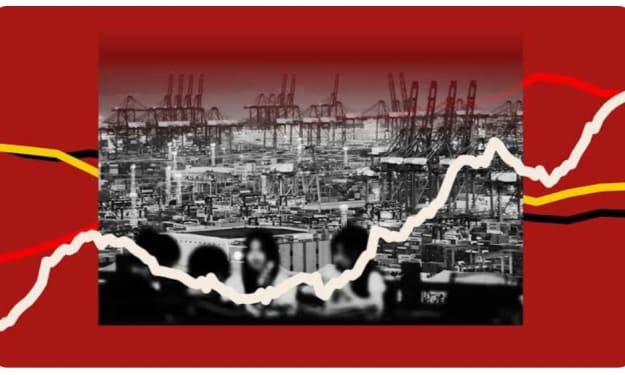
Why China Is Doubling Down on Its Export-Led Growth Model. AI-Generated.
As global economic conditions grow more uncertain, China is reaffirming its commitment to an export-led growth model, signaling a strategic pivot that has far-reaching implications for international trade and geopolitics. While many economies are attempting to rebalance toward domestic consumption, Beijing appears to be doubling down on exports as a central pillar of its economic resilience strategy.
By Ayesha Lashari28 days ago in The Swamp
The Day the Stadium Felt Like Church
I wasn’t born into fandom. I was adopted into it. At ten years old, I didn’t understand offside rules or midfield rotations. I only knew that every Sunday, my grandfather would take my hand, walk me three blocks to the edge of the stadium, and sit with me on a cracked concrete step—just outside the gates, where the roar of the crowd bled into the street like a hymn.
By KAMRAN AHMAD29 days ago in The Swamp