
Europe Has ‘Lost the Internet,’ Warns Belgium’s Cybersecurity Chief: A Wake-Up Call for the Digital Age
Why Europe’s Digital Dependence Has Become a Major Security Risk

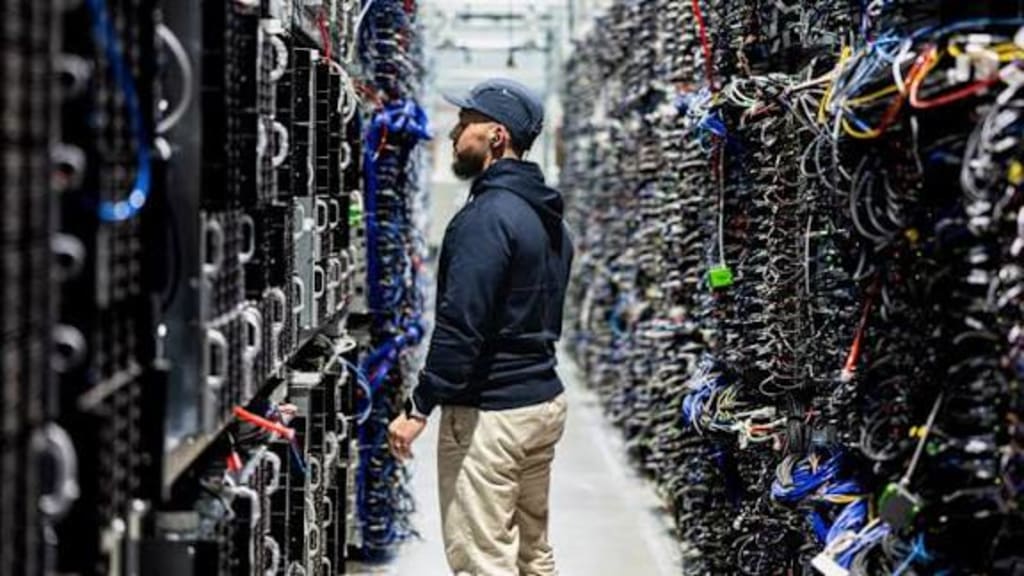
Europe’s digital backbone is under strain, and the warning could not be starker. Belgium’s cybersecurity chief has cautioned that Europe has, in effect, “lost the internet”—a provocative phrase that captures a deeper reality: the continent no longer controls critical parts of the digital infrastructure it relies on daily. From cloud services and social platforms to undersea cables and data centers, Europe’s dependence on foreign technology has grown so pervasive that its digital sovereignty is increasingly fragile.
This warning is not about a sudden blackout or a single cyberattack. It is about slow erosion—years of outsourcing, fragmented regulation, and underinvestment that have left Europe exposed to economic coercion, surveillance risks, and cascading failures during crises. In a world where the internet underpins everything from hospitals and energy grids to elections and national defense, losing control of it is not merely a technical problem; it is a strategic one.
What Does It Mean to “Lose the Internet”?
At its core, the statement reflects Europe’s reliance on non-European companies and jurisdictions for essential internet services. Most major cloud platforms, social networks, search engines, and operating systems used across Europe are owned and operated by firms based outside the EU. Even critical infrastructure—such as content delivery networks, domain name services, and parts of undersea cable systems—are often controlled by global tech giants with priorities shaped elsewhere.
This dependency creates vulnerabilities. Policy decisions, commercial disputes, sanctions, or geopolitical tensions can quickly ripple through Europe’s digital ecosystem. If a service provider changes terms, restricts access, or becomes the target of a cyber conflict, European users and institutions may have little recourse.
The Security Risks Are Real
Cybersecurity professionals warn that dependence equals exposure. When data is stored, processed, or routed through systems outside Europe’s direct oversight, it becomes harder to enforce privacy laws, audit security standards, or respond rapidly to incidents. Recent years have seen a rise in ransomware attacks on hospitals, municipalities, and transport systems—many of which rely on third-party platforms.
There is also the risk of “digital choke points.” Concentration among a few providers means that a single failure—technical or political—can have outsized effects. Outages at major cloud or DNS providers have already demonstrated how quickly services across countries can grind to a halt.
Economic and Democratic Implications
The internet is not just infrastructure; it is the marketplace and the public square. When advertising, commerce, and information flows are dominated by external platforms, European businesses face unequal competition, and public discourse can be shaped by algorithms designed beyond European democratic accountability.
Moreover, data is the fuel of modern economies. Losing control over data means losing leverage over innovation in artificial intelligence, healthcare research, smart manufacturing, and climate technologies. Europe risks becoming a consumer of digital products rather than a creator—dependent on others for the tools that define future growth.
Why Europe Fell Behind
Europe’s predicament did not happen overnight. The EU has been a global leader in digital regulation—most notably with GDPR—but regulation alone does not build infrastructure. Fragmented markets, cautious investment cultures, and the absence of tech giants willing to scale at speed have hindered the emergence of European alternatives.
Public procurement often favored established global vendors, reinforcing dependency. Meanwhile, investment in homegrown cloud services, semiconductors, and cybersecurity tools lagged behind the scale seen in the United States and parts of Asia.
A Path Back to Digital Sovereignty
The warning from Belgium’s cybersecurity chief is also a call to action. Europe still has options—if it moves decisively.
First, investment must match ambition. Initiatives to build European cloud services, strengthen semiconductor manufacturing, and secure undersea cables need sustained funding and political backing. Second, interoperability and open standards can reduce lock-in and give users real choice. Third, public institutions should lead by example, prioritizing secure, European-based solutions where feasible.
Talent is another pillar. Europe produces world-class engineers and researchers, but retaining them requires competitive ecosystems—startups that can scale, access to capital, and regulatory clarity that encourages innovation without sacrificing rights.
Cooperation Without Isolation
Reclaiming digital control does not mean cutting ties or building walls around the internet. Global cooperation remains essential for cybersecurity, trade, and innovation. The goal is resilience: ensuring that Europe can function, defend itself, and uphold its values even when global systems are stressed.
That means diversifying suppliers, strengthening cross-border incident response within the EU, and aligning security requirements across member states. A resilient internet is one where no single actor—or foreign dependency—can bring societies to a standstill.
The Moment of Choice
The phrase “lost the internet” is intentionally jarring. It is meant to shake policymakers and the public out of complacency. Europe stands at a crossroads: continue with comfortable dependence, or invest in the hard work of rebuilding digital sovereignty.
In an era of cyber conflict, economic rivalry, and rapid technological change, control over the internet is control over the future. Europe still has the capacity to reclaim it—but the window is narrowing.
About the Creator
Fiaz Ahmed Brohi
I am a passionate writer with a love for exploring and creating content on trending topics. Always curious, always sharing stories that engage and inspire.
Keep reading
More stories from Fiaz Ahmed Brohi and writers in The Swamp and other communities.
Several Killed as Iran Protests Over Rising Cost of Living Spread
Iran has once again been shaken by widespread protests as anger over the rising cost of living spills onto the streets, leaving several people dead and many more injured or detained. The demonstrations, which began in response to economic hardship, have rapidly spread across multiple cities, highlighting deep frustration among ordinary Iranians struggling to cope with inflation, unemployment, and declining living standards.
By Fiaz Ahmed Brohi18 days ago in The Swamp
Indonesian Plane Goes Missing
On January 17, 2026, an ATR 42‑500 aircraft operated by Indonesia Air Transport (IAT) went missing while flying from Yogyakarta to Makassar. The small plane, which was on a mission for Indonesia’s Ministry of Marine Affairs and Fisheries, lost contact with air traffic controllers about 13:17–13:30 local time, over Maros Regency, South Sulawesi. The disappearance immediately prompted a large-scale search operation, drawing attention from local authorities, national rescue teams, and international media. It also raised concerns about air travel safety in a country with thousands of flights connecting its many islands each day. The Flight and Its Passengers The plane carried 10 to 11 people, according to official reports. Among them were three employees from the Ministry of Marine Affairs and Fisheries, along with the flight crew. Their mission was routine: aerial surveillance to monitor fisheries activity. Indonesia’s geography, with its mix of mountains and dense forests, makes flights over certain areas particularly challenging. The plane’s route took it over hilly, limestone terrain, which posed difficulties for both navigation and potential search efforts. The Search Effort Once the plane went missing, the National Search and Rescue Agency (Basarnas) immediately launched an operation. Teams of rescuers, including military personnel, police, and local volunteers, scoured the area by land, air, and drone, combing through the remote and rugged terrain of Bantimurung–Bulusaraung National Park. Weather reports indicated partly cloudy skies at the time of the incident, suggesting that the disappearance was unlikely to be caused solely by poor visibility. However, the combination of mountainous terrain and limited radar coverage complicated the search. Initial Discoveries About 24 hours after the disappearance, rescuers reported finding wreckage on a hilltop in the Bulusaraung area, including fragments of the fuselage and other aircraft parts. One body was recovered from the site, while teams continued to search for additional remains or survivors. Authorities emphasized that while some debris had been located, the investigation into the exact cause of the crash was just beginning. Pieces of the aircraft were being carefully documented and collected to assist with the investigation. Investigating the Cause The exact reason for the plane going missing is still under investigation. Officials are focusing on several key factors: The plane’s flight path and any possible deviations during its final moments. Communication gaps between the aircraft and air traffic control, particularly over the hilly region. Analysis of flight data recorders and emergency locator transmitters. Potential impacts of local weather patterns, including winds and cloud formations in the mountainous areas. The aircraft manufacturer, ATR (a French-Italian company), has expressed full support for the investigation and is working closely with Indonesian authorities to determine what went wrong. The Human Impact Beyond the technical and logistical details, the incident has a very real human dimension. Families of passengers and crew members have been waiting anxiously for news. Local and national officials have expressed condolences and support, emphasizing transparency and regular updates. Public reaction has been marked by both concern and solidarity. Communities across Indonesia are following developments closely, while media outlets continue to report verified information as it becomes available. Looking Ahead The discovery of wreckage and the recovery of one body is only the beginning. Rescue teams continue to navigate difficult terrain, hoping to recover any other victims and gather evidence to fully understand the incident. For Indonesia, a nation reliant on air travel across its thousands of islands, this tragedy underscores the ongoing challenges of aviation safety in remote areas. It also highlights the dedication of rescue personnel who risk their own safety to search for missing planes and their passengers. Authorities have stressed that the investigation will take time, and that the priority is both the recovery of victims and understanding the factors that contributed to this incident. Conclusion The disappearance of the Indonesian plane is a stark reminder of the risks inherent in aviation, particularly over complex and remote terrain. While one body has been recovered and debris located, questions remain. Families, officials, and the wider public are hoping for answers, as rescue teams continue their careful and difficult work. In situations like this, patience, transparency, and dedication to safety are essential. The story of this missing plane is still unfolding, and authorities have pledged to provide updates as the investigation progresses.
By Saboor Brohi a day ago in The Swamp



Comments
There are no comments for this story
Be the first to respond and start the conversation.