politics
Politics does not dictate our collective cultural mindset as much as it simply reflects it; We've got to look in the mirror sometimes, and we've got one.
Zelensky Urges Trump to Help Broker Talks With Putin Amid Ongoing War. AI-Generated.
Ukrainian President Volodymyr Zelensky has publicly called on former United States President Donald Trump to help facilitate a high-level meeting with Russian President Vladimir Putin, signaling Kyiv’s continued effort to explore every possible diplomatic channel to end the devastating war. The appeal comes at a time when the conflict between Russia and Ukraine has entered another prolonged and uncertain phase, marked by battlefield fatigue, global economic strain, and growing pressure for a political solution.
By Muhammad Hassan29 days ago in The Swamp
Two Ship Crew Members Arrested in Finland Over Baltic Sea Cable Damage. AI-Generated.
The arrest of two ship crew members in Finland over damage to undersea cables in the Baltic Sea has intensified global concerns about the vulnerability of critical maritime infrastructure. As nations increasingly rely on underwater cables for electricity, internet connectivity, and secure communications, even a single incident can have far-reaching geopolitical and economic consequences. What Happened in the Baltic Sea? Finnish authorities confirmed the arrest of two crew members from a foreign-flagged vessel suspected of being involved in damage to subsea infrastructure in the Baltic Sea. The incident came to light after disruptions were detected in underwater cables that play a vital role in regional communications and energy transmission between Northern European countries. Investigators believe the damage occurred during routine maritime activity, but the circumstances raised enough suspicion to warrant criminal investigation. The arrested crew members are reportedly being questioned over potential negligence, violation of maritime safety laws, or deliberate interference with protected infrastructure. Why Undersea Cables Matter Underwater cables form the backbone of modern civilization. Over 95% of global internet traffic travels through subsea fiber-optic cables, while power cables beneath the sea connect national grids and ensure energy security. The Baltic Sea, in particular, hosts a dense network of cables linking Finland, Sweden, Estonia, Germany, and other European nations. Any damage—intentional or accidental—can disrupt communications, affect financial markets, delay emergency services, and raise national security alarms. This is why undersea cable protection has become a strategic priority for governments worldwide. Finland’s Response and Legal Action Finland has taken a firm stance by swiftly detaining the suspects and launching a full investigation. Authorities emphasized that while maritime accidents do happen, the protection of critical infrastructure cannot be taken lightly. Finnish law allows for arrests when there is reasonable suspicion of criminal responsibility, even if intent has not yet been proven. Officials are also cooperating with international partners to determine whether the incident has cross-border implications. Given the shared nature of Baltic Sea infrastructure, neighboring countries are closely monitoring the investigation. Accidental Damage or Something More? One of the central questions surrounding the case is whether the cable damage was accidental or deliberate. Ships can sometimes damage undersea cables through anchor dragging or improper navigation, especially in congested waters like the Baltic Sea. However, recent global tensions have increased scrutiny over any such incidents. In recent years, several countries have reported unexplained damage to subsea cables and pipelines, fueling concerns about sabotage, hybrid warfare, and covert operations. While no conclusions have been drawn in the Finnish case, the arrests reflect heightened vigilance rather than an assumption of guilt. Rising Global Concern Over Maritime Infrastructure The Baltic Sea incident is part of a broader global trend. Governments and security experts are increasingly warning that underwater infrastructure is one of the most exposed elements of national security. Unlike land-based systems, subsea cables are difficult to monitor continuously and costly to repair. As geopolitical rivalries intensify, protecting these assets has become as important as defending airspace or borders. NATO and European Union members have already begun discussing enhanced surveillance, stricter maritime regulations, and improved information-sharing to prevent future incidents. Impact on Shipping and Crew Accountability The arrests also send a clear message to the global shipping industry: accountability at sea is tightening. Ship operators are expected to adhere strictly to navigation protocols, especially in sensitive zones marked by underwater infrastructure. Crew members now face greater legal responsibility, not only for safety at sea but also for the protection of invisible assets beneath it. Training, route planning, and compliance with maritime warnings are becoming more critical than ever. Legal and Diplomatic Implications If the investigation finds negligence or misconduct, the case could result in fines, imprisonment, or broader legal action against the vessel’s operators. If international involvement is suspected, diplomatic discussions may follow. At the same time, Finland has been careful to emphasize due process, underscoring that arrests are part of an investigation—not a verdict. This balanced approach aims to uphold the rule of law while maintaining regional stability. A Wake-Up Call for the World The Baltic Sea cable damage serves as a reminder that modern infrastructure extends far beyond what we can see. Beneath calm waters lie systems that keep societies connected, economies running, and governments functioning. As investigations continue, the case is likely to influence future maritime policies and international cooperation on infrastructure protection. Whether the damage proves accidental or intentional, the message is clear: undersea cables are no longer out of sight—or out of mind. Final Thoughts The arrest of two ship crew members in Finland highlights the growing intersection of maritime activity, national security, and global connectivity. In an age where digital and energy lifelines run beneath the oceans, safeguarding them has become a shared global responsibility. The outcome of this case may well shape how nations protect their underwater arteries in the years to come.
By Fiaz Ahmed Brohi29 days ago in The Swamp
New Year Drone Strike Kills 24 in Russian-Occupied Ukraine, Moscow Says. AI-Generated.
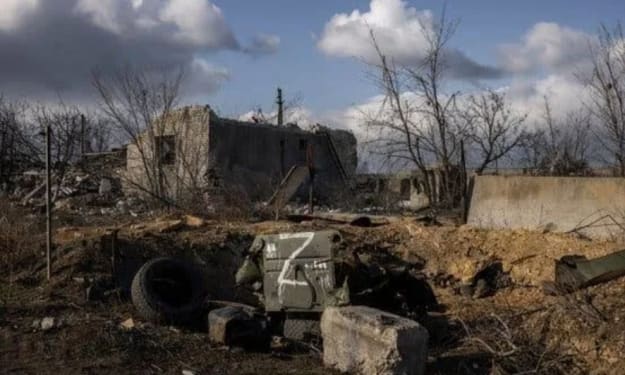
The new year began with renewed violence in Ukraine as a drone strike reportedly killed at least 24 people in Russian-occupied territory, according to statements from Moscow. The incident underscores a grim reality: despite seasonal hopes for ceasefires or diplomacy, the war continues to claim lives on both sides, even as the calendar turns. Russian authorities said the strike targeted a civilian area during New Year celebrations, calling it one of the deadliest drone attacks in recent months in occupied regions. Ukraine has not officially commented on the specific claims, while independent verification remains difficult due to restricted access and competing narratives from both sides. A War That Refuses to Pause For civilians living in occupied areas, the New Year attack reflects a familiar and devastating pattern. Holidays that once symbolized family, renewal, and peace have become periods of heightened fear. Air raid sirens, blackouts, and explosions have replaced fireworks and celebrations across much of the region. The reported drone strike is part of a broader escalation in the use of unmanned aerial systems by both Russia and Ukraine. Drones have become a defining feature of this conflict, used for surveillance, targeting, and increasingly, long-range strikes. Their relatively low cost and high impact have reshaped modern warfare—often at the expense of civilians caught in the middle. Moscow’s Claims and the Information War Russia described the strike as a deliberate attack on civilians, accusing Ukraine of violating international humanitarian norms. Such claims are not new. Throughout the war, both sides have repeatedly accused each other of targeting civilian infrastructure and population centers. However, verifying casualty figures and responsibility remains challenging. Independent journalists and international observers have limited access to Russian-controlled areas, making it difficult to confirm Moscow’s version of events. This information vacuum has become a battleground of its own, where narratives are weaponized alongside missiles and drones. Ukraine, for its part, has consistently stated that its military operations focus on legitimate military targets and logistics hubs, particularly in occupied territories. Kyiv argues that Russia often embeds military assets near civilian areas, increasing the risk of collateral damage. The Human Cost in Occupied Territories Regardless of responsibility, the human toll is undeniable. Civilians in occupied regions face a double burden: exposure to active hostilities and limited access to independent media, humanitarian aid, and evacuation routes. Many residents live under constant surveillance, with restricted movement and fear of reprisals. The New Year strike reportedly hit during a time when families were gathered indoors, amplifying its impact. Emergency services in occupied zones often struggle with shortages of equipment, trained personnel, and safe access to damaged areas, delaying rescue and medical care. As the war stretches into another year, fatigue is setting in—not only among soldiers, but also among civilians who see no clear end to the violence. Drones and the Evolution of the Conflict The increasing reliance on drones highlights how the war has evolved. Once seen primarily as reconnaissance tools, drones are now capable of delivering precise—and sometimes devastating—strikes deep behind front lines. Their use blurs traditional battlefields, bringing warfare closer to civilian life. Experts warn that drone warfare lowers the threshold for attacks, making it easier for conflicts to escalate. Unlike large missile systems, drones can be deployed quickly and frequently, increasing the risk of miscalculation and unintended casualties. The New Year incident may further intensify calls for stronger international rules governing drone use in armed conflicts—though enforcement remains a major challenge. International Reaction and Diplomatic Stalemate So far, international reactions have been muted, reflecting a broader diplomatic stalemate. While Western allies continue to support Ukraine militarily and financially, Russia remains defiant, framing the war as an existential struggle against external pressure. Human rights organizations have repeatedly urged all parties to protect civilians and allow independent investigations into alleged war crimes. However, with trust between the sides at rock bottom, meaningful cooperation appears unlikely. As 2026 begins, prospects for peace remain uncertain. Previous attempts at negotiations have failed, and battlefield dynamics continue to shift without delivering decisive outcomes. A Bleak Start to a New Year The reported drone strike serves as a stark reminder that time alone does not heal conflicts. Each new year adds another chapter of loss, displacement, and trauma for millions of Ukrainians and Russians alike. For families mourning loved ones lost in the latest attack, political statements and strategic debates offer little comfort. Their grief is immediate and personal—another entry in a growing ledger of wartime suffering. Conclusion Whether the full details of the New Year drone strike are ever independently verified, the incident reinforces a painful truth: the Russia-Ukraine war shows no sign of slowing. As drones buzz over contested skies and civilians bear the consequences, hopes for peace feel increasingly distant. Until diplomacy finds a way forward, the new year in Ukraine looks heartbreakingly similar to the last—marked not by celebration, but by survival.
By Fiaz Ahmed Brohi29 days ago in The Swamp
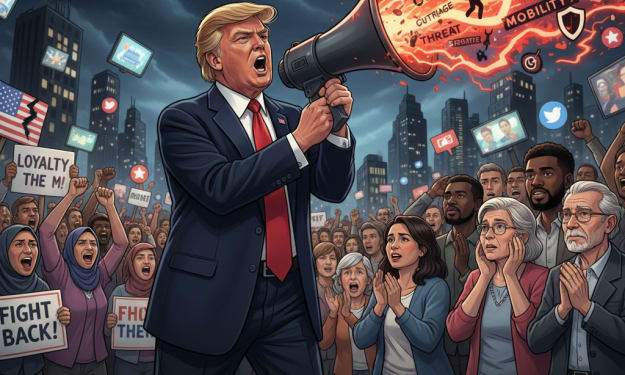
Divisive Rhetoric Reloaded: Inside Trump’s Bold Midterm Bet
Donald Trump’s latest midterm strategy does not whisper. It shouts. It doesn’t arrive dressed in policy white papers or carefully hedged language aimed at consensus-building. Instead, it storms into the political arena with familiar tools: volume, confrontation, and an unmistakable sense of grievance. From rally stages to social media feeds, the message is relentless—America is under threat, enemies are everywhere, and only unwavering loyalty can hold the line.
By The Insight Ledger 29 days ago in The Swamp
Trump’s Shocking Endorsement: How Anti-Muslim Views Slipped Into the Mainstream
American politics has never been short on controversy, but every so often a moment arrives that feels heavier than the usual cycle of outrage. Donald Trump’s recent endorsement of a candidate known for openly anti-Muslim rhetoric was one of those moments. It wasn’t just another tactical move in a crowded political chessboard. It landed as a signal—clear, public, and impossible to ignore—about which voices are acceptable, which fears are worth amplifying, and which communities are once again expected to absorb the fallout. For many Muslims in the United States and beyond, the endorsement felt deeply personal. It didn’t read like an abstract policy disagreement or a debate over national security. It felt like a reminder that their faith, identity, and citizenship can still be treated as negotiable in the pursuit of votes. In a country that prides itself on religious freedom, the moment cut sharply: belonging, it seemed, was being put up for debate again. Why This Endorsement Hit So Hard Endorsements happen all the time. Politicians support allies, reward loyalty, and energize their base. What made this endorsement different wasn’t just the candidate’s history—it was the context. The political environment is already tense, polarized, and emotionally charged. Elections are approaching, global conflicts are inflaming sectarian narratives, and social media ensures every statement travels at the speed of outrage. In that climate, amplifying a figure associated with blanket anti-Muslim claims felt less like oversight and more like intention. Supporters defended the move as “free speech” or “tough talk on security.” Critics saw something else entirely: a calculated decision to legitimize rhetoric that paints Muslims as a monolithic threat rather than a diverse community of citizens. When such rhetoric is elevated by a former president—and a dominant figure in national politics—the line between fringe prejudice and mainstream discourse begins to blur. When Dog Whistles Become Megaphones Anti-Muslim sentiment in Western politics isn’t new. For years, it lived behind euphemisms—phrases about “integration,” “values,” or “security risks” that hinted at suspicion without naming it directly. Everyone understood what was being implied, even if it wasn’t said aloud. This endorsement stripped away much of that ambiguity. The candidate in question didn’t rely on coded language. Their record included sweeping generalizations, dehumanizing stereotypes, and claims that treated Muslims as a single, dangerous bloc. When a national leader amplifies that voice, the message changes. What was once whispered at the margins is suddenly spoken into a microphone. That shift matters. History shows that prejudice doesn’t need majority support to cause harm; it needs permission. When powerful figures appear to grant that permission, social barriers erode. Language hardens. Behavior follows. From Rhetoric to Real-World Consequences Words don’t exist in a vacuum. Political rhetoric shapes social norms, and social norms shape behavior. When Muslims are repeatedly framed as “other,” suspicion becomes easier to justify. Policies that disproportionately affect them—enhanced surveillance, travel restrictions, selective enforcement—become more palatable to the public. Discrimination doesn’t always announce itself loudly; often it creeps in quietly, normalized by repetition. Beyond policy, there are everyday consequences. Spikes in hate crimes often track with moments of heightened anti-Muslim rhetoric. Children face bullying at school. Adults face hostility at work. Ordinary acts—wearing religious clothing, speaking a different language, having a Muslim name—can suddenly feel risky. For those living this reality, the endorsement wasn’t theoretical. It was a reminder that political theater can spill directly into daily life. Inside the Muslim Community: Fear, Fatigue, and Determination Reactions within the Muslim community were complex and deeply human. There was anger—at being singled out yet again. There was exhaustion—from constantly having to explain that terrorism and extremism are not Islam, that Muslims are not a single ideology, and that millions of Muslim Americans contribute to society every day without incident. There was fear—especially among parents worried about their children’s safety and sense of belonging. But there was also resolve. Over the years, Muslim communities in the U.S. have grown more organized, more legally savvy, and more politically engaged. Advocacy groups, civil rights organizations, lawyers, journalists, and grassroots activists have built networks designed to respond quickly when rhetoric turns hostile. In many ways, moments like this sharpen that resolve. When silence feels dangerous, visibility becomes a form of protection. For every headline fueled by prejudice, there are efforts underway to challenge it—in courts, at ballot boxes, and in public discourse. Why This Is Bigger Than One Community It’s tempting to frame this controversy as a “Muslim issue.” That framing misses the point. When a society becomes comfortable with vilifying one religious group for political gain, it sets a precedent. The logic doesn’t stop with Muslims. It can be redirected toward any group that becomes politically convenient to target—Jews, Christians, Sikhs, Hindus, atheists, immigrants, or others who fall outside an imagined norm. Democracy relies not only on laws and elections but on unwritten agreements: that citizenship isn’t conditional, that rights aren’t selective, and that losing political power doesn’t mean losing basic dignity. When leaders undermine those agreements, they weaken the system for everyone. History offers plenty of warnings about where this path can lead. What begins as rhetoric can harden into policy. What starts as “just politics” can evolve into structural exclusion. The Role of Media and Amplification Media plays a crucial role in moments like this—not just in reporting events, but in framing them. Sensational coverage can amplify the most extreme voices, turning outrage into entertainment. Social media accelerates this effect, rewarding inflammatory content with attention and reach. In that environment, nuance struggles to survive. Yet media also has the power to contextualize, to challenge false narratives, and to center the voices of those affected rather than those provoking outrage. Whether it rises to that responsibility shapes how quickly harmful ideas spread—or how effectively they’re resisted. What Ordinary People Can Do When politics feels this ugly, it’s easy to feel powerless. But ordinary actions matter more than they appear. Refusing to normalize dehumanizing language is a start. Pushing back—calmly, clearly—when friends or colleagues repeat harmful narratives disrupts their spread. Listening to Muslims and other minorities about how rhetoric affects their lives matters more than debating abstract principles. Civic engagement matters too. Voting, supporting civil rights organizations, and paying attention to local politics all shape the environment leaders operate in. Endorsements carry weight because they assume public tolerance. Challenging that assumption changes the calculation. Even small acts—solidarity, empathy, everyday kindness—send a counter-signal. They remind targeted communities that they are not alone, and they remind opportunistic politicians that division has limits. A Moment That Will Be Remembered This endorsement will be remembered not just for what it said, but for what it revealed. It exposed how easily fear can be repackaged as policy talk. It showed how quickly fringe ideas can gain legitimacy when power amplifies them. And it forced a reckoning—for Muslims, for allies, and for anyone who believes that citizenship should not depend on faith. History rarely judges societies solely by their leaders’ words. It judges them by how people respond when those words test the boundaries of decency. In that sense, this moment is still unfolding. The final chapter won’t be written by endorsements alone, but by whether citizens accept a shrinking definition of belonging—or insist on a broader one that reflects the country’s reality. In the end, no endorsement, however shocking, can fully define a nation. That power rests with the people who decide whether prejudice gets applause—or resistance.
By The Insight Ledger 29 days ago in The Swamp
Mamdani Is First New York Mayor to Use the Quran at His Swearing-In. AI-Generated.
In a historic and symbolic moment, New York City inaugurated its newest mayor, Ahmed Mamdani, who chose to swear his oath of office on the Quran, making him the first mayor in the city’s history to do so. The decision reflects not only Mamdani’s personal faith but also the increasingly diverse and multicultural fabric of New York City, a metropolis renowned for its history of immigrant communities and religious pluralism. Mamdani, who took office amidst both local and national attention, emphasized the significance of this act. “Today is not just a personal moment,” he said during his inauguration ceremony. “It is a statement about the values of inclusion, representation, and respect for all faiths in the city that has always welcomed the world.” By using the Quran for his swearing-in, Mamdani highlighted the importance of acknowledging the city’s Muslim population, one of the largest in the United States, and the contributions of religious minorities to civic life. The ceremony, attended by city officials, community leaders, and members of the public, was both traditional and modern in tone. Alongside the Quran, Mamdani also displayed the United States Constitution, symbolizing the balance between personal faith and civic responsibility. This dual acknowledgment reinforced his message that public office must serve all constituents, regardless of religion or background. Historically, American leaders have sworn oaths on various texts, reflecting their personal beliefs. While the Bible has traditionally been the most common choice, public officials have used other religious texts, including the Torah and the Bhagavad Gita, to honor their faiths. Mamdani’s choice to use the Quran marks a milestone in American political history, signaling broader acceptance and representation of Muslim Americans in civic leadership. The decision was met with widespread support, particularly among New York’s Muslim communities. Local religious leaders praised the mayor for bringing visibility to their faith in a respectful and civic-minded way. Imam Yusuf Al-Karim, who attended the ceremony, remarked, “This is a proud moment for the city and for the Muslim community. It reminds us that faith and public service can coexist harmoniously, and that diversity strengthens democracy.” Mamdani’s inauguration also sparked broader conversations about the role of religion in American public life. Critics who questioned the decision were reminded of the longstanding constitutional principle of freedom of religion, which guarantees both the right to practice faith and the right to serve in public office without discrimination. By choosing the Quran, Mamdani affirmed these principles, demonstrating that religious identity need not conflict with civic duty. Beyond symbolism, the new mayor faces tangible challenges. New York City grapples with issues ranging from affordable housing and public safety to climate resilience and economic recovery. Mamdani, whose political career spans community organizing and public service, emphasized that his priorities will focus on inclusivity, social equity, and addressing systemic challenges. His swearing-in on the Quran is, therefore, both a personal reflection and a broader statement about leading a diverse city with fairness and integrity. Internationally, Mamdani’s inauguration has resonated as well. Media outlets across the globe highlighted the historic nature of the ceremony, portraying it as a milestone for Muslim representation in Western politics. Observers noted that New York City, often seen as a microcosm of global society, continues to set precedents that echo beyond its borders. The event also underscored the importance of representation in governance. For many young Muslims and other minorities in New York, seeing Mamdani assume office is a powerful affirmation that leadership roles are accessible to them. Representation, experts argue, not only inspires communities but also brings diverse perspectives to policy-making, ensuring that the needs of all citizens are considered. As Ahmed Mamdani begins his tenure, the significance of swearing the oath on the Quran will remain a symbol of inclusivity and progress. It serves as a reminder that public service can honor both personal identity and collective responsibility. In a city as diverse as New York, such gestures carry profound weight, signaling that the civic arena belongs to everyone. In conclusion, Mamdani’s historic inauguration is more than a personal milestone—it represents a broader societal shift toward embracing diversity in American leadership. His choice to use the Quran highlights the evolving narrative of inclusion, demonstrating that faith, when coupled with dedication to public service, can strengthen the democratic fabric of one of the world’s most iconic cities.
By Fiaz Ahmed Brohi29 days ago in The Swamp
“Adapt, Shrink, or Die”: How U.S. Aid Conditions Could Reshape the United Nations. AI-Generated.
A growing debate is unfolding within international policy circles following reports that the United States has attached strict conditions to a $2 billion aid package for the United Nations. The message, described by experts as “adapt, shrink, or die,” signals a potential turning point in the relationship between Washington and the world’s most prominent multilateral institution. Critics argue that these terms could force the UN to align more closely with U.S. priorities, raising serious concerns about independence, neutrality, and the future of global governance.
By Ayesha Lashari29 days ago in The Swamp
How Thousands of Secret Russian Documents Were Exposed. AI-Generated.
In an age where information moves faster than ever, secrecy has become increasingly difficult to maintain. This reality was underscored when thousands of secret Russian documents were exposed to the public, revealing sensitive details about government operations, military planning, and internal communications. The disclosure has sent shockwaves through intelligence communities worldwide and raised urgent questions about cybersecurity, transparency, and the vulnerability of state secrets.
By Ayesha Lashari29 days ago in The Swamp