
Several Killed as Iran Protests Over Rising Cost of Living Spread
Soaring prices, shrinking incomes, and rising frustration push ordinary Iranians into the streets

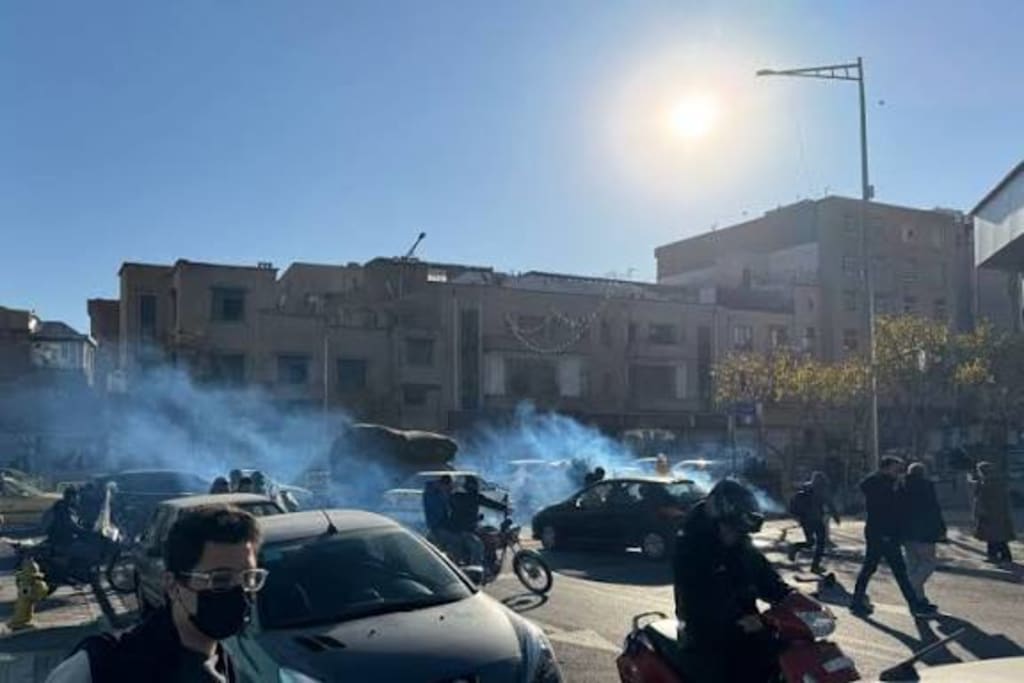
Iran has once again been shaken by widespread protests as anger over the rising cost of living spills onto the streets, leaving several people dead and many more injured or detained. The demonstrations, which began in response to economic hardship, have rapidly spread across multiple cities, highlighting deep frustration among ordinary Iranians struggling to cope with inflation, unemployment, and declining living standards.
Economic Pressure Reaches a Breaking Point
At the heart of the unrest lies Iran’s worsening economic crisis. Prices of basic necessities such as food, fuel, rent, and medicine have risen sharply, while wages have failed to keep pace. For many families, daily life has become a battle for survival. Subsidy cuts, currency depreciation, and years of economic mismanagement have pushed millions closer to poverty.
Inflation has eroded purchasing power, making essentials unaffordable for large sections of society. Middle- and lower-income households, once considered relatively stable, now find themselves struggling to pay bills or put food on the table. The protests reflect not just momentary anger, but long-simmering despair over economic insecurity.
Protests Spread Across Cities
What began as localized demonstrations quickly expanded to several major cities and smaller towns. Protesters gathered in marketplaces, outside government buildings, and along major roads, chanting slogans against high prices and economic injustice. Videos circulating on social media showed crowds confronting security forces, with tensions escalating rapidly.
Authorities responded with a heavy security presence, deploying police and paramilitary units to disperse crowds. In several instances, clashes turned violent. Reports indicate that live ammunition, tear gas, and mass arrests were used to regain control, leading to multiple fatalities. While official figures remain unclear, independent sources suggest the death toll may be higher than acknowledged.
A Pattern of Unrest
These protests are not an isolated event. Iran has witnessed repeated waves of demonstrations in recent years, often triggered by economic grievances. Previous protests over fuel price hikes, unpaid wages, water shortages, and currency collapse have followed a similar pattern: spontaneous outbursts, rapid spread, and forceful crackdowns.
What makes the current unrest significant is its timing and intensity. Many Iranians feel trapped between rising prices and limited political avenues for change. Sanctions have worsened economic conditions, but protesters increasingly blame domestic leadership for corruption, inefficiency, and misplaced priorities.
Government Response and Narrative
Iranian officials have sought to frame the protests as the work of “external enemies” and “agitators,” a familiar narrative during periods of unrest. State media has downplayed the scale of demonstrations while emphasizing the need for order and stability. At the same time, authorities have promised economic reforms and relief measures, though such pledges have been met with skepticism.
Internet restrictions were reportedly imposed in some areas, limiting the flow of information and making it difficult to verify events on the ground. Human rights groups have expressed concern over the use of excessive force and the arrest of protesters, journalists, and activists.
Social Frustration Runs Deep
Beyond economics, the protests reveal broader social frustration. Young people, in particular, face bleak prospects. High unemployment among graduates, limited freedoms, and lack of upward mobility have fueled resentment. Many feel excluded from decision-making processes that directly affect their lives.
For older generations, the sense of decline is equally painful. Those who once hoped for stability now struggle to maintain basic dignity. The demonstrations have united diverse groups — workers, shopkeepers, students, and pensioners — under a shared demand for economic justice.
Regional and Global Implications
Iran’s internal instability carries regional significance. Prolonged unrest could strain governance, affect regional policies, and complicate diplomatic efforts abroad. International observers are closely watching how the leadership navigates this latest crisis, particularly as economic pressures show no immediate signs of easing.
At the same time, global attention remains divided, meaning Iran’s domestic turmoil risks fading from headlines despite its human cost. For protesters on the ground, however, the struggle is intensely personal and ongoing.
An Uncertain Path Forward
As protests continue, Iran faces difficult choices. Addressing public anger requires more than short-term measures or security crackdowns. Structural economic reform, transparency, and trust-building are essential but politically challenging.
Whether the current wave of protests leads to meaningful change remains uncertain. What is clear is that rising living costs have pushed many Iranians past a breaking point. The deaths reported during these demonstrations underscore the urgency of the crisis and the high stakes involved.
About the Creator
Fiaz Ahmed Brohi
I am a passionate writer with a love for exploring and creating content on trending topics. Always curious, always sharing stories that engage and inspire.
Keep reading
More stories from Fiaz Ahmed Brohi and writers in The Swamp and other communities.
US Says Chinese Military Drills Around Taiwan Cause Unnecessary Tensions
In the latest escalation of military tensions in the Asia-Pacific region, the United States has condemned China’s recent military drills near Taiwan, calling them provocative and unnecessarily escalating regional tensions. The drills, which involve live-fire exercises and simulated strikes against Taiwan, have raised alarms not only within Taiwan itself but also across the global community, particularly in Washington. Context Behind the Drills The Chinese military drills were initiated as a response to Taiwan’s increased engagement with the United States and other international allies. Beijing views Taiwan as a breakaway province and has long expressed its intent to reunite Taiwan with mainland China, by force if necessary. The island, however, operates as a de facto independent nation with its own government and economy, a status that China strongly opposes. Taiwan's growing international relations, particularly with the US, have led to heightened concerns in Beijing. The recent drills are seen as part of a broader strategy to intimidate Taiwan and to showcase China’s military capabilities. They come at a time when the US has continued to bolster its defense commitment to Taiwan, including arms sales and diplomatic support. US Reaction: A Call for Stability The US government has consistently expressed its commitment to supporting Taiwan's sovereignty and security. The US is bound by the Taiwan Relations Act, which obligates it to assist Taiwan in maintaining its defense capabilities, although it does not formally recognize Taiwan as a separate nation. The US State Department condemned China’s military maneuvers, describing them as an "unnecessary escalation" that undermines peace and stability in the region. A senior US official pointed out that such military exercises are designed to increase fear and anxiety among the Taiwanese population, sending a clear message of military coercion. The Pentagon issued a statement stating, “China’s actions near Taiwan only exacerbate the tensions and instability in the region. These provocations are counterproductive and only strengthen Taiwan's resolve to preserve its democracy and independence.” A Response to Increased US-Taiwan Relations Beijing has long viewed Taiwan as part of its sovereign territory, and the growing military relationship between the US and Taiwan has become one of the most contentious issues in the Taiwan Strait. Over the last few years, Taiwan’s strategic importance has only grown in the eyes of the US, especially in the context of rising Chinese influence in the Indo-Pacific region. The military drills can be seen as a direct response to the increased US involvement in Taiwan's security. In the past year alone, Taiwan has secured advanced weaponry from the US, including missiles, fighter jets, and radar systems. Furthermore, senior US politicians and military officials have made frequent visits to Taipei, signaling robust diplomatic and military support. In response, China has ramped up its military presence around Taiwan, conducting several rounds of live-fire drills and air incursions. These actions, according to the US, are meant to provoke instability and intimidate Taiwan into submission. The US has emphasized the importance of dialogue and peaceful resolution to avoid further conflict. Taiwan’s Position: Sovereignty and Security Taiwan has been a consistent and vocal advocate for its sovereignty and independence, stressing that its people should have the right to determine their own future. Taiwanese officials have reiterated that they seek peace and stability in the region but will not yield to external pressures or military intimidation. Taiwan's President Tsai Ing-wen has called on China to “cease military threats and focus on dialogue.” At the same time, she affirmed that Taiwan would strengthen its military capabilities to defend itself in the face of rising threats. Taiwan’s Ministry of Defense issued a statement confirming that it is closely monitoring China’s military activities and maintaining a high level of readiness. “We will continue to safeguard Taiwan’s sovereignty and territorial integrity while avoiding unnecessary provocations,” the Ministry said. International Reactions: A Broader Concern The increasing military presence in the Taiwan Strait has triggered concerns beyond the US and Taiwan. Countries in the Indo-Pacific region, including Japan, South Korea, and Australia, have expressed growing concerns over the stability of the Taiwan Strait and the potential for conflict in the area. These nations are increasingly wary of China’s growing military assertiveness and the potential ramifications of a conflict over Taiwan. Furthermore, the European Union (EU) has also voiced its concerns about the rising tensions. In a recent statement, EU officials called for calm and urged China to avoid military escalation. They emphasized the importance of diplomatic dialogue and respect for international law. The Bigger Picture: US-China Rivalry The ongoing military standoff in the Taiwan Strait is part of a larger geopolitical competition between the US and China, which is intensifying as both nations vie for dominance in the Indo-Pacific region. The US has long maintained that it has a strategic interest in the region and that Taiwan’s security is integral to regional stability. The situation reflects the broader US-China rivalry, with Taiwan being a focal point in this strategic competition. While both countries have at times engaged in diplomatic dialogue, their differing positions on Taiwan continue to pose a significant risk to regional security. The Path Forward As tensions continue to mount, experts agree that the risk of miscalculation is high. Military exercises, such as China’s recent drills around Taiwan, can inadvertently lead to conflict, especially in an area as sensitive as the Taiwan Strait. The US and its allies will likely continue to bolster their military presence in the region, while China will likely press forward with its efforts to assert control over Taiwan. For now, the focus remains on reducing tensions and ensuring that diplomacy and dialogue remain at the forefront of efforts to resolve the situation. However, with both sides entrenched in their positions, finding a path to lasting peace remains a significant challenge.
By Fiaz Ahmed Brohi2 months ago in The Swamp
The Forsyth House Fire
Since 1851, Forsyth House has stood on the corner of Union Street and Gordon Street in the heart of Glasgow. Its iconic, or was... because on Sunday 8th of March, 2026, a fire broke out in a small, seemingly un-named shop in the building and tore all that history down. As I write, the rubble is still unsettled and the street is still blocked off. Central Station is quiet on the upper level, and around 30 small businesses have quite literally gone up in smoke.
By S. A. Crawford3 days ago in The Swamp
Canada Ties $20 Billion Submarine Deal to a Korean Auto Plant Demand
Canada has reportedly made the approval of its $20 billion submarine procurement contingent on a significant industrial commitment from South Korea, including the establishment or expansion of an automobile manufacturing plant. The move underscores the growing intersection between defense spending and economic diplomacy as Ottawa seeks to secure both military capabilities and industrial benefits abroad. The deal, which involves the acquisition of advanced diesel-electric submarines for the Royal Canadian Navy, is among the largest defense contracts in the country’s history. Sources familiar with the negotiations said the Canadian government has emphasized that South Korea’s defense contractors must contribute to domestic or regional economic development, with a particular focus on the automotive sector. Officials in Ottawa view the dual-purpose strategy as a way to strengthen Canada’s economic footprint while modernizing its naval fleet. By linking the submarine contract to a Korean auto plant, the government hopes to secure jobs, investment, and technology transfer that could benefit Canadian workers and industries. The specifics of the plant’s size, location, and projected production capacity have not been publicly disclosed, reflecting the confidential nature of the negotiations. Strategic Defense and Industrial Goals The submarines under discussion are expected to replace aging vessels in Canada’s maritime defense fleet. Military analysts say the new submarines will enhance Canada’s ability to patrol its extensive coastline, monitor Arctic waters, and respond to emerging security challenges. The inclusion of an industrial clause linking the purchase to an auto plant represents an unusual but increasingly common approach where defense procurement is used to achieve broader economic and political objectives. The Canadian government has faced criticism in the past for long delays and budget overruns in military procurement projects. By tying the submarine deal to a Korean industrial investment, Ottawa appears to be attempting to balance strategic needs with domestic and international economic benefits. South Korea’s Role South Korea is already a recognized leader in both shipbuilding and automotive industries. Its defense firms have experience producing advanced naval vessels, while its automotive companies are global players with extensive manufacturing capabilities. Analysts suggest that linking the submarine contract to an auto plant ensures that Canada can leverage South Korea’s industrial expertise while promoting cross-sector collaboration. The deal is expected to generate significant economic activity in South Korea and potentially in Canada if joint production or technology-sharing arrangements are implemented. Such arrangements could include parts manufacturing, research collaborations, or workforce training programs, providing long-term benefits beyond the initial defense contract. International and Domestic Reactions Observers have noted that combining defense procurement with industrial investment can complicate international trade relations. Critics argue that linking a military contract to unrelated industrial projects may create tensions with other potential suppliers or trading partners. Others see the strategy as a pragmatic move to ensure that large government expenditures also generate economic returns. In Canada, the announcement has sparked debate among policymakers and industry leaders. Some advocate for more aggressive use of defense contracts to promote domestic industry, while others caution against making defense deals contingent on unrelated industrial commitments. South Korean officials have remained largely diplomatic, acknowledging the potential for collaboration while signaling a need for detailed discussions to finalize commitments. Negotiations are ongoing, and the final terms of the submarine contract—including delivery schedules, financing arrangements, and the specifics of the auto plant—are expected to be revealed once agreements are formally signed. Looking Ahead As Canada moves forward with its ambitious submarine procurement program, the inclusion of industrial conditions demonstrates a broader trend in government contracting: blending national security objectives with economic diplomacy. Whether this approach will deliver the desired benefits for both countries remains to be seen, but it reflects an evolving strategy in which defense and industry are increasingly interconnected. For Canada, the $20 billion submarine deal represents not only an opportunity to modernize its naval fleet but also a chance to foster industrial collaboration on the global stage. By tying the contract to a Korean auto plant, Ottawa is signaling that defense spending can serve multiple objectives—enhancing national security while promoting economic growth.
By Fiaz Ahmed 7 days ago in The Swamp


Comments
There are no comments for this story
Be the first to respond and start the conversation.