
U.S. Army Squadron in Korea Deactivated Amid Concerns About Potential Troop Cuts
"U.S. Army's Reduction of Forces in South Korea: What Does It Mean for Regional Security?"

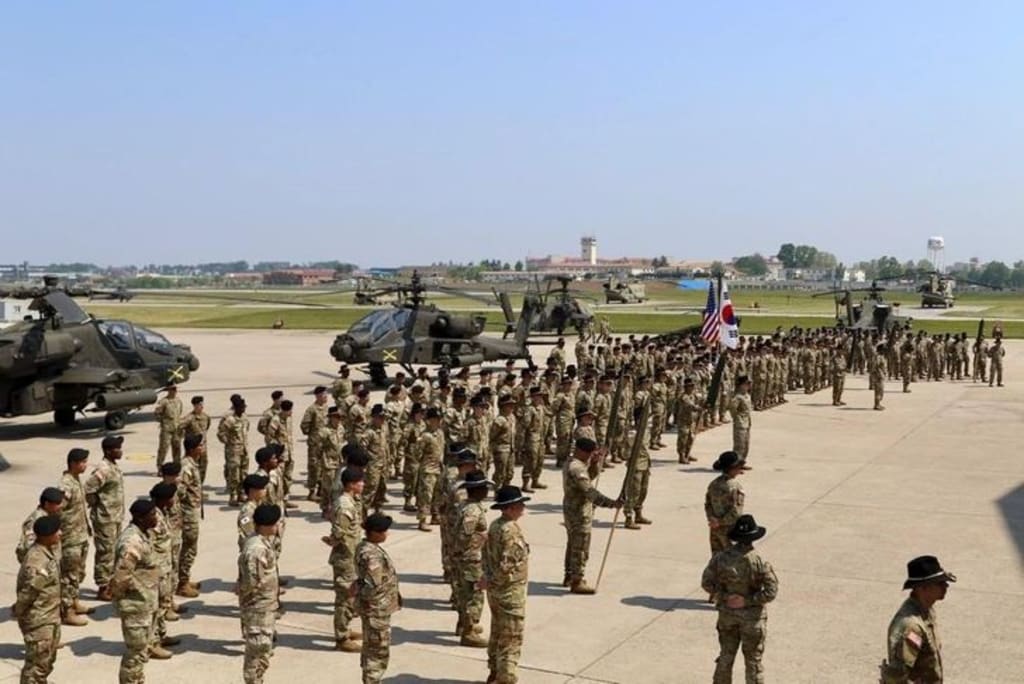
The recent deactivation of a U.S. Army squadron stationed in South Korea has sparked concerns about the future of U.S. military presence in the region, as well as the strategic implications of such a move. While the U.S. government has presented this action as part of routine military restructuring, many experts and analysts are interpreting it as an indication of potential reductions in U.S. military personnel stationed in South Korea. This development comes at a time of growing uncertainty in the region, with rising tensions between the U.S. and North Korea, as well as the evolving geopolitical dynamics surrounding China.
Background: The Deactivation of the Squadron
In late December 2025, the U.S. Army’s 2nd Armored Brigade Combat Team (ABCT), part of the 1st Armored Division, was deactivated after nearly two decades of service in South Korea. This marks a significant shift in the U.S. military’s posture in the region, especially as the Korean Peninsula remains a high-stakes area in terms of security concerns.
The 2nd ABCT was a key component of the U.S. military’s presence in South Korea, responsible for ensuring readiness to counter any potential aggression from North Korea. The unit had a critical role in deterring North Korean provocations, as well as providing rapid response capabilities in the event of a military conflict on the peninsula.
South Korea has been home to a significant U.S. military presence since the Korean War, with tens of thousands of U.S. troops stationed in the country as part of the U.S.-South Korea alliance. This military presence has played a crucial role in maintaining stability in the region, as well as serving as a deterrent against potential North Korean aggression.
The Strategic Implications
The decision to deactivate the squadron comes amid growing concerns over the evolving geopolitical landscape in Asia. The U.S. has been gradually shifting its military focus towards countering China’s growing influence in the Indo-Pacific region, particularly in the South China Sea. As part of this shift, the U.S. military has been reassessing its military deployments and strategic posture in various regions, including the Korean Peninsula.
The U.S. has made efforts to modernize its military presence in South Korea, focusing on enhancing the capabilities of remaining troops and ensuring that the forces stationed there are able to quickly respond to any emerging threats. However, many analysts see the deactivation of the squadron as part of a broader strategy to reduce the U.S. military footprint in the region, as troop reductions have been discussed in previous defense budget proposals.
One possible reason for the reduction in the U.S. military presence in South Korea is the changing nature of North Korea’s military capabilities. While the North Korean regime has continued to test nuclear and missile technology, its military capabilities are not as advanced as those of the U.S. and South Korean forces. This has led some experts to question whether a large U.S. military presence is still necessary on the peninsula.
Additionally, the evolving relationship between the U.S. and South Korea has likely contributed to the decision to reduce the squadron. Under President Yoon Suk-yeol, South Korea has emphasized a stronger role in its own defense, seeking to take on a more active role in countering North Korea’s threats. The growing capabilities of the South Korean military and its greater emphasis on self-defense may have led to the reassessment of the U.S. military’s role in the region.
Concerns Over Potential Troop Cuts
While the deactivation of the 2nd ABCT squadron is being described as a “routine” military adjustment, many experts are concerned about the potential broader implications. The reduction of U.S. forces in South Korea could signal the beginning of a more substantial shift in U.S. military presence on the peninsula.
Critics have expressed concerns that such reductions could embolden North Korea, as the U.S. military has long been seen as a key deterrent against Pyongyang’s aggressive actions. The presence of U.S. forces in South Korea has helped maintain peace on the peninsula for decades, and a reduction in that presence could be interpreted by North Korea as a sign of diminishing U.S. commitment to the alliance.
Additionally, there is concern that reduced troop levels in South Korea could undermine U.S. credibility in the region. U.S. allies in the Indo-Pacific, particularly Japan and South Korea, may worry that the U.S. is pulling back from its traditional role as the security guarantor in the region, making it harder to counter the growing influence of China and North Korea.
The U.S. Response and Future Plans
The U.S. government has emphasized that the decision to deactivate the squadron is part of an ongoing effort to modernize and optimize military capabilities in the region. The U.S. Department of Defense has stated that the reduction of the squadron will be balanced by increased reliance on advanced technologies, including missile defense systems, cyber capabilities, and air superiority.
Moreover, the U.S. has reaffirmed its commitment to defending South Korea in the event of an armed conflict, with the American government pledging to maintain a “robust and flexible” military presence in the region. The deactivation of the 2nd ABCT squadron does not mean the U.S. is abandoning its security obligations to South Korea, but rather reflecting a strategic shift toward more efficient and flexible defense capabilities.
Conclusion
As the deactivation of the 2nd ABCT squadron in South Korea sets the stage for further potential adjustments to the U.S. military presence on the Korean Peninsula, concerns over the future of U.S.-South Korea relations and regional security are likely to grow. While the U.S. continues to invest in modernizing its defense capabilities, the question remains whether the reduced troop presence will undermine its deterrence strategy or if South Korea’s increased military capabilities can pick up the slack.
In the coming years, it will be crucial for both the U.S. and South Korea to maintain a strong partnership and ensure that the region remains stable in the face of growing challenges from North Korea and other geopolitical threats. The U.S. military's ongoing role in East Asia, particularly on the Korean Peninsula, will continue to evolve, with the deactivation of the 2nd ABCT squadron serving as a potential precursor to a larger reorientation of U.S. forces in the region.
About the Creator
Fiaz Ahmed Brohi
I am a passionate writer with a love for exploring and creating content on trending topics. Always curious, always sharing stories that engage and inspire.
Keep reading
More stories from Fiaz Ahmed Brohi and writers in The Swamp and other communities.
Two Ship Crew Members Arrested in Finland Over Baltic Sea Cable Damage
The arrest of two ship crew members in Finland over damage to undersea cables in the Baltic Sea has intensified global concerns about the vulnerability of critical maritime infrastructure. As nations increasingly rely on underwater cables for electricity, internet connectivity, and secure communications, even a single incident can have far-reaching geopolitical and economic consequences. What Happened in the Baltic Sea? Finnish authorities confirmed the arrest of two crew members from a foreign-flagged vessel suspected of being involved in damage to subsea infrastructure in the Baltic Sea. The incident came to light after disruptions were detected in underwater cables that play a vital role in regional communications and energy transmission between Northern European countries. Investigators believe the damage occurred during routine maritime activity, but the circumstances raised enough suspicion to warrant criminal investigation. The arrested crew members are reportedly being questioned over potential negligence, violation of maritime safety laws, or deliberate interference with protected infrastructure. Why Undersea Cables Matter Underwater cables form the backbone of modern civilization. Over 95% of global internet traffic travels through subsea fiber-optic cables, while power cables beneath the sea connect national grids and ensure energy security. The Baltic Sea, in particular, hosts a dense network of cables linking Finland, Sweden, Estonia, Germany, and other European nations. Any damage—intentional or accidental—can disrupt communications, affect financial markets, delay emergency services, and raise national security alarms. This is why undersea cable protection has become a strategic priority for governments worldwide. Finland’s Response and Legal Action Finland has taken a firm stance by swiftly detaining the suspects and launching a full investigation. Authorities emphasized that while maritime accidents do happen, the protection of critical infrastructure cannot be taken lightly. Finnish law allows for arrests when there is reasonable suspicion of criminal responsibility, even if intent has not yet been proven. Officials are also cooperating with international partners to determine whether the incident has cross-border implications. Given the shared nature of Baltic Sea infrastructure, neighboring countries are closely monitoring the investigation. Accidental Damage or Something More? One of the central questions surrounding the case is whether the cable damage was accidental or deliberate. Ships can sometimes damage undersea cables through anchor dragging or improper navigation, especially in congested waters like the Baltic Sea. However, recent global tensions have increased scrutiny over any such incidents. In recent years, several countries have reported unexplained damage to subsea cables and pipelines, fueling concerns about sabotage, hybrid warfare, and covert operations. While no conclusions have been drawn in the Finnish case, the arrests reflect heightened vigilance rather than an assumption of guilt. Rising Global Concern Over Maritime Infrastructure The Baltic Sea incident is part of a broader global trend. Governments and security experts are increasingly warning that underwater infrastructure is one of the most exposed elements of national security. Unlike land-based systems, subsea cables are difficult to monitor continuously and costly to repair. As geopolitical rivalries intensify, protecting these assets has become as important as defending airspace or borders. NATO and European Union members have already begun discussing enhanced surveillance, stricter maritime regulations, and improved information-sharing to prevent future incidents. Impact on Shipping and Crew Accountability The arrests also send a clear message to the global shipping industry: accountability at sea is tightening. Ship operators are expected to adhere strictly to navigation protocols, especially in sensitive zones marked by underwater infrastructure. Crew members now face greater legal responsibility, not only for safety at sea but also for the protection of invisible assets beneath it. Training, route planning, and compliance with maritime warnings are becoming more critical than ever. Legal and Diplomatic Implications If the investigation finds negligence or misconduct, the case could result in fines, imprisonment, or broader legal action against the vessel’s operators. If international involvement is suspected, diplomatic discussions may follow. At the same time, Finland has been careful to emphasize due process, underscoring that arrests are part of an investigation—not a verdict. This balanced approach aims to uphold the rule of law while maintaining regional stability. A Wake-Up Call for the World The Baltic Sea cable damage serves as a reminder that modern infrastructure extends far beyond what we can see. Beneath calm waters lie systems that keep societies connected, economies running, and governments functioning. As investigations continue, the case is likely to influence future maritime policies and international cooperation on infrastructure protection. Whether the damage proves accidental or intentional, the message is clear: undersea cables are no longer out of sight—or out of mind. Final Thoughts The arrest of two ship crew members in Finland highlights the growing intersection of maritime activity, national security, and global connectivity. In an age where digital and energy lifelines run beneath the oceans, safeguarding them has become a shared global responsibility. The outcome of this case may well shape how nations protect their underwater arteries in the years to come.
By Fiaz Ahmed Brohi2 months ago in The Swamp
The Forsyth House Fire
Since 1851, Forsyth House has stood on the corner of Union Street and Gordon Street in the heart of Glasgow. Its iconic, or was... because on Sunday 8th of March, 2026, a fire broke out in a small, seemingly un-named shop in the building and tore all that history down. As I write, the rubble is still unsettled and the street is still blocked off. Central Station is quiet on the upper level, and around 30 small businesses have quite literally gone up in smoke.
By S. A. Crawforda day ago in The Swamp
UK orders 37 artillery weapon systems for RCH 155
The British Army has taken a significant step toward modernising its artillery forces, placing an order for 37 artillery weapon systems in support of its next‑generation Remote Controlled Howitzer (RCH 155) programme. The £53 million contract, awarded by the Organisation for Joint Armament Co‑operation (OCCAR) on behalf of the British Army, represents a long‑lead production agreement that will supply key components of the RCH 155’s artillery modules and support the early phases of the Mobile Fires Platform capability. Officials describe the procurement as part of a broader effort to replace the Army’s legacy self‑propelled guns and restore artillery lethality aligned with modern operational requirements. The RCH 155, mounted on the Boxer armoured vehicle chassis, is envisioned as a highly mobile 155 mm howitzer capable of firing on the move, striking targets at extended ranges and improving survivability in high‑intensity conflict environments. Closing the Capability Gap The British Army’s artillery fleet has been challenged in recent years by the retirement or transfer of older systems. In particular, its fleet of AS‑90 self‑propelled guns was donated to allied forces, notably to support Ukraine’s defence against Russian aggression. This has created a gap in the Army’s long‑range cannon artillery capability that the RCH 155 is intended to fill. To bridge this gap, the Army initially procured 14 Archer artillery systems from Sweden as an interim solution. While useful, these systems do not fully match the strategic depth and advanced features expected of the future Mobile Fires Platform. The RCH 155’s advanced automation, mobility, and firepower are designed to address that shortfall. What the New Order Entails The recent order for 37 weapon systems does not equate to 37 complete howitzer vehicles; rather, it focuses on the production of the artillery gun modules and related subsystems that will eventually be integrated into full vehicles. These include the 155 mm barrel, recoil mechanisms, automated loading systems, breeches and other critical artillery elements. The contract also supports significant investment in the UK’s defence industrial base, particularly in gun barrel manufacturing capacity. Around £30 million of the contract’s value is allocated to expanding facilities such as Rheinmetall’s “Gun Hall” in Telford, which is expected to create skilled jobs and bolster sovereign production capability. By securing these long‑lead items now, the Ministry of Defence (MoD) aims to mitigate future production delays and ensure that the RCH 155 programme progresses smoothly. Long‑lead contracts are a common procurement practice in defence when key components must be manufactured well in advance of final assembly and delivery. Technical Edge and Operational Promise The RCH 155 system itself represents a leap forward in artillery technology compared with legacy guns. Developed by ARTEC GmbH—a joint venture between German and European defence firms—and integrated into the Boxer wheeled chassis, the RCH 155 combines automation, mobility and firepower. Advanced features include fully automated loading, remote operation of the gun module, and the ability to execute rapid “shoot‑and‑scoot” manoeuvres that reduce vulnerability to counter‑battery fire. The system is expected to fire up to eight rounds per minute and hit targets at ranges up to around 70 km depending on ammunition type. Mounted on a wheeled vehicle capable of traversing road and off‑road terrain at speeds up to 100 km/h, this mobility is a crucial factor in modern artillery concepts, offering rapid repositioning and enhanced tactical flexibility. Industrial and Strategic Dimensions The RCH 155 procurement is not solely about military capability; it also reflects strategic defence industrial considerations. The UK’s investment in domestic production lines and technological infrastructure aims to enhance sovereign manufacturing capability and reduce reliance on external suppliers. The expansion of facilities like the Telford gun barrel plant is expected to sustain skilled employment and anchor artillery production within the UK industrial base. This is seen as part of a broader effort to strengthen the UK’s defence supply chain, creating resilience against geopolitical disruptions and aligning production capacity with long‑term military needs. The collaboration with Germany under OCCAR also underscores continued bilateral cooperation on major defence equipment, as both nations look to standardise systems and share testing and evaluation data. Uncertainties and Next Steps Despite the recent contract award, the overall scale and timeline of the RCH 155 programme remain subject to further decisions. The MoD has previously stated that definitive delivery dates and fleet sizes are still under assessment, with the programme expected to achieve initial operating capability later in the decade once full production decisions are taken. In the interim, the Army will continue trials and evaluation of prototype systems to inform future procurement phases. Assessments carried out jointly with German partners will help shape final configurations and operational requirements. The long‑lead contract for 37 weapon systems symbolises confidence in the programme’s direction, even if the complete buy plan has yet to be confirmed. Broader Context The push to renew artillery capabilities is driven by evolving battlefield realities and lessons learned from recent conflicts, including the importance of long‑range fires and rapid manoeuvre artillery on modern battlefields. The RCH 155 is part of an emerging generation of self‑propelled artillery systems that prioritise automation, mobility, and survivability. As the British Army moves toward finalising production contracts and preparing for future delivery, the 37 weapon systems order stands as a key milestone in a long‑term effort to equip ground forces with agile and potent fire support.
By Fiaz Ahmed a day ago in The Swamp
Pandora’s Burden
“My brother warned me to not accept gifts from the one who commissioned you,” said Epimetheus to the woman clad in silvery raiments standing at the entrance to the temple. Her silver tiara and the silver rings on her fingers and toes glinted in the firelight cast by torches set on either side of the doorway. Lingering in the shadows, beyond the reach of the flames as she was, he could not tell what she held in her hands. At first what appeared to be a box was perhaps a funerary urn, or maybe merely an apple.
By J. Otis Haasa day ago in Fiction



Comments
There are no comments for this story
Be the first to respond and start the conversation.