Figures
📚 The Library of Ashurbanipal: The World’s First Great Archive of Knowledge
📚 The Library of Ashurbanipal: The World’s First Great Archive of Knowledge 📜Part I: Discovery Amid Ruins In the mid-1800s, long before archaeology had matured into the scientific discipline we know today, the deserts of northern Iraq were largely unexplored by Europeans. One such explorer was Austen Henry Layard, a British adventurer with a deep fascination for the biblical cities of Nineveh and Babylon. In 1849, while excavating near the village of Kuyunjik, Layard uncovered massive ruins buried under mounds of earth. These ruins belonged to Nineveh, the ancient capital of the Neo-Assyrian Empire — a city that had once been one of the most powerful urban centers in the ancient world.
By Kek Viktor8 months ago in History
The Concealed Wealth of the Inca Empire: Forgotten Treasures of the Andes. AI-Generated.
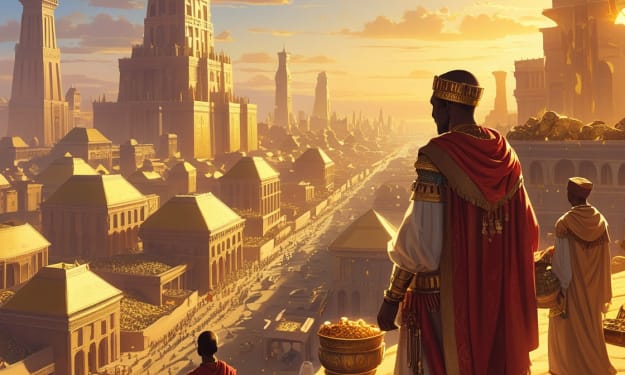
The Concealed Wealth of the Inca Empire: Forgotten Treasures of the Andes Situated high in the Andes Mountains, the Inca Empire (1438–1533) was the most extensive pre-Columbian empire in the Americas. At its zenith, it spanned across Peru, Bolivia, Ecuador, and portions of Chile and Argentina, governing over more than 10 million individuals. However, beyond its expansive territory and sophisticated infrastructure, what astonished Spanish conquistadors most was the empire’s unfathomable wealth—particularly its vast reserves of gold and silver.
By Say the truth 8 months ago in History
The Wealthiest Empire in History: The Golden Heritage of the Mali Empire
The Foundations of the Mali Empire The Mali Empire was established circa 1235 AD by Sundiata Keita, who unified several smaller kingdoms following the decline of the Ghana Empire. Under Sundiata’s guidance, Mali evolved into a centralized entity with a formidable military and effective administration. Nonetheless, it was under his successors—most notably Mansa Musa (r. 1312–1337)—that the empire attained its pinnacle.
By Say the truth 8 months ago in History
Painted in Blood: The Renaissance of Artemisia Gentileschi. . Content Warning.
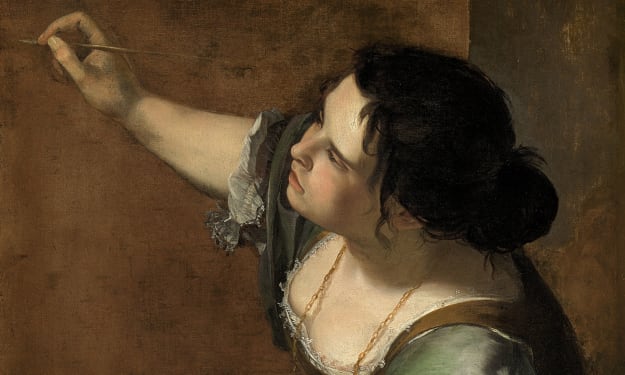
History does not remember Artemisia Gentileschi with the reverence she deserves. Her name was omitted from textbooks for centuries. When it was mentioned, it was often tethered to scandal rather than skill. But behind the layers of oil paint and baroque shadow lies the story of a woman who dared to wield her brush as a weapon against violence, patriarchy, and artistic obscurity.
By Strategy Hub8 months ago in History
In the shadow of the Sultan
The beginning of the mystery Year 1566 On a gloomy night in Istanbul, the capital of the Ottoman Empire, a thick fog covers the city. Beneath the high walls of the palace a lonely boat floats in the black waters of the Bosphorus. Year 1566 On a gloomy night in Istanbul, the capital of the Ottoman Empire, a thick fog covers the city. Beneath the high walls of the palace a lonely boat floats in the black waters of the Bosphorus.
By MD. Tanvir Hossain8 months ago in History
Casimiro de Abreu
Casimiro José Marques de Abreu (1839–1860) was a brilliant yet tragically brief figure in Brazilian literature. A poet of deep sensitivity, he emerged as one of the most iconic voices of Brazil’s Ultra-Romantic movement, leaving a legacy of melancholic beauty despite his premature death at the age of 21. His poetry, marked by nostalgia, youthful yearning, and an almost childlike innocence, continues to resonate with readers, especially through his renowned work As Primaveras (1859) and the timeless poem Meus Oito Anos ("My Eight Years").
By A História8 months ago in History
The Wealthiest Cathedral in Christianity: A Chronicle of St. Peter’s Basilica. Content Warning. AI-Generated.
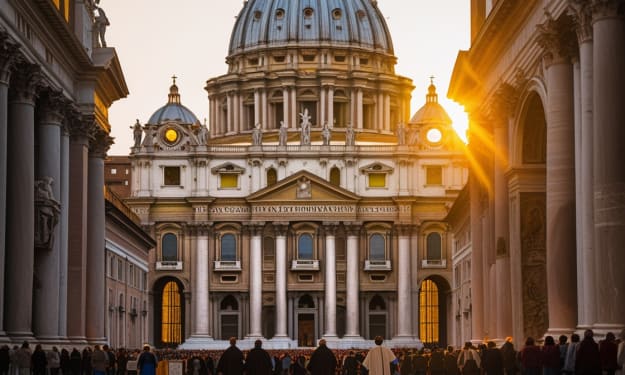
The Origins: A Tomb Transformed into a Basilica The narrative commences in the 1st century CE. According to Christian doctrine, St. Peter, one of Jesus Christ's twelve disciples and viewed as the first Pope, was martyred in Rome during Emperor Nero's rule. He was crucified upside-down and interred in a burial site on Vatican Hill. Over his resting place, Emperor Constantine, the first Roman emperor to embrace Christianity, commissioned a basilica circa 319 CE.
By Say the truth 8 months ago in History
The Golden Vein of China: History and Wealth of the Yellow River's Mineral Deposits
Historical Background The history of mining and mineral utilization in the Yellow River region can be traced back to ancient China, particularly during the Xia, Shang, and Zhou dynasties (2100–256 BCE). Early Chinese metallurgy predominantly relied on copper and tin for the creation of bronze tools, weapons, and ceremonial vessels. Archaeological discoveries from the Yellow River valley, especially within Henan and Shaanxi provinces, indicate that bronze mining and casting practices were highly developed as early as 1700 BCE.
By Say the truth 8 months ago in History
“How far you go in life depends on your being tender with the young, compassionate with the aged, sympathetic with the striving and tolerant of the weak and the strong. Because someday in life you will have been all of these.” —George Washington Carver
Black homesteaders were part of a larger land ownership movement in which settlers acquired and developed public lands for farming in 30 US states over a period of 100 years. The US federal government enacted these policies in areas that it wanted to populate with American citizens or prospective citizens (often to the detriment of the interests of the Native Americans who had previously occupied these lands. In total, some 30,000 black homesteaders obtained land claims in the course of this movement.
By Antoni De'Leon8 months ago in History
Broken Promises
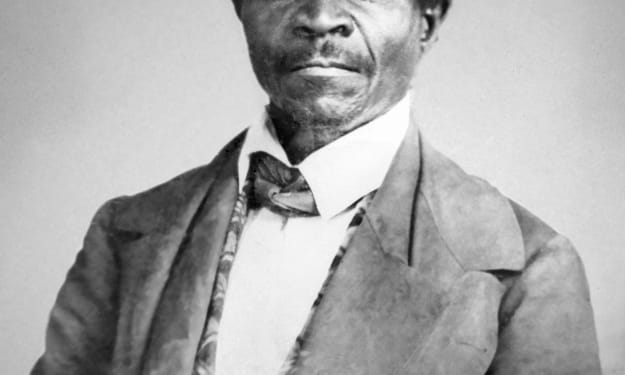
Slavery was seen for its worse. It was seen as an evil. Some believe it was necessary. And many believe it was harsh and cruel. Anyways the process was going to be over real soon. And it became increasing aware to Congress, the influence of slavery. For many Congress members were opposed as well as many who were for slavery. The country was straight divided. And everyone knew it. It was like a cloud of darkness that overshadow the nation. And the world knew about our slavery as well as we did for it was published. And the media covered it. And some of the freedmen proved that slavery was unnecessary. As they advanced and worked, they proved that slavery was not needed. As they build families and lived peacefully under the laws. And this was unnoticed at first until the Dred Scott case. It brought out that slavery was definitely an evil. As Dred worked much of his life as a slave and he finally was freed upon the death of his master. Dred builted a family and he worked as any other man would to support his family. And he was known as a hard working man. He was active in his community. And he was a good neighbor. There were many who vouched for Dred because of his good nature. And his presence that brought fellowship and friendship. And Dred was happy and enjoying his freedom. And he did not mind working night and day to feed his family. He was happy that he was freed. And he was happy to be able to make a living in this country without being stripped of his rights. Dred also became educated. He started learning to read and write. And he took classes at the church. At the church he was noted for his giving. His family was very active in the church. And he would work with the church even when he was almost worn from working for his boss. And Dred did things that he did under slavery with his master except he was respected and getting paid and not being mistreated or beaten. And he enjoyed his freedom even attending at the bar and enjoying the freedom of leisure. His wife would let Dred go with his friends because he would work so hard. And Dred's life was like this for many years almost many decades without slavery. Then he heard from his minister that they were looking for him. And he was confident saying I have the papers that my master's wife allowed me to purchase my freedom. I will not go back to slavery. And the minister tried to convinced him that he has to fight according to the laws because he does not know if the country would stand behind a freedman. And Dred first wanted to tell the court himself. And he did not want his family involved yet. And he told the minister to take care of his family while he faced court. And Dred eventually turned himself in. And he appeared in court and stated the evidence however the judge acted suscipously. And so Dred faced the court accusations and in the end of the court day, he decided for a lawyer. And as the court case proceeded on for many days, the court was in a truce and in a deadheat. The master's wife family were determined to bring him back as a slave. And finally Dred Scott reappeared at the testimony stand and saying determined, you promise me freedom. Your mother promised that I will never go back to slavery. I have builted an entire new life. I have lived under law without breaking any law. I have been a good member of society. I have done well with my freedom. I am a good man. A God fearing church man and you are doing this to me. This is injustice. And it is wrong for me to put back in chains and be a slave again. You people represent nothing but broken promises. You are broken promises to me. And broken promises to my people. No matter what I will hold this belief and truth. And the court went into an uproar. And the court proceeded further to the Supreme Court. And the Supreme Court struck down his win and sentenced him to return to his master's wife family. Eventually Dred Scott Case overshadow the presidential race and American history as a major shamble of history.
By Distinguished Honorary Alumni Dr. Matthew Primous8 months ago in History