
“How far you go in life depends on your being tender with the young, compassionate with the aged, sympathetic with the striving and tolerant of the weak and the strong. Because someday in life you will have been all of these.” —George Washington Carver
Black Homesteaders in the 1800's.


Black homesteaders were part of a larger land ownership movement in which settlers acquired and developed public lands for farming in 30 US states over a period of 100 years. The US federal government enacted these policies in areas that it wanted to populate with American citizens or prospective citizens (often to the detriment of the interests of the Native Americans who had previously occupied these lands. In total, some 30,000 black homesteaders obtained land claims in the course of this movement.
Of what benefit is it, to sacrifice one people for the upliftment of another?
Does history speak of Black settlers fighting the Native Americans for land.
History does document interactions between Black settlers and Native Americans, though direct conflicts over land were not as common as other forms of engagement. In the 19th century, particularly in Indian Territory (modern-day Oklahoma), Black people who had been enslaved by Native American tribes, such as the Cherokee and Creek, were freed and sometimes received land. This created a complex dynamic where Black settlers, Native Americans, and white settlers all laid claim to land that had been taken from others.
Additionally, during the American Indian Wars, conflicts over land were primarily between Native American tribes and European settlers or the U.S. government. However, African Americans were sometimes involved in these conflicts, either as soldiers in the U.S. military or as settlers moving westward.
The relationship between Native Americans and African Americans was shaped by various factors, including slavery, forced relocation, and shared struggles against oppression. While there were instances of tension, there were also moments of cooperation and solidarity.
...
There are several significant events that highlight interactions between Black settlers and Native Americans:
- Black Freedmen in Indian Territory: After the Civil War, formerly enslaved - Black people who had been held by Native American tribes were granted land and citizenship within these nations. This led to complex relationships between Black settlers and Native Americans as they navigated issues of land ownership and identity.
- The Seminole Wars: In the 19th century, Black Seminoles—descendants of escaped enslaved people who had joined the Seminole tribe—fought alongside Native Americans against the U.S. government in Florida. They resisted efforts to remove them from their land and were eventually forced to relocate to Indian Territory.
- Black Cowboys and Settlers in the West: Many African Americans moved westward after the Civil War, settling in areas where Native Americans had been displaced. Some Black settlers worked as cowboys or homesteaders, while others lived alongside Native American communities, forming alliances or facing tensions over land and resources.
These events illustrate the complex and varied relationships between Black settlers and Native Americans, shaped by shared struggles, cooperation, and occasional conflict.
....
Influential black homesteaders
The black homesteaders movement included a number of influential people, including:
Oscar Micheaux, who later became a novelist and the first recognized African American film-maker.
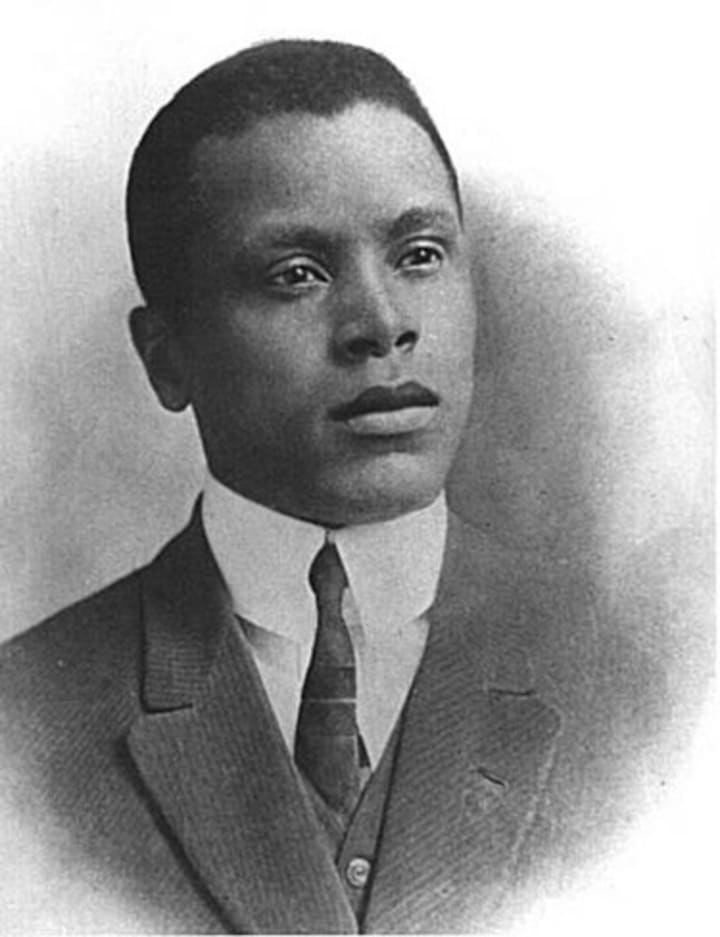
Oscar Micheaux was a pioneering African American filmmaker, author, and producer, widely regarded as the first major Black feature filmmaker. Born Oscar Devereaux Micheaux on January 2, 1884, in Metropolis, Illinois, he was the fifth of thirteen children in his family. His father, Calvin S. Micheaux, had been born into slavery.
Micheaux's early life was marked by financial struggles and a rebellious spirit. His family moved to the city to provide better educational opportunities, but economic difficulties forced them back to farming. As a teenager, Micheaux moved to Chicago, where he worked various jobs, including in stockyards and steel mills. He later became a Pullman porter, a prestigious job for African Americans at the time, which allowed him to travel and develop business skills.
His experiences as a homesteader in South Dakota inspired him to write novels, including The Homesteader (1917), which became the basis for his first film. Micheaux refused an offer from an African American film company to adapt his book, choosing instead to produce the film himself, launching his career as an independent filmmaker. Over the next three decades, he wrote, directed, and produced over 45 films, many of which tackled themes of racial injustice, social inequality, and African American identity.
Micheaux was known for his tenacity and charisma, often distributing his films personally and securing funding through direct investor engagement. His films, including Within Our Gates (1920) and God’s Step Children (1937), challenged racial stereotypes and provided authentic portrayals of Black life. Despite working with limited budgets, his contributions to cinema were groundbreaking.
...........
George Washington Carver, whose long scientific career and many discoveries while at the Tuskegee Institute are celebrated.
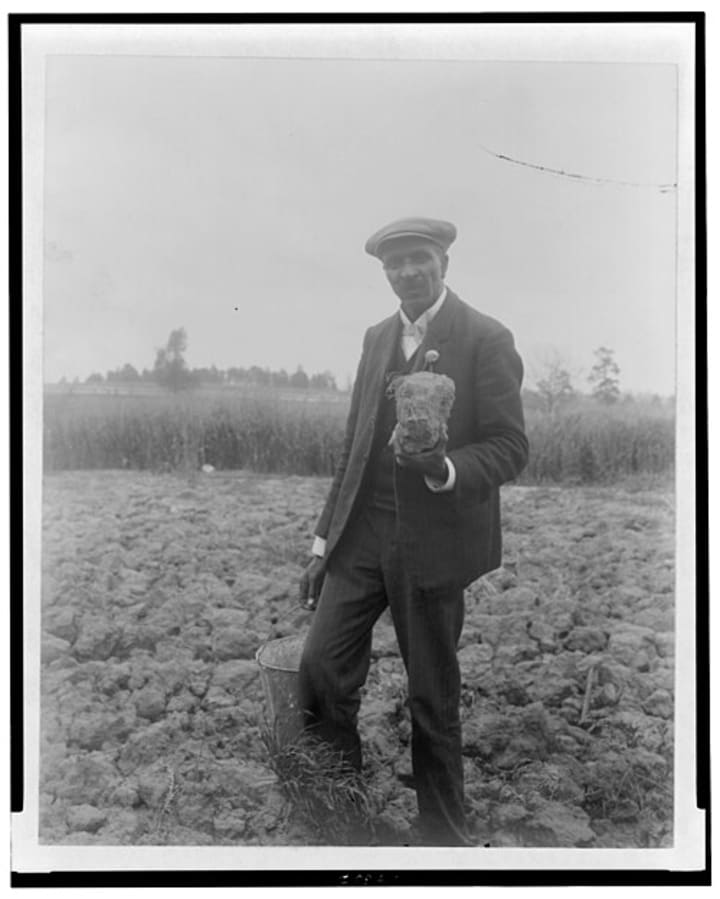
George Washington Carver was an American agricultural scientist and inventor, best known for his work in promoting alternative crops to cotton and methods to prevent soil depletion.
Carver was born into slavery around 1864 in Diamond, Missouri. His exact birth date is unknown because records were not kept for enslaved people at the time. As an infant, Carver, his sister, and his mother were kidnapped by raiders from Arkansas. While his brother, James, was rescued, Carver's mother was never found.
After slavery was abolished, Carver and his brother were raised by their former owners, Moses and Susan Carver, who encouraged his education. Since Black children were not allowed to attend the local school, Carver walked several miles to a school for African American students. His thirst for knowledge led him to pursue education in various towns, eventually earning a high school diploma in his twenties.
He later attended Simpson College in Iowa, where he initially studied art and music. However, a professor recognized his talent in botany and encouraged him to transfer to Iowa State Agricultural College (now Iowa State University), where he became the first Black student and later the first Black faculty member.
His early struggles shaped his determination to use science to improve the lives of poor farmers.
Carver encouraged farmers to grow crops like peanuts and sweet potatoes, not just for food but also to improve soil quality. He developed numerous products from peanuts, though contrary to popular belief, he did not invent peanut butter. His research helped revolutionize agriculture in the southern United States, making farming more sustainable and profitable.
Beyond his scientific contributions, Carver was a strong advocate for environmentalism and education. He spent much of his career at Tuskegee Institute, where he taught and conducted research. His work earned him widespread recognition, including the Spingarn Medal from the NAACP, and he was even referred to as the "Black Leonardo" by Time magazine.
His inventions and his impact on agriculture?
George revolutionized agriculture with his innovative approaches to soil health and crop rotation. He recognized that continuous cotton farming was depleting soil nutrients, so he encouraged farmers to rotate crops with peanuts, sweet potatoes, and soybeans---plants that restored nitrogen to the soil. This method not only improved soil fertility but also increased agricultural productivity.
Carver also developed over 300 products from peanuts, including dyes, plastics, and even gasoline. His research extended beyond peanuts---he found new uses for sweet potatoes, pecans, and other crops, helping farmers diversify their income sources.
His work at Tuskegee Institute was groundbreaking, as he taught farmers sustainable practices, promoted organic fertilizers, and emphasized conservation. His contributions laid the foundation for modern sustainable agriculture.
............
Robert H. Knox (described at the time as a "prominent colored citizen" of Montgomery, Alabama).
A study at the University of Nebraska quotes a speech given to a 1872 convention of Black southerners by Robert H. Knox (described at the time as a "prominent coloured citizen" of Montgomery, Alabama). Knox describes his change of view on the wisdom of Blacks staying in the South and his advice to conference attendees to seek opportunities elsewhere:
"I yet would say let us rest here a while longer; let us trust in God .... to give us what is most needed here, personal security to the laboring masses, the suppression of violence, disorder and kukluxism .... Failing in these, it is time then, I repeat, to desert the State and seek homes elsewhere ..... where there may be enjoyed in peace and happiness by your own fireside the earnings of your daily toil".
Thus, the black homesteader movement foreshadowed the Great Migration of the mid-twentieth century during which 6 million blacks fled the South to work in northern or western states. In addition to the attraction of free land and the opportunities provided by land ownership, black homesteaders “also had in their consciousness the bitter agony of Black people’s history in the South".
About the Creator
Antoni De'Leon
Everything has its wonders, even darkness and silence, and I learn, whatever state I may be in, therein to be content. (Helen Keller).
Tiffany, Dhar, JBaz, Rommie, Grz, Paul, Mike, Sid, NA, Michelle L, Caitlin, Sarah P. List unfinished.
Keep reading
More stories from Antoni De'Leon and writers in History and other communities.
Dear Harriet...Tonight We Run!!!
Dear Readers: I invite you to travel through time to meet some brave and noteworthy souls. There are, throughout history, several powerful first-person accounts of slavery that provide deep insights into the experiences of enslaved individuals. Here are a few notable examples:
By Antoni De'Leon11 months ago in History


Comments (5)
Antoni, your work is a revelation—threading forgotten histories into a tapestry that demands our attention. Oscar Micheaux’s legacy, as you’ve illuminated, isn’t just a footnote but a cornerstone of cultural resilience, and I’m eager to delve deeper into his pioneering narratives. Your piece resonates with my own exploration of Robert Knox and the fraught dynamics of brotherhood and power in colonial contexts. It’s rare to find writing that bridges scholarly rigor with visceral storytelling, but you’ve done so masterfully. Here’s to unearthing more of these obscured lineages and challenging the silences in our collective memory. Keep igniting these essential conversations
This article makes me think about how complex these land ownership dynamics were. It's hard to say if sacrificing one group for another was truly worth it. I wonder if there were more peaceful ways to handle the land distribution. Also, it's interesting that there were moments of cooperation despite the tensions. How could we learn from these historical interactions today?
What is fantastic histories. Thank you very much for writing this. I am going to have to check out Oscar Micheaux’s works, I am very interested in him. I wrote a piece probably about a year ago for the Men community here on vocal which included a bit on Robert Knox and his brothers. Great work, Antoni.
Great insights, Antoni. Of course, you realize that Trump will put a lid on this if he ever finds out about it.
We have to remember them. They foresaw the future for us.