
The Wealthiest Empire in History: The Golden Heritage of the Mali Empire
Throughout the annals of history, numerous empires have accumulated remarkable wealth and authority—from Rome to the British Empire. However, in terms of natural resource wealth, cultural flourishing, and legendary extravagance, one name stands unparalleled: the Mali Empire. Situated in West Africa, the Mali Empire thrived between the 13th and 16th centuries and is broadly regarded as the wealthiest empire in global history, primarily due to its substantial gold deposits, extensive trade networks, and the exceptional affluence of its most illustrious emperor, Mansa Musa.

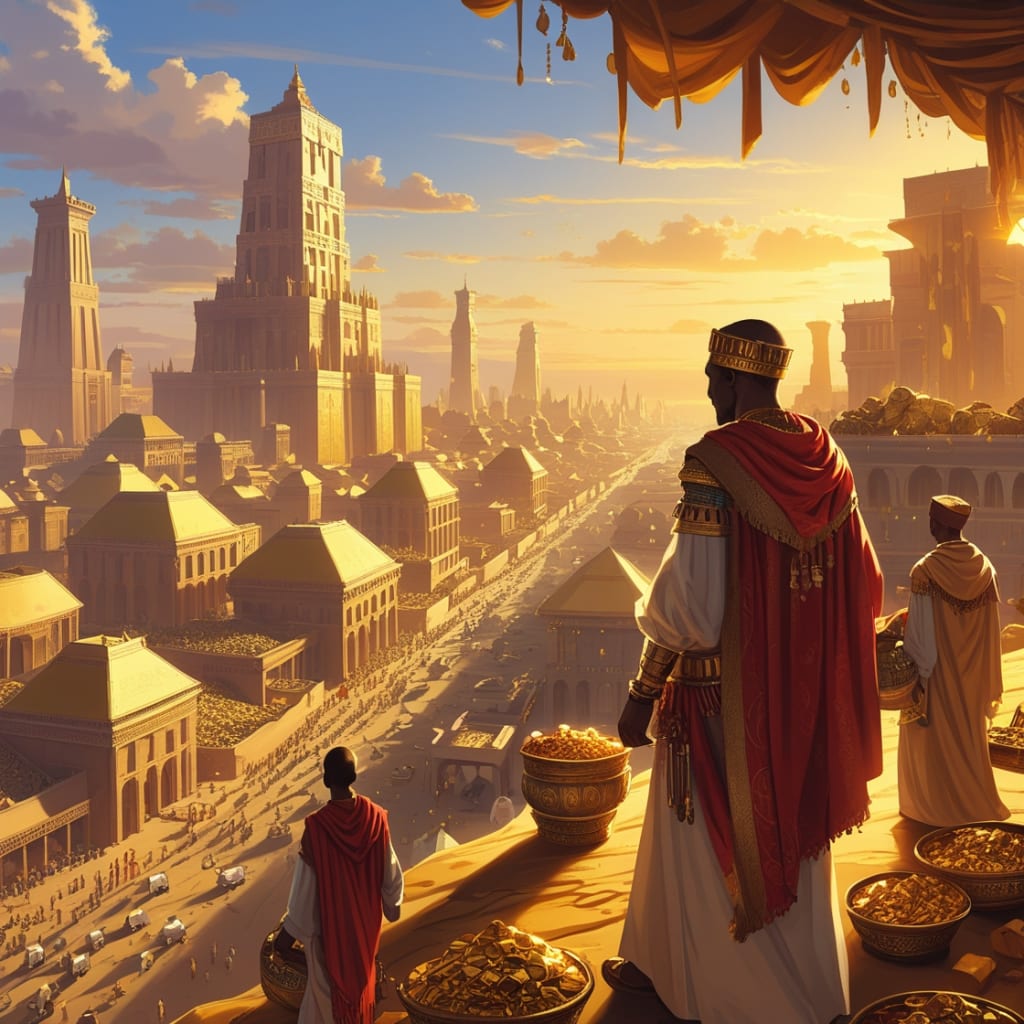
The Foundations of the Mali Empire
The Mali Empire was established circa 1235 AD by Sundiata Keita, who unified several smaller kingdoms following the decline of the Ghana Empire. Under Sundiata’s guidance, Mali evolved into a centralized entity with a formidable military and effective administration. Nonetheless, it was under his successors—most notably Mansa Musa (r. 1312–1337)—that the empire attained its pinnacle.
Encompassing portions of contemporary Mali, Senegal, Gambia, Guinea, Niger, Nigeria, and Mauritania, the Mali Empire governed extensive territories and essential trade routes, including segments of the Sahara Desert. This positioned it to dominate trans-Saharan commerce, especially in salt, ivory, enslaved individuals, and most crucially—gold.
Mansa Musa: The Most Affluent Individual in History
Mansa Musa, the tenth sovereign of Mali, is frequently recognized as the most affluent person in documented history. His net worth, adjusted for inflation and current assessments, is approximated to exceed $400 billion USD. This fortune was not solely attributed to dominion over land but also the empire’s gold mines, which contributed more than half of the world’s gold during his reign.
In 1324, Mansa Musa embarked on a renowned pilgrimage to Mecca (Hajj), an occasion that highlighted the immense scale of his empire’s riches. He journeyed with a caravan composed of:
60,000 individuals,
12,000 enslaved individuals conveying gold bars,
80 camels transporting hundreds of pounds of gold dust each.
According to historians, he distributed so much gold in Cairo, Mecca, and Medina that it diminished the value of the metal, resulting in economic inflation in the region for over a decade. This singular incident established Mali—and Musa—as significant players on the medieval global landscape.
Sources of Wealth
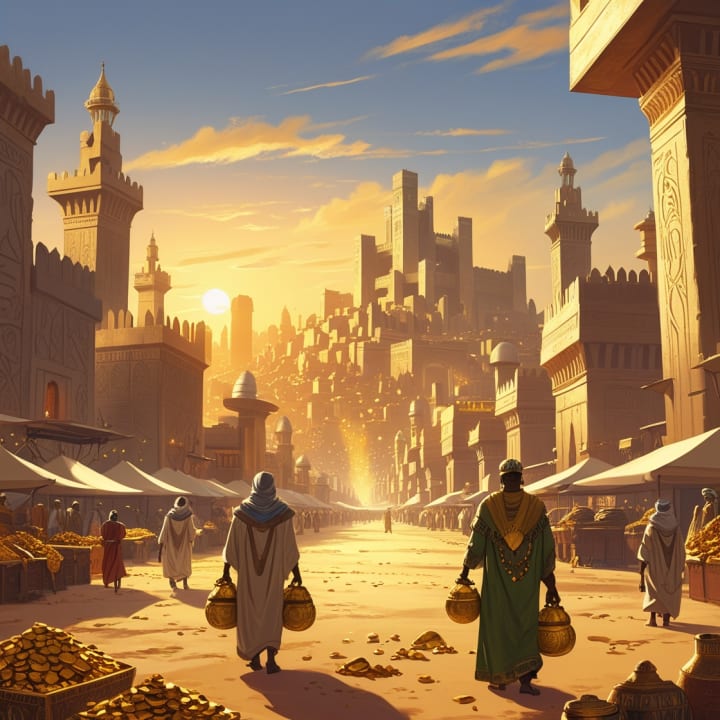
Gold Mines: The empire had direct authority over the Bambuk and Bure goldfields, two of the wealthiest globally at that time.
Salt Trade: Salt, a highly prized resource, was mined in Taghaza and traded throughout Africa.
Strategic Trade Routes: Mali’s location enabled it to serve as a commercial center linking North Africa, the Mediterranean, and Sub-Saharan areas.
Agriculture: Arable land along the Niger River supported extensive farming, which nourished the empire and provided goods for export.
Timbuktu: A Hub of Wealth and Scholarship
Beyond economic strength, the Mali Empire was a luminary of culture, scholarship, and Islamic education. The city of Timbuktu, under Mansa Musa and his successors, transformed into one of the most significant intellectual hubs in the Islamic realm. Housing the University of Sankoré and over 700,000 manuscripts, Timbuktu drew scholars, poets, theologians, and traders from various regions of Africa and the Middle East.
Wealth resided not solely in gold and gems—it was equally found in knowledge and learning.
The Decline of the Empire
By the late 14th and early 15th centuries, the Mali Empire commenced its decline. Internal conflicts, succession challenges, and assaults from rival states such as the Songhai Empire gradually weakened its influence. The advent of Atlantic trade routes by the Portuguese also redirected economic interests away from trans-Saharan paths, diminishing Mali’s strategic relevance.
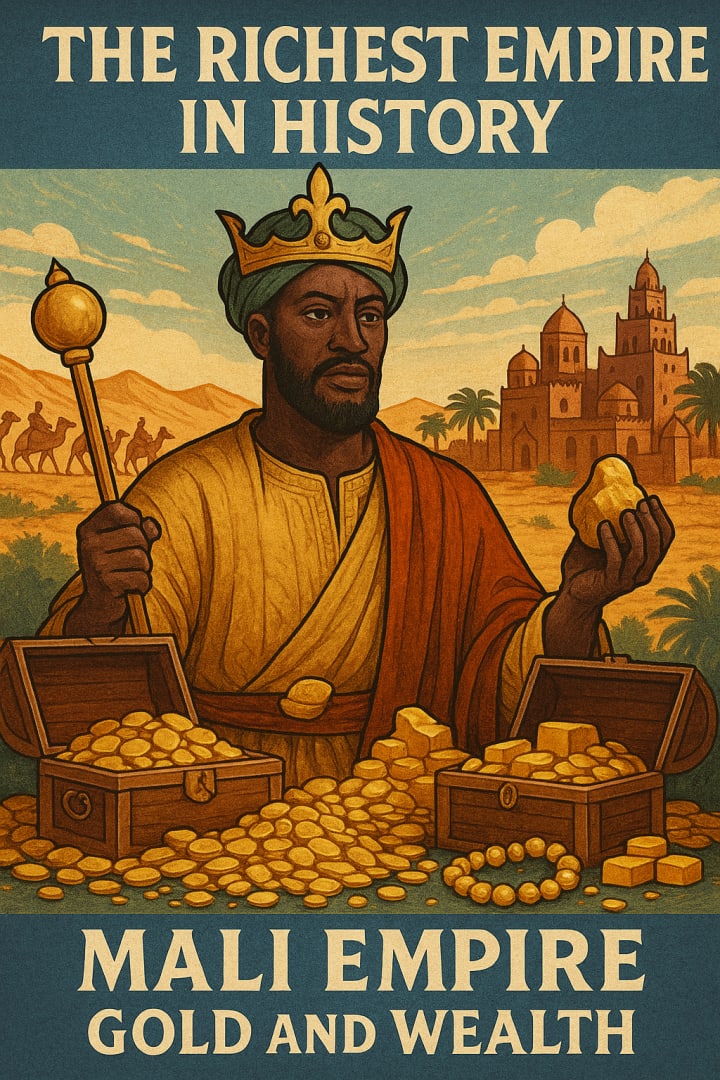
Nevertheless, the legacy of the Mali Empire persists. Its cultural offerings, historical manuscripts, and architectural marvels continue to be examined and honored.
Modern Legacy and Historical Importance
Presently, the Mali Empire symbolizes African resilience, unity, and intellectual wealth. Mansa Musa’s legendary affluence frequently serves as a counter-narrative to prevailing misconceptions regarding African impoverishment throughout history. UNESCO has safeguarded sites in Timbuktu, including its ancient mosques and libraries, as World Heritage Sites.
In contemporary culture, Mansa Musa has been portrayed in documentaries, novels, and even video games—preserving the account of the wealthiest empire and its renowned monarch.
Conclusion
The Mali Empire, with its immense fortune, strategic prominence, and cultural brilliance, remains a historical symbol of prosperity and sophistication. Its reign serves as a reminder that Africa was once the cradle of the richest empire in global history, one that commanded respect from Cairo to Mecca, and whose ruler’s magnanimity transformed the world economy.
In the chronicles of human history, no empire shines with as much gold—or legacy—as Mali.
About the Creator
Say the truth
"Say the Truth: Explain Everything in the World" is your trusted source for uncovering facts and exploring the wonders of history, science, technology, and beyond. We simplify complex ideas and reveal truths to inspire curiosity .
Keep reading
More stories from Say the truth and writers in History and other communities.
Beneath the Golden Tides: Revealing the Concealed Mineral Wealth of China's Yellow River
A River Shaping Through Epochs and Stone The Yellow River traverses a multitude of landscapes: towering mountains, fertile plains, loess plateaus, and desert basins. This journey has enabled it to carve into rock strata rich in minerals, revealing deposits that ancient civilizations soon learned to utilize. As early as the Shang Dynasty (c. 1600–1046 BCE), bronze metallurgy thrived along the river, with copper, tin, and lead extracted locally and crafted into weapons, ceremonial items, and tools.
By Say the truth 8 months ago in History
Where the Pulse Ends
© 2026 Sai Marie Johnson The humidity in the city didn’t just hang; it leaned. It was a thick, stagnant soup of diesel exhaust, ozone, and the metallic tang of blood that drifted from the "Compliance Zones." Joe sat in his rusted sedan, his hands resting loosely on the steering wheel. He wasn't gripping it. He wasn't angry. Anger was a chemical spike, a biological inefficiency. Joe was simply... focused.
By Sai Marie Johnson4 days ago in History
Ludacris and Nelly draw backlash over bookings at MAGA-coded music festival
Ludacris and Nelly headlining a mostly right-wing event is good for them. It’s also great for the genre of hip hop. The two rap veterans have showcased their talents on other stages. Why can’t they perform for mostly MAGA folks and grab that bag?
By Skyler Saunders5 days ago in Beat



Comments (1)
The Mali Empire was really something. It's amazing how much power and wealth it had, especially with all those gold mines. Mansa Musa's pilgrimage was huge. Can you imagine traveling with that much gold? It's crazy that it caused inflation. I wonder what other impacts the empire's wealth had on the regions it traded with. And how did they manage to control such vast territories and important trade routes?