
The Golden Vein of China: History and Wealth of the Yellow River's Mineral Deposits
The Yellow River, commonly known as the "Cradle of Chinese Civilization," has sustained the Chinese populace for millennia. Extending over 5,400 kilometers, it traverses nine provinces and has been instrumental in shaping China’s agriculture, culture, politics, and economy. While a significant portion of its renown arises from its fertile soil and historical importance, the Yellow River basin also conceals another treasureits extensive mineral deposits. From precious metals to rare earth elements, the mineral riches hidden beneath and around the Yellow River have contributed to the propulsion of China's economic growth throughout dynasties and into contemporary times.

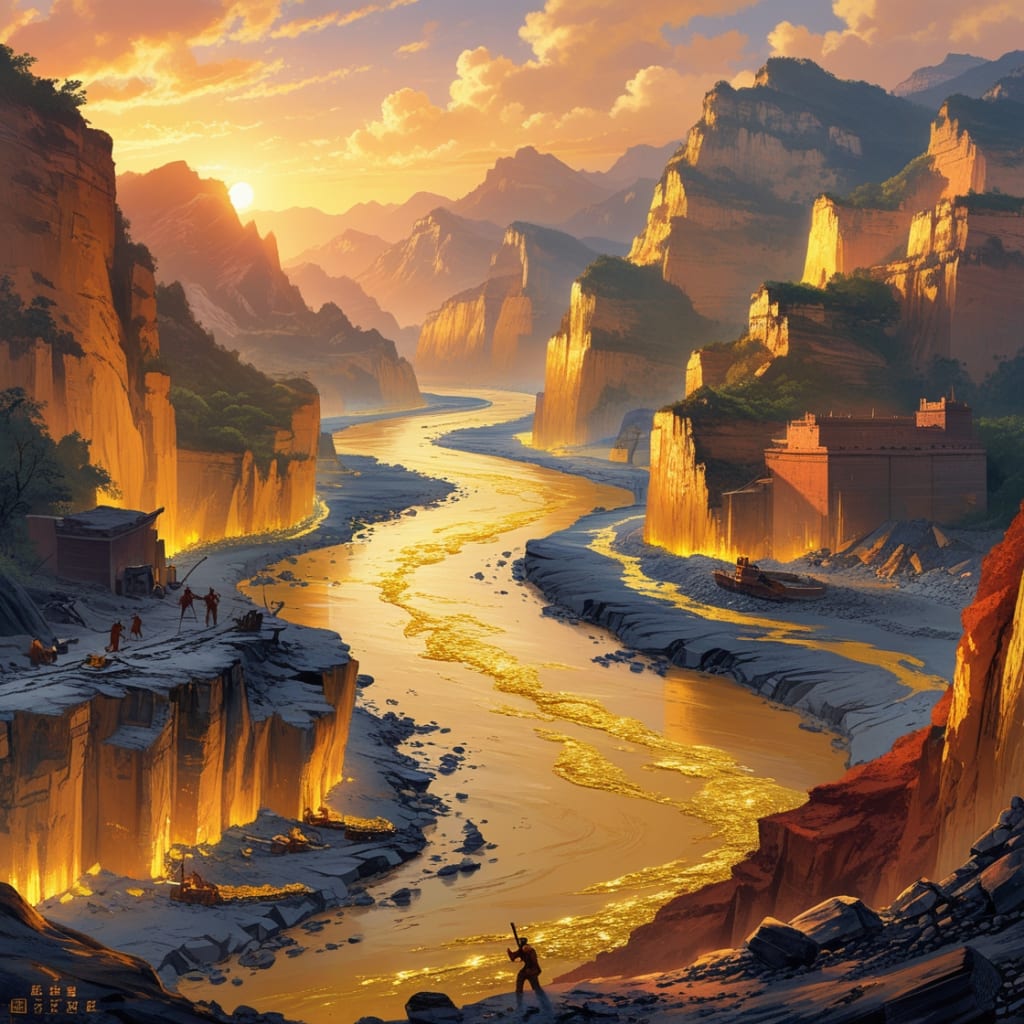
Historical Background
The history of mining and mineral utilization in the Yellow River region can be traced back to ancient China, particularly during the Xia, Shang, and Zhou dynasties (2100–256 BCE). Early Chinese metallurgy predominantly relied on copper and tin for the creation of bronze tools, weapons, and ceremonial vessels. Archaeological discoveries from the Yellow River valley, especially within Henan and Shaanxi provinces, indicate that bronze mining and casting practices were highly developed as early as 1700 BCE.
During the Han Dynasty (206 BCE – 220 CE), China commenced the extraction of a broader array of minerals, including iron, gold, and mercury, which found applications in everyday life as well as traditional medicine. Historical documents, such as The Records of the Grand Historian by Sima Qian, describe organized mining activities in the mountainous areas adjacent to the Yellow River. By the Tang and Song dynasties, more advanced techniques like deep shaft mining and hydraulic power facilitated enhanced utilization of mineral resources in the region.
Key Mineral Deposits in the Yellow River Basin
The Yellow River basin is endowed with a diverse assortment of minerals, attributable to its varied geological formations. Some of the most prominent mineral resources encompass:
Gold and Silver
The upper portions of the Yellow River in Qinghai and Gansu provinces are recognized for their gold-rich sands and quartz veins. Traditional panning techniques have been supplanted by contemporary large-scale open-pit and underground mining endeavors. Silver is commonly found in conjunction with gold and lead ores in the area.
Iron Ore
The Loess Plateau region, particularly in Shanxi, boasts plentiful iron deposits. These ores powered ancient blacksmithing industries and continue to sustain modern steel production.
Coal
Shanxi Province, situated in the mid-Yellow River basin, hosts some of China’s most abundant coal reserves, which generate a substantial portion of the country’s electricity and industrial output. The Datong and Taiyuan basins are particularly noteworthy.
Copper and Lead-Zinc Deposits
Primarily located in Gansu and Shaanxi provinces, these base metals are essential for electrical wiring, batteries, and industrial uses.
Rare Earth Elements (REEs)
While more concentrated in southern China, rare earth minerals have also been identified in small but valuable amounts in the Yellow River basin, especially in Gansu Province, which has been earmarked for REE exploration.
Salt and Alkali
The salt lakes and alkaline soils of the lower Yellow River have historically supplied significant chemical resources, utilized in both culinary applications and early chemical processes.
Economic Evaluation: The Valuation of Yellow River Mineral Deposits
Assessing the valuation of the Yellow River’s mineral resources is complex due to various factors: continuous extraction, undiscovered reserves, ecological costs, and variable global prices. Nevertheless, based on geological assessments, production data, and recent economic evaluations from Chinese mining organizations, we can outline a preliminary estimate.
Gold reserves: Estimated to exceed 1,200 tons across Gansu and Qinghai, with a current price of approximately $70,000/kg, totaling $84 billion USD.
Silver: Roughly 20,000 tons valued at $850/kg, resulting in $17 billion USD.
Iron ore: Billions of tons available in Shanxi, with high-grade reserves assessed to be worth $100 billion USD.
Coal reserves: Shanxi alone contains over 260 billion tons, with economically recoverable coal valued at over $200 billion USD.
Copper, Lead, Zinc: Combined base metal reserves may reach a total estimated market valuation of $60 billion USD.
Rare Earth Elements: Smaller yet high-value accumulations may have an estimated worth of around $10 billion USD, contingent on development and market demand.
Total Valuation Estimate: $471 billion USD (conservative projection)
This amount solely reflects identified and economically extractable resources. With additional exploration and technological progress, the actual worth could be considerably higher.
Ecological Impact and Challenges
While mineral extraction has brought economic benefits to the Yellow River region, it has also induced significant environmental harm. Coal mining and smelting have led to air and water contamination, soil degradation, and land subsidence. Over-extraction has diminished groundwater levels, adversely affecting agriculture and human health.
The Chinese government has enacted more rigorous regulations in recent years to mitigate pollution and encourage sustainable mining practices. Several initiatives now aim to reconcile economic benefits with environmental preservation, particularly in ecologically sensitive regions.
Conclusion
The mineral wealth of the Yellow River has been a discreet yet influential factor in China’s advancement. From ancient bronze artifacts to contemporary steel and rare earth exports, the riches beneath this iconic river have substantially influenced Chinese civilization and its position in the global economy. However, as the demand for these resources continues to escalate, sustainable practices and ecological consciousness must steer future extraction efforts. In many respects, the Yellow River stands not only as the "Mother River of China" but also as one of its most significant concealed treasures.
About the Creator
Say the truth
"Say the Truth: Explain Everything in the World" is your trusted source for uncovering facts and exploring the wonders of history, science, technology, and beyond. We simplify complex ideas and reveal truths to inspire curiosity .
Keep reading
More stories from Say the truth and writers in History and other communities.
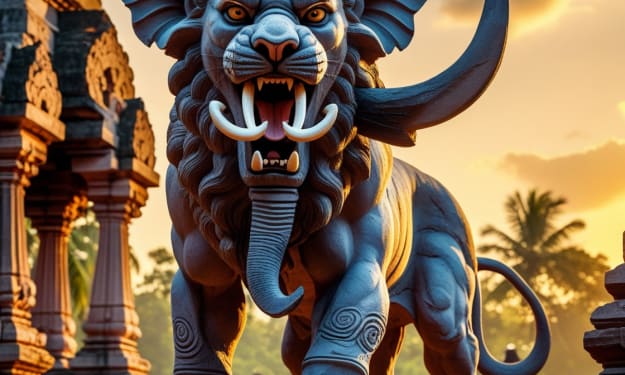
The Roaring Silence: Revealing the Greatest Enigma of the Yali
Origins and Early Representations: The earliest recorded illustrations of Yalis can be traced to the Pallava and Chola temples in Tamil Nadu, dating as early as the 7th century CE. These mystical beings embellish columns, gopurams (temple towers), and even thrones. In these representations, the Yali frequently appears mid-roar, with colossal claws, razor-sharp fangs, and a serpentine tail coiling around ancient stone.
By Say the truth 8 months ago in History
The Light of Islam: The Journey of the Prophet
Over 1,400 years ago, in the city of Mecca, a child was born who would change the world forever. His name was Muhammad ﷺ, and he belonged to the noble tribe of Quraysh. From the beginning, his life was marked by trials and simplicity. Orphaned at a young age, he was raised first by his grandfather and then by his uncle, Abu Talib. Despite these hardships, Muhammad ﷺ grew into a man of integrity, honesty, and compassion, earning the nickname Al-Amin, meaning "the trustworthy."
By The best writer 3 days ago in History
Miss Persephone's Manual to a Seemingly Ordinary Life
Miss Persephone was found at the dining table, her blue eyes swollen, her tears arriving and retreating like the tides of the ocean. Earlier that day, her family had visited her in the retirement home where she had lived for eight years. It was her eightieth birthday.
By Imola Tóth5 days ago in Fiction



Comments (2)
The Yellow River region’s mining history—spanning 5,000 years from ritual bronzes to industrial gold—reveals a profound interplay between human ingenuity and ecological impact. While ancient panning coexisted with river ecosystems, modern mechanized extraction has triggered erosion, mercury contamination, and habitat loss. Today, the challenge lies in reconciling this legacy with sustainable practices: leveraging AI-driven mineral mapping, circular economy principles, and community-led reclamation to ensure the river’s bounty fuels progress without sacrificing its ecological soul. Can China’s cradle of civilization pioneer a model where heritage and sustainability converge?
The history of mining in the Yellow River region is really interesting. It's amazing how far back it goes, from bronze in ancient times to more minerals in later dynasties. I'm curious about the shift from traditional panning to modern mining for gold. How has that affected the local environment? Also, with all these minerals, what's the plan to ensure sustainable extraction in the future?