Figures
The Legacy of Mary Shelley
Mary Shelley, born Mary Wollstonecraft Godwin on August 30, 1797, in London, is best remembered for her groundbreaking novel Frankenstein; or, The Modern Prometheus. This 19th-century British writer led a life marked by tragedy, intellectual restlessness, and a prolific creative mind. Though she is celebrated primarily for Frankenstein, Shelley’s legacy extends far beyond her most famous work, encompassing a diverse literary career that has cemented her place as one of the most influential figures in English literature. Mary Shelley was born into an intellectually vibrant household. Her mother, Mary Wollstonecraft, was a prominent philosopher and advocate for women's rights, while her father, William Godwin, was a political philosopher and writer. Sadly, her mother died of complications shortly after Mary’s birth, leaving her to be raised by her father, who nurtured her with a rich education in literature and philosophy. This intellectual environment helped foster Mary’s early passion for writing.
By A Históriaabout a year ago in History
Why Did Hitler's Right-Hand Man Make a Secret Trip to Britain? The Curious Case of Rudolf Hess
On August 17, 1987, a frail 93-year-old man stood in his summer house, unplugging a lamp from the table. With trembling hands, twisted by arthritis, he wrapped the extension cord around the latch of a nearby window. He carefully made a loop at the other end of the cord, placed it around his neck, and let his body fall slowly to the floor. Within minutes, the noose tightened, and his life slipped away.
By Marveline Merababout a year ago in History
How the Nazis Lost the War Because of a Single Corpse: Operation Mincemeat
Beaches are known for the random odds and ends that get washed up: seashells, seaweed, driftwood, empty plastic bottles, and the occasional oddity. But in 1943, a fisherman on the southern coast of Spain stumbled upon something far more unexpected—a dead body dressed in the uniform of a British Royal Marine, carrying a briefcase full of top-secret documents.
By Marveline Merababout a year ago in History
The Greatest Sniper Who Ever Lived: Simo Häyhä, The White Death
On April 1, 2002, a 96-year-old man quietly passed away in a retirement home on the southern coast of Finland. Standing only five feet tall, he had shrunk further with age, and he lived a quiet life as a farmer, never marrying or having children. Known simply as Simo to the few who called him a friend, this humble man had lived an extraordinary life, though few knew it.
By Marveline Merababout a year ago in History
Why Was There a War Over Dinosaur Bones? The Bone Wars
When you hear the phrase “thunder lizards,” what comes to mind? Probably some massive, lumbering reptile that shakes the earth with every step. And you'd be right—well, mostly. The Brontosaurus, or "thunder lizard" in Greek, was one of the largest creatures to ever roam the Earth, measuring around 23 meters long with a neck to match and a tail that seemed to go on forever.
By Marveline Merababout a year ago in History
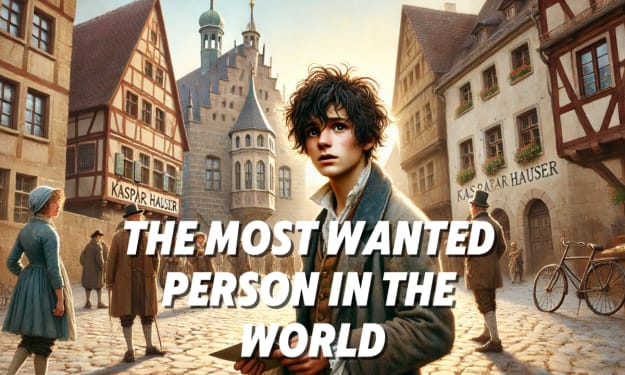
Why Was This Feral Child the Most Wanted Person in the World? The Mysterious Life of Kaspar Hauser
In the spring of 1828, a disheveled teenage boy shuffled into the city of Nuremberg, a location steeped in history and intrigue, which, at that time, was part of the kingdom of Bavaria. The boy moved with an unusual hesitance, making his way to the Town Square, where he stood awkwardly, clutching an envelope as if it contained the secrets of the universe. It was a surreal scene—this lost soul holding out an envelope to an unseen recipient. After a while, a local shoemaker noticed the boy’s plight and approached him with kindness.
By Marveline Merababout a year ago in History
Existentialism and Stoicism.
An existentialist person is the one who avoids absurdity by creating meaning in life or existence. A stoic person is one who accepts what is out of control with calmness and doesn't get disturbed by the ups and downs in life. These philosophies can make one's life beautiful after their implementation and they can make it even more beautiful and worth living after they are implemented in life together. There are some examples of famous personalities who are existentialist and stoic at the same time.
By Zainab Noor.about a year ago in History
The Road to Success
Success is rarely a straight path. It is often fraught with challenges, setbacks, and moments of doubt. Yet, it is through these trials that the seeds of greatness are sown. The stories of those who have achieved remarkable success are not just tales of triumph, but also of unwavering perseverance and resilience. This article delves into true stories of individuals who exemplified these qualities, ultimately achieving their dreams and inspiring others along the way.
By Sazeeb Chowduryabout a year ago in History
Soldiers Who are Still Fighting WWII Today: The Last Soldiers of World War II
In 2005, the world was shocked by the story of two elderly Japanese men who stumbled out of the dense jungle on the island of Mindanao in the Philippines. Yoshio Yamakawa, aged 87, and Tsuzuki Nakauchi, aged 85, were confused and bewildered. They asked a question that left everyone baffled: "Has the war ended yet?"
By Marveline Merababout a year ago in History
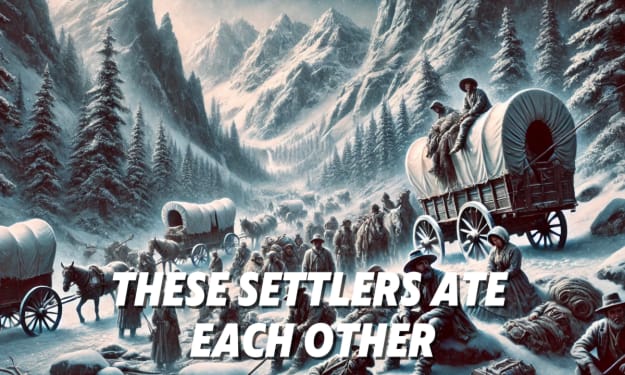
Why These American Settlers Eat Each Other: The Tragic Tale of the Donner Party
By the mid-19th century, America was caught in the grip of pioneer fever, a fervent desire to explore and settle the vast, uncharted territories of the West. Like a giant star-spangled bird stretching its wings, the nation was eager to gobble up new lands and lay claim to untouched regions. Among those captivated by this siren call were brothers George and Jacob Donner, who, along with their families, embarked on a monumental 2,500-mile journey from Springfield, Illinois, to California in search of the prosperity and wealth promised by the American West.
By Marveline Merababout a year ago in History
The Woman Who Will Still Be Alive in 1,000 Years: Henrietta Lacks
Henrietta Lacks was born in Roanoke, Virginia, in 1920, just two days after women were granted the right to vote in the United States. Despite the historic significance of her birth, her life was marked by hardship and struggle. Henrietta's mother tragically died giving birth to her tenth child when Henrietta was just four years old. Her father, overwhelmed by the challenges of raising such a large family, sent Henrietta and her siblings to live with relatives who would care for them.
By Marveline Merababout a year ago in History