
Why These American Settlers Eat Each Other: The Tragic Tale of the Donner Party
A Journey to the West

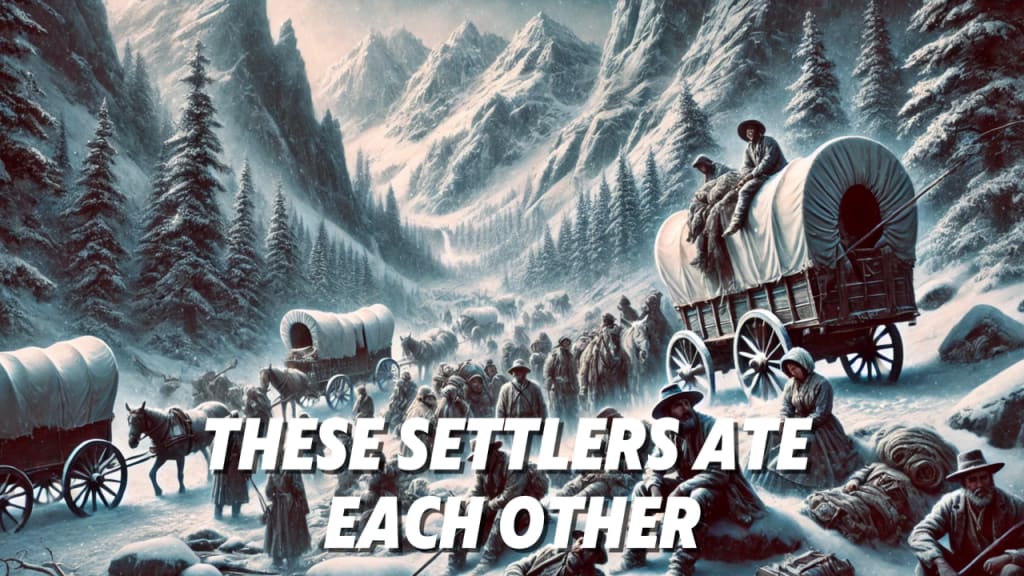
By the mid-19th century, America was caught in the grip of pioneer fever, a fervent desire to explore and settle the vast, uncharted territories of the West. Like a giant star-spangled bird stretching its wings, the nation was eager to gobble up new lands and lay claim to untouched regions. Among those captivated by this siren call were brothers George and Jacob Donner, who, along with their families, embarked on a monumental 2,500-mile journey from Springfield, Illinois, to California in search of the prosperity and wealth promised by the American West.
The Dawn of a New Adventure
The Donners were not alone on this ambitious trek. They were joined by the Reed family, led by James Reed, a man recently hit by bankruptcy but determined to turn his fortunes around in California. An interesting tidbit to note: Reed was friends with a certain Mr. Abraham Lincoln, who reportedly contemplated joining Reed on this journey. However, Lincoln ultimately chose to remain behind, focusing on his burgeoning political career, a decision that would certainly pay off in the long run.
James Reed’s family traveled in a custom-built wagon, which was somewhat akin to the early version of MTV's Pimp My Ride. This unique double-decker wagon featured shock-absorbing seats, bunk beds, and a cooking stove, showcasing the blend of practicality and comfort that pioneers sought during their long voyages.
The Importance of Timing
Anyone heading to California knew that reaching the Sierra Nevada mountains before winter was crucial. Arrive too late, and the treacherous mountain range would become nearly impossible to traverse. While the Donners and Reeds set off a little later in the season, they believed they still had ample time to reach their destination—provided nothing went awry along the way. Spoiler alert: everything went wrong.
An Ominous Beginning
The initial 250 miles of their journey went surprisingly well. The pioneers reached Independence, Missouri—the launch pad of the Oregon Trail—on schedule. After spending a few days stocking up on supplies and mentally preparing for the epic journey ahead, the two families pressed onward, joining a larger train of around 50 wagons. Up to this point, things seemed to be going swimmingly, and both the Donners and Reeds could be forgiven for thinking that crossing a continent in a wagon was just a walk in the park.
But then, one by one, challenges began to emerge. Unusually high water levels in the Big Blue River, located in what is now Kansas, forced the group to construct rafts to float their wagons across. Tragically, this was also when the journey claimed its first victim: James Reed's mother, who passed away from a long-standing illness. While these setbacks were unfortunate, they were mere harbingers of the calamities that lay ahead.
The Allure of a Shortcut
The real turning point came when James Reed turned his attention to a book titled "The Emigrant's Guide to Oregon and California," written by Lansford Hastings. Hastings was a well-known figure in the lore of westward migration and had mapped out a purported shortcut that promised to reduce the journey by 400 miles. Intrigued by the idea of arriving in California a month earlier, Reed championed Hastings' shortcut to the group.
Despite the warnings from an experienced mountaineer named James Clyman—who advised sticking to the known route—Reed's faith in Hastings' shortcut remained unshaken. To say that this faith was misplaced would be a grave understatement.
Hastings, despite authoring the guide, had never actually traversed his own shortcut. He had scouted some areas, yes, but he conveniently assumed the rest of the route would be manageable. As Reed proposed the shortcut to the group, opinions were divided: some wagoners felt sticking to the traditional route was wiser, while others were excited about the prospect of a quicker journey.
The Fork in the Road
The choice was made: the group would take Hastings' proposed shortcut. And thus began the saga of the Donner Party. You might think that the name evokes images of a celebratory gathering, but the reality was far more chilling.
Initially, the group enjoyed a brief stroke of luck when they heard that Lansford Hastings himself was waiting further along the trail to personally guide anyone taking his shortcut. Unfortunately, when they reached Fort Bridger, a key resupply point on the Oregon Trail, they discovered that Hastings had already moved ahead with another wagon train.
Unfazed, the group chose to continue with their plans. However, upon reaching the Weber River in what is now Utah, they found a note from Hastings stating that a crucial part of his shortcut—the Weber Canyon—was utterly impassable. Hastings left directions for an alternate route, but confidence in the shortcut began to wane. Reed, possibly feeling a touch of regret, galloped off to find Hastings and demand an explanation. Hastings assured him that all would be well and that the new route would work just as smoothly.
Challenges in the Wilderness
As the party set out again, it became painfully clear that the alternate route was far more arduous than Hastings had led them to believe. Progress slowed to a crawl as the pioneers had to cut down trees to clear a path for their wagons. When they finally emerged from the dense woodland and reached the Great Salt Lake Desert, they faced a new nightmare. With only a month of summertime remaining, time was no longer on their side.
The desert proved to be a harsh and unforgiving landscape. The group ran out of water within three days, and while daytime temperatures soared, nighttime brought a sharp drop into freezing territory. To make matters worse, moisture hidden beneath the salt crust began rising during the day, turning the ground into a sticky, salt-flavored glue. This made it increasingly difficult for the wagons to traverse the terrain, leading to the loss of 36 oxen and four abandoned wagons.
The desert stretched on far longer than Hastings had indicated. What the pioneers had believed would take two days stretched to five grueling days. By the time they finally reached the other side, their food and water supplies were critically low. The group was forced to spend an agonizing week recovering beneath Pilot Peak, while two members rode ahead in search of provisions.
The Bitter Chill of Winter
Why Did These American Settlers Eat Each Other? You'll definitely enjoy this!
After more than a month spent on the shortcut, the group finally rejoined the traditional route. However, the shortcut had added a staggering 125 miles to their journey. Just as they thought conditions couldn’t get any worse, snow began to fall earlier than expected in the Sierra Nevada mountains. The terrifying possibility of being trapped in the mountains for winter loomed large.
As tensions escalated among the group, a fight broke out between James Reed and another member. In the heat of the moment, Reed stabbed his opponent to death. Outraged, the party called for Reed to be hanged. They had been waiting for an excuse to rid themselves of Reed’s leadership long before this fatal incident, but he was ultimately spared, thanks to his wife's intervention. Instead, he was banished from the group, forced to ride off alone—a punishment that might have felt more like a relief.
The Final Descent into Despair
The bedraggled wagon train reached the Truckee River on October 16. There, they were joined by two Native American guides who offered assistance in navigating through the mountains. For the first time in months, optimism surged within the group. But as luck would have it, George Donner’s wagon axle broke down, forcing him and 22 others to stay behind for repairs. The rest of the party pressed on, only to be halted again by heavy snowfall.
By this time, the Donner Party was the only wagon train still on the trail, and they were forced to face a grim reality: there was no way they could reach California before winter set in. Desperation hung thick in the air as the group began constructing makeshift shelters, preparing for the brutal months ahead. They attempted hunting and fishing, but success eluded them, and their food stores dwindled.
The Forlorn Hope
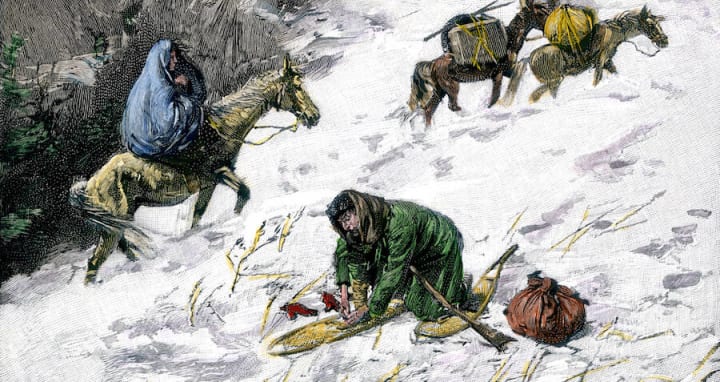
As hunger gnawed at their bellies, a desperate group of 17, including the Native American guides, set out on makeshift snowshoes to find help. This group would come to be known as the "Forlorn Hope," a name that foreshadowed their grim fate. Within a week, they ran out of food, lost their bearings, and some began to turn back. Their leader, Charles Stanton, suffered from snow blindness and ultimately succumbed to despair, sitting down to smoke his pipe—never to be seen alive again.
As conditions grew more dire, the remaining members of the Forlorn Hope lit a fire to warm themselves, only for a blizzard to extinguish it. Faced with starvation, the unthinkable began to surface in their discussions. On Christmas Eve 1846, the members of Forlorn Hope began drawing lots to decide who would be sacrificed for food. A man named Patrick Dolan drew the short straw, but to his immense relief, his comrades couldn’t bring themselves to kill him. Fate intervened when Dolan died the following day of natural causes, sparing him from the horrors that lay ahead.
Within a day, hunger overcame their moral hesitation, and the surviving members of Forlorn Hope resorted to cannibalism, consuming the remains of their deceased companions. Meanwhile, the two Native American guides, witnessing this gruesome turn of events, felt it wise to distance themselves from the group. However, they didn’t get far before collapsing from exhaustion. Tragically, when they were later discovered, they had already succumbed to starvation.
The Search for Help
News of the Donner Party's plight had reached the outside world, leading to several rescue missions. After months of winter weather, the first relief party was dispatched by the California Pioneer Association on February 19, 1847, guided by William Eddy, a member of the doomed group. After several harrowing days, they managed to reach the remains of the camp and began rescuing survivors.
But when they arrived, they found that conditions had only worsened. The remaining survivors had barely clung to life, and more than half of them had already perished. The horrifying realization struck: the survivors had resorted to the very act that had haunted the Forlorn Hope.
The Aftermath
When the last survivors were finally rescued, only 48 of the original 87 members of the Donner Party had made it out alive. The harrowing journey had claimed lives, shattered families, and instilled fear in the hearts of those who dared to cross the mountains.
The tragedy of the Donner Party serves as a stark reminder of the dangers faced by pioneers venturing into the unknown. While the lure of the West promised riches and opportunity, the reality often included unexpected trials, harrowing decisions, and the fragility of human life.
Today, the name "Donner Party" remains synonymous with the dark side of the pioneer spirit—a tale of perseverance and despair that continues to haunt the annals of American history.
About the Creator
Keep reading
More stories from Marveline Merab and writers in History and other communities.
The Woman Who Will Still Be Alive in 1,000 Years: Henrietta Lacks
Henrietta Lacks was born in Roanoke, Virginia, in 1920, just two days after women were granted the right to vote in the United States. Despite the historic significance of her birth, her life was marked by hardship and struggle. Henrietta's mother tragically died giving birth to her tenth child when Henrietta was just four years old. Her father, overwhelmed by the challenges of raising such a large family, sent Henrietta and her siblings to live with relatives who would care for them.
By Marveline Merababout a year ago in History
No ICE, No KKK, No Fascist USA
"I don't 'do' politics." Politics will do you, regardless. Watching from the sidelines for the last year I can see far too many similarities in the way Trump's ICE Gestapo is to Nazi Germany. Considering the United States just invaded Venezuela and kidnapped their President and his wife I would say we are there.
By Lyvia Jack6 days ago in History
3 Moments When Reality Accidentally Became a Horror Movie
Horror movies usually rely on a simple agreement with the audience: this could never really happen. Ghosts follow rules, monsters have weaknesses, and there’s always a clear point where reality hands the story over to fiction. Real life, unfortunately, does not care about narrative structure, logic, or closure.
By Enoch Sagini5 days ago in History
How, Too
Many people wonder how, too. You are not alone, and I am an expert. I will teach you how, too! First, you need to remit a small application fee and fill out an application describing the nature of your financial situation and how often payments will be made, as this will have great bearing on how well I teach you how, too.
By Harper Lewis3 days ago in Fiction



Comments
There are no comments for this story
Be the first to respond and start the conversation.