
The Woman Who Will Still Be Alive in 1,000 Years: Henrietta Lacks
The Extraordinary Legacy of Henrietta Lacks: A Story of Immortality and Ethics in Medical Research

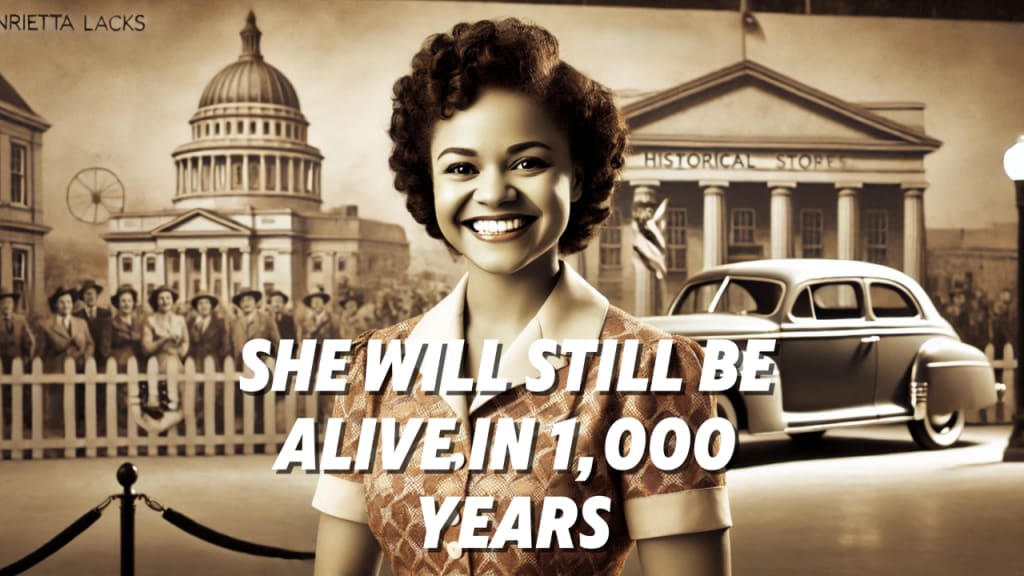
Henrietta Lacks was born in Roanoke, Virginia, in 1920, just two days after women were granted the right to vote in the United States. Despite the historic significance of her birth, her life was marked by hardship and struggle. Henrietta's mother tragically died giving birth to her tenth child when Henrietta was just four years old. Her father, overwhelmed by the challenges of raising such a large family, sent Henrietta and her siblings to live with relatives who would care for them.
From a young age, Henrietta was forced to work in the local tobacco fields, and she dropped out of school in the sixth grade to support her family. By the time she was 14, she had already become a mother, giving birth to her first child. Over the next 15 years, she would have four more children. However, her life took a tragic turn when she passed away at just 31 years old, having endured a hard and short life.
Despite her struggles and the challenges she faced, Henrietta Lacks had unwittingly begun a journey that would change the world. Her name may have been forgotten by many, but her cells would live on, revolutionizing medical science and creating a legacy that endures to this day.
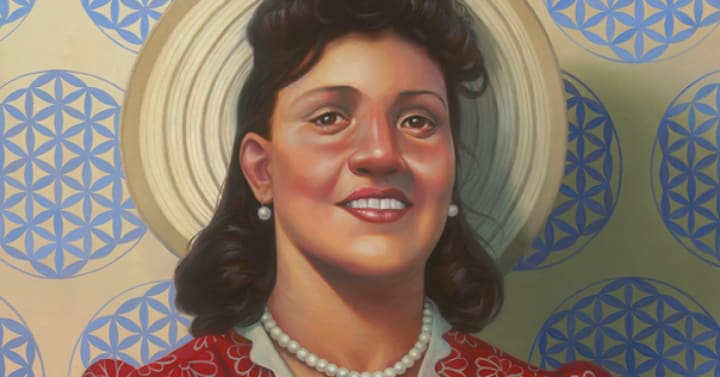
The Discovery of Immortality
To understand the impact of Henrietta's life, we must revisit the early 1950s, specifically 1951, when she was 30 years old. Henrietta felt a painful knot in her abdomen, a sensation that was initially mistaken for a sign of pregnancy. After giving birth to her fifth child, the discomfort persisted, prompting her to seek medical attention at Johns Hopkins Hospital, the only institution in the area that would treat Black patients.
It was here that she met Dr. Howard Jones, a young physician who would later establish a reproductive center responsible for the world's first test tube baby. During his examination, Dr. Jones discovered a strange mass of bleeding tissue in Henrietta’s cervix. A biopsy was performed, and the results were devastating: Henrietta had cervical cancer.
Despite aggressive treatment involving radium tube inserts, the cancer spread rapidly, and she succumbed to the disease before the year was out. However, during her treatment, two tissue samples were taken from her cervix—one healthy and the other cancerous—without Henrietta's knowledge or consent. These samples were sent to Dr. George Otto Gey, head of the tissue culture laboratory at Johns Hopkins.
What happened next was nothing short of remarkable. For years, Dr. Gey had struggled to culture human cells, facing the limitation known as the Hayflick limit, which restricts the number of times a human cell can divide before cell division ceases. However, Henrietta’s cells defied this limit. Rather than dying off as expected, her cervical cancer cells thrived and multiplied indefinitely. Dr. Gey realized that Henrietta Lacks had unwittingly provided the world with an immortal cell line, known as HeLa cells, named after her.
The Impact of HeLa Cells
The discovery of HeLa cells represented a groundbreaking moment in medical research. Scientists finally had access to an unlimited supply of human cells that could be cultured and studied without the ethical concerns associated with using living human tissue. Over the years, HeLa cells have been utilized in various critical medical advancements, including:
- Polio Vaccine Development: In 1953, HeLa cells were infected with the poliovirus, allowing researchers to study the disease on an unprecedented scale. This research directly contributed to the creation of the first polio vaccine.
- Radiation Research: HeLa cells have been used extensively to study the effects of radiation on human tissue, aiding in the understanding of how radiation therapy impacts cancer patients.
- Space Exploration: HeLa cells were sent into space on early rockets to investigate the effects of microgravity on human cells, providing insights into how space travel might affect the human body.
- In Vitro Fertilization (IVF): HeLa cells played a crucial role in the development of IVF techniques, making it possible for countless couples to conceive when they otherwise could not.
- Viral Research: HeLa cells have been instrumental in studying various viruses, including HIV, HPV, Zika, herpes, measles, mumps, and even COVID-19.
The contributions of HeLa cells to medical science cannot be overstated. They have been at the center of over 11,000 patents and have been cited in more than 100,000 scientific papers. In fact, it is estimated that over 20 tons of HeLa cells have been produced since Henrietta's death, and they continue to be a vital resource for researchers around the world.
The Ethical Dilemma
Meet the Woman Who Will Still Be Alive in 1,000 Years. You'll definitely enjoy this!
While the scientific contributions of HeLa cells are undoubtedly extraordinary, Henrietta Lacks' story also raises significant ethical concerns. The tissue samples were taken without her consent, a standard practice in the 1950s but one that is now viewed as deeply troubling. For nearly 25 years, Henrietta's family was unaware that her cells were being used for groundbreaking research. During this time, her relatives continued to struggle financially, often lacking access to basic medical care, while the pharmaceutical companies and researchers profited from the very cells that had been taken from Henrietta.
In a legal context, the doctors at Johns Hopkins were under no obligation to seek permission for the use of Henrietta's cells. This practice of using human tissue samples without consent was common at the time and still occurs today in some cases. The landmark case of John Moore in 1990 highlighted this ethical gray area when he discovered that his cells had been used to create an immortal cell line that was commercialized by his physician. The California Supreme Court ruled that individuals have no rights to their discarded cells, reinforcing a troubling precedent regarding the ownership of biological materials.
This situation raises essential questions about consent and the ownership of one’s own biological materials. Should individuals have the right to control how their cells are used in research, especially if those cells could potentially save millions of lives? The challenge lies in balancing the need for medical advancements with the rights of individuals.
A Legacy of Change
Henrietta Lacks' life may have been cut short, but her legacy is profound. Her cells have become a cornerstone of modern medical research, paving the way for breakthroughs that have saved countless lives. However, her story also serves as a powerful reminder of the importance of ethics in medicine.
In recent years, there has been a growing awareness of the need for informed consent in medical research, and Henrietta's story has played a significant role in this shift. Her family has fought for recognition and justice, advocating for changes in how human tissue is handled in research.
In 2013, the National Institutes of Health (NIH) announced a new policy requiring that researchers obtain consent before using HeLa cells for studies. This policy change reflects a broader trend towards prioritizing ethical considerations in research and ensuring that individuals are treated with dignity and respect.
Conclusion: A Tribute to Henrietta Lacks
Henrietta Lacks was a loving mother who faced unimaginable hardships throughout her life. Yet, in death, she has become a symbol of resilience and a catalyst for change in the field of medical research. Her story is a mix of tragedy and triumph, illustrating the complexities of ethical dilemmas in science.
Today, Henrietta Lacks is celebrated as a pioneer whose contributions to medical science have had an enduring impact. Her name may have been forgotten by many, but her legacy as the source of HeLa cells lives on, reminding us of the potential for ordinary individuals to effect extraordinary change. In a world where science and ethics must coexist, Henrietta Lacks serves as a guiding light, urging us to remember the humanity behind the research and to honor those who make it possible.
As we reflect on the incredible journey of Henrietta Lacks, we are reminded of the importance of consent, recognition, and respect in all aspects of medical research. Her life, though tragically short, continues to inspire and inform the ethical standards we strive to uphold in the pursuit of scientific knowledge and medical advancement.
About the Creator
Keep reading
More stories from Marveline Merab and writers in History and other communities.
Why Did the Best Surgeon in History Kill Most of His Patients? Robert Liston, The Story of Surgery's Evolution
Surgery isn’t something many of us look forward to. The very thought of it brings shudders, unless you're the woman who made headlines for spending millions to look like a cat. Yet, for most of us, the notion of going under the knife is something we dread. However, we should be thankful that we live in an era where anesthesia and hygiene are both considered essential practices in medicine. Imagine, for a moment, a time where surgery meant being wide awake, feeling every agonizing cut and incision, as a surgeon hacked through your body with a dirty saw. The terror of such an experience was the unfortunate reality of surgery in Victorian England.
By Marveline Merababout a year ago in History
Vlad Țepeș
Vlad Țepeș: Sovereignty Written in Blood History remembers kings by their victories, saints by their sacrifices, and tyrants by their cruelties. Vlad Țepeș is remembered by all three and understood by none. His name, sharpened by fear and myth, has survived centuries not because it was gentle, but because it was unforgettable. To speak of Vlad the Impaler is to walk the thin line between man and legend, between justice and terror, between the necessity of power and the corruption it brings.
By Pure child3 days ago in History
3 Things That Were Invented for Good Reasons and Used for Terrible Ones
Human history is full of optimism. Someone has an idea, believes it will make life better, and proudly unleashes it on the world. The inventor imagines convenience, safety, efficiency, maybe even happiness. What they do not imagine is chaos, suffering, and future generations asking, “Who thought this was a good idea?”
By Enoch Sagini3 days ago in History


Comments (1)
Very touching story! Those who had loses from cancer understnd the pain and the signifficance of the article. great job!