
Why Did Hitler's Right-Hand Man Make a Secret Trip to Britain? The Curious Case of Rudolf Hess
From Hitler’s Right-Hand Man to a Strange Flight and a Lonely Death

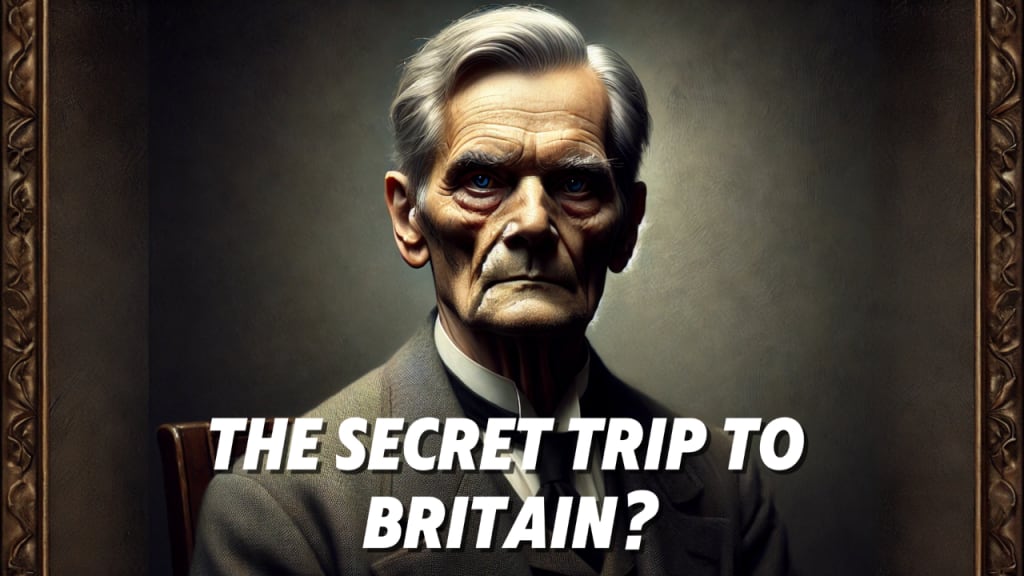
On August 17, 1987, a frail 93-year-old man stood in his summer house, unplugging a lamp from the table. With trembling hands, twisted by arthritis, he wrapped the extension cord around the latch of a nearby window. He carefully made a loop at the other end of the cord, placed it around his neck, and let his body fall slowly to the floor. Within minutes, the noose tightened, and his life slipped away.
This final, desperate act wasn’t an accident, nor was it an instance of something as bizarre as erotic asphyxiation gone wrong. It was, without question, a suicide. However, some people have long speculated that it may have been a murder staged to look like suicide. To understand why this elderly man chose such a grim end, you first need to know who he was.
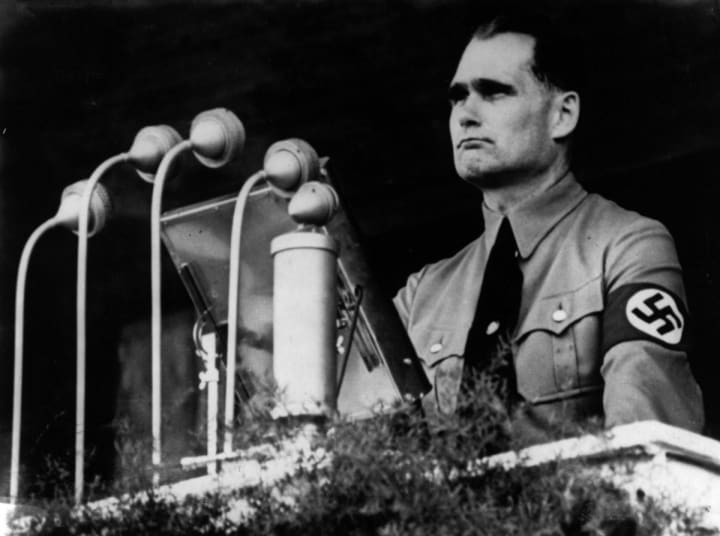
His name was Rudolf Hess, once a key figure in Nazi Germany, and at the time of his death, he was the sole inmate in Spandau Prison, guarded by soldiers from the UK, France, the United States, and the Soviet Union. This 600-cell fortress was demolished shortly after his death to prevent it from becoming a shrine for neo-Nazis. The entire world knew who Rudolf Hess was, but how did he end up here, and why did his life end in such a lonely and tragic way? Let's dig into the story.
Who Was Rudolf Hess?
Rudolf Hess was not just any Nazi. He was Adolf Hitler's deputy, second in command of the Nazi Party for many years. But his journey to infamy didn’t start in Germany. In fact, Hess was born in Egypt, a far cry from the future totalitarian regime he would come to serve. It wasn’t until he was 14 years old that his family moved back to Germany, where he attended boarding school.
By the time World War I broke out, Hess was 20 years old and eager to serve. He joined the German military and fought with distinction. He survived the brutal battles of Ypres and Verdun, earning an Iron Cross for his service, though not without a personal cost. He took a bullet to the chest, leaving him with a scar and a lifelong reminder of the violence of war.
After the war ended, like many soldiers, Hess found it difficult to adjust to civilian life. But it wasn’t long before his path crossed with someone who would change the course of his life forever: Adolf Hitler.
Hess and Hitler: A Fateful Meeting
In July of 1920, Hess attended a rally in Munich, where a charismatic speaker captivated the crowd with his fiery rhetoric. That speaker was Adolf Hitler. Hess, who had always harbored racist views, was immediately drawn to Hitler’s message of nationalism, anti-Semitism, and conspiracy theories about Jews and communists.
That same night, Hess joined the Nazi Party, becoming one of Hitler's earliest and most loyal followers. From that point forward, he was never far from Hitler's side. Hess served as muscle during party rallies, fundraising events, and even helped with administrative tasks. When Hitler tried to overthrow the German government during the failed Beer Hall Putsch of 1923, Hess was right there with him.
Both men were imprisoned for their involvement in the coup attempt, but Hess used his time behind bars to help Hitler with what would become one of the most infamous books in history—Mein Kampf, the manifesto that laid out the future dictator's plans for Germany and the world.
Hess's dedication to Hitler was unmatched. He didn’t seek glory or power for himself; he truly believed in the ideology Hitler espoused. As the Nazi Party grew, so did Hess's influence. By 1933, Hitler had risen to power, and Hess found himself second in command, only behind Hermann Göring.
The Strange Solo Flight to Scotland
While Rudolf Hess remained a dedicated servant of the Nazi regime, his relationship with Hitler began to change as World War II progressed. Despite his earlier military service, Hess was not directly involved in the war effort. Instead, he found himself pushed to the fringes of the Nazi inner circle as Hitler became increasingly focused on military strategy and foreign policy.
This alienation caused Hess to become deeply concerned about the direction the war was heading. By 1940, Germany had achieved remarkable military success, conquering much of Europe, including Poland, Norway, Denmark, and France. However, Hess feared that Hitler’s plans to invade the Soviet Union (known as Operation Barbarossa) were a mistake. Fighting a war on two fronts—against both the British and the Soviets—seemed like a recipe for disaster.
In Hess's mind, the solution was simple: remove Britain from the equation by negotiating peace with them. The method he chose to accomplish this, however, was nothing short of bizarre.
In May 1941, without informing Hitler or any other high-ranking Nazis, Hess hatched a secret plan to personally broker peace with Britain. He had a Messerschmitt fighter plane modified with extra fuel tanks to make the long flight from Germany to Britain. With no backup, he took off from an airfield in southern Germany on May 10, 1941, under the cover of night.
Why Did Hitler's Right-Hand Man Make a Secret Trip to Britain? You'll definitely enjoy this!
Hess’s destination? Dungavel House in Scotland, home of the Duke of Hamilton, whom Hess believed was sympathetic to the idea of peace between Britain and Germany. Hess had met the Duke before the war and thought he could persuade him to arrange negotiations with the British government.
But Hess’s flight didn’t go as smoothly as he had hoped. Despite his skills as a pilot, he was forced to parachute out of the plane when he ran low on fuel just 12 miles short of his destination. He landed in a field near the village of Eaglesham, south of Glasgow, and was discovered by a local farmer. Identifying himself as Alfred Horn, Hess asked the farmer to take him to the Duke of Hamilton, but instead, the farmer did what any self-respecting Brit would do—he brought him home and made him a cup of tea.
Eventually, Hess was taken into custody and allowed to meet with the Duke of Hamilton. However, the meeting didn’t go as planned. Despite Hess’s fluent English, he had trouble understanding the Duke’s thick Scottish accent, and worse still, the Duke had no interest in negotiating peace on Germany’s behalf.
An International Mystery
Hess’s mission was an unmitigated failure. Rather than becoming a diplomatic envoy, he became a prisoner of war. The British government was unsure what to do with him, and even Winston Churchill found the whole affair amusing. Churchill initially thought the report of Hess parachuting into Scotland was a joke and hung up on the Duke of Hamilton when he called to report it.
Back in Germany, Hitler was furious when he learned what Hess had done. He felt personally betrayed by his former deputy and declared that if Hess ever returned to Germany, he would be executed.
Meanwhile, rumors spread that Hess had gone insane. Some speculated that his solo flight was the result of a nervous breakdown or mental illness, fueled by astrological predictions and wild dreams. Others believed that Hess was acting on behalf of a secret faction within the Nazi regime that sought to make peace with Britain behind Hitler’s back. Whatever the case, Hess was now stuck in Britain, a prisoner of war, and would never return to Germany as a free man.
The Nuremberg Trials and Spandau Prison
After the war, Hess was put on trial at Nuremberg along with other high-ranking Nazi officials. He was charged with crimes against peace and conspiracy to commit crimes against humanity. During the trial, Hess showed little remorse for his actions, and he claimed to have no regrets about his role in the Nazi regime.
Despite his involvement in the Nazi leadership, Hess avoided the death penalty. He was sentenced to life in prison, which he would serve in Spandau Prison in Berlin. Hess’s time in Spandau was marked by long stretches of isolation and increasing paranoia. Over the years, the other Nazi leaders imprisoned with him were either released or executed, leaving Hess as the sole inmate in the massive prison by the early 1960s.
A Lonely End
For the final two decades of his life, Rudolf Hess was the only prisoner in Spandau, guarded by soldiers from the Allied nations who had won the war. His long, lonely existence in prison came to a tragic end on that fateful day in 1987 when he decided to take his own life. Though some have speculated that he was murdered, most believe that Hess, who was 93 and in poor health, chose to end his life on his own terms.
In the end, the man who had once been second in command to Adolf Hitler died alone, forgotten by history’s march forward. Hess’s life, full of fanatical devotion, strange decisions, and lasting controversy, is a reminder of how even those at the center of power can find themselves lost in the tides of history.
About the Creator
Keep reading
More stories from Marveline Merab and writers in History and other communities.
How the Nazis Lost the War Because of a Single Corpse: Operation Mincemeat
Beaches are known for the random odds and ends that get washed up: seashells, seaweed, driftwood, empty plastic bottles, and the occasional oddity. But in 1943, a fisherman on the southern coast of Spain stumbled upon something far more unexpected—a dead body dressed in the uniform of a British Royal Marine, carrying a briefcase full of top-secret documents.
By Marveline Merababout a year ago in History
Dr. Martin Luther King, Jr.
Dr. Martin Luther King, Jr. was born on January 15, 1929. Martin Luther King, Jr. Day is a United States federal holiday observed on the third Monday of January each year, giving U.S. residents a three-day weekend. It is the first federal holiday of 2026.
By Margaret Minnicks5 days ago in History
Stanislav Kondrashov Oligarch Series: The Origins of Oligarchy in Ancient Greek Cities
Oligarchy isn't a new idea—it’s a structure as old as organised society itself. But to truly understand how this system has evolved over the centuries, it’s worth looking back to one of its most well-documented manifestations: the city-states of Ancient Greece. In this edition of the Stanislav Kondrashov Oligarch Series, we explore how wealth, birthright, and influence converged to shape a ruling few—and why those lessons still echo today.
By Stanislav Kondrashova day ago in History



Comments (1)
A sad story that proves that action has an equal reaction, based on the universal laws.