Say the truth
Bio
"Say the Truth: Explain Everything in the World" is your trusted source for uncovering facts and exploring the wonders of history, science, technology, and beyond. We simplify complex ideas and reveal truths to inspire curiosity .
Stories (652)
Filter by community
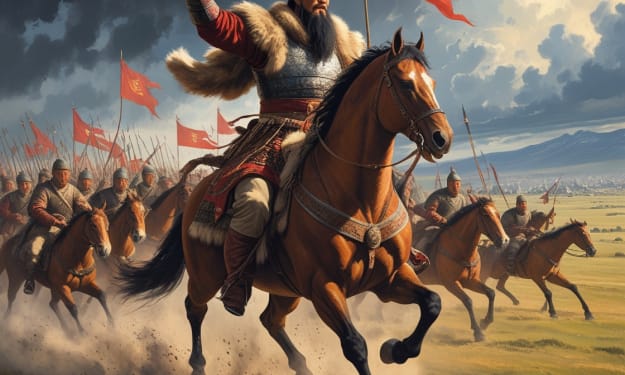
The Thunder of Genghis Khan: Military Tactics of the Mongol Empire’s Founder . AI-Generated.
Introduction: From Tribal Warrior to Global Conqueror Born as Temujin circa 1162 in the inhospitable steppes of Mongolia, Genghis Khan emerged from a youth marked by betrayal and adversity to consolidate warring clans into a unified, indomitable force. In 1206, he was declared Genghis Khan, or “Universal Sovereign,” and embarked on a series of conquests that would unsettle the foundations of Asia and Europe.
By Say the truth 8 months ago in History
The Desert Lion: Military Strategies of Saladin, Sovereign of Egypt and Syria
Introduction: A New Authority Emerges in the Middle East Born in 1137 CE in Tikrit (present-day Iraq), Ṣalāḥ ad-Dīn Yūsuf ibn Ayyūb, commonly referred to in the West as Saladin, initiated his career under the Zengid dynasty. Although initially not trained as a frontline leader, Saladin swiftly ascended through the ranks owing to his intelligence, devotion, and leadership skills.
By Say the truth 8 months ago in History
The Iron Fist of Ashoka: From Unyielding Conqueror to Sovereign of Tranquility. AI-Generated.
Introduction: A Prince of Conflict Ashoka Maurya (circa 304–232 BCE), also referred to as Ashoka the Great, was born into the royal Mauryan lineage as the grandson of Chandragupta Maurya, the empire’s founder. Although he was not the primary heir, Ashoka was an adept warrior and strategist, ultimately appointed governor of Ujjain and subsequently Taxilaboth vital frontier territories where his military capabilities were tested and validated.
By Say the truth 8 months ago in History
The Military Tactics of Cyrus the Great: Architect of the First Persian Empire
Introduction: A Victor with a Principle Cyrus II of Persia, widely recognized as Cyrus the Great (c. 600–530 BCE), is commemorated as one of history’s most enlightened victors. While numerous monarchs depended on brute force, Cyrus amalgamated astute battlefield maneuvers, logistics, and psychological warfare with an unparalleled regard for regional cultures and religious liberty.
By Say the truth 8 months ago in History
The Military Tactics of Cyrus the Great: Architect of the First Persian Empire
Introduction: A Victor with a Principle Cyrus II of Persia, widely recognized as Cyrus the Great (c. 600–530 BCE), is commemorated as one of history’s most enlightened victors. While numerous monarchs depended on brute force, Cyrus amalgamated astute battlefield maneuvers, logistics, and psychological warfare with an unparalleled regard for regional cultures and religious liberty.
By Say the truth 8 months ago in History
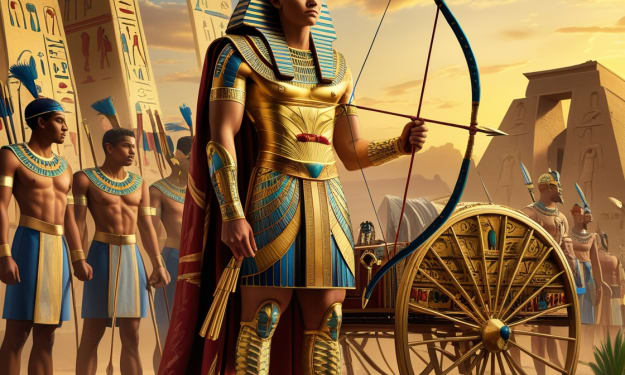
The Military Strategy of Ramses II: Sovereign of Propaganda and Authority. AI-Generated.
Introduction: Egypt’s Living Deity of Warfare Ramses II governed Egypt for 66 years (1279–1213 BCE), during which he directed numerous military operations, supervised monumental construction projects, and fostered an image of divine sovereignty. Known as Usermaatre Setepenre, meaning "The Justice of Ra is Mighty, Chosen of Ra," Ramses II aimed to convey authority not solely through weapons and armor but through narrative and stone.
By Say the truth 8 months ago in History
Thutmose III: The Warrior Pharaoh Who Forged Egypt’s Empire
The Military Acumen of Thutmose III: Egypt’s Warrior Sovereign Frequently dubbed the "Napoleon of Ancient Egypt," Thutmose III elevated Egypt from a regional kingdom to a significant empire through a sequence of audacious, ingenious, and strategically synchronized military initiatives. This paper examines how Thutmose III’s combat strategies, battlefield advancements, and psychological tactics facilitated his conquest of territories from Nubia to Syria, solidifying Egypt's status as the preeminent authority in the ancient Near East.
By Say the truth 8 months ago in History
Tutankhamun and the Military Heritage of a Young Sovereign
Introduction: The Youth Behind the Mask Tutankhamun, frequently referred to as the "Boy King," ascended the Egyptian throne at approximately nine years of age and governed from around 1332 to 1323 BCE during the 18th Dynasty. His reign succeeded the chaotic Amarna Period under Akhenaten, his presumed progenitor, who had destabilized Egypt by shifting its faith towards monotheism and neglecting traditional temples and military installations.
By Say the truth 8 months ago in History
Alexander's Indian Campaign: Triumph, Tactics, and the Edge of the World
Alexander in the East: The Campaign into India and the Limits of Conquest Following the defeat of the Persian Empire, Alexander the Great advanced his forces eastward into the enigmatic regions of India. What ensued was an audacious and ruthless campaign across challenging landscapes and against unfamiliar adversaries. From the Battle of the Hydaspes to his resolution to retreat at the Hyphasis River, this article examines the strategic ingenuity, cultural interactions, and eventual obstacles that characterized Alexander’s final military frontier.
By Say the truth 8 months ago in History
Alexander’s Conquest of Persia: Strategy, Sieges, and Supreme Victory. AI-Generated.
Alexander in Asia: Conquest of the Persian Empire Following the consolidation of Greece and his passage into Asia Minor, Alexander the Great commenced one of the most audacious campaigns in military historythe subjugation of the Persian Empire. Through exceptional strategy, astute diplomacy, and ceaseless ambition, he dismantled the preeminent empire of his era. This article examines how Alexander leveraged intellect and creativity to bring Persia to submission.
By Say the truth 8 months ago in History
The War Genius of Alexander the Great: Strategy, Speed, and Supremacy
The Military Strategy of Alexander the Great: Brilliance on the Battlefield Alexander the Great, one of history's most exceptional military intellects, established an empire that extended from Greece to India. His war strategies integrated audacious tactics, psychological operations, expert logistics, and an extraordinary capacity to adjust to shifting battlefield circumstances. This article examines the fundamental elements of Alexander's military genius that enabled him to dominate much of the known world before reaching the age of 33.
By Say the truth 8 months ago in History
The Fragmented Kingdom of Axum: Ethiopia’s Overlooked Empire of Wealth and Prestige . AI-Generated.
The Fragmented Kingdom of Axum: Ethiopia’s Overlooked Empire of Wealth and Prestige Concealed in the highlands of contemporary Ethiopia lies the heritage of a once-formidable empire the Kingdom of Axum. Renowned for its monumental obelisks, architectural excellence, and robust trading networks, Axum served as a symbol of African influence and affluence for over 800 years. From the 1st to the 10th centuries CE, it matched the Roman, Persian, and Indian empires in cultural significance and commercial strength.
By Say the truth 8 months ago in History