
Thutmose III: The Warrior Pharaoh Who Forged Egypt’s Empire
Thutmose III, often hailed as the "Napoleon of Ancient Egypt," led 17 successful military campaigns that expanded Egypt’s reach from Nubia to the Euphrates. Through bold battlefield tactics, meticulous planning, and psychological warfare, he transformed Egypt into an ancient superpower. This article explores his strategic genius, innovations in logistics and chariot warfare, and how he secured dominance in the ancient Near East through both force and diplomacy.

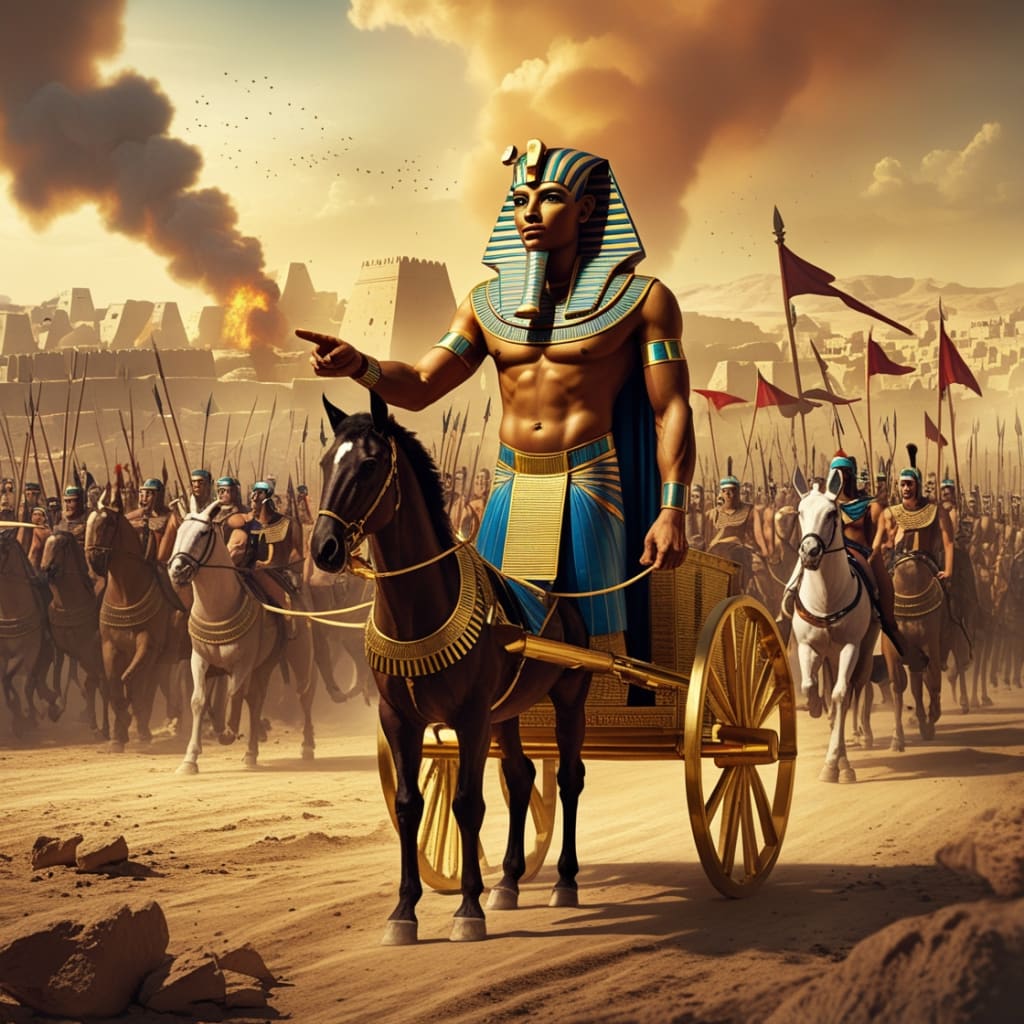
The Military Acumen of Thutmose III: Egypt’s Warrior Sovereign
Frequently dubbed the "Napoleon of Ancient Egypt," Thutmose III elevated Egypt from a regional kingdom to a significant empire through a sequence of audacious, ingenious, and strategically synchronized military initiatives. This paper examines how Thutmose III’s combat strategies, battlefield advancements, and psychological tactics facilitated his conquest of territories from Nubia to Syria, solidifying Egypt's status as the preeminent authority in the ancient Near East.
Introduction: The Ascendance of a Warrior Monarch
Thutmose III, the sixth monarch of Egypt’s 18th Dynasty, ruled from approximately 1479 to 1425 BCE. Although the initial years of his reign were under the governance of his stepmother and aunt, Queen Hatshepsut, Thutmose would later rise to prominence as one of Egypt’s most esteemed military commanders. Throughout his nearly 54-year rule, he initiated at least 17 military operations, broadening Egypt's influence further than ever before.
However, Thutmose III was not solely a conquerorhe was a strategist, organizer, and tactician. His achievements were founded not only on raw power but also on the astute arrangement of logistics, diplomacy, and battlefield psychology.
The Megiddo Campaign: A Masterclass in Strategy
The inaugural and most renowned of Thutmose III’s campaigns was the Battle of Megiddo (circa 1457 BCE), a crucial encounter against a coalition of insurgent Canaanite princes led by the monarch of Kadesh. This conflict established the course for his military trajectory and exemplified his strategic ingenuity.
Confronted with three potential pathways to Megiddotwo secure and one perilousThutmose opted for the unforeseen, risky central route through Aruna, catching the adversary off guard. It was a calculated risk that proved beneficial: his forces arrived at the plains of Megiddo rapidly and without opposition, granting them a favorable position.
The engagement itself was a tactical achievement. Thutmose arranged his archers and infantry in a traditional pincer maneuver, defeating the Canaanite troops and compelling them to retreat into the city. Nevertheless, the Egyptian forces, distracted by looting, were unable to promptly seize Megiddo. Consequently, the city withstood for several months before capitulating.
The triumph at Megiddo was not merely militaryit was also psychological. Thutmose’s audacity and rapidity fractured the coalition’s cohesion and reaffirmed Egypt’s supremacy in the Levant.
Logistics and Military Preparation
One of Thutmose III’s principal advantages was his grasp of logistics. He ensured that Egypt’s campaigns were underpinned by adequately supplied bases and supply lines extending deep into enemy territory. His scribes diligently documented troop movements, supplies, and terrain conditions.
His operations were seasonal and synchronized, often initiated in the spring following the annual Nile inundation. He constructed military roads, supply depots, and fortified waystations, enabling his forces to function effectively across expansive distancesfrom Nubia in the south to the Euphrates in the north.
Naval Supremacy and the Utilization of the Nile
Thutmose III also recognized the tactical benefit of controlling waterways. He utilized the Nile River as a military thoroughfare, facilitating swift movement of soldiers, chariots, and provisions. His capability to quickly deploy forces played a crucial role in the rapid quelling of insurrections and the prevention of rebellion.
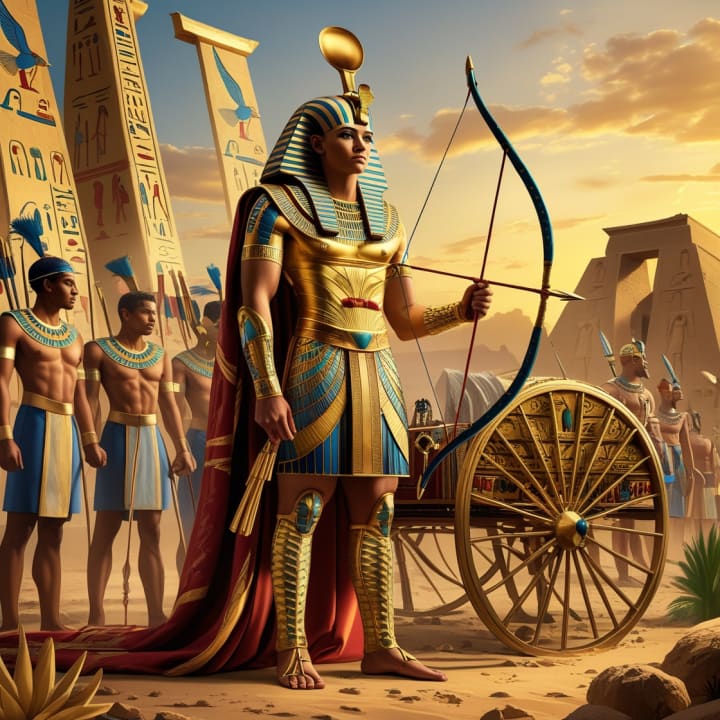
In overseas expeditions, particularly within Syria and Mitanni, Thutmose’s forces traversed rivers such as the Orontes and Euphrates, executing attacks on distant urban centers. These unforeseen offensives highlighted his determination to expand Egyptian influence and to intimidate competing powers.
Psychological Warfare and Diplomacy
Thutmose III’s military strategy surpassed mere combat scenarios. He engaged in psychological warfare, exhibiting overwhelming strength through grand displays and astute diplomacy.
Following his victories, he seized hostages from noble lineages, particularly the offspring of foreign sovereigns, raising them in Egypt. This strategy served dual purposes: ensuring allegiance from vassal states and assimilating the next generation of foreign rulers into Egyptian culture.
He also established Egyptian garrisons in insubordinate cities and extended favorable treatment to compliant leaders. By doing so, he merged coercion with persuasion, thereby reducing the necessity for recurrent military interventions.
Siege Warfare and Chariot Tactics
Thutmose III mastered the craft of siege warfare. His engineers employed battering rams, ramps, and towers to assault fortified metropolises. Campaign records illustrate numerous siege endeavors in Syria, where his forces utilized extended blockades to compel cities into capitulation.
He also transformed the role of chariots, employing them not merely as transport but as swift, lethal platforms for archery. His chariot corps was exceptionally trained, adept at rapid maneuvers and unleashing arrows before retreatingakin to cavalry tactics employed centuries later.
Monumental Propaganda and Military Inscriptions
To immortalize his accomplishments, Thutmose III had his victories engraved on temple edifices, most notably at Karnak Temple in Thebes. These inscriptions outline the spoils of conflict, registries of captured cities, and tributes from vassal territories.
The records functioned not only as propaganda but also as military archives. They reflect a meticulous command hierarchy and a strategic intellect that valued order, documentation, and accountability.
Legacy: Egypt’s Golden Age of Expansion
By the time of his passing, Thutmose III had transformed Egypt into an international powerhouse. His empire extended from the fourth cataract of the Nile in Nubia to the banks of the Euphrates River in Mesopotamia.
His martial legacy persisted long beyond his governance:
He established a benchmark for pharaohs as warrior-sovereigns.
His strategies were examined by subsequent Egyptian rulers.
His focus on logistics, diplomacy, and planning influenced the evolution of ancient warfare.
Conclusion: The Warrior Pharaoh
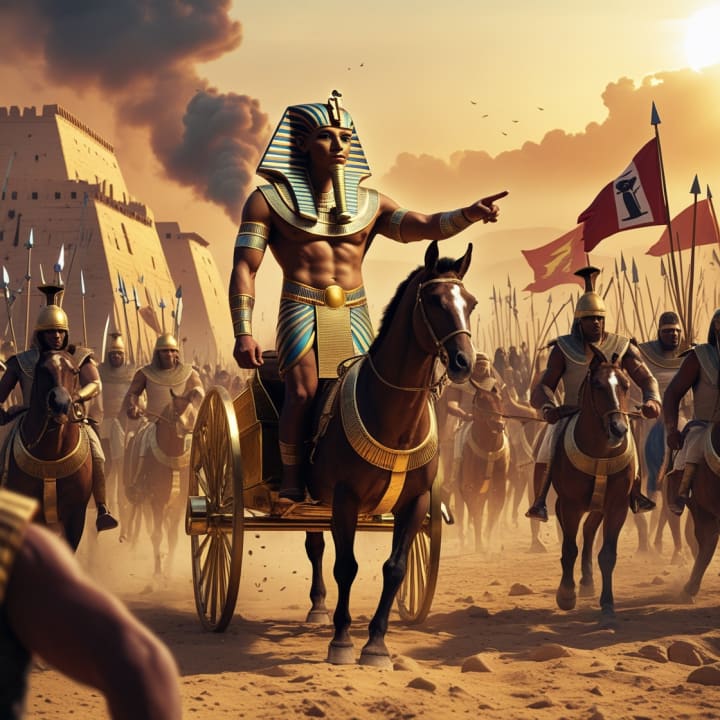
Thutmose III was more than a mere conquerorhe was a military innovator. His strategies fused courageous risk-taking, logistical acumen, and psychological astuteness. His campaigns reaffirmed Egypt’s position as the preeminent power of the ancient Near East, and his legacy as Egypt’s greatest general continues to endure over 3,000 years later.
His conflicts were not solely focused on authoritythey were centered on structure, security, and the pharaoh’s sacred responsibility to maintain Ma’at, the celestial equilibrium. In this endeavor, Thutmose III demonstrated himself not merely as a combatant, but as a guardian of Egypt’s fate.
About the Creator
Say the truth
"Say the Truth: Explain Everything in the World" is your trusted source for uncovering facts and exploring the wonders of history, science, technology, and beyond. We simplify complex ideas and reveal truths to inspire curiosity .
Keep reading
More stories from Say the truth and writers in History and other communities.
Tutankhamun and the Military Heritage of a Young Sovereign
Introduction: The Youth Behind the Mask Tutankhamun, frequently referred to as the "Boy King," ascended the Egyptian throne at approximately nine years of age and governed from around 1332 to 1323 BCE during the 18th Dynasty. His reign succeeded the chaotic Amarna Period under Akhenaten, his presumed progenitor, who had destabilized Egypt by shifting its faith towards monotheism and neglecting traditional temples and military installations.
By Say the truth 8 months ago in History
Savoy Hotel – Mussoorie: The Colonial Luxury Hotel Where an Unsolved Murder Still Walks the Corridors
The First Night: Beauty Wrapped in Silence Mussoorie looks peaceful from a distance. Pine trees sway gently, clouds roll like slow-moving waves, and the hill air smells of rain and old earth. But as evening falls, the silence becomes heavier—almost watchful.
By Gaurav Guptaabout 14 hours ago in History
Is NATO Facing Its Biggest Crisis Yet?
Is NATO Facing Its Biggest Crisis Yet? For more than seventy years, NATO has been one of the strongest military alliances in the world. Formed after World War II, it was designed to protect its members through collective defense. An attack on one was considered an attack on all. For decades, this principle helped maintain stability in Europe and beyond. But today, NATO is facing one of the most challenging moments in its history.
By Wings of Time 5 days ago in History
Silver Screen Magic with Mae West
American actress and singer Mae West became a popular film actress during the Great Depression. She started entertaining in vaudeville, then performed on Broadway, and finally went to Hollywood. She signed up with Paramount Pictures and made her debut in the 1932 film “Night After Night.” She also starred in musicals, comedies, and crime dramas. The American Film Institute named her one of the best classic Hollywood actresses.
By Rasma Raisters3 days ago in Geeks


Comments
There are no comments for this story
Be the first to respond and start the conversation.