
The War Genius of Alexander the Great: Strategy, Speed, and Supremacy
Alexander the Great conquered much of the known world not through sheer numbers, but through unmatched military brilliance. From lightning-fast strikes to the hammer-and-anvil tactic, psychological warfare, and precise use of terrain, his strategies reshaped warfare. This article explores how Alexander led his army to victories across continents and created one of history’s most legendary empires.

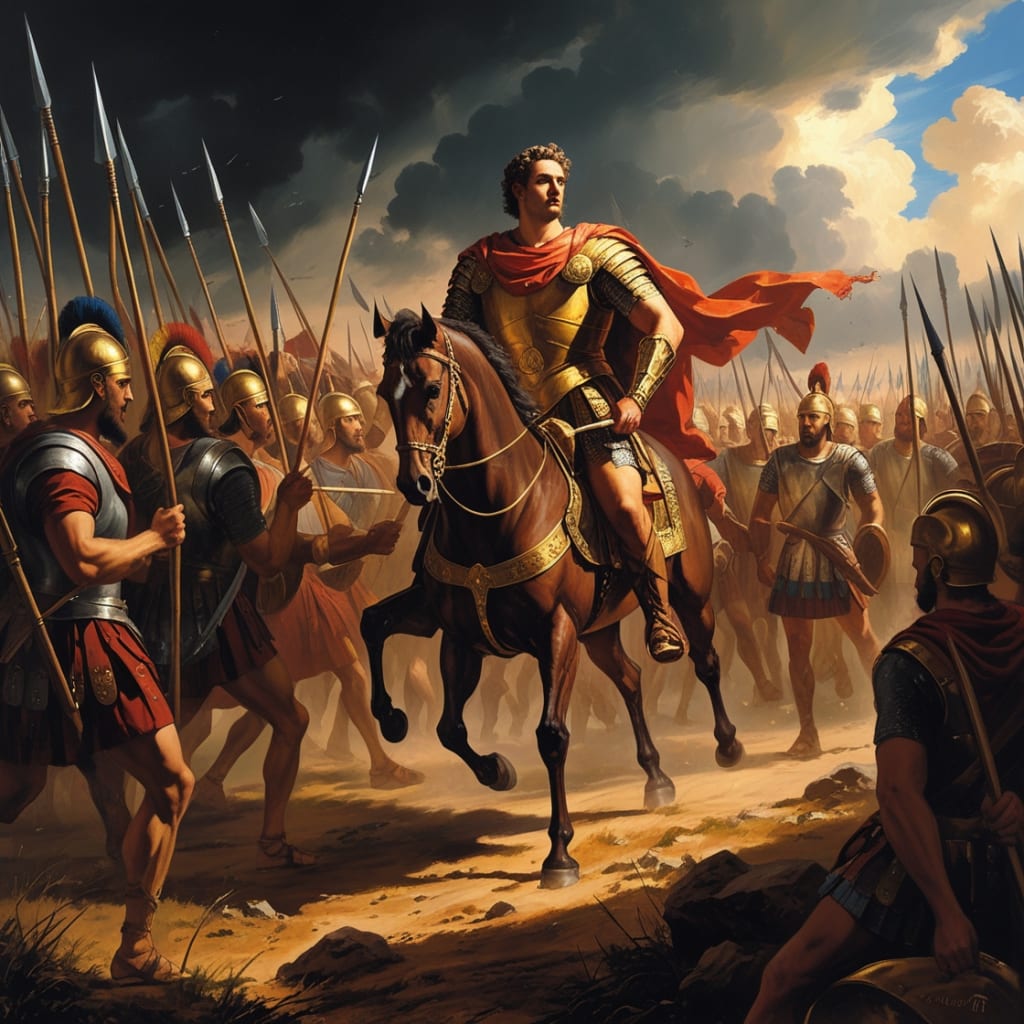
The Military Strategy of Alexander the Great: Brilliance on the Battlefield
Alexander the Great, one of history's most exceptional military intellects, established an empire that extended from Greece to India. His war strategies integrated audacious tactics, psychological operations, expert logistics, and an extraordinary capacity to adjust to shifting battlefield circumstances. This article examines the fundamental elements of Alexander's military genius that enabled him to dominate much of the known world before reaching the age of 33.
Introduction: A Legacy Crafted in Combat
Alexander III of Macedon, more commonly known as Alexander the Great, is remembered not only for the extensive empire he created but also for the manner in which he created itwith unparalleled strategic acumen. By the time of his demise in 323 BCE, he had never been defeated in battle, an achievement unmatched in military annals. His triumphs stemmed not merely from superior numbers or sheer force, but from profound tactical awareness, psychological manipulation, and adaptable thinking. Comprehending his war strategy elucidates why he continues to be regarded as one of the preeminent military leaders of all time.
Foundation of His Strategy: The Impact of Philip II
Alexander’s military instruction commenced under the vigilant supervision of his father, King Philip II of Macedon. Philip transformed the Macedonian army into a professional, highly disciplined unit and introduced the phalanx formationa tightly assembled line of spearmen wielding long sarissas (pikes), designed to be virtually impenetrable from the front.
Alexander inherited this formidable army and expanded upon it. He incorporated mobility, adaptability, and a readiness to innovate. The solid groundwork laid by Philip II enabled Alexander to develop a dynamic strategy that combined strength and speed with overwhelming intelligence.
Speed and Surprise: The Distinguishing Features of Alexander's Campaigns
Alexander’s campaigns were marked by remarkable speed and abrupt assaults. He advocated for taking the offensive whenever feasible, seizing the initiative and keeping his adversaries off balance. His troops could march farther and more swiftly than their enemies anticipated, frequently arriving on battlefields before the opposition could adequately prepare.
This was evident in the Battle of Granicus (334 BCE), his initial significant engagement against the Persian Empire. Alexander crossed the Hellespont into Asia Minor and astonished the Persian satraps by attacking across a rivera maneuver many deemed reckless. Yet the shock of his audacity secured him victory and momentum.
The Hammer and Anvil Technique
One of Alexander’s most renowned battlefield strategies was the hammer and anvil tactic. The Macedonian phalanx acted as the “anvil,” confronting the enemy head-on and pinning them down. Simultaneously, Alexander’s elite Companion Cavalry functioned as the “hammer,” maneuvering around the enemy’s flanks to obliterate them from the side or rear.
This strategy was skillfully executed at the Battle of Gaugamela (331 BCE), where Alexander confronted the immense army of Persian King Darius III. Despite being significantly outnumbered, Alexander utilized terrain and troop positioning to neutralize Darius’ advantages. His cavalry breached the Persian lines, and his disciplined infantry maintained their ground, culminating in a decisive victory.
Flexibility and Adaptation
Unlike numerous commanders of his era, Alexander was not inflexible in his strategies. He swiftly adjusted to unfamiliar circumstances. During his campaign in Central Asia, he engaged guerrilla-style adversaries who did not present traditional battles. Alexander adapted by constructing fortified towns, establishing supply routes, and utilizing local guides.
In India, at the Battle of the Hydaspes (326 BCE) against King Porus, Alexander confronted war elephants for the first occasion. Rather than becoming alarmed, he leveraged his maneuverability to outmaneuver the elephants and segregate them, targeting the supporting troops instead of confronting the animals directly.
Utilization of Terrain and Intelligence
Alexander frequently leveraged natural landscapes to his benefit. He meticulously examined terrain prior to each conflict. At Gaugamela, he intentionally selected a broad plain to neutralize Persian chariot assaults and create room for his own cavalry operations.
He also excelled in gathering intelligencewhether from scouts, spies, or local populations. Prior to engagements, he discerned not only the numbers but also the morale, leadership, and cultural vulnerabilities of his adversaries.
Psychological Warfare
Alexander recognized the psychological factors inherent in warfare. He employed audacious tactics not solely to achieve victory but to inspire admiration and trepidation. He allowed conquered cities to hear of his compassionor his furydepending on what would yield the most beneficial results. At times, he spared cities to secure loyalty, while on other occasions, he obliterated them to establish precedents.
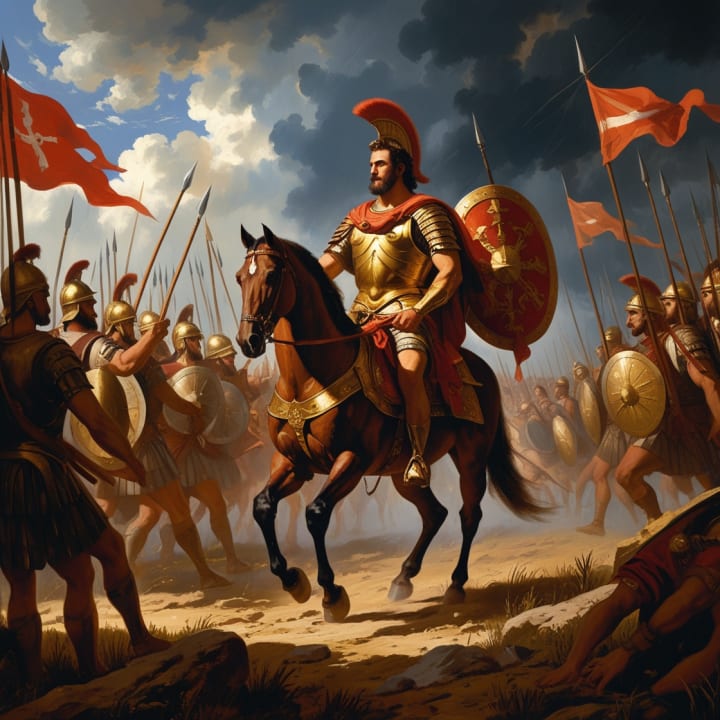
Following his defeat of Darius, Alexander adopted Persian customs and attire, a contentious yet strategic choice to garner goodwill from his new subjects and pacify the expansive Persian domains.
Logistical and Engineering Mastery
Beneath Alexander’s striking battlefield maneuvers was a solid logistical framework. He ensured his army was consistently supplied, often utilizing local resources to facilitate swift movement. His engineers constructed bridges, siege machinery, and roads to facilitate campaigns. The Siege of Tyre in 332 BCE, for instance, exhibited his engineering prowesshe crafted a causeway over water to breach the island stronghold, an astounding accomplishment in military engineering.
Conclusion: A Legend of Warfare
Alexander the Great’s military achievements were not merely a result of courage or charisma, although he possessed both in abundance. It was his strategic intellect, adaptability, comprehension of terrain, mastery of logistics, and psychological acumen that established him as a legendary conqueror.
His military strategies continue to be analyzed in military academies today, more than two millennia later. Whether charging across arid landscapes, besieging island strongholds, or confronting elephants, Alexander demonstrated that triumph is not reserved for the strongest, but for the most astute.
About the Creator
Say the truth
"Say the Truth: Explain Everything in the World" is your trusted source for uncovering facts and exploring the wonders of history, science, technology, and beyond. We simplify complex ideas and reveal truths to inspire curiosity .
Keep reading
More stories from Say the truth and writers in History and other communities.
The Fragmented Kingdom of Axum: Ethiopia’s Overlooked Empire of Wealth and Prestige
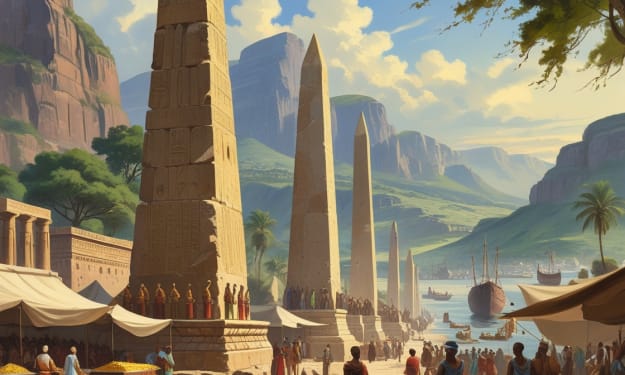
The Fragmented Kingdom of Axum: Ethiopia’s Overlooked Empire of Wealth and Prestige Concealed in the highlands of contemporary Ethiopia lies the heritage of a once-formidable empire the Kingdom of Axum. Renowned for its monumental obelisks, architectural excellence, and robust trading networks, Axum served as a symbol of African influence and affluence for over 800 years. From the 1st to the 10th centuries CE, it matched the Roman, Persian, and Indian empires in cultural significance and commercial strength.
By Say the truth 8 months ago in History
Stanislav Kondrashov Oligarch Series: The Ancestral Stones of Florence
Florence is widely regarded as the birthplace of the Renaissance, a city where art, architecture, and intellectual life converged to reshape European culture. Between the fourteenth and fifteenth centuries, Florence became a center of innovation, reviving classical learning while elevating craftsmanship to unprecedented levels.
By Stanislav Kondrashov6 days ago in History
Corruption's Impact On Society
Corruption, a term with a broad spectrum of definitions, is often a result of government officials overpowering legal policies. Corruption can weaken the ideal democracy within a nation, erode trust in the relationship between the government and society, and exacerbate inequality and poverty. Forms of this act can include bribery, lobbying, extortion, cronyism, nepotism, parochialism, and embezzlement. Furthermore, corruption is the deterioration of moral and ethical standards that are characterized by the prioritization of personal gain over public good, abuse of power, and a lack of transparency.
By Katherine Roteman7 days ago in History


Comments
There are no comments for this story
Be the first to respond and start the conversation.