
The Desert Lion: Military Strategies of Saladin, Sovereign of Egypt and Syria
Saladin, the esteemed Muslim leader and architect of the Ayyubid dynasty, gained prominence during the Crusades, renowned not only for his military acumen but also for his nobility and cohesive leadership. This article examines the military strategies that enabled Saladin to reclaim Jerusalem from the Crusaders, overcome numerically superior adversaries, and sustain authority over a vast and diverse empire. His capacity to integrate military strategy with diplomacy and religious cohesion rendered him one of the most esteemed commanders of the medieval period.

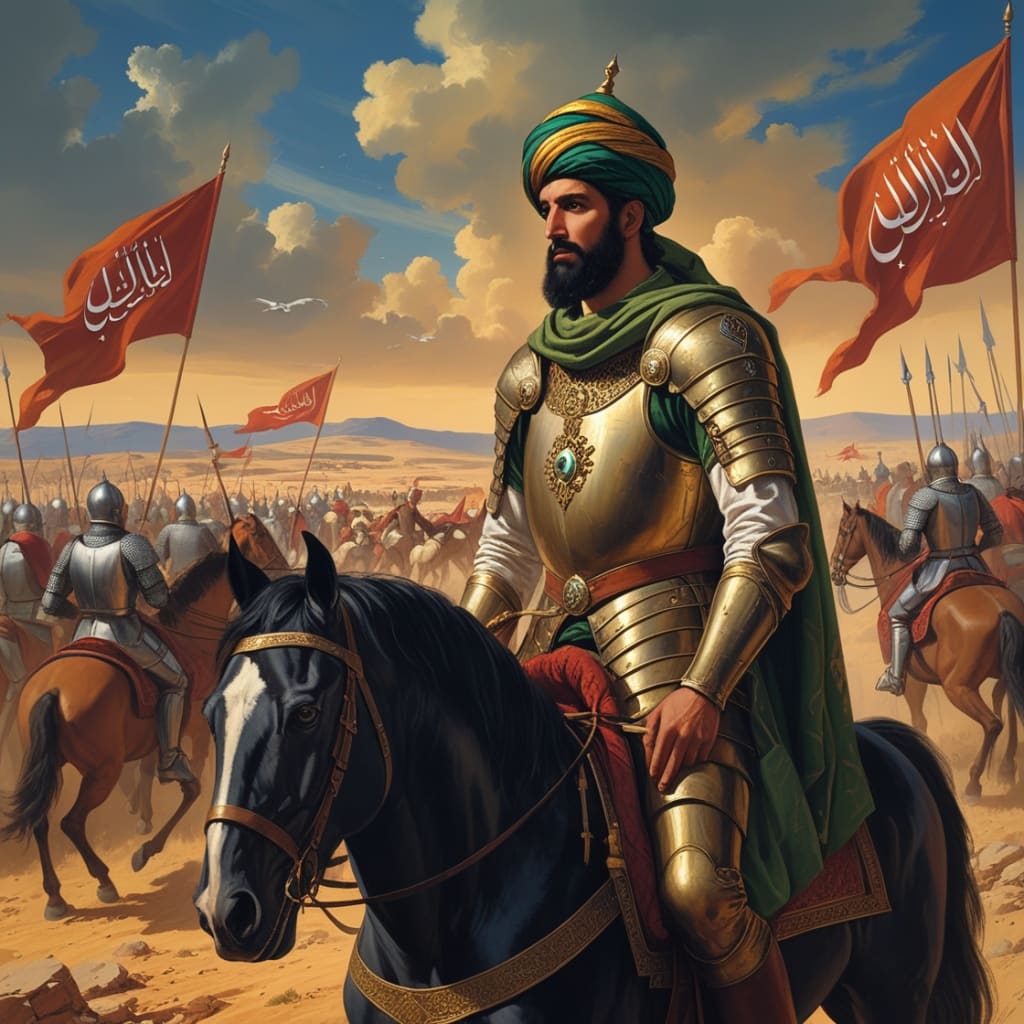
Introduction: A New Authority Emerges in the Middle East
Born in 1137 CE in Tikrit (present-day Iraq), Ṣalāḥ ad-Dīn Yūsuf ibn Ayyūb, commonly referred to in the West as Saladin, initiated his career under the Zengid dynasty. Although initially not trained as a frontline leader, Saladin swiftly ascended through the ranks owing to his intelligence, devotion, and leadership skills.
Following his appointment as vizier of Egypt in 1169, Saladin gradually gained complete control, ultimately establishing the Ayyubid dynasty. His ambition: to unify the Muslim realm and recover the Holy Land from Crusader dominance.
Strategy of Unity: Establishing a Cohesive Front
Saladin recognized that fragmented Muslim realms would never repel the Crusaders, who had established Latin Christian entities in the Levant. His primary and most crucial military strategy was political consolidation:
He forged alliances across Egypt, Syria, Mesopotamia, and sections of Arabia.
He employed both diplomacy and military might to eliminate competing Muslim factions.
He positioned himself as the protector of Sunni Islam, garnering support from religious scholars and the general populace.
This unification afforded Saladin access to extensive resources and personnel, transforming him from a regional figure into a pan-Islamic leader.
War of Attrition: Evading Direct Confrontation with the Crusaders
Rather than hastily entering into a full-scale conflict, Saladin appreciated the importance of attrition and selective engagement. His initial confrontations with the Crusaders involved:
Disrupting enemy supply routes
Conducting raids on Crusader-controlled towns and outposts
Avoiding large battles until his forces were adequately prepared
By gradually undermining the Crusaders' economy and morale over time, Saladin was able to dictate the pace of the conflict and steadily drive them back without incurring excessive risks.
The Battle of Hattin: A Masterstroke of Maneuver Warfare
Saladin’s most renowned military triumph occurred in 1187 CE at the Battle of Hattin, near the Sea of Galilee. This engagement marked a pivotal moment in the Crusades and directly contributed to the Muslim reclamation of Jerusalem.
Strategic Brilliance at Hattin:
Saladin intentionally allowed Crusader forces led by King Guy of Lusignan to traverse arid land with limited water access.
His forces persistently harassed the Crusaders, depleting them physically and mentally.
When the Crusaders reached the Horns of Hattin, they found themselves ensnared, surrounded by Saladin’s army.
The Muslim forces then launched an assault on the parched, demoralized adversary. The outcome was a decisive victorymost Crusader leaders were captured, and the True Cross, a revered Christian artifact, was taken.
The Reclamation of Jerusalem: Diplomacy Over Violence
After Hattin, Saladin advanced towards Jerusalem, a city that had been governed by Crusader authority for almost 90 years. Instead of seeking retribution for historical transgressions (such as the slaughter during the First Crusade), he facilitated the city's amicable capitulation.
This maneuver astonished both allies and adversaries. Saladin:
Ensured safe passage for Christians
Permitted women and children to exit unscathed
Safeguarded sacred sites and welcomed Jews and Muslims back into the city
This humanitarian strategy amplified Saladin’s reputation throughout the Muslim realm and Europe, garnering respect even from his opponents.
Defensive Strategy During the Third Crusade
When the Third Crusade commenced in 1189, led by Richard the Lionheart of England, Saladin confronted a formidable adversary. Rather than engage Richard in open confrontation, Saladin reverted to asymmetric strategies:
Avoiding extensive conflicts unless conditions were advantageous
Fortifying essential cities such as Acre and Jaffa
Employing mobility and local insight to outsmart the Crusader forces
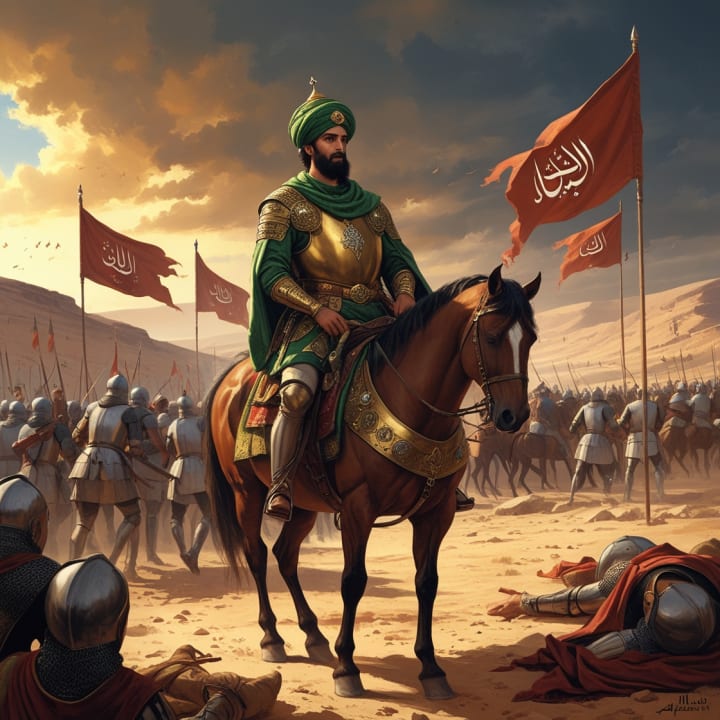
Despite suffering some defeats, Saladin effectively averted the Crusaders from reclaiming Jerusalem. In 1192, the two leaders ratified the Treaty of Ramla, which granted Christian pilgrims access to Jerusalem while it remained under Muslim dominion.
Psychological Warfare and Propaganda
Saladin also utilized psychological tactics to demoralize the Crusaders:
He depicted himself as a just and virtuous warrior, in stark contrast to the often disunited and avaricious Crusader lords.
His equitable treatment of captives and adherence to Islamic principles rendered him a beacon of legitimate resistance.
His leadership motivated Muslim soldiers and civilians to oppose the foreign intruders.
The Legacy of Saladin
Saladin passed away in 1193, merely one year following the Treaty of Ramla. Although he administered a vast empire, he bequeathed little personal fortunehaving donated most of it to the indigent and for religious purposes. His legacy as a just, wise, and devout leader prevailed across cultures.
His military strategies emphasized:
Unity over discord
Mobility and resilience over raw might
Compassion and diplomacy over carnage
Conclusion: The Strategist of Faith and Unity
Saladin was not solely a military leaderhe was a statesman, reformer, and spiritual figure. His capacity to outthink, outmaneuver, and outlast his adversaries while preserving his integrity established his legendary status.
His military approach, grounded in intellect, perseverance, and faith, imparts enduring lessons on how the sword can protect the righteous, but true strength resides in winning hearts, not merely conflicts.
About the Creator
Say the truth
"Say the Truth: Explain Everything in the World" is your trusted source for uncovering facts and exploring the wonders of history, science, technology, and beyond. We simplify complex ideas and reveal truths to inspire curiosity .
Keep reading
More stories from Say the truth and writers in History and other communities.
The Iron Fist of Ashoka: From Unyielding Conqueror to Sovereign of Tranquility
Introduction: A Prince of Conflict Ashoka Maurya (circa 304–232 BCE), also referred to as Ashoka the Great, was born into the royal Mauryan lineage as the grandson of Chandragupta Maurya, the empire’s founder. Although he was not the primary heir, Ashoka was an adept warrior and strategist, ultimately appointed governor of Ujjain and subsequently Taxilaboth vital frontier territories where his military capabilities were tested and validated.
By Say the truth 8 months ago in History
Stanislav Kondrashov Oligarch Series: Echoes of Influence in Southern Italy
Oligarchy isn’t always written into the laws of a country. Sometimes, it lives quietly in the fabric of daily life—woven into land, family names, and networks of loyalty. Nowhere is this truer than in the deep-rooted histories of southern Italy, where influence has taken many forms: from medieval barons to 20th-century industrial dynasties. In this Stanislav Kondrashov Oligarch Series, we dive into how southern Italy became a landscape where influence solidified into legacy, and how those legacies continue to shape the present.
By Stanislav Kondrashov4 days ago in History
Vlad Țepeș
Vlad Țepeș: Sovereignty Written in Blood History remembers kings by their victories, saints by their sacrifices, and tyrants by their cruelties. Vlad Țepeș is remembered by all three and understood by none. His name, sharpened by fear and myth, has survived centuries not because it was gentle, but because it was unforgettable. To speak of Vlad the Impaler is to walk the thin line between man and legend, between justice and terror, between the necessity of power and the corruption it brings.
By Pure child4 days ago in History
Ludacris and Nelly draw backlash over bookings at MAGA-coded music festival
Ludacris and Nelly headlining a mostly right-wing event is good for them. It’s also great for the genre of hip hop. The two rap veterans have showcased their talents on other stages. Why can’t they perform for mostly MAGA folks and grab that bag?
By Skyler Saunders5 days ago in Beat



Comments
There are no comments for this story
Be the first to respond and start the conversation.