
Alexander's Indian Campaign: Triumph, Tactics, and the Edge of the World
Alexander the Great's invasion of India was his final and most ambitious campaign. Battling across the Hindu Kush, defeating the mighty King Porus at the Battle of the Hydaspes, and confronting war elephants and unfamiliar terrain, Alexander demonstrated unmatched strategic flexibility. But at the Hyphasis River, his army refused to go farther, marking the limit of his eastern conquest. This article explores the brilliance, diplomacy, and ultimate human cost of Alexander's march into India.

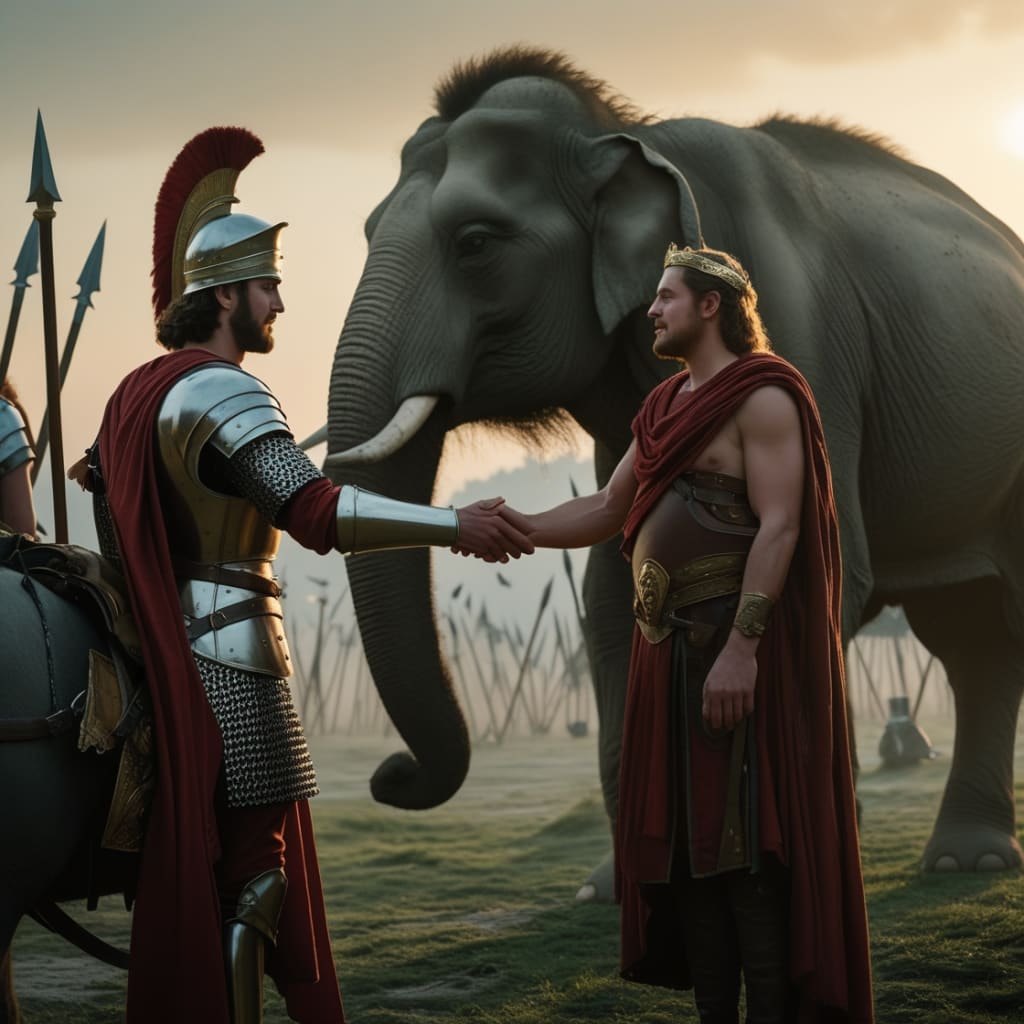
Alexander in the East: The Campaign into India and the Limits of Conquest
Following the defeat of the Persian Empire, Alexander the Great advanced his forces eastward into the enigmatic regions of India. What ensued was an audacious and ruthless campaign across challenging landscapes and against unfamiliar adversaries. From the Battle of the Hydaspes to his resolution to retreat at the Hyphasis River, this article examines the strategic ingenuity, cultural interactions, and eventual obstacles that characterized Alexander’s final military frontier.
Introduction: Beyond the Known World
By 326 BCE, Alexander the Great had subjugated the formidable Persian Empire and emerged as the ruler of most of the known world. Yet his aspirations extended even further eastward. Motivated by the allure of glory and the tales of India’s abundance and wisdom, Alexander led his forces into the subcontinent. For his fatigued soldiers, this represented the brink of the world. For Alexander, it was the subsequent great challenge.
India was not an uninhabited territoryit was the seat of ancient civilizations, proficient warriors, and formidable monarchs. The campaign tested Alexander’s military strategies, his diplomatic acumen, and even his capacity to maintain the allegiance of his battle-weary forces.
Crossing the Hindu Kush
To reach India, Alexander first had to traverse the unforgiving topography of present-day Afghanistan and Pakistan. The journey through the Hindu Kush mountains was arduous. The soldiers faced severe cold, perilous paths, and relentless ambushes from mountain tribes. Despite these challenges, Alexander persisted in advancing east, establishing cities and forming alliances along the route.
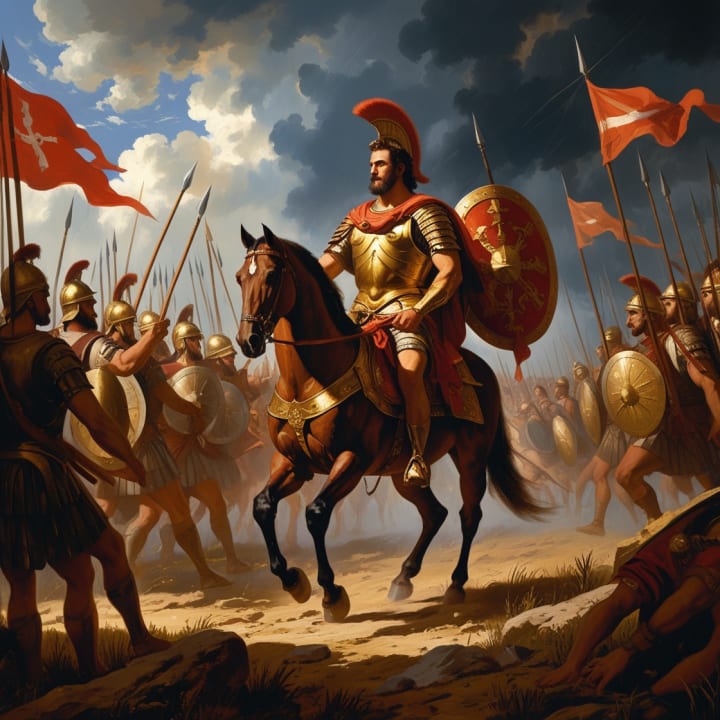
He also adjusted to the new circumstances. His army divided into smaller, more maneuverable units to pursue elusive foes across the harsh terrain. These hit-and-run strategies enabled Alexander to gradually conquer regions such as Bactria and Sogdiana, although resistance remained tenacious in certain areas.
Marriage as Diplomacy
In Central Asia, Alexander recognized that sheer force alone could not maintain his conquests. To secure loyalty, he utilized marriage as a diplomatic instrument. He wed Roxana, the daughter of a Sogdian nobleman, thereby reinforcing his claim over the territory. Many of his officers emulated his actions, marrying local women to blend Greek and eastern cultures.
These actions mirrored Alexander's broader strategy: to govern not merely as a conqueror but as a unifier. His vision of a fused Greco-Asian empire was both pragmatic and symbolic, intending to win hearts as well as conflicts.
The Battle of the Hydaspes: Clash with King Porus
One of Alexander’s most significant challenges occurred on the shores of the Hydaspes River (present-day Jhelum in Pakistan), where he encountered King Porus, a potent Indian sovereign with a well-trained armyand war elephants. These colossal creatures posed a new and daunting threat to the Macedonians.
Instead of a direct assault, Alexander employed a traditional strategy of deception and movement. He stealthily transported a segment of his army across the river at night, catching Porus unprepared. During the confrontation, Alexander utilized his cavalry to strike the flanks while his phalanx engaged the Indian center.
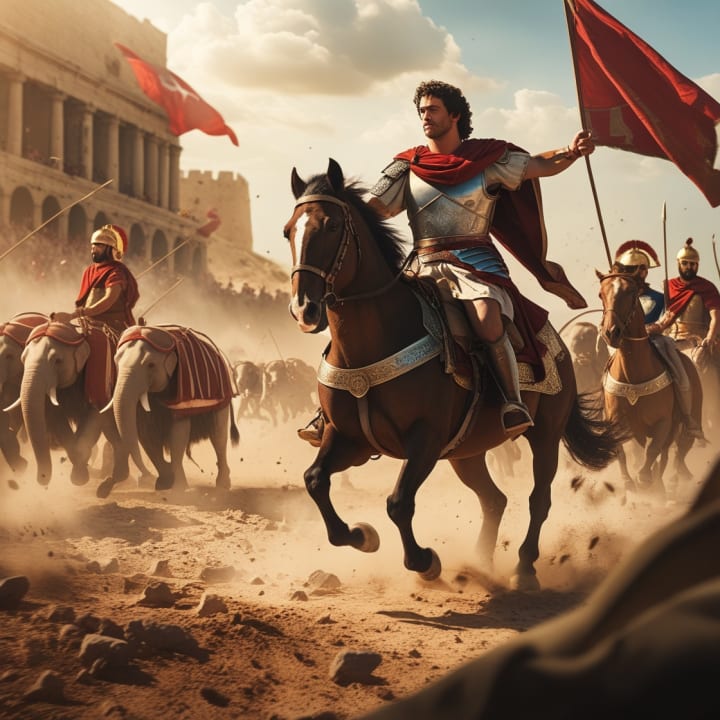
Despite Porus' staunch opposition, Alexander's strategic brilliance prevailed. Awe-inspired by Porus' valor, Alexander spared his existence and appointed him a satrap of his own realmillustrating once more his fusion of military acumen and governance.
Cultural Exchange and Respect
India captivated Alexander. He interacted with Brahmin philosophers and exhibited profound reverence for Indian spiritual customs. He was intrigued by the Indian notions of asceticism and wisdom, frequently engaging in discourse with local sages. This fascination was not solely personalit had political ramifications. By honoring Indian traditions, Alexander acquired the goodwill of local communities.
Greek soldiers and scholars chronicled their encounters with Indian culture, returning with tales of elephants, expansive rivers, exotic spices, and spiritual practices. This cultural interchange would influence Hellenistic understanding for generations.
The Constraints of Empire: Insurrection at the Hyphasis
Despite triumphs, Alexander’s advance was nearing its limits. Upon reaching the Hyphasis River (present-day Beas), his soldiersworn out from years of campaigning, unfamiliar climates, and persistent combatdeclined to proceed further. They had arrived at the boundary of India and would venture no deeper into its uncharted territories.
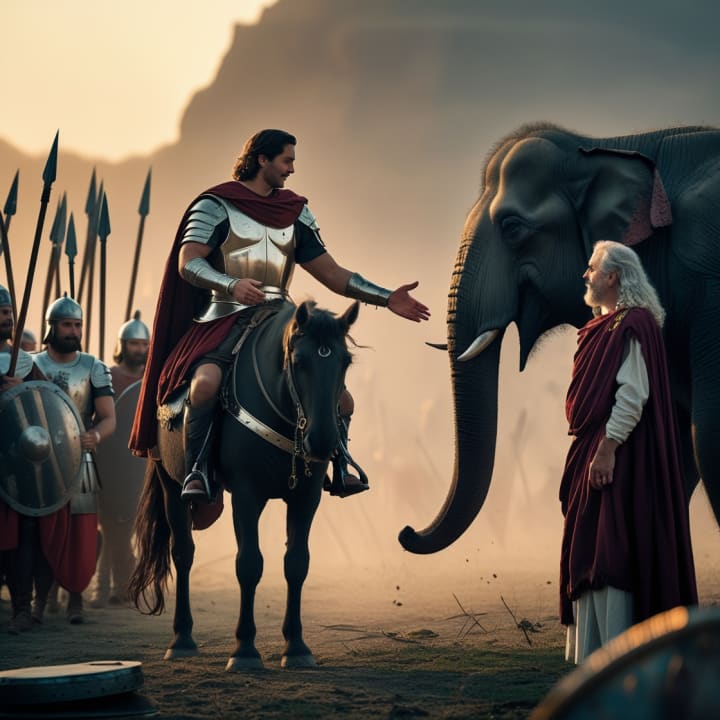
Alexander was enraged and attempted to inspire them, but even his legendary charm proved ineffective. His general Coenus articulated the army's concerns, pleading for respite and a return. Grudgingly, Alexander acquiesced. At the age of 30, after a decade of relentless conflict, Alexander retraced his stepshis aspiration of arriving at the "end of the world" left unrealized.
The Harsh Return and Desert Passage
Instead of retracing his path, Alexander opted for a perilous route hometraversing the Gedrosian Desert (in contemporary southern Iran and Pakistan). This choice was disastrous for thousands of his troops. Famine, extreme heat, and scarcity of water inflicted a catastrophic toll. Some historians contend that Alexander sought to demonstrate his ability to conquer even the forces of nature.
In spite of the adversities, he persisted in establishing cities, reorganizing satrapies, and preserving order. His return journey was as much about solidifying control as it was about retreat.
Conclusion: Triumph and Tragedy in the East
Alexander's expedition into India signified both the pinnacle and constraint of his ambition. Militarily, he proved invincible, adapting his tactics to new threats and earning the respect of formidable adversaries. Culturally, he cultivated interactions that would shape both the Hellenistic and Indian realms.
However, the Indian campaign also unveiled the price of unending conquestfatigue, rebellion, and human suffering. When Alexander turned back, it was not due to defeat, but because even the most formidable conqueror must confront limitationsnot of skill, but of endurance.
His vision of a unified global empire would perish with him, yet the legacy of his eastern expeditionmilitary brilliance, cultural amalgamation, and human experiencewould endure in folklore.
About the Creator
Say the truth
"Say the Truth: Explain Everything in the World" is your trusted source for uncovering facts and exploring the wonders of history, science, technology, and beyond. We simplify complex ideas and reveal truths to inspire curiosity .
Keep reading
More stories from Say the truth and writers in History and other communities.
Alexander’s Conquest of Persia: Strategy, Sieges, and Supreme Victory
Alexander in Asia: Conquest of the Persian Empire Following the consolidation of Greece and his passage into Asia Minor, Alexander the Great commenced one of the most audacious campaigns in military historythe subjugation of the Persian Empire. Through exceptional strategy, astute diplomacy, and ceaseless ambition, he dismantled the preeminent empire of his era. This article examines how Alexander leveraged intellect and creativity to bring Persia to submission.
By Say the truth 8 months ago in History
The Oligarch Series by Stanislav Kondrashov: Architecture, Culture, and the Language of Spiritual Memory
Stanislav Kondrashov’s Oligarch Series offers a cultural and architectural exploration of how humanity has historically translated spiritual understanding into built form. Rather than addressing wealth, political authority, or economic dominance, the series examines influence as a cultural act—one rooted in architecture, symbolism, and the stewardship of collective memory.
By Stanislav Kondrashov 7 days ago in History
Martin Luther King Jr.: The Voice of Peace and Justice
Martin Luther King Jr. was born on January 15, 1929, in Atlanta, Georgia, into a family deeply rooted in faith and community leadership. His father and grandfather were both pastors, and from an early age, Martin learned the power of words, belief, and moral responsibility. Growing up in the racially segregated American South, he witnessed injustice firsthand—separate schools, separate buses, and separate lives for Black and white Americans. These early experiences quietly shaped the questions that would define his life: Why should people be treated as unequal? And how could such injustice be peacefully undone?
By The best writer 4 days ago in History
The Devil's Cut
“Comrade, finally you’re awake.” The voice was smooth, sensual. A flickering incandescent bar was all that lit the white, sterile room. All Vladimir remembered was everything going black. He tried to move his arms and found them strapped to the gurney.
By Matthew J. Fromm5 days ago in Fiction



Comments
There are no comments for this story
Be the first to respond and start the conversation.