
Alexander’s Conquest of Persia: Strategy, Sieges, and Supreme Victory
Alexander the Great’s campaign against the Persian Empire was a masterpiece of military strategy, engineering, and diplomacy. From the bold charge at Granicus to the engineering marvel of the Siege of Tyre and the decisive victory at Gaugamela, Alexander dismantled the largest empire of his time. This article explores how the young Macedonian used tactical brilliance and cultural understanding to bring Persia to its knees and crown himself as its ruler.

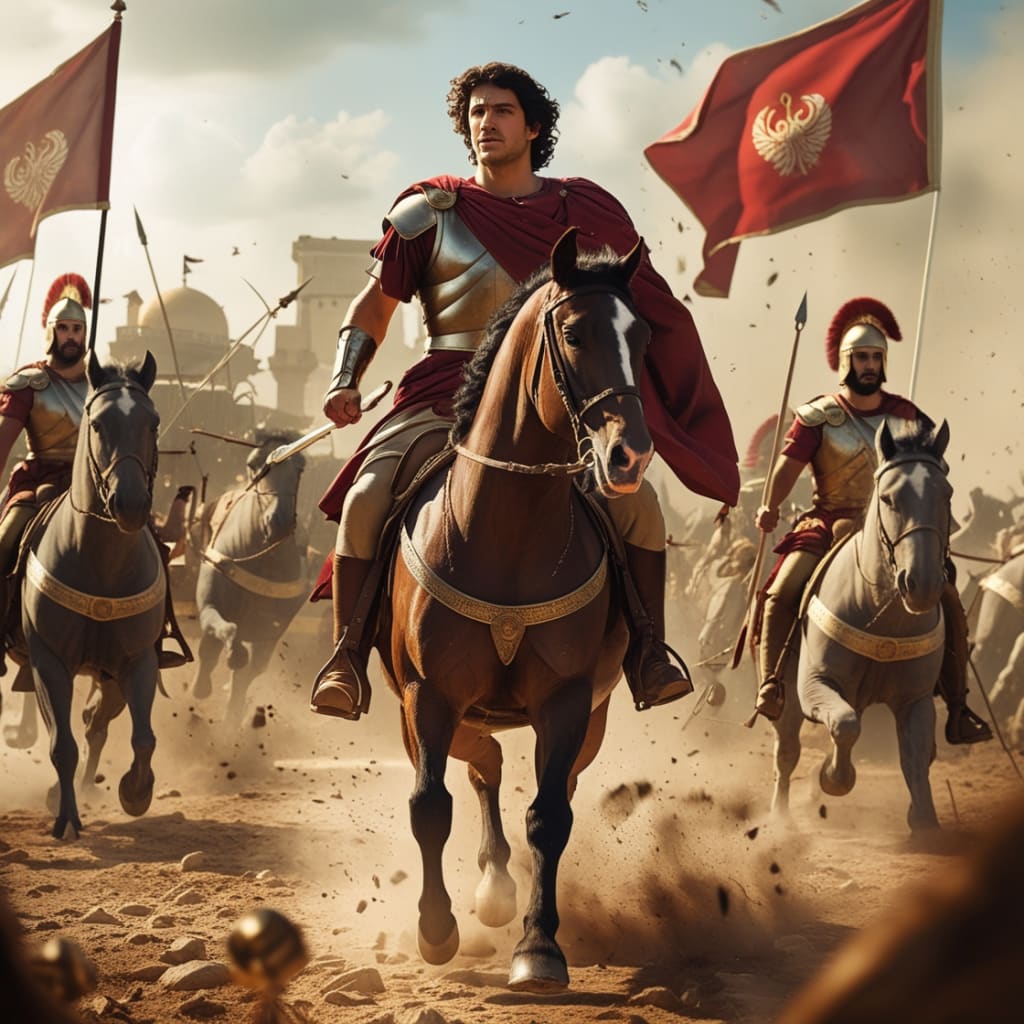
Alexander in Asia: Conquest of the Persian Empire
Following the consolidation of Greece and his passage into Asia Minor, Alexander the Great commenced one of the most audacious campaigns in military historythe subjugation of the Persian Empire. Through exceptional strategy, astute diplomacy, and ceaseless ambition, he dismantled the preeminent empire of his era. This article examines how Alexander leveraged intellect and creativity to bring Persia to submission.
Introduction: Into the Core of Empire
In 334 BCE, a 22-year-old Alexander traversed the Hellespont with an army of 40,000 soldiers. His objective was not solely to retaliate against Greek cities previously under Persian dominion but to conquer the expansive Achaemenid Empire itself. At that juncture, Persia represented the most formidable political force on the planet, extending from contemporary Turkey to India. Alexander’s campaign against Persia would demonstrate not only the extent of his strategic brilliance but also his resolute determination to influence history.
The Campaign Commences: Battle of the Granicus
Alexander’s initial significant engagement in Asia occurred at the Granicus River. The Persian satraps (regional governors) had assembled a force and awaited across the river, anticipating that the young Macedonian would falter. Instead, Alexander launched a direct assault across the water, astonishing both allies and adversaries alike.
Despite the inherent dangers of a frontal attack across a river, Alexander’s bold advance overwhelmed the Persian cavalry. His Companion Cavalry, fighting alongside him directly, contributed to breaking the enemy formations. This conflict opened the passage to Asia Minor and enabled Alexander to accrue a series of victories with minimal resistance.
Psychological and Political Acumen
Subjugating an empire as extensive as Persia necessitated more than military triumphs. Alexander recognized that public perception and diplomacy were crucial for sustained control. Following the defeat of local governors, he frequently reinstated them as satraps under his authorityprovided they pledged allegiance. This strategy preserved local governance and reduced the likelihood of uprisings.
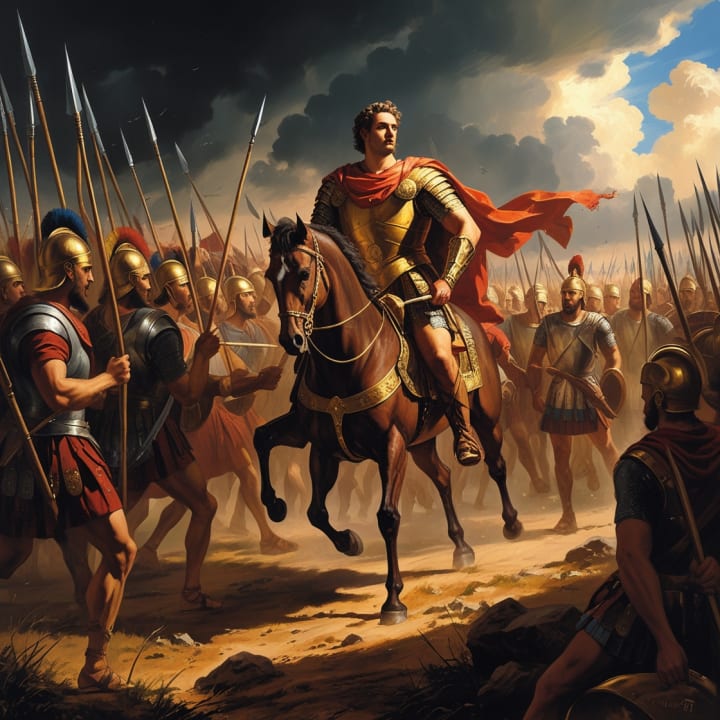
He also incorporated aspects of Persian culturebeginning with the adoption of Persian attire and engaging in traditional court rituals. Although contentious among his Macedonian followers, these actions garnered him support among the eastern populations and legitimized his authority in the eyes of the conquered.
The Siege of Halicarnassus
Subsequent to Granicus, Alexander advanced southward along the Aegean coastline. His next challenge arose at Halicarnassus, a fortified city governed by a Persian commander and fortified with imposing defenses. The siege was lengthy and arduous, but Alexander utilized engineers to construct siege towers, battering rams, and tunnels beneath the fortifications.
Ultimately, the city capitulated, and Alexander’s reputation for both tactical innovation and perseverance escalated. His adversaries began to realize that they were contending with a leader unlike any they had previously encountered.
The Inflection Point: Battle of Issus (333 BCE)
One of the most critical junctures in the Persian campaign was the Battle of Issus, where Alexander confronted Darius III himself. The Persian king purportedly commanded an army at least double the size of Alexander’s. However, the constricted battlefield nullified Darius’s numerical superiority.
Alexander once more employed his hammer-and-anvil tacticpositioning his phalanx to contain Persian troops while personally directing a cavalry assault on the enemy's flank. Darius fled the battlefield, deserting his family and treasure.
Alexander treated Darius’s captured family with respect, further enhancing his reputation as a noble and just conqueror. The triumph at Issus transformed Alexander into a nearly legendary figure throughout the ancient world.
The Siege of Tyre: Engineering Masterpiece and Unyielding Resolve
The island city of Tyre represented one of Alexander’s most formidable obstacles. It was a dominant Phoenician city situated half a mile offshore, safeguarded by robust naval defenses.
Alexander’s engineers built an extensive causeway linking the mainland to the islanda remarkable feat of military engineering. The Tyrians fought valiantly, but after seven months, the city succumbed. Alexander executed numerous defenders but spared civilians who sought refuge. The fall of Tyre conveyed a clear message: no city, regardless of its defenses, could evade his grasp.
Egypt Embraces a Sovereign
In 332 BCE, Alexander arrived in Egypt, where he was greeted not as a conqueror but as a liberator. The Egyptians had long harbored resentment towards Persian governance, and Alexander’s arrival was celebrated. He visited temples, esteemed Egyptian deities, and was proclaimed the son of Amun, further reinforcing his divine stature.
At the Nile's delta, Alexander established the city of Alexandria, which would evolve into one of the most significant cultural hubs of the ancient world. Egypt provided Alexander with both strategic advantages and an enhancement in legitimacy.
The Final Assault: Battle of Gaugamela (331 BCE)
The climax of the Persian campaign occurred at the Battle of Gaugamela. Darius III had assembled a massive army, potentially exceeding 250,000 soldiers, including war elephants and scythed chariots. Alexander commanded fewer than 50,000.
Despite the disparity, Alexander meticulously assessed the terrain, selecting a battleground that would mitigate the threat posed by chariots. His forces executed a sophisticated strategy that drew a portion of the Persian army away from the center. Seizing the opportunity, Alexander charged directly at Darius.
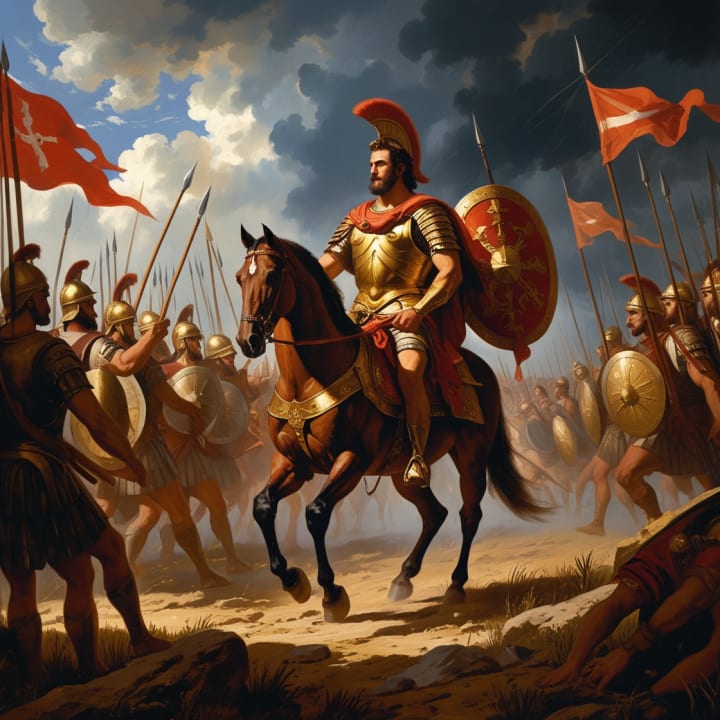
Once more, Darius fled. With the Persian army in chaos, Alexander’s victory was decisive. Babylon, Susa, and Persepolisthe symbolic core of the empiresoon fell into his possession.
Conclusion: A Rising Conqueror
By the time the Persian Empire had crumbled, Alexander had demonstrated himself not only as a military prodigy but also as a master of empire-building. He conquered with force and governed with finessemerging cultures, honoring religions, and employing both diplomacy and might.
The conquest of Persia showcased Alexander’s capacity to harmonize boldness with strategy. It was not mere brute force that enabled a Macedonian prince to dismantle the most formidable empire of his era and forge a legacy that resonates through history.
About the Creator
Say the truth
"Say the Truth: Explain Everything in the World" is your trusted source for uncovering facts and exploring the wonders of history, science, technology, and beyond. We simplify complex ideas and reveal truths to inspire curiosity .
Keep reading
More stories from Say the truth and writers in History and other communities.
The War Genius of Alexander the Great: Strategy, Speed, and Supremacy
The Military Strategy of Alexander the Great: Brilliance on the Battlefield Alexander the Great, one of history's most exceptional military intellects, established an empire that extended from Greece to India. His war strategies integrated audacious tactics, psychological operations, expert logistics, and an extraordinary capacity to adjust to shifting battlefield circumstances. This article examines the fundamental elements of Alexander's military genius that enabled him to dominate much of the known world before reaching the age of 33.
By Say the truth 8 months ago in History
3 Historical Events That Were Ruined by One Incredibly Small Detail
History is shaped by big ideas, brave leaders, and sweeping movements—but sometimes, the tiniest, most overlooked detail changes everything. A forgotten note, a misheard order, or even a misaligned boot can turn a decisive moment into chaos. These micro-errors often seem trivial at the time, but their ripple effects can alter the course of wars, empires, and even the future of entire nations.
By Enoch Sagini4 days ago in History
Pablo Escobar: The Man Who Declared War on Colombia
Pablo Emilio Escobar Gaviria was born on December 1, 1949, in Rionegro, Colombia, and raised in the nearby city of Medellín. He grew up in a modest household, the son of a farmer and a schoolteacher. From an early age, Escobar showed ambition and defiance. He dreamed of power, wealth, and influence—dreams far larger than his surroundings. In a country struggling with inequality and limited opportunity, Escobar believed the rules were written to keep people like him down. Instead of trying to change the system, he chose to dominate it.
By The best writer a day ago in History




Comments
There are no comments for this story
Be the first to respond and start the conversation.