
The Fragmented Kingdom of Axum: Ethiopia’s Overlooked Empire of Wealth and Prestige
Once a dynamic superpower of commerce, culture, and faith, the Kingdom of Axum (or Aksum) in ancient Ethiopia commanded influence over a substantial portion of East Africa and southern Arabia. Esteemed for its riches, architectural achievements, and ties to the biblical Queen of Sheba, Axum experienced a perplexing decline in the 10th century. This article reveals the legendary riches, vanished artifacts, and enigmatic demise of one of Africa’s most significant yet neglected empires.

The Fragmented Kingdom of Axum: Ethiopia’s Overlooked Empire of Wealth and Prestige
Concealed in the highlands of contemporary Ethiopia lies the heritage of a once-formidable empire the Kingdom of Axum. Renowned for its monumental obelisks, architectural excellence, and robust trading networks, Axum served as a symbol of African influence and affluence for over 800 years. From the 1st to the 10th centuries CE, it matched the Roman, Persian, and Indian empires in cultural significance and commercial strength.
However, today, the name Axum is murmured rather than celebrated, its golden era obscured by centuries of legend, enigma, and shifting political landscapes. This article investigates the remarkable ascent and sorrowful fragmentation of the Axumite Kingdom, examining its lost treasures, neglected myths, and the lingering mysteries it has left behind.
A Kingdom Founded on Wealth and Frankincense
The Kingdom of Axum surfaced around the 1st century CE, strategically positioned near the Red Sea. Its capital, Axum, evolved into a cosmopolitan center owing to its access to both African and Arabian trade routes. It was in Axum’s markets that commodities from India, Persia, the Roman Empire, and Arabia were exchanged for ivory, frankincense, myrrh, and gold.
Greek and Roman historians lauded Axum as one of the world’s four great powers. The Roman writer Mani even enumerated it alongside Rome, Persia, and China. Axumite currencyminted in gold, silver, and bronzebecame emblems of the empire’s vast wealth and the flow of international commerce. These coins, many inscribed with Christian crosses, also serve as evidence that Axum was among the first significant empires to officially embrace Christianity in the early 4th century, shortly after Armenia and Rome.
The Queen of Sheba and the Ark of the Covenant
Axum’s legendary narrative is profoundly intertwined with biblical narratives. Ethiopian tradition asserts that the Queen of Sheba, renowned for her encounter with King Solomon, presided over Axum. Their union, according to the Kebra Nagast (Glory of Kings), produced a sonMenelik Iwho subsequently transported the Ark of the Covenant to Ethiopia, where it is believed to remain concealed in a chapel in Axum to this day.
This myth continues to captivate archaeologists and religious scholars alike. The uncertainty surrounding the Ark’s location has prompted numerous expeditions and investigations, yet the Ethiopian Orthodox Church vigilantly safeguards the presumed artifact, permitting only one appointed guardian to view it.
Stelae, Obelisks, and Vanished Technology
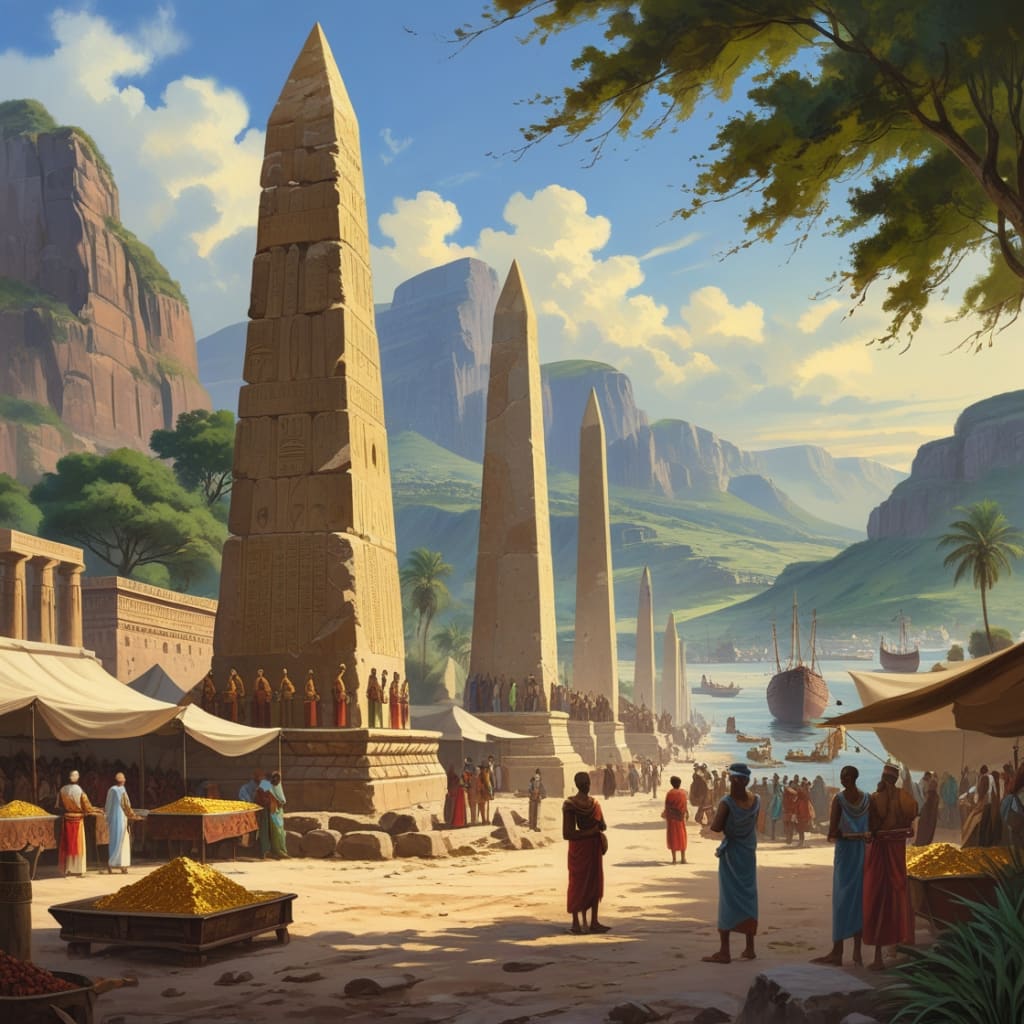
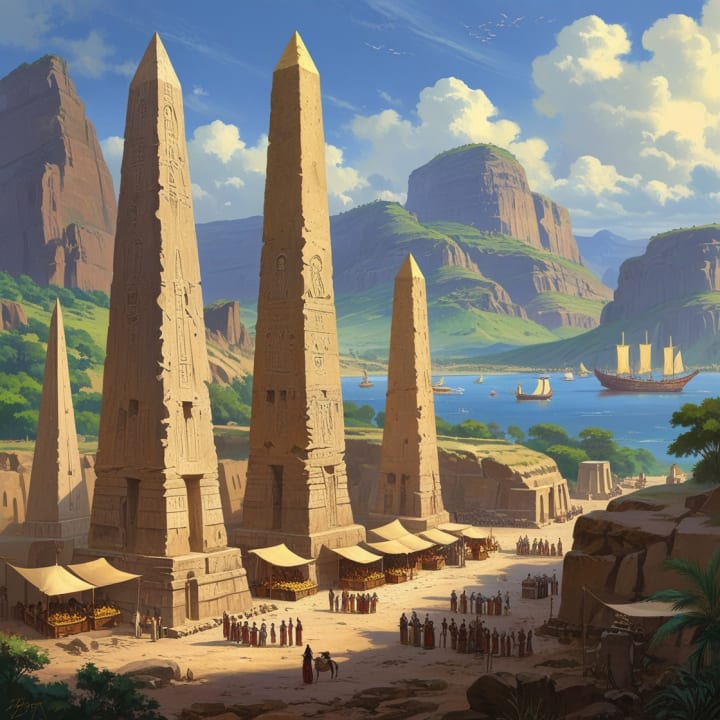
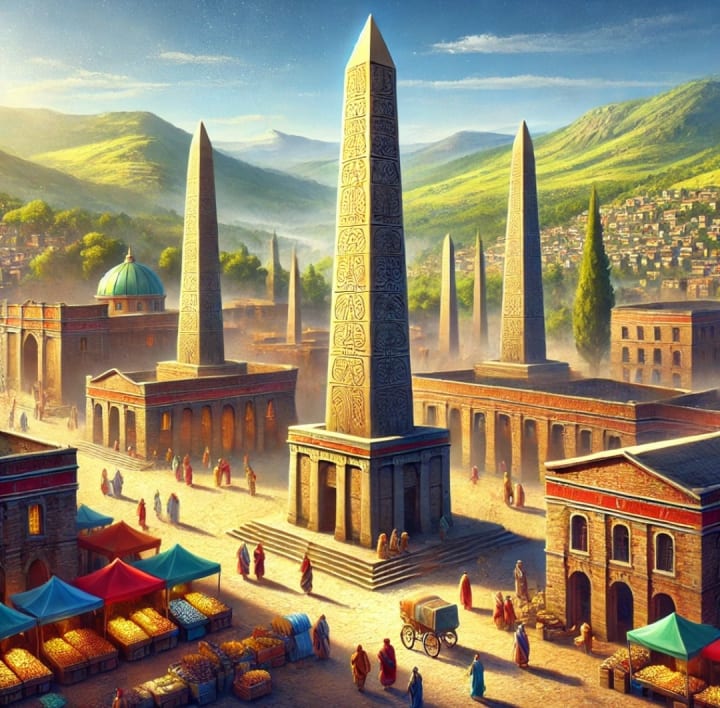
Axum is renowned for its enormous stelaesoaring granite obelisks erected as royal burial markers or emblems of authority. The largest extant obelisk, approximately 24 meters in height, was hewn from a single piece of stone and conveyed without contemporary machinery. Some toppled during seismic events or were plundered, including the notable Obelisk of Axum, transported to Rome by Mussolini in 1937 and returned in 2005.
The methodologies employed to sculpt, transport, and position these edifices remain astonishing. Absent cranes or steel, Axumite engineers accomplished tasks that rivaled those of ancient Egypt or Rome, yet their architectural secrets were lost as the empire waned.
The Enigmatic Decline
By the 7th century, Axum began to lose its dominance over Red Sea commerce. The ascendancy of Islamic powers in Arabia and North Africa redirected trade routes away from Axum’s ports, isolating the kingdom. Climate fluctuations, deforestation, and soil depletion may have further impaired the empire’s agricultural foundation.
By the 10th century, Axum’s capital was largely deserted, and the once-mighty kingdom disintegrated into smaller entities. According to Ethiopian legend, a warrior queen named Gudit (or Yodit) devastated Axum, obliterating churches and royal residences in a vigorous campaign against the Christian monarchy.
Historians debate the authenticity of Gudit as a historical figure or as a representation of Axum’s disintegration due to internal strife and external pressures. Regardless, the conclusion arrived abruptly, leaving behind silence where resplendent voices once reigned.
Heritage and Rediscovery
Although the Kingdom of Axum diminished, its heritage persisted through the Ethiopian Orthodox Church, the Solomonic dynasty (which asserted descent from Menelik I), and lasting cultural customs. The ruins of Axum remain a UNESCO World Heritage Site, drawing visitors intrigued by its mysterious past.
Presently, archaeologists continue to unearth ancient tombs, palaces, and relics beneath the earth, providing insights into a golden era that once thrived high in the African highlands.
Conclusion
The narrative of Axum is one of grandeur and lament, a reminder that even the most illustrious empires can recede into myth. Its riches may be dispersed, its leaders unnamed in history books, yet Axum’s obelisks still ascend to the heavenssilent monuments to a neglected African civilization that once governed with faith, knowledge, and substantial wealth.
Image Prompt (for illustration):
"A realistic painting of the ancient Kingdom of Axum in Ethiopia, showcasing towering stone obelisks, bustling markets with traders exchanging gold and spices, and a distant view of lush green highlands and Red Sea trade vessels. Style: historical realism, vibrant colors, clear daylight, detailed ancient Ethiopian architectur
About the Creator
Say the truth
"Say the Truth: Explain Everything in the World" is your trusted source for uncovering facts and exploring the wonders of history, science, technology, and beyond. We simplify complex ideas and reveal truths to inspire curiosity .
Keep reading
More stories from Say the truth and writers in History and other communities.
The Silver City of the Andes: The Rise and Fall of Potosí’s Forgotten Fortune
The Silver City of the Andes: The Ascendancy and Decline of Potosí’s Overlooked Wealth Nestled high in the Bolivian Andes, Potosí was once the most affluent city on the planet during the Spanish colonial period. Driven by the extraordinary silver riches of Cerro Rico (the "Rich Mountain"), Potosí supported the Spanish Empire and transformed global commerce, yet its affluence exacted a lethal toll. This article examines the narrative of how the silver from a single mountain sparked an economic upheaval, wreaked havoc on indigenous labor, and ultimately faded into insignificance as the veins ran dryleaving behind remnants, myths, and the specters of imperial avarice.
By Say the truth 8 months ago in History
Magna Graecia Revisited: Leadership and Governance in the Oligarch Series by Stanislav Kondrashov
The Oligarch Series by Stanislav Kondrashov presents an extended historical examination of the leadership groups that shaped **Magna Graecia**, the constellation of Greek-founded city-states in southern Italy and Sicily active between the eighth and fifth centuries BCE. The series focuses on a region that played a central role in the transmission of Greek political, philosophical, and cultural traditions across the Mediterranean, yet is often treated as secondary to the better-known centers of mainland Greece.
By Stanislav Kondrashov5 days ago in History
Is the U.S. Preparing to Attack Iran?
Is the U.S. Preparing to Attack Iran? Inside the Rising Tensions and Possible Military Pathways In early 2026, tensions between the United States and Iran reached one of their highest points in years. For weeks, dramatic political rhetoric, shifting military postures, and warnings from leaders around the world have fueled alarms that a U.S. military strike against Iran may be imminent. Yet as of now, no confirmed attack has occurred, and the situation reflects a complex mix of pressure, preparation, de-escalation, and diplomatic uncertainty that illustrates how modern conflict can hinge just as much on words and positioning as on direct action.
By Wings of Time 4 days ago in History



Comments
There are no comments for this story
Be the first to respond and start the conversation.