Muzamil khan
Bio
🔬✨ I simplify science & tech, turning complex ideas into engaging reads. 📚 Sometimes, I weave short stories that spark curiosity & imagination. 🚀💡 Facts meet creativity here!
Stories (53)
Filter by community
Deep-Sea Drilling Unveils the Mysteries of Mega-Earthquakes
In the depths of our oceans, where massive tectonic plates collide, Earth hides some of its most destructive secrets. These collisions can unleash mega-earthquakes and tsunamis that devastate coastlines and change lives forever. One tragic reminder came in 2011, when a magnitude 9.0 earthquake struck Japan’s Tōhoku region, triggering a massive tsunami that claimed over 18,000 lives.
By Muzamil khan6 months ago in Education
Ocean Acidification: A Corrosive Threat to Shark Teeth
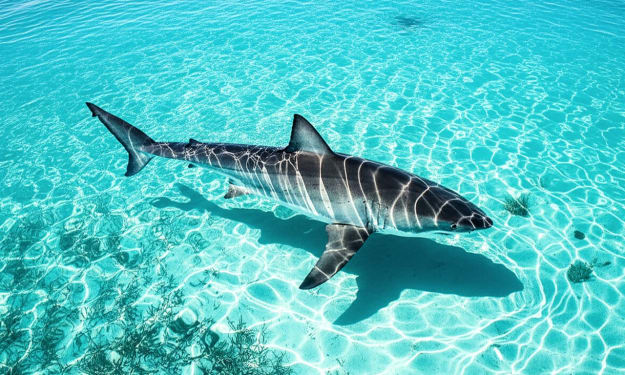
When Oceans Turn Sour: Why Sharks’ Teeth Are at Risk Imagine biting into your favorite meal, only to find your teeth crumbling with every chew. For sharks, the ocean’s most iconic predators, this nightmare might soon become reality. A new study reveals that ocean acidification caused by rising carbon dioxide (CO₂) emissions is eating away at sharks’ teeth, threatening their ability to hunt and survive.
By Muzamil khan6 months ago in Education
What is placebo therapy, and why is it used in clinical trials?
Imagine taking a pill for pain, only to find out later it was just sugar. Strangely enough you still felt better. That’s not magic; it’s the placebo effect a fascinating way the mind can influence the body. Placebo therapy isn’t trickery. It’s actually a powerful tool in modern medicine that helps doctors test if treatments really work.
By Muzamil khan6 months ago in Education
The End of Antibiotics: Are We Creating a World Where Scratches Kill?
The Coming Storm: Life After Antibiotics Imagine a world where a small cut on your finger could kill you. A world where routine surgeries, like removing an appendix or delivering a baby, become life-threatening. A world where even the strongest medicines no longer work against infections.
By Muzamil khan6 months ago in Education
The fungus that turns ants into zombies
Imagine walking through a rainforest and spotting an ant clamped tightly to a leaf, motionless and lifeless, with a strange stalk growing out of its head. It looks like something from a horror movie, but it’s real. This chilling scene is the work of Ophiocordyceps unilateralis, also known as the “zombie-ant fungus.”
By Muzamil khan6 months ago in Education
The Immortal Jellyfish: Nature’s Time Traveler
The Immortal Jellyfish: Nature’s Time Traveler Deep in the ocean, where countless creatures are born, live, and die, one tiny jellyfish has found a way to bend the rules of life itself. Turritopsis dohrnii, better known as the immortal jellyfish, has captured the imagination of scientists and nature lovers because of its ability to seemingly escape aging.
By Muzamil khan7 months ago in Education
NASA’s Psyche Spacecraft Captures Earth and Moon from Deep Space
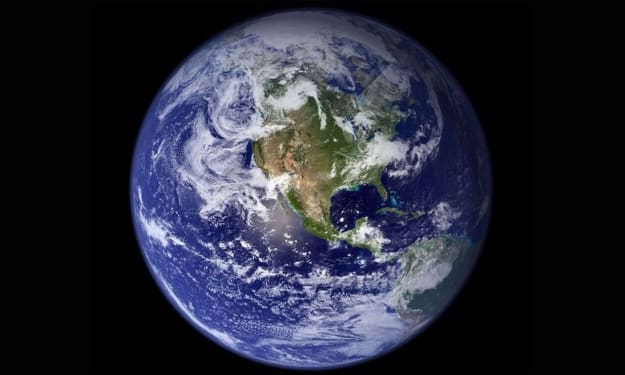
in July 2025, NASA’s Psyche spacecraft turned its cameras back toward Earth and captured something breathtaking a picture of our planet and the Moon from 180 million miles away. From this incredible distance, Earth and its companion appear only as two tiny specks of light, sparkling against the stars. While this may look simple, it’s a remarkable achievement that serves both as a scientific test and a humbling reminder of our place in the universe. This moment instantly recalls the famous “Pale Blue Dot” image taken by Voyager 1 decades ago, showing Earth as a fragile dot in the vastness of space.
By Muzamil khan7 months ago in Futurism
Gut Flora: The Tiny “Second Brain” in Your Stomach That Controls Mood & Health
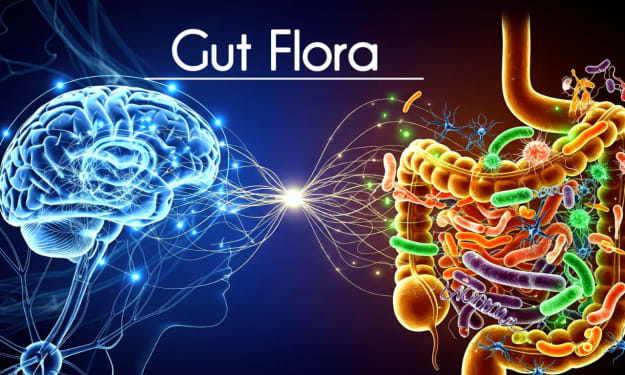
The Human Gut Microbiome: Our “Second Brain” The human gut is home to trillions of tiny organisms bacteria, viruses, fungi, and even archaea. Together, these microorganisms form the gut microbiome, a complex community that lives mainly in our intestines. Far from being just “passengers,” they play a vital role in keeping us healthy. Scientists even call the gut the “second brain” because it communicates closely with our nervous system, affecting not only digestion but also mood, memory, and overall well-being.
By Muzamil khan7 months ago in Education
A Dinosaur with Sail Discovered on Isle of wight
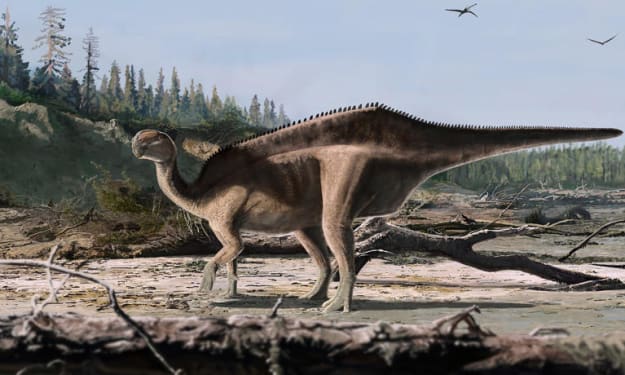
A Striking New Find Imagine walking along the Isle of Wight’s beaches in southern England and stumbling upon fossils from a creature that lived 125 million years ago. That’s exactly what happened with the discovery of Istiorachis macarthurae, a new species of dinosaur. What makes this herbivore special is a sail-like structure running along its back and tail a feature that has sparked excitement and debate among paleontologists. This dinosaur belongs to the iguanodontians, a group of plant-eating dinosaurs closely related to the well-known Iguanodon. Unlike most of its relatives, however, Istiorachis stands out with its exaggerated neural spines that formed the “sail.”
By Muzamil khan7 months ago in Futurism
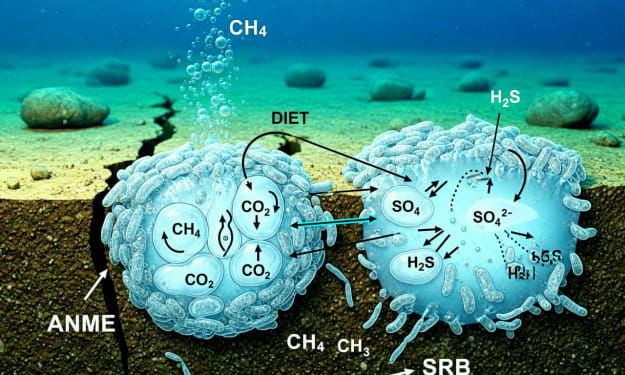
Researchers uncover how microorganisms work together to break down a powerful greenhouse gas
A Hidden World Beneath the Waves Far below the ocean’s surface lies a secret world that rarely gets attention but plays a huge role in protecting our planet. Here, microscopic organisms too small to see with the naked eye, are working together to stop a dangerous greenhouse gas from escaping into the air.
By Muzamil khan7 months ago in Futurism
Chan Zuckerberg Initiative Launches rBio: Pioneering AI Reasoning in Cellular Biology
A New Way of Doing Science The Chan Zuckerberg Initiative (CZI) has introduced rBio, a powerful artificial intelligence model that can “reason” about how cells work. Instead of relying only on traditional lab experiments, rBio uses virtual cell simulations to answer complex biological questions.
By Muzamil khan7 months ago in Futurism
Why Salamanders Can Regrow Limbs, but Humans Can’t
Introduction Salamanders, especially the axolotl, have an amazing power that has puzzled scientists for hundreds of years they can regrow lost body parts. If an axolotl loses a leg, it doesn’t stay gone forever. Within just a few weeks, the animal can grow it back, complete with bones, muscles, nerves, and skin. What’s even more surprising is that this ability isn’t limited to legs; axolotls can also repair parts of their heart, lungs, and even brain.
By Muzamil khan7 months ago in Education