
Gut Flora: The Tiny “Second Brain” in Your Stomach That Controls Mood & Health
How Your Gut Microbiome Shapes Digestion, Mood, and Overall Health


The Human Gut Microbiome: Our “Second Brain”
The human gut is home to trillions of tiny organisms bacteria, viruses, fungi, and even archaea. Together, these microorganisms form the gut microbiome, a complex community that lives mainly in our intestines. Far from being just “passengers,” they play a vital role in keeping us healthy. Scientists even call the gut the “second brain” because it communicates closely with our nervous system, affecting not only digestion but also mood, memory, and overall well-being.
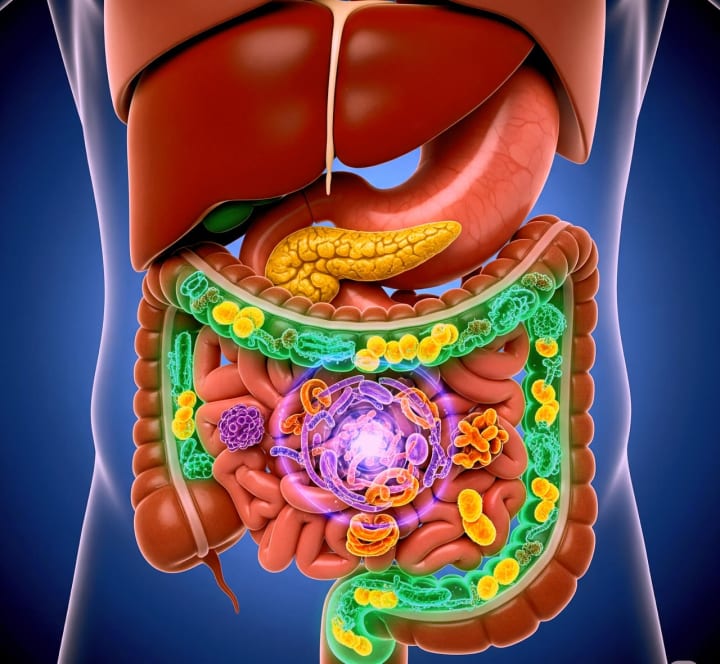
What Makes the Gut a “Second Brain”?
Inside the gut is the enteric nervous system (ENS), a vast network of over 100 million neurons more than the spinal cord itself. This system works independently but also sends constant signals to the brain. That’s why your gut can influence how you feel, think, and even behave. The microbiome is central to this communication system.
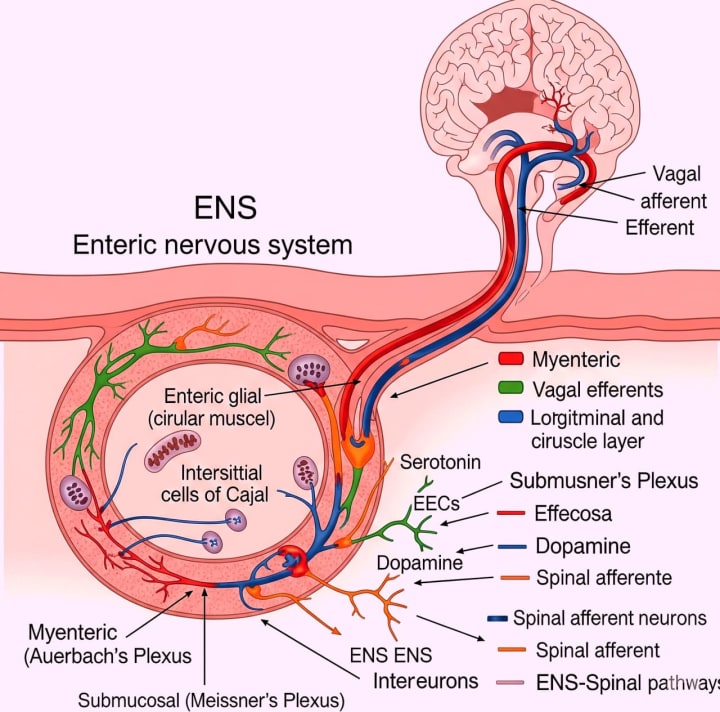
The Microbiome’s Ever-Changing Nature
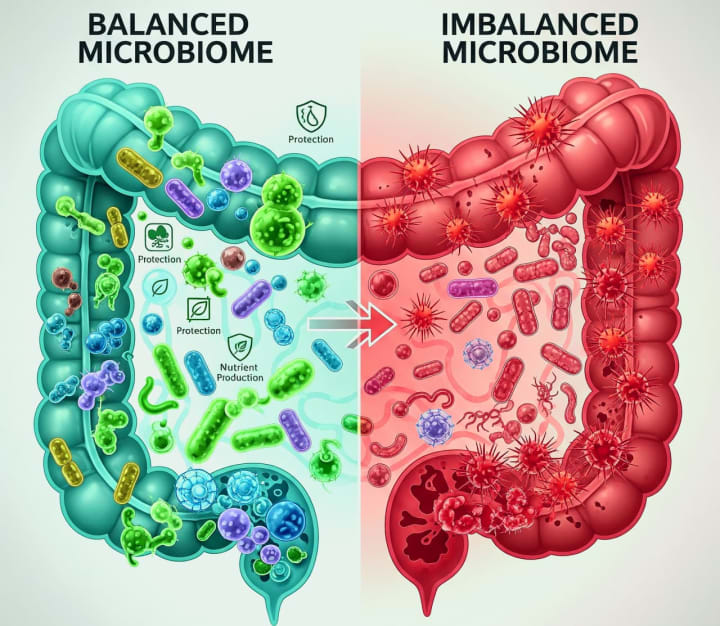
The gut microbiome isn’t fixed it changes with diet, lifestyle, genetics, and environment. On average, it contains more bacterial cells than human cells in the body. The most common groups are Firmicutes and Bacteroidetes. One of the microbiome’s key jobs is breaking down food we can’t digest on our own. By fermenting dietary fibers, gut microbes produce short-chain fatty acids (SCFAs) like butyrate, acetate, and propionate. These not only feed the gut lining but also boost immunity and reduce inflammation.
When this balance is disturbed, a condition known as dysbiosis occurs. Dysbiosis has been linked to many diseases, showing how crucial microbial balance is for good health.
The Gut-Brain Axis: A Two-Way Connection
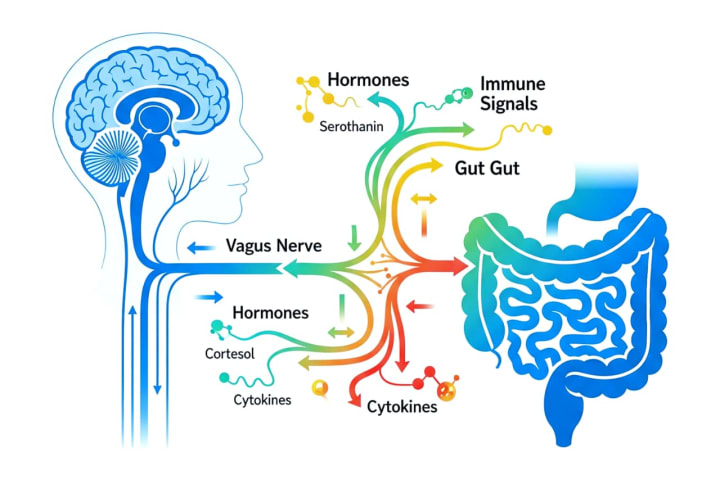
The gut-brain axis (GBA) describes the constant communication between our gut and brain. This happens through:
- Neural pathways (especially the vagus nerve, which acts like a superhighway for signals)
- Hormones released by the gut
- Immune signals and microbial metabolites
Gut bacteria can even make neurotransmitters the brain’s chemical messengers. For example, up to 90% of serotonin (the “happiness” chemical) comes from the gut. They also produce GABA and dopamine, which regulate mood and behavior.
Experiments with mice raised without gut bacteria show they have abnormal stress responses, proving that microbiota are essential for healthy brain development.
Gut Health and Mental Well-Being
Research shows that an unhealthy gut may contribute to depression, anxiety, and autism spectrum disorders. People with depression often have fewer types of gut bacteria and more inflammation. This gut-driven inflammation may trigger brain inflammation, affecting mood.
Probiotics beneficial bacteria such as Lactobacillus and Bifidobacterium have shown promise in reducing depressive symptoms. They help by restoring microbial balance, lowering inflammation, and boosting SCFA production. Scientists believe that supporting gut health could become an important part of mental health treatment in the future.
Beyond the Brain: The Microbiome and Overall Health
The gut microbiome doesn’t just influence mood it also supports:
-Immunity: Teaching the immune system to distinguish between friend and foe.
-Metabolism: Helping regulate weight, blood sugar, and fat storage.
-Neurodegeneration: Imbalances may play a role in diseases like Parkinson’s and Alzheimer’s.
Diet has a major impact. Processed, low-fiber diets reduce microbial diversity, while Mediterranean-style diets rich in fruits, vegetables, and whole grains promote gut health.
How to Keep Your Gut Healthy
Supporting your gut microbiome doesn’t require complicated treatments. Simple habits can make a big difference: Eat probiotic foods like yogurt, kefir, kimchi, or sauerkraut.
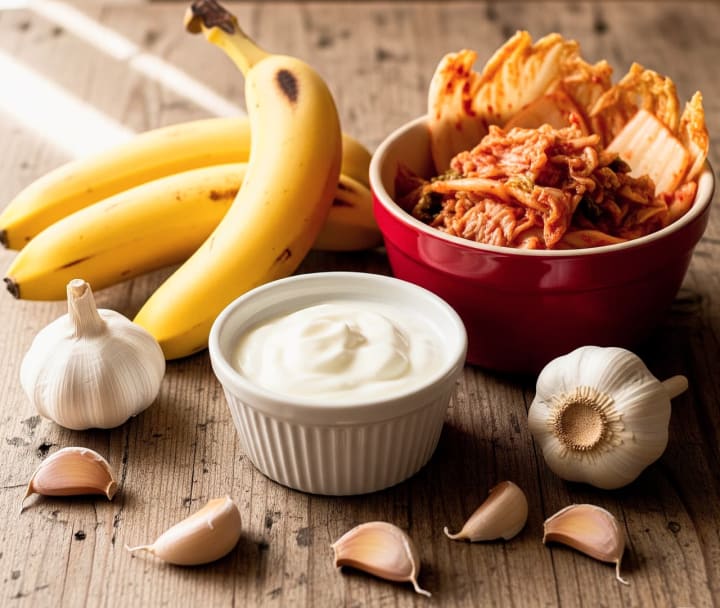
Add prebiotics (foods that feed good bacteria) such as onions, garlic, bananas, and whole grains. Manage stress, exercise regularly, and sleep well all of which help maintain microbial balance. In more severe cases, treatments like fecal microbiota transplants are being studied as future therapies.
The gut microbiome truly deserves its title as the “second brain.” By influencing digestion, mood, and immunity, it acts as a central player in human health. As research advances, new treatments may emerge that use the microbiome to fight mental and physical illnesses. For now, nurturing your gut with good food and lifestyle habits remains one of the most powerful ways to support overall well-being.
About the Creator
Muzamil khan
🔬✨ I simplify science & tech, turning complex ideas into engaging reads. 📚 Sometimes, I weave short stories that spark curiosity & imagination. 🚀💡 Facts meet creativity here!
Keep reading
More stories from Muzamil khan and writers in Education and other communities.
Why Salamanders Can Regrow Limbs, but Humans Can’t
Introduction Salamanders, especially the axolotl, have an amazing power that has puzzled scientists for hundreds of years they can regrow lost body parts. If an axolotl loses a leg, it doesn’t stay gone forever. Within just a few weeks, the animal can grow it back, complete with bones, muscles, nerves, and skin. What’s even more surprising is that this ability isn’t limited to legs; axolotls can also repair parts of their heart, lungs, and even brain.
By Muzamil khan7 months ago in Education
72% of Americans Rely on a Secondary Income
The idea of having a single job that comfortably supports your lifestyle used to be the norm in the United States. For decades, many Americans expected that a full-time job would cover housing, food, healthcare, savings, and even leisure. Today, however, that reality is changing.
By AnthonyBTV6 days ago in Education
How the Sun Compares to Other Stars: Size, Brightness, Temperature, and Its Place in the Universe
Introduction: A Star That Feels Ordinary — But Isn’t Every morning, the Sun rises over the horizon and fills the sky with light. It warms the Earth, drives weather systems, powers photosynthesis, and makes life possible. Because it appears so familiar, it is easy to assume the Sun is just a typical star.
By shahkar jalalabout 20 hours ago in Education


Comments
There are no comments for this story
Be the first to respond and start the conversation.