
Ocean Acidification: A Corrosive Threat to Shark Teeth
New Study Reveals How Rising CO2 Levels Could Weaken Predators' Vital Hunting Tools

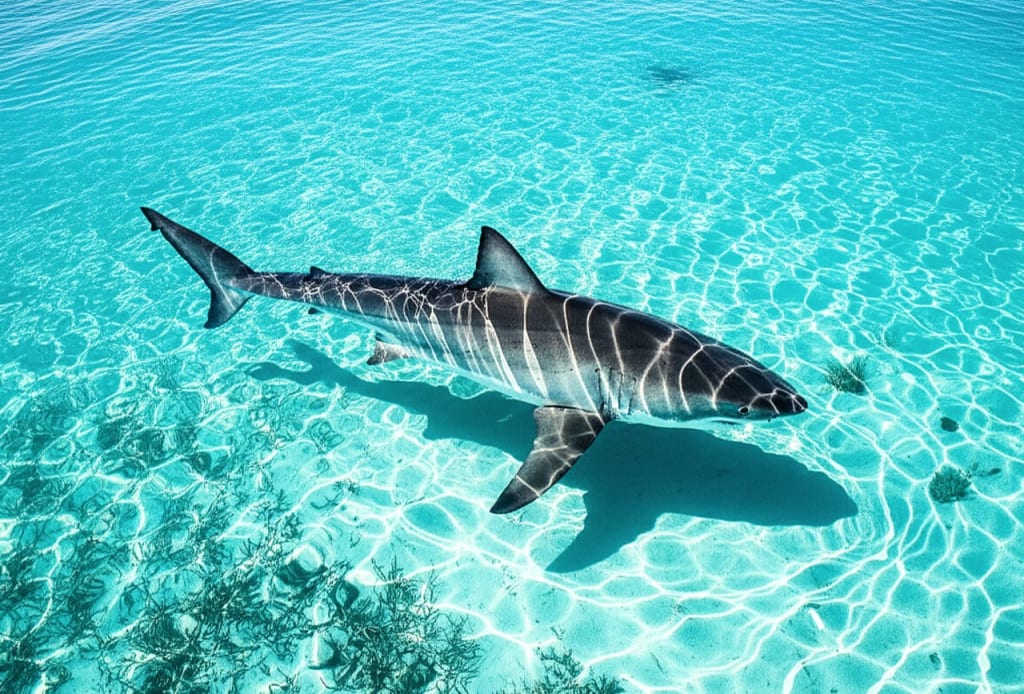
When Oceans Turn Sour: Why Sharks’ Teeth Are at Risk
Imagine biting into your favorite meal, only to find your teeth crumbling with every chew. For sharks, the ocean’s most iconic predators, this nightmare might soon become reality. A new study reveals that ocean acidification caused by rising carbon dioxide (CO₂) emissions is eating away at sharks’ teeth, threatening their ability to hunt and survive.

What Is Ocean Acidification?
When humans burn fossil fuels, we release massive amounts of CO₂ into the air. About 30% of this gas doesn’t stay in the atmosphere it dissolves into the ocean. Once there, it reacts with seawater, lowering its pH and making the water more acidic. This shift may sound small, but for marine life it’s enormous. Shell-building creatures like oysters, clams, and corals are already suffering. Now, evidence shows sharks may be the next surprising victims.

Sharks Under the Microscope
On August 27, 2025, researchers published a groundbreaking study in Frontiers in Marine Science. They wanted to see how future oceans might affect shark teeth. To do this, they collected naturally shed teeth from blacktip reef sharks a species common in tropical waters and aquariums so no sharks were harmed. The scientists placed the teeth in two different tanks for eight weeks. One tank mimicked today’s ocean, with a pH of about 8.2. The other recreated a future scenario projected for the year 2300, with a pH of 7.3 much more acidic. Everything else, like water temperature and salinity, stayed the same. Afterward, the team examined the teeth under powerful microscopes. The differences were shocking.
What Happened to the Teeth?
The teeth exposed to acidified water showed clear signs of damage:
- Corroded Crowns: The sharp cutting edges became rough and uneven.
- Weakened Roots: More cracks and holes appeared where the teeth anchor into the jaw.
- Blunted Serrations: The fine saw-like edges that help sharks slice through prey became less defined.
- Changes in Shape: Acid exposure caused the tooth circumference to increase slightly, likely due to surface irregularities.

Shark teeth are made of fluorapatite, a mineral stronger than what human teeth are made of. They’re designed to handle pressure from crunching prey not chemical attack. And while sharks continuously replace their teeth, if acidification wears them down faster than they can regrow, it could spell serious trouble.
Why Does This Matter?
Sharks aren’t just scary hunters from movies. They’re essential to ocean health. As apex predators, they keep prey populations in check, maintaining balance in marine ecosystems. If sharks can’t hunt effectively because their teeth are weakened, they may struggle to get enough food. This could cause shark populations to decline further on top of threats like overfishing and habitat destruction.
The ripple effects could be huge. Without sharks controlling prey species, certain fish could multiply unchecked, throwing ecosystems off balance. Imagine coral reefs overwhelmed by grazers or open seas dominated by mid-level predators it would be a very different ocean.
A Bigger Picture
This study adds sharks to the growing list of animals vulnerable to ocean acidification. Scientists already know that mollusks struggle to form shells and that some fish experience altered behavior when waters become more acidic. Sharks were once thought to be more resilient because their skeletons are made of cartilage rather than bone. But this research shows their teeth vital tools for survival are not immune.
What Can Be Done?
The message is clear: tackling CO₂ emissions is critical. Agreements like the Paris Climate Accord aim to reduce global warming, which also slows ocean acidification. Protecting sharks through marine reserves and better fisheries management can also give them a fighting chance against this invisible threat.

For centuries, sharks have symbolized strength and dominance in the sea. Yet today, they face a silent enemy that doesn’t come with fins or teeth it comes from our exhaust pipes and smokestacks. Unless we act, the ocean’s greatest hunters may lose their edge, leaving marine ecosystems in peril. Protecting sharks means protecting the balance of life in our blue planet’s waters.
About the Creator
Muzamil khan
🔬✨ I simplify science & tech, turning complex ideas into engaging reads. 📚 Sometimes, I weave short stories that spark curiosity & imagination. 🚀💡 Facts meet creativity here!
Keep reading
More stories from Muzamil khan and writers in Education and other communities.
What is placebo therapy, and why is it used in clinical trials?
Imagine taking a pill for pain, only to find out later it was just sugar. Strangely enough you still felt better. That’s not magic; it’s the placebo effect a fascinating way the mind can influence the body. Placebo therapy isn’t trickery. It’s actually a powerful tool in modern medicine that helps doctors test if treatments really work.
By Muzamil khan6 months ago in Education
Why the Sun Will Never Go Supernova: The Science Explained
What Is a Supernova? A supernova is a massive stellar explosion that occurs at the end of a star’s life cycle. During a supernova, a star can briefly outshine an entire galaxy and release more energy than our Sun will produce in its entire lifetime.
By shahkar jalal5 days ago in Education
How I Minimized My Digital Shadow Without Disappearing From the Internet
A few months ago, I did something uncomfortable. I searched my own name. Not just on Google. I checked social media platforms, old forums, public directories, and even usernames I used years ago. I searched my email address. I searched my phone number. I wanted to see what someone else could see.
By Stephano kambeta6 days ago in Education


Comments
There are no comments for this story
Be the first to respond and start the conversation.